
Published 2 November 2026 · By Jatin Dua, Broker of Record, RE/MAX Quantum Realty
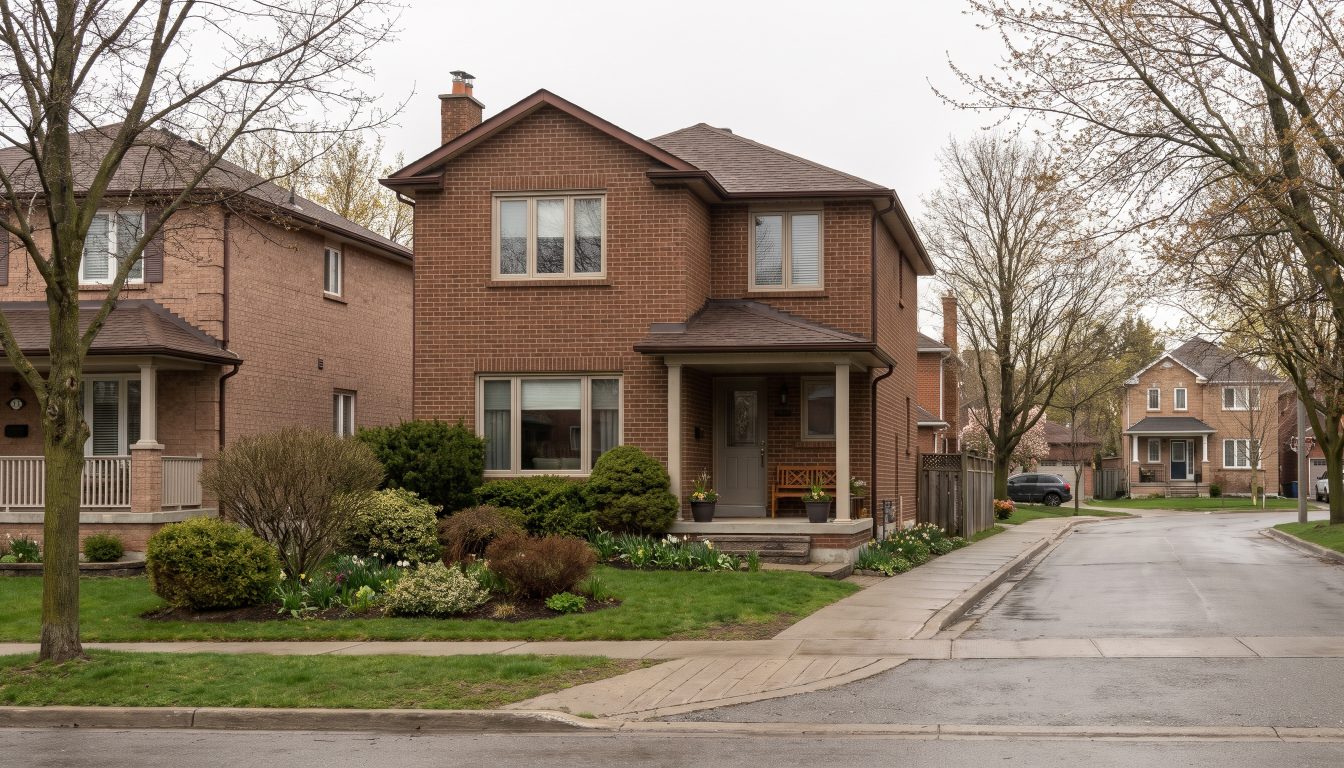
Before listing your home in 2027, price it from the last 90 days of sales, work out your net proceeds after the mortgage payout and closing costs, fix and declutter without renovating, gather permits and warranties, and plan your agent and launch date. In October 2026, GTA homes sold for 97% of list price on average (TRREB).
This guide is for GTA homeowners planning to sell in 2027, whether you are moving up, downsizing or leaving the region. You get the five things I have every seller do before the sign goes up, the October 2026 numbers that explain why each one matters, and the paperwork that trips people up at the last minute.
What should you do before listing your home in 2027?
The work you do in the four to eight weeks before listing decides most of the result. In my experience, a new listing gets the most attention in its first two weeks, and you cannot get that launch back. These are my five steps, in order:
- Price your home from the last 90 days of sales.
- Work out what you will actually walk away with.
- Fix, clean and declutter, but skip the big renovation.
- Gather your documents before the first showing.
- Pick your agent, your timing and your launch plan.
What is the GTA market like for sellers right now?
Slower and more price-sensitive than in 2024. TRREB reported 5,603 sales in October 2026, down 7.9% from a year earlier, and an average price of $1,024,108, down 2.7%. New listings fell 11.9%, so sellers are also holding back. Two numbers in that report matter most to anyone listing:
- Homes sold for 97% of their list price on average. Buyers are negotiating, but well-priced homes are not selling far below asking.
- Listing days on market averaged 31, but property days on market averaged 49. Property days count the total time a home was for sale, even if it was taken off and relisted. The gap shows how much longer homes take when the first price is wrong.
| City | Detached median 2024 | Detached median 2026 | Change vs 2025 | Avg days on market 2024 | Avg days on market 2026 |
|---|---|---|---|---|---|
| Mississauga | $1,371,085 | $1,225,000 | −5.8% | 22 | 31 |
| Brampton | $1,127,250 | $950,000 | −8.9% | 22 | 30 |
| Vaughan | $1,590,000 | $1,415,000 | −5.0% | 21 | 30 |
| Markham | $1,650,000 | $1,420,000 | −6.5% | 19 | 29 |
| Oakville | $1,763,000 | $1,625,000 | −3.0% | 24 | 33 |
| Whitby | $1,065,000 | $977,000 | −6.2% | 16 | 23 |
Source: TRREB MLS data via REALM, January–October of 2024, 2025 and 2026 (detached medians and average days on market for each city as a whole); TRREB Market Watch, October 2026.
1. Price your home from the last 90 days of sales
The table shows why last year’s number is the wrong starting point. In every one of these cities, the detached median is lower than in 2024 and homes take longer to sell. A neighbour’s 2024 sale price is history, not a guide.
A good price starts with the most recent sales of homes like yours: same area, similar size, lot, age and condition. Then it looks at what is for sale right now, because those are the homes buyers will compare with yours. If five similar homes are listed and none are selling, the market is telling you something.
Pricing a little under the market can bring more showings and sometimes more than one offer. Pricing above it usually means a price cut later and a listing that buyers start to wonder about. My guide to the mistakes sellers make when rates are rising covers this in more detail.
2. Work out what you will actually walk away with
Before you list, know your net number: the sale price minus everything that comes off it. The main items are:
- Your mortgage payout. Ask your lender for a payout statement. The Financial Consumer Agency of Canada says breaking a closed mortgage normally means a prepayment penalty that can cost thousands of dollars, plus possible administration, appraisal, reinvestment and discharge fees, and repayment of any cash back you received. Porting the mortgage to your next home may be an option; ask early.
- Commission and legal fees, plus adjustments for property tax and utilities on closing.
- Tax reporting. Even if the home was your principal residence and no tax is owed, the Canada Revenue Agency requires you to report the sale on Schedule 3 of your tax return and complete Form T2091. The CRA says it will only allow the exemption if you report the sale, and a late designation can bring a penalty of up to $8,000.
My guides to seller closing costs in Ontario and to what happens to your mortgage when you sell walk through each cost.
Instant Home Valuation
What’s your home
worth today?
Answer six quick questions and get an instant value range built from current Toronto & GTA sale data — property type, size, condition, lot and location all weighted the way a real pricing conversation weighs them. Takes about ninety seconds.
Reading recent GTA sale data…
Building your estimate
Estimated market value
—
$0–$0
Most likely value $0 · roughly $0 per square foot
What moved the number
Starting from the area baseline for your property type, here’s what each answer added or subtracted.
Market context
Recent local averages for comparison.
—
A range is a starting point.
A strategy is what sells.
This model doesn’t know that your neighbour’s identical semi went $80,000 over asking last month, or which two upgrades actually pay back in your area. That conversation is free and takes twenty minutes.
3. Fix, clean and declutter, but skip the big renovation
Buyers form an opinion in the first minute, both online and at the door. The work that pays back most is usually the cheapest:
- Declutter hard. Pack away at least a third of what is on shelves, counters and in closets. Buyers need to picture their own things.
- Deep clean. Windows, grout, baseboards, appliances and the furnace room.
- Fix the small things. Dripping taps, loose handles, burnt-out bulbs, sticky doors and scuffed paint. Each one makes a buyer wonder what else was missed.
- Neutral paint where needed. In my experience, tired or bold walls are one of the things buyers mention most after showings.
- Curb appeal. A tidy front yard, clean entrance and working lights set the tone for the photos.
In my experience, a full kitchen or bathroom renovation right before selling rarely earns back its cost, and it delays your launch. Consider a pre-listing inspection if your home is older, so you can fix or disclose problems before a buyer’s inspector finds them. See what tends to pay off in what adds value before you sell in the GTA.
4. Gather your documents before the first showing
Missing paperwork can slow a deal or give a buyer a reason to renegotiate. Pull these together before you list:
- Permits and final inspections for past work, such as a basement, deck, addition or new electrical panel.
- Receipts and warranties for the roof, furnace, air conditioner, windows and appliances.
- A year of utility bills, so buyers can see real running costs.
- Any rental contracts for equipment such as a water heater or furnace, since a buyer will ask whether they transfer.
- Your survey, if you have one.
Selling a condo?
Order a status certificate early. The Condominium Authority of Ontario says a corporation can charge up to $100, including taxes, with delivery within 10 days. Having it ready lets a buyer’s lawyer review it quickly.
Selling a home with a tenant?
The tenant’s lease survives a sale. Under section 49 of the Residential Tenancies Act, if a buyer of a house with no more than three units, or of a condo unit, needs it for their own or a close family member’s use, you can give notice on the buyer’s behalf after you have a signed agreement of purchase and sale. The notice must give at least 60 days and end on the last day of a rental period or the fixed term. Section 49.1 requires you, the seller, to pay the tenant one month’s rent or offer another acceptable unit. Plan your closing date around these rules.
Unpermitted work is one of the most common late-stage problems I see. A finished basement or addition without a closed permit can make a buyer’s lender or insurer nervous, and it can turn into a price reduction after an inspection. Check your permit history with your city before you list, and decide whether to close out old permits or disclose the work up front.
5. Pick your agent, your timing and your launch plan
Interview at least two or three agents. Ask each one for the recent sales they used to reach their suggested price, their plan for photos, video, floor plans and marketing, and how they will handle offers. Under Ontario’s real estate rules, an agent must give you the RECO Information Guide before providing services. RECO says it holds information clients should know before they sign, so read it.
Then pick your timing. In my experience, spring brings more buyers but also more competing listings. The Bank of Canada’s next rate decision is on 9 December 2026, after its October hike to 2.50%, and further moves could change buyers’ budgets. My guide on whether to sell in December or wait for spring weighs the trade-offs.
Finally, plan the launch: photos only when the home is ready, the listing live on a set day, and showings concentrated in the first two weekends while interest is highest.
In my experience, sellers who do these five things in order rarely need a price cut. The ones who struggle usually skipped step one and priced off a 2024 sale or a neighbour’s asking price. With homes selling for about 97% of list price and relisted homes taking weeks longer, I would rather launch at a sharp, well-supported price and let buyers compete than start high and chase the market down. My view is cautious: I do not expect prices to jump in early 2027, so plan as if today’s values are what you will get.
What to do next
- Pull the last 90 days of sales for homes like yours, or ask an agent to do it.
- Get a mortgage payout statement and estimate your net proceeds.
- Make a two-column list: small fixes to do now, and anything to disclose instead of fixing.
- Gather permits, warranties, utility bills and, for a condo, the status certificate.
- Interview two or three agents and pick a launch date at least four weeks out.
Need help with this? Talk to me.
I’m Jatin Dua, Broker of Record at RE/MAX Quantum Realty, and I’m the best agent to do this kind of work for you in Toronto and across the GTA. Over $100 million in GTA sales and 100+ families helped sell. Feel free to contact me any time: call or text 833-330-1925 or email [email protected].
Frequently asked questions
What should I do before listing my house for sale in 2027?
Before listing a GTA home in 2027, do five things: price it from the last 90 days of comparable sales, work out your net proceeds after the mortgage payout and closing costs, fix, clean and declutter without a big renovation, gather permits, warranties and utility bills, and choose your agent, timing and launch plan. Start four to eight weeks before you want to list.
How long does it take to sell a house in the GTA in 2026?
In October 2026, GTA homes that sold had been on the market for 31 days on average, according to TRREB. Counting time on earlier listings of the same property, the average was 49 days. From January to October 2026, detached homes took 23 to 33 days on average in cities such as Whitby, Mississauga and Oakville (TRREB MLS data via REALM).
How much below asking are homes selling in the GTA?
GTA homes sold for 97% of their list price on average in October 2026, according to TRREB’s Market Watch. That means a home listed at $1,000,000 sold for about $970,000 on average across all home types. Results vary by area and home type, and well-priced homes can still sell at or above asking.
Should I renovate my house before selling in Ontario?
Usually not a full renovation. In my experience, a major kitchen or bathroom renovation right before selling in the GTA rarely earns back its full cost and delays your listing. Decluttering, deep cleaning, small repairs, neutral paint where needed and better curb appeal usually give more value for the money. Fix or disclose any known problems before a buyer’s inspector finds them.
Do I have to report the sale of my home to the CRA?
Yes. Since the 2016 tax year, the Canada Revenue Agency requires you to report the sale of your principal residence on Schedule 3 of your tax return, and since 2017 you must also complete Form T2091. The CRA says it will only allow the principal residence exemption if you report the sale. A late designation can bring a penalty of up to $8,000.
Will I pay a penalty if I sell my house before my mortgage term ends?
Probably, if you have a closed mortgage. The Financial Consumer Agency of Canada says breaking a closed mortgage normally means a prepayment penalty that can cost thousands of dollars, plus possible fees such as a discharge fee. Ask your lender for a payout statement before you list, and ask whether you can port the mortgage to your next home.
Can I sell my house in Ontario if I have a tenant?
Yes, and the lease continues after the sale. If the buyer of a house with up to three units, or of a condo unit, needs it for their own or a close family member’s use, the seller can give notice on the buyer’s behalf after a signed agreement under section 49 of the Residential Tenancies Act. It requires at least 60 days’ notice and one month’s rent in compensation.
What documents do I need to sell my house in Ontario?
Gather permits and final inspections for past work, receipts and warranties for the roof, furnace, air conditioner and windows, a year of utility bills, any equipment rental contracts, and your survey if you have one. Condo sellers should order a status certificate, which costs up to $100 and must be delivered within 10 days in Ontario.
Is 2027 a good time to list my home in the GTA?
It can be if you have a real reason to move and price correctly. GTA sales fell 7.9% and the average price fell 2.7% in October 2026 compared with a year earlier, according to TRREB, but new listings fell even faster, by 11.9%. The Bank of Canada’s next rate decision is 9 December 2026, and further hikes could affect buyers.
Sources
- TRREB Market Watch, October 2026
- Financial Consumer Agency of Canada: Breaking your mortgage contract
- Canada Revenue Agency: Reporting the sale of your principal residence
- Residential Tenancies Act, 2006 (Ontario e-Laws)
- Condominium Authority of Ontario: What is a status certificate?
- RECO Information Guide
Related reading
- Top 5 Best Neighbourhoods to Live in Mississauga in 2027
- Top 5 Best Neighbourhoods to Live in Brampton in 2027
- Top 5 Best Neighbourhoods to Live in Markham in 2027
- Top 5 Best Neighbourhoods to Live in Oakville in 2027
About the author — Jatin Dua, Toronto and GTA real estate broker
I am Jatin Dua, Broker of Record and co-founder of RE/MAX Quantum Realty Inc., Brokerage, Unit 101, 799 The Queensway, Toronto. I work with buyers and sellers across Toronto and the GTA and have helped more than 100 families sell. Four-plus years of active GTA transactions and over $100 million in sales volume.
Reach me at [email protected] or 833-330-1925, or book a call.