
Published 2 November 2026 · By Jatin Dua, Broker of Record, RE/MAX Quantum Realty
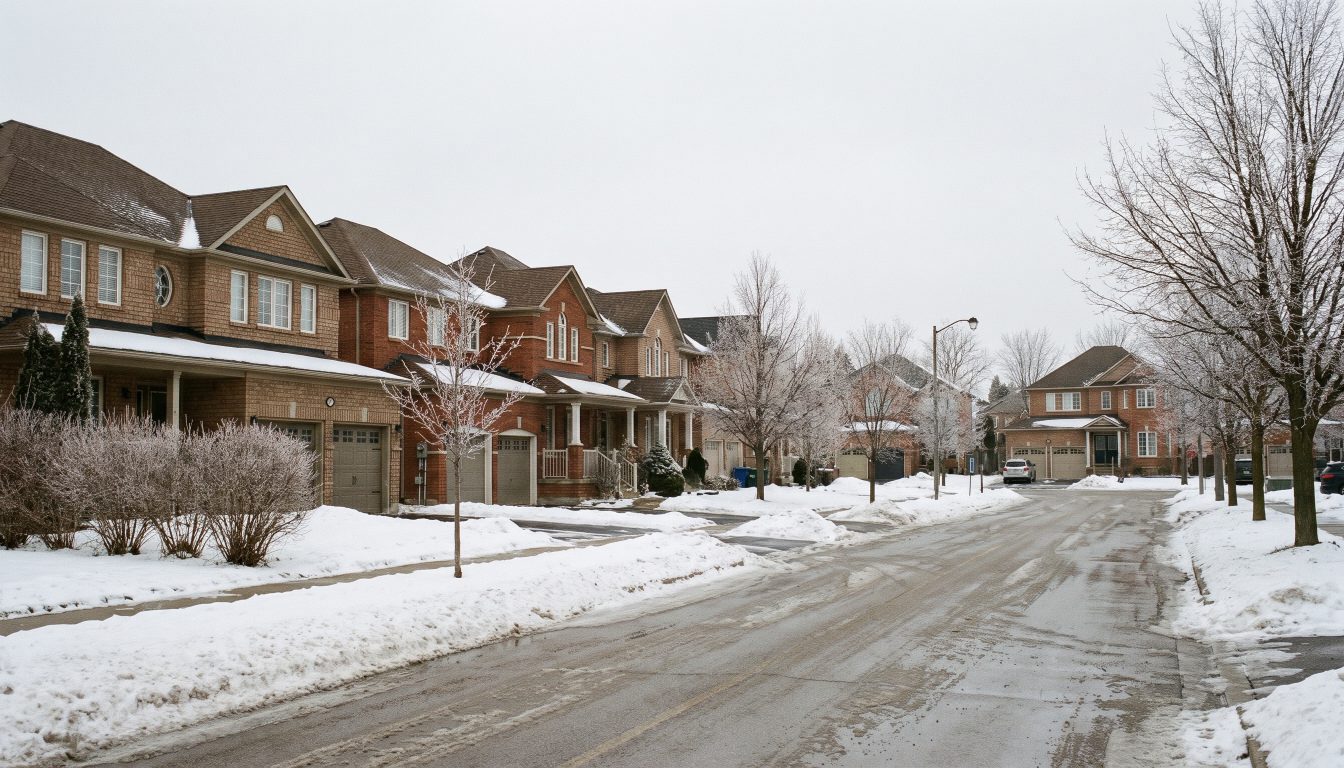
Most GTA houses that sold from January to October 2026 were on the market for about three to four weeks: detached homes averaged 29 days, semis 24 and freehold townhouses 28 (TRREB MLS data via REALM). Add a few weeks to prepare and a negotiated closing, and plan on roughly three to five months from first call to keys.
If you plan to sell a house in Toronto or elsewhere in the GTA in 2027, you need a realistic timeline before you buy your next home, book movers or give notice anywhere. This guide uses TRREB sales data from 2024 to 2026 to show how long detached houses, semis and townhouses actually take to sell, city by city, and how long the whole process takes from your first call to closing day.
How long does it take to sell a house in the GTA right now?
From January to October 2026, detached houses that sold across the GTA spent about 29 days on the market on average. Semi-detached homes averaged about 24 days and freehold townhouses about 28. These are averages for homes that sold, so treat them as a guide, not a promise.
The latest monthly report says the same thing. In October 2026, TRREB reported that detached homes sold in an average of 29 days, semis in 22 and freehold townhouses in 28. Homes of all types sold for about 97% of their final list price on average, which means most buyers were negotiating.
| Home type (GTA) | 2024 | 2025 | 2026 | Sold in 2026 |
|---|---|---|---|---|
| Detached | 21 days | 26 days | 29 days | 23,397 |
| Semi-detached | 17 days | 21 days | 24 days | 4,744 |
| Freehold townhouse | 20 days | 25 days | 28 days | 4,775 |
| Condo townhouse | 25 days | 31 days | 37 days | 3,848 |
| Condo apartment | 31 days | 37 days | 40 days | 13,663 |
Source: TRREB MLS data via REALM, January to October of each year. Average days on market for homes that sold, weighted by sales across every TRREB municipality and City of Toronto district in the data (my calculation, rounded).
Two patterns stand out. Freehold houses still sell faster than condo townhouses and condo apartments in every year shown. And every home type has slowed by about a week since 2024, so a timeline that worked for a friend who sold two years ago is now too short.
Why are GTA houses taking longer to sell than in 2024?
In 2024, a typical GTA detached house sold in about three weeks. In 2026 it took about a week longer. Three things changed.
- Buyers have more choice. TRREB counted 25,098 active listings at the end of October 2026 and about 4.6 months of inventory. When buyers can compare many similar homes, they take their time.
- Buyers are cautious. TRREB said in its October 2026 report that worries about inflation, borrowing costs and the economy kept many buyers on the sidelines. GTA sales were down 7.9% from October 2025.
- Borrowing costs went up. The Bank of Canada raised its policy rate to 2.50% on 28 October 2026, and the big banks moved prime to 4.70%. A buyer with a variable-rate mortgage now qualifies for a little less.
Prices also fell. Detached medians in most GTA cities are 6% to 16% below where they were in 2024. Sellers who price from a 2024 sale wait longer than sellers who price from last month.
Which GTA cities sell houses the fastest and the slowest?
Durham Region was the quickest part of the GTA in 2026. Higher-priced and more rural areas were slower. Every city in the table below got slower than it was in 2024.
| Area | Detached, avg days 2024 | Detached, avg days 2026 |
|---|---|---|
| Whitby | 16 | 23 |
| Ajax | 18 | 23 |
| Oshawa | 17 | 25 |
| Pickering | 18 | 26 |
| City of Toronto (all districts) | 19 | 26 |
| Newmarket | 21 | 27 |
| Burlington | 22 | 29 |
| Markham | 19 | 29 |
| Brampton | 22 | 30 |
| Vaughan | 21 | 30 |
| Mississauga | 22 | 31 |
| Richmond Hill | 25 | 31 |
| Milton | 22 | 32 |
| Aurora | 19 | 32 |
| Oakville | 24 | 33 |
| Caledon | 30 | 40 |
| King | 33 | 47 |
Source: TRREB MLS data via REALM, January to October 2024 and 2026, detached homes only. City of Toronto figure is my sales-weighted average of all 35 TRREB districts.
Inside Toronto the spread is wide. Detached homes in the east-end districts E01 and E02 averaged 14 to 16 days in 2026, while C12, the district around the Bridle Path, averaged 45. For more local detail, see my Toronto selling-time breakdown and the five GTA cities where homes sell fastest.
Instant Home Valuation
What’s your home
worth today?
Answer six quick questions and get an instant value range built from current Toronto & GTA sale data — property type, size, condition, lot and location all weighted the way a real pricing conversation weighs them. Takes about ninety seconds.
Reading recent GTA sale data…
Building your estimate
Estimated market value
—
$0–$0
Most likely value $0 · roughly $0 per square foot
What moved the number
Starting from the area baseline for your property type, here’s what each answer added or subtracted.
Market context
Recent local averages for comparison.
—
A range is a starting point.
A strategy is what sells.
This model doesn’t know that your neighbour’s identical semi went $80,000 over asking last month, or which two upgrades actually pay back in your area. That conversation is free and takes twenty minutes.
Why does selling often take longer than the days-on-market number?
The average you see in reports only counts the listing that sold. TRREB publishes two measures, and the gap between them matters.
- Listing days on market counts the days the final, sold listing was up.
- Property days on market counts the full time the home was for sale, even if it was taken down and listed again during the same contract.
In October 2026 the first number was 31 days across the GTA, but the second was 49. For the year to date it was 32 versus 48. In plain terms, homes that were pulled and relaunched added more than two weeks to the average seller’s real wait.
The averages also leave out homes that never sold. From January to October 2026, TRREB recorded 145,345 new listings and 52,694 sales. New listings include relaunches, so this is not a failure rate, but it shows that plenty of listings end without a deal. If that happens to you, read what happens when a GTA listing expires.
What is the full timeline to sell a house in the GTA, start to finish?
Days on market stop when a deal goes firm. You still have to prepare before that and close after it. Here is how I plan a typical freehold sale.
| Stage | Planning range | What happens |
|---|---|---|
| Price and plan | About 1 week | Pick an agent, review recent sales, set the price and launch date |
| Prepare the home | 1 to 4 weeks | Repairs, cleaning, decluttering, photos, floor plan |
| On the market | About 3 to 6 weeks | Showings, offers, negotiation (GTA detached average was 29 days in 2026) |
| Conditions | Often about 1 week | Buyer’s financing and inspection conditions, if any |
| Closing | Commonly 30 to 90 days | Lawyers transfer title and money; you hand over keys |
| Total | Roughly 3 to 5 months | From first call to closing day |
Source: market time from TRREB MLS data via REALM (January to October 2026). Other stages are my own planning ranges, not official figures. Your closing date is whatever you and the buyer agree in writing.
The closing date is the part you control most. A buyer who has to sell their own home may ask for a long closing. A buyer moving from a rental may want 30 days. My guide on how to pick a closing date covers the trade-offs.
Does the month you list change how long it takes to sell?
Yes. In 2026, the GTA average for homes that sold ranged from 45 days in January to 27 days in May, using TRREB’s monthly listing days on market for all home types. February was 36, March 31, April 29, June 29, July 32, August 35, September 34 and October 31.
Spring is faster because more buyers are looking. It is also more crowded, so a well-priced home stands out more than an average one. If you are weighing a winter listing against a spring one, read sell in December or wait for spring 2027.
How can you sell a house faster in the GTA in 2027?
- Price from the last 60 to 90 days of sales on your street type and home type, not from a 2024 sale or a neighbour’s asking price.
- Know what your home type gets. In October 2026, GTA semis sold at about 101% of list and City of Toronto semis at 102%, while detached homes sold at about 97%. In King, detached homes averaged 92%.
- Launch ready. Fix small defects, clean, and have photos and a floor plan done before day one. In my experience, the first two weeks bring the most showings.
- Make showings easy and answer agents quickly.
- Be flexible on closing if you can. It widens your pool of buyers.
In my view, the first two to three weeks decide most sales. If you have had steady showings and no offers by then, buyers are telling you the price is off. A small change early usually costs less than a bigger cut after the listing goes stale. I would rather set the right price on day one than plan for a reduction.
What if you need to buy your next home before your house sells?
Plan for the slow case, not the average. If the average is 29 days, some homes take 60 or more, and relaunched homes add time that the headline number hides.
Do not sign a firm offer on your next home based on an average days-on-market figure. If your house has not sold by your purchase closing, you may need bridge financing or two mortgages at once, and both cost more after the October 2026 rate hike. Make your purchase conditional on your sale, set a long closing on the purchase, or sell first.
How long should your listing agreement be?
There is no standard length in Ontario. RECO, the real estate regulator, says a representation agreement can run for a day, a few weeks or months, and its expiry date must appear prominently on the first page. Read the holdover clause too, because it can mean you owe commission after the agreement ends. My explainer on the holdover clause covers what to ask.
In my view, a term of about 60 to 90 days fits the 2026 data for most freehold homes. It gives enough time for a launch, a price review and a second push, without locking you in for half a year.
What to do next
- Get a current value for your home based on sales from the last 90 days, not your purchase price or a 2024 sale.
- Check the average days on market for your home type and city in the tables above, then add preparation and closing time.
- Decide whether you will sell first, buy first or make your purchase conditional, before you start looking.
- Pick a launch month and work backwards to set dates for repairs, photos and listing.
- Agree on a listing term and a price review date with your agent before you sign.
Need help with this? Talk to me.
I’m Jatin Dua, Broker of Record at RE/MAX Quantum Realty, and I’m the best agent to do this kind of work for you in Toronto and across the GTA. Over $100 million in GTA sales and 100+ families helped sell. Feel free to contact me any time: call or text 833-330-1925 or email [email protected].
Frequently asked questions
How long does it take to sell a house in the GTA in 2027?
Plan on about three to four weeks on the market for a well-priced house in 2027, based on the latest data. From January to October 2026, GTA detached homes averaged 29 days, semis 24 and freehold townhouses 28 (TRREB MLS data via REALM). Add one to four weeks to prepare and a negotiated closing, usually 30 to 90 days, for a total of roughly three to five months.
What is the average days on market in the GTA in 2026?
In October 2026, GTA homes of all types sold in an average of 31 days, according to TRREB’s Market Watch. The property days on market figure, which includes time on earlier listings that were taken down and relaunched, was 49 days. For January to October 2026 the two figures were 32 and 48 days, so relaunched homes add real time.
Is it taking longer to sell a house in Toronto than last year?
Yes, slightly. Detached houses across the City of Toronto averaged about 26 days on market from January to October 2026, compared with about 23 days in the same period of 2025 and 19 days in 2024 (TRREB MLS data via REALM, my weighted average of all 35 districts). The east-end districts were fastest and the Bridle Path area was slowest.
Which GTA city sells houses the fastest?
Whitby and Ajax sold detached houses fastest in the GTA from January to October 2026, at about 23 days on market each (TRREB MLS data via REALM). Oshawa and Pickering were close behind at 25 and 26 days. King Township was slowest at about 47 days, and Caledon averaged about 40 days.
How long does it take to close on a house in Ontario after an offer is accepted?
There is no fixed closing period in Ontario; the closing date is whatever buyer and seller agree in the offer. Many sales close 30 to 90 days after the deal goes firm, and conditions such as financing or inspection usually come first. A buyer who must sell their own home may ask for a longer closing, so agree on a date that also works for your next move.
What month do houses sell fastest in the GTA?
May was the fastest month in 2026. GTA homes of all types that sold in May averaged 27 days on market, compared with 45 days in January, based on TRREB’s monthly Market Watch reports. April and June were close at 29 days. Spring also brings the most new listings, so pricing matters more then.
How long should I wait before lowering my house price in the GTA?
In my view, review the price after about two to three weeks if you have had showings but no offers. In 2026, GTA detached homes that sold averaged 29 days on market, so a home still unsold after a month is already slower than most. Look at showing numbers and agent feedback before deciding, and make one clear change rather than several small ones.
Does days on market reset when a house is relisted in Ontario?
Yes, the listing days on market count starts again when a home is relisted. TRREB also publishes property days on market, which counts total time for sale across relaunches within the same contract. In October 2026 the GTA averages were 31 and 49 days, so buyers’ agents can usually see when a home has been on the market much longer than its current listing shows.
How long does it take to sell a semi-detached house in Toronto?
Semi-detached houses sold fastest of any home type in Toronto in late 2026. In October 2026, City of Toronto semis sold in an average of 18 days at about 102% of list price, according to TRREB. From January to October 2026, Toronto semis averaged about 20 days on market (TRREB MLS data via REALM).
Sources
- TRREB Market Watch, October 2026
- TRREB news release: Inflation and borrowing costs impacted October GTA real estate market (4 Nov 2026)
- TRREB Market Watch, January 2026
- TRREB Market Watch, May 2026
- RECO: Signing a contract with a real estate brokerage
- Bank of Canada increases policy rate to 2.5% (28 Oct 2026)
Related reading
- Seller Closing Costs in Ontario for 2027: Every Fee Before You Get Paid
- How to Sell a House in Toronto, Step by Step (2027)
- Closing Costs on a New Build in Ontario: What Builders Add
- How Much Is My House Worth in Caledon? (2027)
About the author — Jatin Dua, Toronto and GTA real estate broker
I am Jatin Dua, Broker of Record and co-founder of RE/MAX Quantum Realty Inc., Brokerage, Unit 101, 799 The Queensway, Toronto. I work with buyers and sellers across Toronto and the GTA and have helped more than 100 families sell. Four-plus years of active GTA transactions and over $100 million in sales volume.
Reach me at [email protected] or 833-330-1925, or book a call.