
Published 2 November 2026 · By Jatin Dua, Broker of Record, RE/MAX Quantum Realty
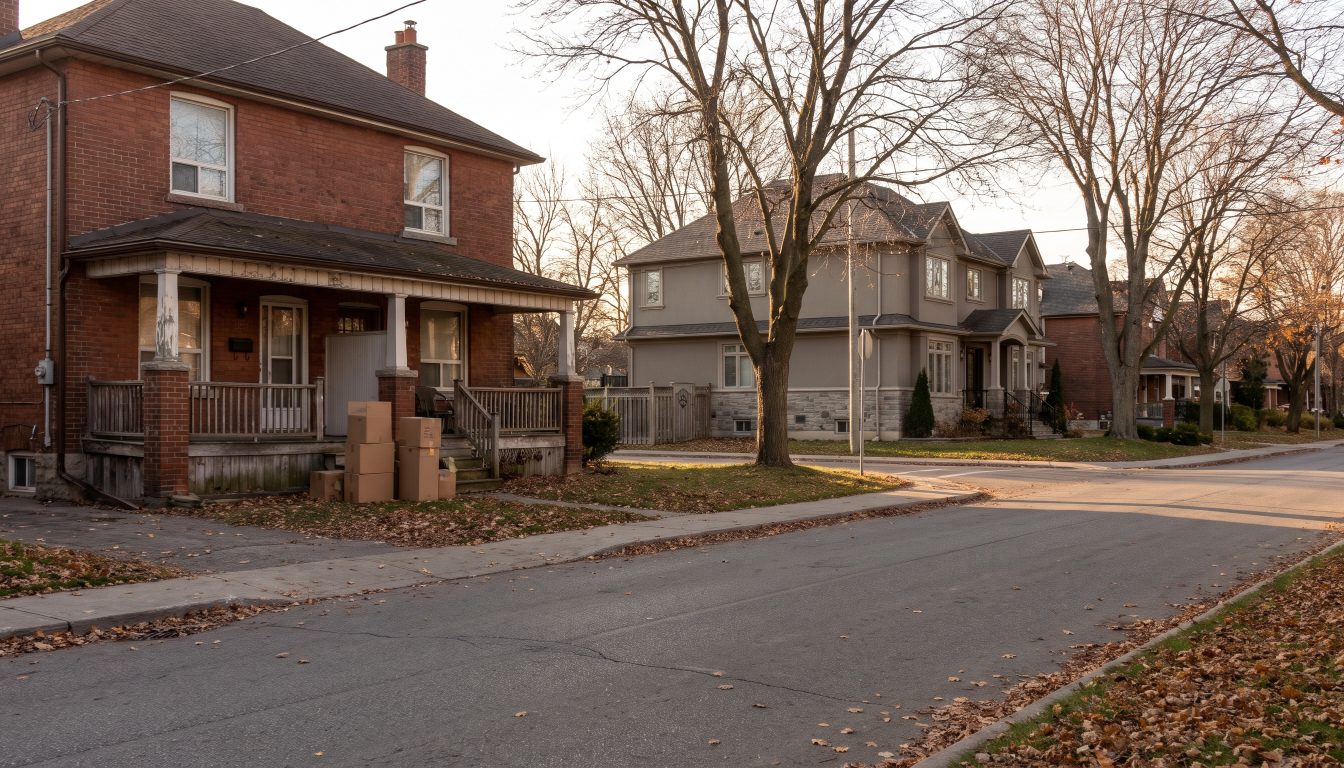
For most GTA move-up buyers in 2027, sell first or sell and buy together with matched closings. Homes averaged 31 days on market with 4.6 months of inventory in October 2026, so selling can take time. Buy first only if you can carry two homes; bridge loans need a firm sale and usually last 90 days to six months.
This guide is for GTA homeowners who want to move up, or move on, in 2027 and have to decide whether to buy the next home or sell the current one first. You will get the 2027 market picture, how the price gap between home types has changed, and the real costs and rules behind each option.
Should I buy first or sell first in 2027?
For most GTA move-up buyers in 2027, my answer is to sell first, or to sell and buy at the same time with closing dates lined up. Buying first makes sense only if you can carry two homes for several months without strain, or if the home you want is rare and you have the equity to cover a slow sale.
RBC’s guide puts the trade-off simply: selling first gives you more financial certainty, while buying first gives you more time to find the right home. In a market where homes take longer to sell, certainty is usually worth more.
What does the 2027 GTA market mean for buying or selling first?
The market heading into 2027 favours patience on the buying side and preparation on the selling side.
- Supply: TRREB counted 25,098 active listings in October 2026, with 4.6 months of inventory across its area. Regions ranged from 3.6 months in Durham to 5.0 months in York.
- Speed: the average home took 31 days to sell, and sold for 97% of its asking price.
- Prices: the average GTA price was $1,024,108, down 2.7% from a year earlier.
- Rates: the Bank of Canada raised its policy rate to 2.50% on 28 October 2026 and said a further increase could be needed. Its next decision is 9 December 2026.
RBC notes that in a buyers’ market, selling first helps you avoid carrying two properties. That is the risk to manage in 2027: not that you cannot find a home, but that your current one takes longer to sell, or sells for less, than you planned.
How has the move-up price gap changed since 2024?
When prices fall, they usually fall on both sides of your move. What matters is the gap between what you sell and what you buy.
| City: selling to buying | Selling median, 2024 to 2026 | Buying median, 2024 to 2026 | Gap in 2024 | Gap in 2026 |
|---|---|---|---|---|
| Brampton: semi to detached | $923,000 to $790,000 | $1,127,250 to $950,000 | $204,250 | $160,000 |
| Mississauga: semi to detached | $999,999 to $885,000 | $1,371,085 to $1,225,000 | $371,086 | $340,000 |
| Markham: freehold town to detached | $1,200,000 to $999,990 | $1,650,000 to $1,420,000 | $450,000 | $420,010 |
| Vaughan: condo apartment to detached | $635,000 to $530,000 | $1,590,000 to $1,415,000 | $955,000 | $885,000 |
| Oakville: freehold town to detached | $1,150,000 to $1,005,000 | $1,763,000 to $1,625,000 | $613,000 | $620,000 |
| Whitby: freehold town to detached | $840,000 to $765,000 | $1,065,000 to $977,000 | $225,000 | $212,000 |
Source: TRREB MLS data via REALM, January–October 2026 vs the same period of 2024. Median sold prices at city level; your own homes may differ.
In five of these six cities, the gap to move up has narrowed. In Oakville it widened slightly, because detached prices held up better than townhouse prices. The point for your plan: whether you sell first or buy first, you are dealing in the same market. A lower sale price is often offset by a lower purchase price, as long as you sell and buy around the same time.
What happens if I sell first?
The advantages
- You know exactly how much money you have before you shop.
- You avoid two mortgages, two sets of property tax and two sets of utilities.
- Your offer on the next home can be firm or close to it, which sellers like.
The risks, and how to handle them
- Nowhere to go: RBC flags the cost of temporary housing, storage and moving twice if dates do not line up. Ask for a longer closing date on your sale to give yourself time to buy.
- Prices rise while you look: possible, but in a market with four to five months of supply it is a smaller risk than in 2021 or 2022.
- A rent-back: some buyers will let you stay after closing and pay rent. See how a sale and rent-back works in Ontario.
Instant Home Valuation
What’s your home
worth today?
Answer six quick questions and get an instant value range built from current Toronto & GTA sale data — property type, size, condition, lot and location all weighted the way a real pricing conversation weighs them. Takes about ninety seconds.
Reading recent GTA sale data…
Building your estimate
Estimated market value
—
$0–$0
Most likely value $0 · roughly $0 per square foot
What moved the number
Starting from the area baseline for your property type, here’s what each answer added or subtracted.
Market context
Recent local averages for comparison.
—
A range is a starting point.
A strategy is what sells.
This model doesn’t know that your neighbour’s identical semi went $80,000 over asking last month, or which two upgrades actually pay back in your area. That conversation is free and takes twenty minutes.
What happens if I buy first?
Buying first gives you time to find the right home, but it means you are a forced seller once you close on the new one. RBC warns that if your current home takes longer to sell, you may need two mortgages and pay two sets of bills, assuming you can be approved for both.
Before you buy first, run three numbers:
- Carrying cost: two mortgage payments, property taxes, insurance and utilities for three to six months.
- Lowest acceptable sale price: what your current home would sell for if you had to sell in 30 days, not your hoped-for price.
- Cash for the down payment: where it comes from if your equity is still tied up in the old house.
The Toronto vacant home tax trap
If your old home is in Toronto and sits empty for six months or more in a year, it can be treated as vacant. The City’s Vacant Home Tax is 3% of the property’s assessed value. There is an exemption when ownership is fully transferred and the closing date falls in that tax year, but an empty home that has not closed by year-end may not qualify. You must still file a declaration by 30 April. I explain this in detail in buying before you sell in Toronto and the vacant home tax.
How does bridge financing work in Ontario?
A bridge loan is short-term financing that lets you use the equity in your current home for the down payment on the next one, when the purchase closes before the sale. The key requirement: your current home must already be sold firm.
- RBC says bridge loans typically run six months, ranging from 90 days to 12 months or longer, and require a firm sale agreement.
- TD describes bridge financing as typically covering up to 90 days, and needs both the sale and purchase agreements plus approval on the new home.
- RBC notes that bridge loan rates tend to be higher than mortgage rates, and terms vary widely.
So a bridge loan solves a timing gap between two firm deals. It does not help if your home has not sold yet. My guide to bridge financing in Ontario covers costs and alternatives.
Do not buy first assuming a bridge loan will save you if your home does not sell. Without a firm sale, most lenders will not offer one. If your old home is still unsold when the new one closes, you need approval to carry both mortgages, or you may be forced to accept a low offer. Get that approval in writing before you firm up a purchase.
Can I make my offer conditional on selling my house?
Yes. RECO’s buyer checklist lists the sale of your existing home as one of the conditions you can include in an offer. It protects you: if your house does not sell by the deadline, you can walk away.
The catch is that many sellers do not like this condition, because their home is tied up while you sell yours. It works best:
- on homes that have been on the market a while, where the seller has few other offers;
- when your home is already listed, priced right and getting showings;
- with an escape clause, which lets the seller keep marketing and gives you a short window to firm up if another offer arrives.
In a slower 2027 market, more sellers may accept it than during the bidding-war years, but expect to give something in return, such as price or a flexible closing date.
Can I take my mortgage with me when I move up?
Often, yes. CMHC describes portability as an option to move your mortgage to another home with little or no penalty when you sell, and says mortgage loan insurance can also be transferred. If your current rate is lower than today’s rates, porting can be worth a lot, especially after the October 2026 rate hike.
Portability has rules: each lender sets its own time limit between the sale and the purchase, and any extra money you borrow is usually at current rates. Ask your lender for the porting terms in writing before you choose sell-first or buy-first, because the time limit may decide it for you. See porting your mortgage when you move.
What is the safest way to line up two closings?
- Get pre-approved for the purchase and confirm your porting and bridge options before you list.
- List your home first and aim for a firm sale with a long closing date.
- Shop seriously once your sale is firm, and set the purchase closing a few days after your sale closes, or use a bridge loan if it must close first.
- Keep a backup plan for housing and storage, as RECO’s checklists suggest, in case a date slips.
In 2027 I would rather see clients sell first with a long closing than buy first and hope. The market is giving buyers time, which means you can usually find the next home within a sensible closing window. The families who get hurt are the ones carrying two homes while their first one sits. If you do buy first, decide your walk-away sale price before you sign, and stick to it.
What to do next
- Get a value for your current home with the estimator on this page, then a written market analysis.
- Ask your lender about porting, bridge financing and whether you qualify to carry two mortgages.
- Work out your carrying costs for three to six months and your lowest acceptable sale price.
- Decide sell-first or buy-first before you see any homes, and tell your agent.
- If your home is in Toronto, plan around the vacant home tax rules and the 30 April declaration.
Need help with this? Talk to me.
I’m Jatin Dua, Broker of Record at RE/MAX Quantum Realty, and I’m the best agent to do this kind of work for you in Toronto and across the GTA. Over $100 million in GTA sales and 100+ families helped sell. Feel free to contact me any time: call or text 833-330-1925 or email [email protected].
Frequently asked questions
Should I buy or sell first in the GTA in 2027?
For most GTA homeowners in 2027, selling first, or selling and buying together with matched closing dates, is the safer choice. TRREB reported 4.6 months of inventory and 31 average days on market in October 2026, so homes take time to sell. Buying first can work if you can carry two homes for several months or have approval for a bridge loan.
Can I buy a house before selling mine in Ontario?
Yes, you can buy a house before selling yours in Ontario, but you need a lender to approve you for both mortgages unless your current home is already sold firm. If it has sold, a bridge loan can cover the gap between closings. Without a firm sale, you risk carrying two homes, two sets of bills and a forced sale.
How long can a bridge loan be in Canada?
Bridge loans in Canada are short. RBC says its bridge loans typically run six months and can range from 90 days to 12 months or longer. TD describes bridge financing as usually covering up to 90 days. Both require a firm sale agreement on your current home, and bridge loan rates tend to be higher than regular mortgage rates.
Can I make an offer conditional on the sale of my house in Ontario?
Yes. RECO lists the sale of your existing home as a condition buyers can include in an Ontario offer. If your home does not sell by the deadline, you can walk away. Sellers often add an escape clause so they can keep marketing, and in a slower 2027 market more sellers may accept the condition, usually in return for a better price or terms.
What happens if my house does not sell after I buy a new one?
If your house does not sell before your new purchase closes, you must close anyway, carrying both mortgages if your lender approved it. Without that approval, you may need private financing or have to accept a lower offer. In Toronto, a home left empty for six months or more in a year may also face the 3% Vacant Home Tax.
Does the vacant home tax apply if I buy first and my old Toronto house is empty?
It can. Toronto’s Vacant Home Tax is 3% of assessed value and applies to homes vacant for six months or more in a year. There is an exemption when ownership is fully transferred with a closing date in that tax year. If your old home sits empty and has not closed by year-end, file your declaration by 30 April and check the exemptions.
Can I port my mortgage when I move up to a bigger house?
Often, yes. CMHC describes portability as moving your mortgage to a new home with little or no penalty when you sell, and says mortgage loan insurance can be transferred too. Each lender sets its own porting rules and time limits, and any extra amount you borrow is usually at current rates. Get your lender’s terms in writing before you list.
Is it easier to move up in the GTA in 2027 than in 2024?
In many GTA cities, the price gap to move up has narrowed. In Brampton, the gap between median semi and detached prices fell from $204,250 in 2024 to $160,000 in 2026, based on TRREB MLS data via REALM for January to October. Oakville was an exception, where the townhouse-to-detached gap widened slightly. Rising rates can offset some of that gain.
Sources
- TRREB Market Watch, October 2026
- Bank of Canada: policy rate decision, 28 October 2026
- RBC Royal Bank: Should you buy or sell your home first?
- RBC Royal Bank: Bridge financing
- TD Canada Trust: Bridge financing
- RECO: Buyer’s checklist
- CMHC: Homebuying Step by Step guide (portability)
- City of Toronto: Vacant Home Tax
Related reading
- Seller Closing Costs in Ontario for 2027: Every Fee Before You Get Paid
- How to Sell a House in Toronto, Step by Step (2027)
- Closing Costs on a New Build in Ontario: What Builders Add
- How Much Is My House Worth in Caledon? (2027)
About the author — Jatin Dua, Toronto and GTA real estate broker
I am Jatin Dua, Broker of Record and co-founder of RE/MAX Quantum Realty Inc., Brokerage, Unit 101, 799 The Queensway, Toronto. I work with buyers and sellers across Toronto and the GTA and have helped more than 100 families sell. Four-plus years of active GTA transactions and over $100 million in sales volume.
Reach me at [email protected] or 833-330-1925, or book a call.