Published 2 November 2026 · By Jatin Dua, Broker of Record, RE/MAX Quantum Realty
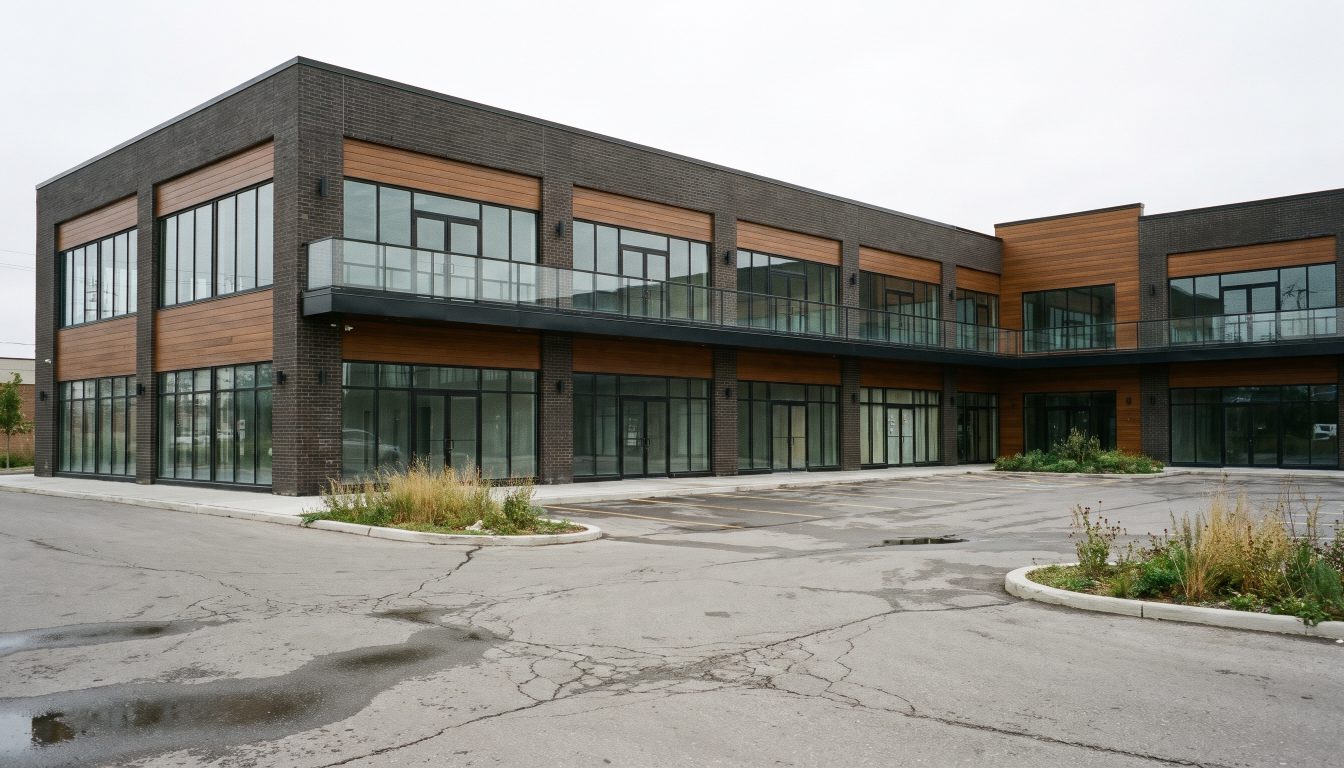
You can buy a commercial condo unit for a dental clinic in the GTA, but the condo declaration and rules must allow it, not just the zoning. Check for use restrictions and dental exclusives, get board approval for work on common elements, insure your own build-out, and settle the HST before you sign. Banks such as TD advertise up to 100% financing.
This guide is for GTA dentists who have decided to buy rather than lease, and are looking at a commercial condo unit in a plaza or medical building. You will learn what to read in the condo documents, how renovations and insurance work in a condo, what closing really costs, and how banks lend on these units.
Can you buy a commercial condo unit for a dental clinic in the GTA?
Yes. Many GTA plazas, office buildings and medical buildings are registered as commercial condominiums, so units can be bought one at a time. When you buy one, you own the unit and a share of the common elements, such as the roof, the parking lot, the main drains and the lobby.
That means three sets of rules apply to your clinic, not one:
- The city’s zoning, which must list a dental or medical use for that property.
- The condo declaration, which under Ontario’s Condominium Act may set conditions or restrictions on how units are used and occupied.
- The condo rules, which the board can make to protect safety and prevent unreasonable interference with other owners.
The Condominium Act says every owner and occupier must comply with the Act, the declaration, the by-laws and the rules. So a unit can pass zoning and still be off limits for a dental practice because of the condo documents.
If you are still deciding whether to own at all, read my guide to buying versus leasing a dental office in the GTA first. This post assumes you are buying.
What should a dentist look for in a commercial condo declaration?
Read the use section line by line. These are the clauses I check first for a dental buyer:
- Permitted uses. Some declarations list allowed uses, or ban some, unit by unit. Look for medical, dental or clinic wording, and for any ban on uses that create noise, odour or after-hours traffic.
- Exclusive use rights. A declaration can give one unit the exclusive right to run a certain business, including a dental clinic. If another unit holds a dental exclusive, you may not be able to open at all.
- Who can waive an exclusive. Check whether the owner, the tenant or the board can consent to a competing use, and for how long.
- Maintenance and repair. The declaration can allocate who maintains and repairs which parts of the unit and common elements. Dental plumbing, rooftop HVAC and exhaust lines often run through common elements.
- Signage, hours and parking. Look for limits on signs, evening and weekend access, and whether parking spaces are assigned or shared.
Exclusive rights are not theory. In a 2021 Ontario Superior Court case (2021 ONSC 2707), a commercial condo declaration gave one unit an exclusive right to operate a dental clinic. A dentist who leased that unit bought the unit next door, moved his practice and used the tenant’s consent right to allow himself to compete. According to a Miller Thomson summary of the decision, the court held that the consent only lasted while he remained the tenant, and that the court reads a declaration the way a reasonably well-informed owner would. The lesson for a buyer: read the exclusive, and know who controls it.
Can you renovate a commercial condo unit into a dental office?
Usually, but you need more than a contractor. A dental build-out adds sinks in every operatory, a sterilization area, compressed air, suction, x-ray shielding and often new HVAC. Inside your unit, the declaration and the city’s permits set the limits. The moment the work touches the common elements, the Condominium Act applies.
Under section 98 of the Act, an owner may change the common elements only if the board approves it by resolution and the owner and corporation sign an agreement. That agreement sets out who pays, and who is responsible for repair, maintenance and insurance of the change. Common examples in a dental fit-out are coring through the slab for drains, adding a rooftop unit, venting a vacuum pump outside or adding exterior signs.
Build the board’s approval into your timeline and your offer. My post on dental office build-out costs in the GTA covers budgets and timelines. The dental-specific approvals, such as x-ray plan approval, are in my guide to dental office space in Ontario.
What does a status certificate show for a commercial unit?
The status certificate is the condo corporation’s official snapshot of the unit and the building. Under section 76 of the Condominium Act it must include, among other things:
- the common expenses for the unit and any arrears;
- any increase in common expenses since the budget, and any special assessment for the reserve fund;
- the most recent reserve fund study and the current reserve fund balance;
- outstanding judgments and legal actions involving the corporation;
- copies of the declaration, by-laws, rules, budget and audited financial statements;
- current agreements, including section 98 agreements for the unit, and the insurance certificates.
The corporation must deliver it within 10 days of the request and payment. Under Ontario Regulation 48/01, the fee cannot exceed $100 including taxes. The certificate binds the corporation as of its date, in favour of a buyer or lender who relies on it.
For a dental buyer, I look hardest at the reserve fund and any planned major work, because roof, parking lot and HVAC projects in an older plaza can mean a special assessment. My post on reading a status certificate like a buyer’s lawyer was written for homes, but the same red flags apply.
Want a quick range for what a clinic unit like this could sell or rent for? Try the estimator below.
Who insures your dental build-out in a condo unit?
You do, in most cases. Section 99 of the Condominium Act requires the corporation to insure the units and common elements against major perils such as fire, smoke and water escape. But the same section says that duty does not include improvements made to a unit. What counts as an improvement is measured against a “standard unit”, which the corporation describes in a by-law or in a schedule to the declaration.
In a commercial building, the standard unit is often a bare shell. So the walls, cabinetry, plumbing, operatory chairs and imaging you add may be yours alone to insure. Ask for the standard unit by-law and the corporation’s insurance certificate, and give both to your insurance broker before you waive conditions.
What does it cost to close on a commercial condo unit in the GTA?
Beyond the price, budget for land transfer tax, HST, property tax at commercial rates and legal costs. The table uses a $900,000 unit in the City of Toronto as an example.
| Cost | Rule | Example: $900,000 unit in Toronto |
|---|---|---|
| Ontario land transfer tax | 0.5% to $55,000, 1% to $250,000, 1.5% to $400,000, 2% above; the extra 2.5% tier applies only to homes | $14,475 |
| Toronto municipal land transfer tax | Same brackets for properties that are not one or two single-family homes | $14,475 |
| HST on the purchase | Commercial property is generally taxable; a registered buyer self-assesses instead of paying the seller | 13% of the price is $117,000; how much you can recover depends on use |
| Property tax | 2026 Toronto total commercial rate 2.301986%, residential 0.767311% | About $11,510 a year for every $500,000 of assessed value |
| Status certificate | Capped at $100 including taxes | $100 |
Source: Ontario Ministry of Finance land transfer tax rates; City of Toronto MLTT rates and 2026 property tax rates; CRA GST/HST Memorandum 19.4.1; O. Reg. 48/01. Outside Toronto, only the Ontario tax applies. Confirm HST with your accountant.
The HST point dentists cannot skip
CRA’s Notice 339 says dental services are exempt supplies, and that no input tax credit is allowed on capital real property used 10% or less in commercial activities. A dentist who buys a unit and uses it only for dental care may not recover the HST. Owning through a separate company that rents to the practice changes who pays HST and when. That is a question for your accountant before you sign. Toronto also offers a small business tax subclass that reduces the commercial rate by 20% for eligible properties, so ask whether the unit qualifies.
On a resale commercial unit, HST is usually not added to the price on the agreement, because a registered buyer self-assesses it. That makes it easy to forget until your accountant files. On a $900,000 unit, an unrecoverable 13% is a six-figure cost. Make sure the agreement, your corporate structure and your HST registration are settled before the deal goes firm.
How do banks finance a commercial condo unit for a dental practice?
The big banks lend to dentists on owner-occupied space on generous terms. TD’s healthcare banking page advertises up to 100% loan-to-value on owner-occupied commercial real estate, with a 25-year amortization. CIBC’s dental financing page says banks can often finance up to 100% of the building the clinic occupies “so long as affordability is evident”, over up to 25 years, fixed or variable.
“Up to” is a ceiling. TD says approval depends on its lending criteria, including good personal credit, and that personal guarantees may be required. In my experience, the lender will also want the status certificate and may order its own appraisal. If you are also buying or building the practice, expect the bank to look at both loans together. My guide to financing a dental practice purchase in Canada covers the practice loan side.
Who should own the unit, and what happens when you sell the practice?
Decide this with your lawyer and accountant before the offer, because the name on the offer usually becomes the name on title. Two RCDSO points shape the answer. The College says a dentistry professional corporation’s activities are limited to dentistry and related ancillary activities. It also says holding companies may not own shares in a dentistry professional corporation. That is why many dentists hold their unit personally or in a separate company and rent it to the practice.
The choice matters later. If your practice corporation owns the unit, a buyer of your shares may also be buying the real estate, and the real estate affects whether the shares qualify for the lifetime capital gains exemption. If you own it separately, you can sell the practice and keep the unit as a rental, or sell both. My post on selling a dental practice and the tax rules explains the share tests.
A good commercial condo unit can be a better long-term home for a practice than a lease, because no landlord can relocate you or decline to renew. But the condo documents decide almost everything. I make every dental offer conditional on the lawyer’s review of the status certificate and declaration, on written zoning confirmation, and on the board’s approval of the key build-out items. A buyer who waives those to win a unit takes on risks that are hard to fix later.
What to do next
- Ask for the declaration, rules and the most recent reserve fund study before you make an offer, and look for use restrictions and exclusives.
- Confirm with the city, in writing, that a dental or medical use is permitted at the address.
- Have your accountant decide the ownership structure and settle the HST question before you sign.
- Make the offer conditional on the status certificate review, financing, insurance and board approval of the build-out.
- Book a call with me. I search MLS and off-market owners for commercial condo units where a dental clinic is permitted, and I negotiate the conditions above into the deal.
Need help with this? Talk to me.
I’m Jatin Dua, Broker of Record at RE/MAX Quantum Realty, and I’m the best agent to do this kind of work for you in Toronto and across the GTA. Over $100 million in GTA sales and 100+ families helped sell. Feel free to contact me any time: call or text 833-330-1925 or email [email protected].
Frequently asked questions
Can I buy a commercial condo unit for a dental office in Ontario?
Yes, as long as the city’s zoning and the condo’s own documents both allow a dental use. Under Ontario’s Condominium Act, a declaration may restrict how units are used, and every owner and occupier must comply with the declaration, by-laws and rules. Ask for the declaration before you make an offer, and make the deal conditional on your lawyer’s review.
What is an exclusive use clause in a commercial condo?
It is a clause that gives one unit the sole right to run a certain type of business in the building. In a 2021 Ontario Superior Court case, 2021 ONSC 2707, a commercial condo declaration gave one unit an exclusive right to operate a dental clinic. If another unit already holds a dental exclusive, you may not be able to open a practice in that building.
Do I need condo board approval to renovate a dental office unit?
Yes, for any work that changes the common elements. Under section 98 of Ontario’s Condominium Act, an owner may alter the common elements only if the board approves by resolution and the owner signs an agreement covering cost, repair, maintenance and insurance. In a dental fit-out, drains through the slab, rooftop HVAC and exterior signs often need this.
How much does a status certificate cost for a commercial condo in Ontario?
No more than $100 including taxes. Ontario Regulation 48/01 caps the fee, and the Condominium Act requires the corporation to deliver the certificate within 10 days of the request and payment. It must show the unit’s common expenses, any special assessments, the reserve fund study and balance, legal actions, insurance and copies of the declaration, by-laws and rules.
Is HST charged on a commercial condo unit in Ontario?
Generally yes. CRA says a sale of commercial real property is usually taxable, and a registered buyer self-assesses the HST instead of paying it to the seller. Dentists face a catch: CRA’s Notice 339 says dental services are exempt, so a unit used almost entirely for dental care may not qualify for input tax credits. Confirm the structure with your accountant first.
Does condo insurance cover my dental build-out?
Usually not. Section 99 of Ontario’s Condominium Act requires the corporation to insure units and common elements against major perils, but not improvements made to a unit. Improvements are measured against a standard unit described in a by-law or the declaration, and in commercial buildings that is often a bare shell. Insure your walls, cabinetry, plumbing and equipment yourself.
What is the property tax rate on a commercial condo in Toronto in 2026?
The total 2026 commercial property tax rate in Toronto is 2.301986%, compared with 0.767311% for residential property. That works out to about $11,510 a year for every $500,000 of assessed value. Toronto also has a small business tax subclass that cuts the commercial rate by 20% for eligible properties, so ask whether the unit qualifies.
Can a dentist get 100% financing on a commercial condo unit?
Some banks advertise it. As of November 2026, TD’s healthcare banking page offers up to 100% loan-to-value and a 25-year amortization on owner-occupied commercial real estate, and CIBC says banks can often finance up to 100% of a clinic building if affordability is evident. Approval depends on credit, practice income and the unit, and personal guarantees may be required.
Should my dental professional corporation own the condo unit?
Not always, so get advice first. The RCDSO says a dentistry professional corporation is limited to dentistry and related ancillary activities, and that holding companies may not own its shares. Many dentists hold the unit personally or in a separate company that rents to the practice. The right choice depends on financing, HST and how you plan to sell later.
Sources
- Condominium Act, 1998, S.O. 1998, c. 19 (sections 7, 58, 76, 98, 99, 119)
- O. Reg. 48/01 under the Condominium Act (status certificate fee)
- Miller Thomson via Legal 500: Condo declaration can limit uses of a unit (2021 ONSC 2707)
- CRA GST/HST Memorandum 19.4.1, Commercial Real Property: Sales and Rentals
- CRA GST/HST Notice 339, Input Tax Credits Related to Dental Practices
- Ontario Ministry of Finance: Calculating land transfer tax
- City of Toronto: Municipal Land Transfer Tax rates and fees
- City of Toronto: Property tax rates and fees (2026)
- TD: Banking for healthcare professionals
- CIBC: Dental practice financing
- RCDSO: Health Profession Corporations
Related reading
- Where Can You Open a Dental Clinic in the GTA? Zoning by City (2027)
- Selling Your Dental Practice, Your Building, or Both: Options for Ontario Dentists in 2027
- The Canadian Dental Care Plan in 2027: What It Means for Buying, Selling or Opening a GTA Dental Practice
- From Associate to Owner: How GTA Dentists Buy or Start Their First Practice in 2027
About the author — Jatin Dua, Toronto and GTA real estate broker
I am Jatin Dua, Broker of Record and co-founder of RE/MAX Quantum Realty Inc., Brokerage, Unit 101, 799 The Queensway, Toronto. I work with buyers and sellers across Toronto and the GTA and have helped more than 100 families sell. Four-plus years of active GTA transactions and over $100 million in sales volume.
Reach me at [email protected] or 833-330-1925, or book a call.
More from the library
- Buying a Mortgage Brokerage in Ontario: The FSRA Licence, the Principal Broker and What Actually Transfers
- Butcher Shop and Halal Meat Store Premises in Ontario: Meat Rules, Coolers and the Lease
- Buying a Daycare in Ontario: The Licence Does Not Transfer
- Insuring a Luxury Home in Toronto: Why the Quote Comes Back Strange
- Sell and Rent in Retirement? The Numbers for Toronto Homeowners
- King+ Condos, 39 Sherbourne St: A Glass Tower on an 1861 Hotel Facade
How this estimate is produced
The estimate blends recent selling prices for comparable units in the area with the details you entered: size, bedrooms, floor, exposure, parking, locker and condition. It is a statistical estimate, not an appraisal and not a formal opinion of value.
What it cannot see
- Interior condition and upgrades beyond what you told it
- Unit-specific issues: noise, an obstructed view, a pending special assessment
- Your reserve fund and where the maintenance fee is heading
- What is competing with you in your own building right now
What moves the number most
- Floor and exposure, which can separate otherwise identical units
- Parking and locker, each priced separately by buyers
- Kitchen and bathroom condition
- Maintenance fee per square foot against the rest of the building
Treat it as a range, not a price
A single figure to the dollar would be false precision. Use the estimate to decide whether a move is worth exploring. Before you price anything for the market, the number needs checking against what is actually selling and sitting in your building this month, and that takes a person. I will do that for you at no cost and with no obligation.
Market data is sourced from the Toronto Regional Real Estate Board. Information is deemed reliable but is not guaranteed. This tool does not provide an appraisal or a formal opinion of value, and it is not a substitute for advice on your specific property. Jatin Dua, Broker of Record, RE/MAX Quantum Realty.