Published 2 November 2026 · By Jatin Dua, Broker of Record, RE/MAX Quantum Realty
What's Your Home Worth Right Now?
Get a free AI-powered price range for your property in under 90 seconds, based on recent GTA comparable sales. No name or address required.
Get My Free Estimate →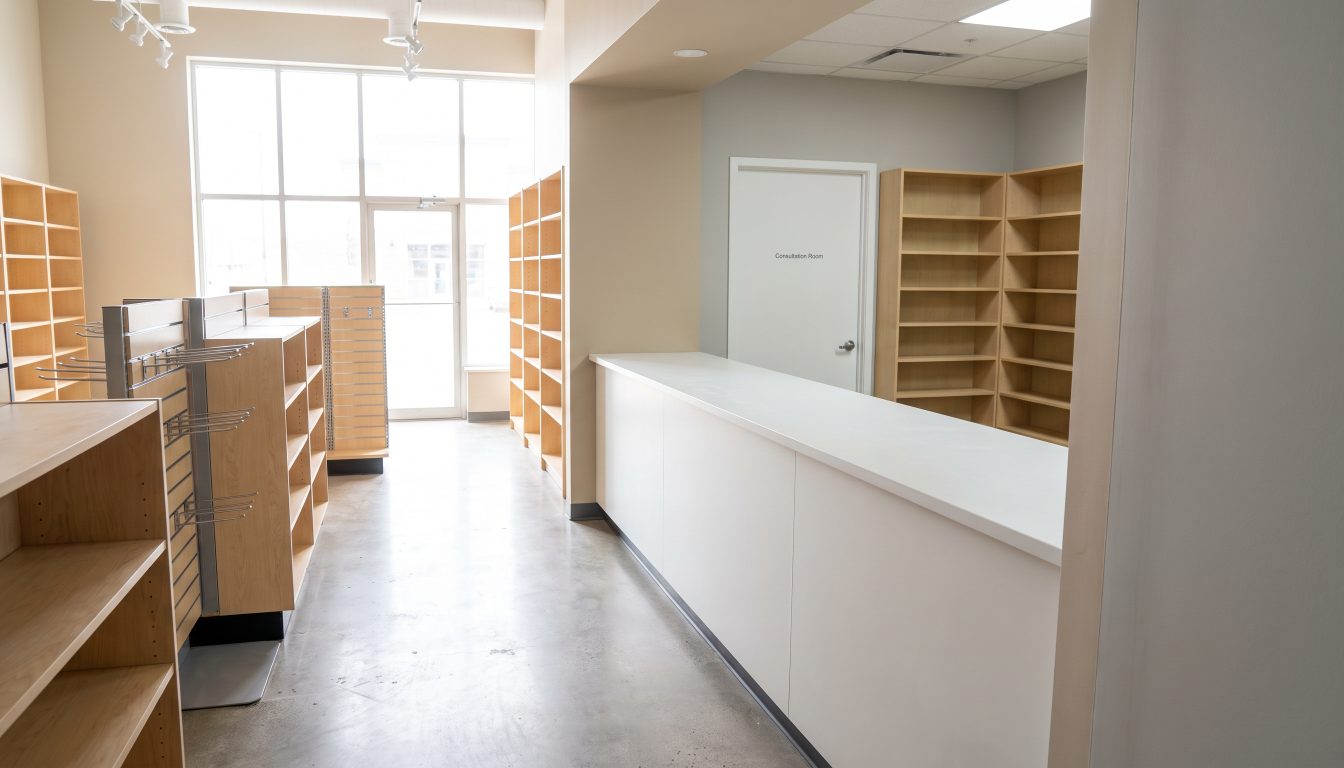
To open a new pharmacy in Ontario, set up a pharmacist-controlled owner, secure a properly zoned unit that meets OCP minimums, and file a complete College application before construction and at least 45 days before opening. The 2027 application fee is $779.85 plus HST. Register separately with the Ministry for ODB billing, and open on a weekday.
This guide is for pharmacists planning to open a brand-new pharmacy in Ontario in 2027, not to buy an existing one. You will get the steps in order, the Ontario College of Pharmacists (OCP) fees for 2027, a realistic timeline, and how to get set up to bill the Ontario Drug Benefit (ODB) program on day one.
How do you open a new pharmacy in Ontario?
In short, you need an eligible owner, a suitable and properly zoned unit, an accreditation from the College, and a billing account with the Ministry of Health. The College says a new pharmacy cannot open to the public until it is accredited, and both the applicants and the pharmacy must meet the Drug and Pharmacies Regulation Act (DPRA) and its regulations.
The order matters. You choose the site and structure the company first, file the College application before construction starts, build, pass an assessment, then open on a weekday. Most delays I see come from doing these steps out of order, such as signing a firm lease and starting construction before the floor plan has gone to the College.
My role here is the real estate. I find units where a pharmacy is permitted, check zoning and size, and negotiate the lease. I am not a lawyer, accountant or regulator, so confirm the corporate, tax and College points with those professionals.
Who can own a new pharmacy in Ontario?
Under the DPRA, only a pharmacist or a corporation that meets the Act’s tests may own or operate a pharmacy. A corporation needs a majority of pharmacist directors, and a majority of each class of shares owned by pharmacists or by pharmacist health profession corporations. Every pharmacy also needs a pharmacist named as its designated manager.
The College also reviews the people behind the application. It assesses whether each applicant’s past and present conduct gives reasonable grounds to believe the pharmacy will be run with decency, honesty and integrity and in line with the law. It says it will take whatever time it needs for that review, so a proposed opening date can move. Have a lawyer set up the corporation and share structure before you apply.
Where can a new pharmacy go? Zoning and the unit
Start with zoning. In Toronto’s city-wide Zoning By-law 569-2013, I did not find a separate definition for a pharmacy. A pharmacy usually falls under “retail store”, defined as premises where goods or commodities are sold, rented or leased. Whether retail is permitted depends on the zone, and some employment and office zones limit it. Always confirm the use on the specific property with the city before you firm up a lease. My guide to the change of use permit explains when a permit is needed even without construction.
Then check the unit against the College’s numbers: at least 200 sq ft (18.6 m²) of accredited area, a dispensary of at least 100 sq ft (9.3 m²), two sinks in the dispensary, a dedicated drug fridge and an acoustically private consultation area, among others. My guide to Ontario pharmacy premises requirements goes through each one and what it means for the lease.
What goes into the OCP application?
The College’s opening page lists what a complete application includes:
- The Application for Certificate of Accreditation as a Community Pharmacy, with the application fee.
- Proof of enrolment in the Incident Management Platform.
- A Declaration of Good Character for every pharmacist director of the operating corporation.
- Articles of incorporation and share certificates, if the corporation has never operated a pharmacy in Ontario.
- A floor plan showing the total accredited area, the dispensary area, both dispensary sinks, the consultation room or area, and any compounding area and hood, or “no compounding”. If the pharmacy is inside a larger space, the plan must show how the accredited part is kept secure and separate.
The application must be complete before construction starts and at least 45 days before your proposed opening date.
How long does it take to open a pharmacy in Ontario?
From signing a conditional lease to opening, plan in months, not weeks. The College’s 45 days is a minimum from a complete application, and the build-out and the Ministry’s billing set-up run alongside it.
| Step | When | What to know |
|---|---|---|
| Confirm zoning and size; sign a conditional lease | First | Make the lease conditional on zoning and College timing |
| Set up the corporation and choose the designated manager | Before applying | Majority pharmacist directors and shares |
| File a complete OCP application with floor plan | Before construction and at least 45 days before opening | The College’s review time varies |
| Send the ODB registration package to the Ministry | As early as possible | Processing takes several business days after all paperwork arrives |
| Build out the space | After the application is filed | Later layout changes count as renovations needing College approval |
| Accreditation assessment | After approval, before opening | The pharmacy must be ready to open that day |
| Opening day | A weekday | ODB is closed on weekends |
| Follow-up (callback) assessment | About 3 to 6 months after opening | Uses the full assessment criteria |
| Annual renewal | On or before 10 May each year | Renewal fee applies |
Source: OCP, Opening a Community Pharmacy; OCP, Checklist for Opening a New Pharmacy (October 2025); Ontario Ministry of Health, Ontario Drug Programs Reference Manual (revision 17, August 2026). Timing is general; confirm your own dates with the College and the Ministry.
Want to compare the cost of leasing a unit with buying one before you commit? The estimator below gives a quick range.
How much does it cost to open a pharmacy in Ontario?
The College’s own fees are modest next to rent, build-out and inventory, but they are fixed and public. Here are the 2027 amounts from its schedule of fees, before 13% HST:
| OCP fee | 2027 amount (before HST) |
|---|---|
| Application fee (opening, relocation, acquisition, amalgamation) | $779.85 |
| New pharmacy opening, issuance between 10 May and 9 November | $1,170.40 |
| New pharmacy opening, issuance between 10 November and 9 May | $585.20 |
| Annual community pharmacy renewal | $1,466.10 |
| Reinspection | $1,559.75 |
| Missed or late-cancelled assessment | $643.60 |
| Health profession corporation, certificate of authorization application | $1,559.75 |
Source: Ontario College of Pharmacists, Schedule of Fees (2027 column). All fees are non-refundable and subject to HST.
Notice the issuance fee is half as much if your certificate is issued between 10 November and 9 May. That alone should not drive your opening date, but it is worth knowing.
The large costs are rent, leasehold improvements, fixtures, the pharmacy software system, opening inventory and working capital until volume builds. I have not found a reliable public figure for a typical Ontario start-up, so get real quotes from contractors and your wholesaler. As one published reference point, the Canadian Franchise Association’s directory lists Medicine Shoppe Canada with an investment of $175,000 to $200,000 and a franchise fee of $6,000 to $25,000. On financing, Scotiabank says it offers approved applicants up to 100% financing through its professional plan. Read the lease carefully too, because the landlord’s contribution to the build-out can change your numbers a lot. My commercial lease clauses guide covers allowances and fixturing periods.
How do you get set up to bill the Ontario Drug Benefit program?
Accreditation lets you open. Billing ODB is a separate step with the Ministry of Health. The Ministry’s reference manual says a new pharmacy must submit a registration package that includes an Ontario Drug Programs application, a Health Network System (HNS) subscription agreement and an Office 365 email registration form. Granting billing privileges is at the Ministry’s discretion.
- Your pharmacy ID number is built from your OCP accreditation number and becomes effective when you connect online.
- Claims dated before your activation date will not be processed.
- Activation is only available from 8:30 a.m. to 5 p.m., Monday to Friday, excluding statutory holidays.
- Every pharmacist submitting ODB claims must be registered with the Ministry using their College licence number.
- Even a pharmacy that does not bill ODB must get access to the Narcotics Monitoring System.
The manual says the Ministry’s review can begin before the College issues the accreditation number, so send your package early.
Do not let rent start before your opening date is realistic. If the College assessment slips or the ODB account is not active, you are paying rent, staff and loan costs with no way to bill. Negotiate a rent-free fixturing period, and make the lease conditional on approvals where the landlord will agree.
What does the College check on assessment day?
A community operations advisor visits, or assesses remotely, before you open. The College’s checklist for new pharmacies says the pharmacy must be “ready to open” on the day. If it is not accredited and a second visit is needed, you pay a second assessment fee and your opening can be delayed. The checklist covers, among other things:
- A pharmacy practice management system that meets national standards, with unique user logins, an audit trail and daily backups.
- The accredited area, dispensary and work surface minimums, the two sinks and the dedicated drug fridge with a temperature display.
- Required signs, including the narcotics time-delay safe sign at each entrance, posted hours and the designated manager’s name or certificate.
- Equipment and supplies for dispensing and any compounding you plan to do.
The College recommends that the designated manager be present or available on assessment day.
Treat the College’s checklist as part of your construction drawings, not a list to read the week before opening. I ask clients to walk the unit with the checklist before they firm up the lease. Sinks, fridge space, the consultation room and the safe all depend on what the landlord will let you build.
Should you open as an independent, a banner or a franchise?
Each route trades freedom for support. A Scotiabank guide for pharmacists puts it this way: going independent gives you more control over decisions but leaves you to do the market research, recruiting and planning yourself, with possibly higher costs and lower margins. A franchise brings market research, including help choosing a location, and the bank notes that bigger chains have economies of scale on drug pricing. Banners sit in between: you keep ownership while using a recognized name and the group’s programs.
If you are weighing a new store against buying an existing one, read my guide to buying a pharmacy in Ontario. A purchase brings patients on day one, but the College treats it as a new pharmacy too.
What to do next
- Speak to a lawyer and accountant about the corporation, share structure and designated manager before you apply.
- Shortlist units, confirm zoning for the exact address, and measure each one against the College’s premises minimums.
- Sign a lease that is conditional on zoning, College timing and landlord approval of your build-out, with a fixturing period.
- File your complete OCP application before construction, then send the ODB registration package to the Ministry right away.
- Book a call with me to find and negotiate the right unit for your opening date.
Need help with this? Talk to me.
I’m Jatin Dua, Broker of Record at RE/MAX Quantum Realty, and I’m the best agent to do this kind of work for you in Toronto and across the GTA. Over $100 million in GTA sales and 100+ families helped sell. Feel free to contact me any time: call or text 833-330-1925 or email [email protected].
Frequently asked questions
How do I open a pharmacy in Ontario?
You need an eligible owner, a suitable unit and two approvals. In 2027, the owner must be a pharmacist or a pharmacist-controlled corporation with a pharmacist designated manager. The Ontario College of Pharmacists must accredit the pharmacy after an assessment, and the Ministry of Health must set up your Ontario Drug Benefit billing account. File the College application before construction and at least 45 days before opening.
How long does the OCP new pharmacy application take?
At least 45 days, often longer. The Ontario College of Pharmacists requires a complete application at least 45 days before the proposed opening date and before construction begins. It also says it will take whatever time it needs to assess the owners, so processing time varies and the opening date can change. After approval, an advisor must assess the pharmacy before it can open.
How much does it cost to open a pharmacy in Canada?
College fees are small; the build-out is not. In Ontario, the 2027 OCP application fee is $779.85 and the opening issuance fee is $585.20 or $1,170.40 depending on the date, plus HST. Rent, leasehold improvements, software, inventory and working capital are the big costs. The Canadian Franchise Association lists one pharmacy franchise at a $175,000 to $200,000 investment.
Do you have to be a pharmacist to open a pharmacy in Ontario?
The owner must be a pharmacist or a qualifying corporation. Under Ontario’s Drug and Pharmacies Regulation Act, a corporation that owns a pharmacy needs a majority of pharmacist directors and a majority of each class of shares held by pharmacists or pharmacist health profession corporations. Every pharmacy also needs a pharmacist designated manager. Have a lawyer confirm your structure before you apply in 2027.
What is the minimum size for a new pharmacy in Ontario?
200 square feet of accredited area. The Ontario College of Pharmacists’ checklist for a new pharmacy sets a minimum accredited area of 18.6 m² (200 sq ft), a dispensary of at least 9.3 m² (100 sq ft) and a work surface of at least 1.12 m² (12 sq ft). The dispensary also needs two sinks, or a double sink, and a dedicated drug fridge.
How do I get an ODB billing number for a new pharmacy?
Apply to the Ministry of Health separately from the College. Ontario’s Drug Programs Reference Manual says a new pharmacy submits a registration package with an Ontario Drug Programs application, a Health Network System subscription agreement and an email registration form. Your pharmacy ID is based on your OCP accreditation number, and claims dated before activation are not paid. Send the package early.
Can a new pharmacy open on a weekend in Ontario?
No. The Ontario College of Pharmacists says all new openings must happen on a weekday because the Ontario Drug Benefit program is closed on weekends. The Ministry only activates new pharmacy ID numbers from 8:30 a.m. to 5 p.m., Monday to Friday, excluding statutory holidays. In 2027, choose a weekday opening, ideally early in the week.
What happens if my pharmacy fails the OCP assessment?
Your opening is delayed and you pay again. The College’s checklist for new pharmacies says the pharmacy must be ready to open on assessment day. If the advisor does not accredit it and a second visit is needed, the pharmacy pays a second assessment fee. In 2027 the reinspection fee is $1,559.75 plus HST, and a missed or late-cancelled assessment costs $643.60.
Is a pharmacy allowed in a retail zone in Toronto?
Usually it is treated as a retail store, but check the exact property. Toronto’s Zoning By-law 569-2013 defines a retail store as premises where goods or commodities are sold, rented or leased, and I found no separate pharmacy definition. Whether retail is permitted depends on the zone and its conditions, so confirm with the City before you firm up a lease in 2027.
Sources
- Ontario College of Pharmacists: Opening a Community Pharmacy
- Ontario College of Pharmacists: Checklist for Opening a New Pharmacy (October 2025)
- Ontario College of Pharmacists: Schedule of Fees (2026 and 2027)
- Drug and Pharmacies Regulation Act, R.S.O. 1990, c. H.4 (Ontario e-Laws)
- Ontario Ministry of Health: Ontario Drug Programs Reference Manual (revision 17, August 2026)
- City of Toronto Zoning By-law 569-2013, Chapter 800 Definitions
- Canadian Franchise Association: Medicine Shoppe Canada directory listing
- Scotiabank: 5 considerations for setting up a pharmacy (March 2024)
Related reading
- Where Can You Open a Dental Clinic in the GTA? Zoning by City (2027)
- Buying a Commercial Condo Unit for a Dental Clinic in the GTA (2027)
- Selling Your Dental Practice, Your Building, or Both: Options for Ontario Dentists in 2027
- The Canadian Dental Care Plan in 2027: What It Means for Buying, Selling or Opening a GTA Dental Practice
About the author — Jatin Dua, Toronto and GTA real estate broker
I am Jatin Dua, Broker of Record and co-founder of RE/MAX Quantum Realty Inc., Brokerage, Unit 101, 799 The Queensway, Toronto. I work with buyers and sellers across Toronto and the GTA and have helped more than 100 families sell. Four-plus years of active GTA transactions and over $100 million in sales volume.
Reach me at [email protected] or 833-330-1925, or book a call.
More from the library
- Retirement Home Property in Ontario: Zoning, Fire Code Sprinklers and What to Inspect
- Photography and Podcast Studio Space in Ontario: Zoning, Soundproofing, Loading and the Lease
- Start a Dental Practice or Buy One? Ontario Costs Compared (2027)
- Mimico or Humber Bay Shores? One Price Stat, Two Places
- Development Charges in the GTA: What Land Buyers Pay in 2026
- Blue Diamond, 99 Foxbar Rd: A Tower Built Into a 1911 Church at St. Clair
How this estimate is produced
The estimate blends recent selling prices for comparable units in the area with the details you entered: size, bedrooms, floor, exposure, parking, locker and condition. It is a statistical estimate, not an appraisal and not a formal opinion of value.
What it cannot see
- Interior condition and upgrades beyond what you told it
- Unit-specific issues: noise, an obstructed view, a pending special assessment
- Your reserve fund and where the maintenance fee is heading
- What is competing with you in your own building right now
What moves the number most
- Floor and exposure, which can separate otherwise identical units
- Parking and locker, each priced separately by buyers
- Kitchen and bathroom condition
- Maintenance fee per square foot against the rest of the building
Treat it as a range, not a price
A single figure to the dollar would be false precision. Use the estimate to decide whether a move is worth exploring. Before you price anything for the market, the number needs checking against what is actually selling and sitting in your building this month, and that takes a person. I will do that for you at no cost and with no obligation.
Market data is sourced from the Toronto Regional Real Estate Board. Information is deemed reliable but is not guaranteed. This tool does not provide an appraisal or a formal opinion of value, and it is not a substitute for advice on your specific property. Jatin Dua, Broker of Record, RE/MAX Quantum Realty.