Published 2 November 2026 · By Jatin Dua, Broker of Record, RE/MAX Quantum Realty
What's Your Home Worth Right Now?
Get a free AI-powered price range for your property in under 90 seconds, based on recent GTA comparable sales. No name or address required.
Get My Free Estimate →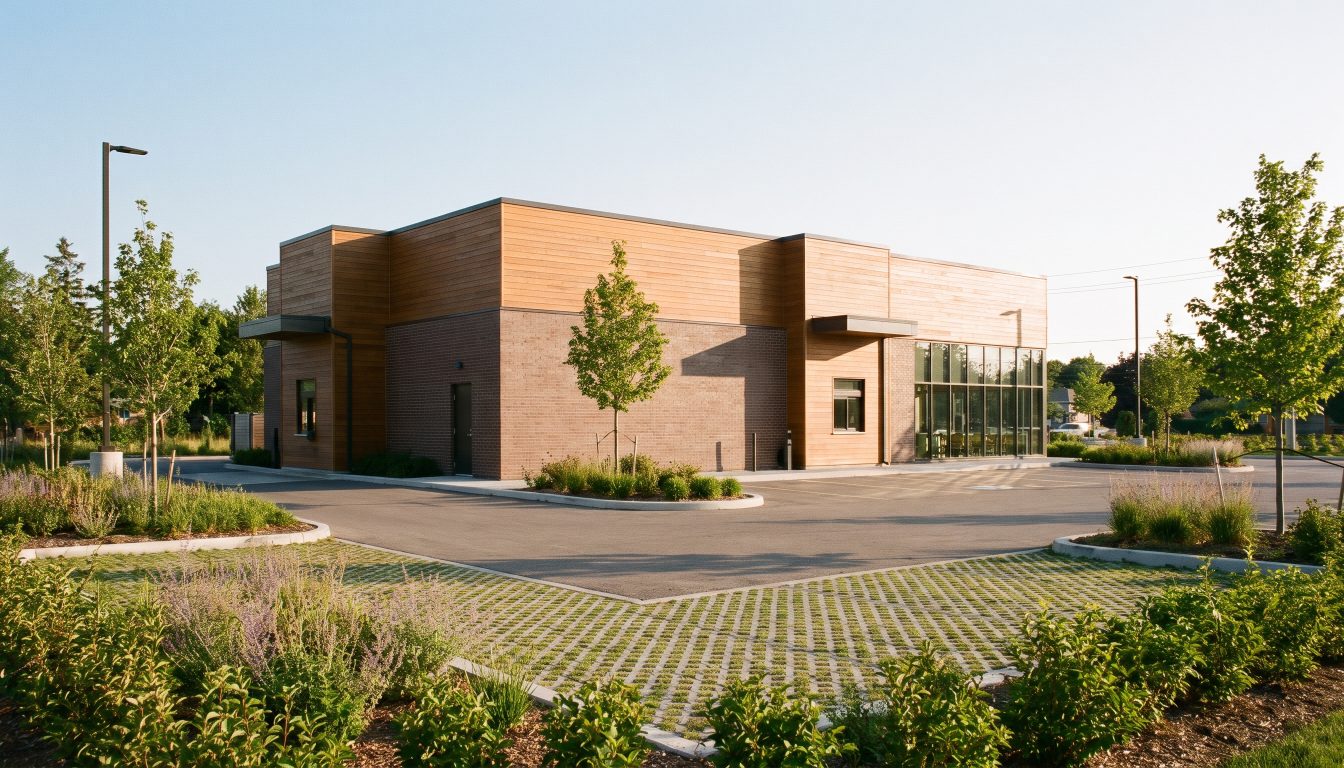
A single-tenant net lease property is leased to one business that pays base rent plus most property costs, such as tax, insurance and maintenance. It offers simple, steady income, but if the tenant leaves, income drops to zero at once. Judge it on the tenant’s strength, the years left on the lease, and what the site would rent for to someone else.
This guide is for investors who want steady, low-maintenance income and are looking at a property leased to one business on a net lease: a pharmacy, a bank branch, a fast-food pad, a grocery store or a single-tenant industrial building. You will learn how these leases work, how to run the numbers, what makes a tenant strong, and what to check before you buy. Laws and taxes differ by province; the examples here use Ontario.
What is a single-tenant net lease property?
It is a commercial property leased in full to one tenant, where the tenant pays some or all of the building’s operating costs on top of its base rent. Those extra payments are often called additional rent. The main lease types differ by who pays what.
| Lease type | Tenant pays | Landlord pays |
|---|---|---|
| Gross | One flat rent | Property tax, insurance and maintenance |
| Single net | Base rent plus property tax | Insurance and maintenance |
| Double net | Base rent plus tax and building insurance | Maintenance, often including structure and roof |
| Triple net (NNN) | Base rent plus nearly all property costs | Usually only what the lease leaves out, often the structure or roof |
Source: Pacific Legal PC, “Renting a commercial property in Ontario” (Mondaq, 15 Jul 2025). Every lease is different; the wording controls.
Labels are not reliable. Two leases both called “triple net” can split roof and structure costs differently. Read the repair, replacement and operating cost clauses yourself, with your lawyer.
Why do investors like net lease property?
Because the income is simple. With a strong tenant on a long net lease, your rent arrives each month and the tenant handles most of the costs and day-to-day work. That suits business owners who have just sold a company, families with a holding company, and anyone who wants real estate income without managing many tenants.
Public REITs build whole portfolios this way. A July 2026 RENX profile of Canadian Net REIT, for example, described 98 fully leased single-tenant properties, most of them necessity retail on triple net leases, with grocery chains as its largest tenants. It also noted the flip side: when a tenant leaves at lease end, the property can go to 100% vacancy at once. If you would rather own units of a REIT than a building, read my comparison of owning property directly vs REITs.
How does the math work on a net lease property?
Here is an illustrative example, not a real listing. A single-tenant retail building outside Toronto is priced at $5 million at a 5.5% cap rate, financed with a 55% loan-to-value (LTV) mortgage at 5.5% over 25 years. For context, Lee & Associates, using CoStar data, put the average Toronto-area retail cap rate at 5.11% in Q3 2026. The 5.5% interest rate is an assumption; commercial mortgages are priced as a spread over bond yields, and the 5-year Government of Canada yield was 3.60% on 2 October 2026.
| Line | Illustrative amount |
|---|---|
| Purchase price | $5,000,000 |
| Net operating income (NOI) at a 5.5% cap rate | $275,000 |
| Mortgage (55% LTV) | $2,750,000 |
| Yearly mortgage payments (5.5%, 25 years) | About $202,649 |
| Debt service coverage ratio (DSCR) | About 1.36 |
| Cash flow after the mortgage | About $72,351 |
| Ontario land transfer tax | $96,475 |
| Cash in (down payment plus land transfer tax) | $2,346,475 |
| Cash-on-cash return, year one | About 3.1% |
Illustrative only. Monthly compounding; legal, lender and inspection costs excluded. Inside the City of Toronto, the municipal land transfer tax would add another $96,475.
NOI is rent minus the owner’s costs before the mortgage; on a true triple net lease it is close to the base rent. The cap rate is NOI divided by price. DSCR is NOI divided by yearly mortgage payments. Cash-on-cash return is cash flow divided by the cash you put in. You also pay down about $52,700 of principal in year one. If the lease had 2% yearly rent increases, the $275,000 rent would grow to about $328,650 by year ten. For a deeper walk-through, see how commercial property is valued.
To see what your own cash buys and how the cash flow compares across building types, use the calculator below; it is set to $5 million but you can change every number.
Loading the investment calculator…
What makes a net lease tenant strong?
In single-tenant property, the tenant’s ability to keep paying is most of what you are buying. Investors call it the tenant’s covenant.
- Who actually signed the lease: a national parent company is very different from a local franchisee or a numbered company with no assets. Read the signature page.
- Guarantees: if a small company signed, is there a personal or parent-company guarantee, and for how long?
- Financial statements: ask for them, or for public filings if the tenant is listed.
- How the location performs: a busy store is more likely to renew than one the company is quietly trying to close.
- Time left on the lease: a strong tenant with two years left is riskier than an average tenant with twelve.
Buy the real estate, not just the tenant. Before I would recommend a net lease property, I ask one question: if this tenant left tomorrow, who else would rent this building, and at what rent? A well-located site with fair rent can be re-leased. A purpose-built building on a weak site with above-market rent is a bond with a roof, and it can lose value fast when the lease ends.
Which net lease clauses matter most?
- Term and renewal options: how long is left, and can the tenant renew at a set rent or at market rent?
- Rent increases: fixed steps, a percentage, or none at all. Flat rent for many years loses value to inflation.
- Roof and structure: who pays to replace them. Under many leases the landlord keeps the structure and roof unless the lease shifts them to the tenant.
- Assignment and subletting: can the tenant hand the lease to a weaker company, and is the original tenant released?
- Operating covenant: must the tenant keep the store open, or can it “go dark” and keep paying rent on an empty building?
- Early termination and purchase rights: any break clause, or a tenant right of first refusal to buy, affects your exit.
My guide to commercial lease clauses in Ontario goes through these in more detail.
What happens if a net lease tenant defaults or leaves?
In Ontario, commercial tenancies fall under the Commercial Tenancies Act and the lease, not the Residential Tenancies Act. An August 2026 Wildeboer Dellelce LLP update explains that if the lease is silent, a landlord’s rights to end the lease and re-enter for unpaid rent arise once rent is 15 days overdue. A landlord can instead keep the lease alive and seize the tenant’s goods for unpaid rent, called distress, but only under strict rules on timing, notice, appraisals and sale. After ending a lease, the landlord must try to re-let and reduce its losses. Claims for rent arrears generally have a six-year limitation period; most other lease claims have two years. Confirm with your lawyer.
One tenant means one point of failure. If the tenant in the illustrative example left, the property would go from $275,000 of income to none, while you still owed about $202,649 a year on the mortgage plus property tax, insurance and upkeep the tenant used to cover. Re-leasing a single-use building can take many months and often needs money for alterations and leasing fees. Keep a cash reserve and look hard at leases with less than five years left.
How are net lease properties financed and taxed in Canada?
Financing: lenders size the loan on the NOI, the DSCR and the LTV, and they pay close attention to the tenant’s strength and how long the lease runs compared with the loan term. A short remaining lease usually means a smaller loan. See my guide to commercial mortgage rates in Canada.
HST: buying commercial real property is generally taxable. A buyer registered for HST usually self-assesses the tax rather than paying it to the seller, and may claim it back as an input tax credit.
Capital cost allowance (CCA): this is the yearly tax deduction for building wear. Most buildings fall in Class 1 at 4%. An eligible non-residential building acquired after 18 March 2007, and not used before then, can claim 6% if you elect a separate class and at least 90% of the floor area is used for non-residential purposes, or 10% if that much is used for manufacturing or processing. Land is not depreciable. Ask your accountant how CCA recapture works when you sell.
Land transfer tax: in Ontario a commercial property pays 0.5% to $55,000, 1% to $250,000, 1.5% to $400,000 and 2% above, so $96,475 on $5 million, and twice that inside Toronto.
What should you check before buying a net lease property?
- The full lease, every amendment, and any side letters.
- An estoppel certificate from the tenant: a signed statement of the rent, term, deposits and that the landlord is not in default.
- The tenant’s financial statements or public filings, and any guarantee.
- A Phase 1 ESA (environmental site assessment), especially for gas stations, auto service or older industrial sites.
- A building condition assessment (BCA) of the roof, parking and mechanical systems, matched against who pays under the lease.
- The zoning, so you know which other uses could lease the property if the tenant leaves.
What to do next
- Decide your target lease length and tenant type before you look, so you compare like with like.
- For each property, ask what it would rent for to someone else, and value it on that too.
- Get the lease, estoppel and tenant financials early, and have your lawyer read the repair and assignment clauses.
- Get a lender’s view on how the remaining lease term affects the loan.
- Review HST registration and the CCA election with your accountant before closing.
Run your own numbers in the calculator above, and if you are weighing a specific net lease property, book a call and I will walk through the lease and the math with you.
Need help with this? Talk to me.
I’m Jatin Dua, Broker of Record at RE/MAX Quantum Realty, and I’m the best agent to do this kind of work for you in Toronto and across the GTA. Over $100 million in GTA sales and 100+ families helped sell. Feel free to contact me any time: call or text 833-330-1925 or email [email protected].
Frequently asked questions
What is a triple net lease in Canada?
A triple net (NNN) lease is a commercial lease where the tenant pays base rent plus nearly all property costs, such as property tax, building insurance and maintenance. The landlord usually pays only what the lease leaves out, often the roof or structure. The label is not standard across Canada, so the lease wording, not the name, decides who pays for what.
Is a single-tenant net lease property a good investment?
It can be, if the tenant is strong, the lease is long and the site would re-lease well. The income is simple and the tenant covers most costs. The main risk is concentration: if the only tenant leaves, income drops to zero while you still pay the mortgage, taxes and insurance. Value the property on what another tenant would pay too.
What cap rate do net lease properties sell at in Ontario?
There is no single published average for net lease property. As a guide, Lee & Associates, using CoStar data, put the average Toronto-area retail cap rate at 5.11% in Q3 2026. Net lease prices depend mainly on the tenant’s strength, the years left on the lease and the rent increases, so a long lease to a national tenant usually trades at a lower cap rate.
What is the difference between a gross lease and a net lease?
In a gross lease, the tenant pays one flat rent and the landlord pays property tax, insurance and maintenance. In a net lease, the tenant pays base rent plus some or all of those costs as additional rent. Single net adds property tax, double net adds insurance, and triple net adds nearly all property costs, though each lease sets the exact split.
What happens if a commercial tenant stops paying rent in Ontario?
If the lease is silent, the landlord’s right to end the lease and re-enter arises once rent is 15 days overdue under the Commercial Tenancies Act, with no prior notice required for unpaid rent. The landlord can instead keep the lease and seize goods for rent under strict distress rules. Commercial disputes go to court, not the Landlord and Tenant Board. Confirm with a lawyer.
How much do I need to buy a $5 million net lease property in Ontario?
In this guide’s illustrative example, about $2.35 million: a $2.25 million down payment at 55% loan-to-value plus $96,475 of Ontario land transfer tax, before legal and lender costs. Inside Toronto, the municipal land transfer tax adds another $96,475. The loan a lender offers depends on the rent, the tenant’s strength, the remaining lease term and your finances.
Can I claim depreciation on a net lease building in Canada?
Yes, through capital cost allowance. Most buildings are Class 1 at 4% a year. An eligible non-residential building acquired after 18 March 2007, and not used before then, can claim 6% with a separate-class election if at least 90% of its floor area is non-residential, or 10% for manufacturing or processing use. Land is not depreciable. Confirm with your accountant.
What should I check before buying a property leased to one tenant?
Read the full lease and amendments, get a signed estoppel certificate, review the tenant’s financial statements and any guarantee, order a Phase 1 environmental site assessment and a building condition assessment, and confirm the zoning. Above all, check how many years remain on the lease and what the property would rent for to a different tenant if this one left.
Do I pay HST on a commercial property with a tenant in Ontario?
Usually yes, because commercial real property is generally a taxable supply. A buyer registered for HST normally self-assesses the tax on its own return instead of paying it to the seller, and can often claim it back as an input tax credit if the property is used in a commercial activity such as leasing. Confirm the details with your accountant before closing.
Sources
- Mondaq (Pacific Legal PC): Renting a commercial property in Ontario (15 Jul 2025)
- RENX: Canadian Net REIT focus on single-tenant retail nets 98 properties (15 Jul 2026)
- Wildeboer Dellelce LLP: Tenant in default? What every commercial landlord needs to know (4 Aug 2026)
- Lee & Associates: Toronto Retail Market Report Q3 2026 (CoStar data)
- Canada Revenue Agency: Classes of depreciable property (CCA)
- Canada Revenue Agency: GST/HST Memorandum 19.4.1, Commercial real property sales and rentals
- Canadian Mortgage Professional: What persistently high bond yields could mean for the commercial mortgage market (Oct 2026)
- Government of Ontario: Calculating land transfer tax
Related reading
- How to Invest $5 Million in GTA Real Estate (2027): Your Real Options
- What $5 Million Buys in GTA Real Estate in 2027: Houses, Buildings, Plazas and Land
- A $5 Million House or a $5 Million Apartment Building in Toronto? The 2027 Math
- Commercial vs Residential Real Estate Investment in the GTA (2027)
About the author — Jatin Dua, Toronto and GTA real estate broker
I am Jatin Dua, Broker of Record and co-founder of RE/MAX Quantum Realty Inc., Brokerage, Unit 101, 799 The Queensway, Toronto. I work with buyers and sellers across Toronto and the GTA and have helped more than 100 families sell. Four-plus years of active GTA transactions and over $100 million in sales volume.
Reach me at [email protected] or 833-330-1925, or book a call.
More from the library
- Funeral Home for Sale in Ontario? How Owners Sell, Step by Step
- Industrial Real Estate Investment in the GTA (2027): Small-Bay, Multi-Tenant and Owner-User
- Buying a Day Spa in Ontario: Licences That Don’t Transfer, Public Health Rules, HST and What to Check
- Mimico vs Bloor West Village: Where Can You Actually Buy?
- Buying a Funeral Home in Ontario: Licences, Prepaid Contracts and What Actually Transfers
- Crescent Road Townhouses, 94 Crescent Rd: Ten 1983 Rosedale Townhomes