
Published 2 September 2026 · Updated 29 September 2026 · By Jatin Dua, Broker of Record, RE/MAX Quantum Realty
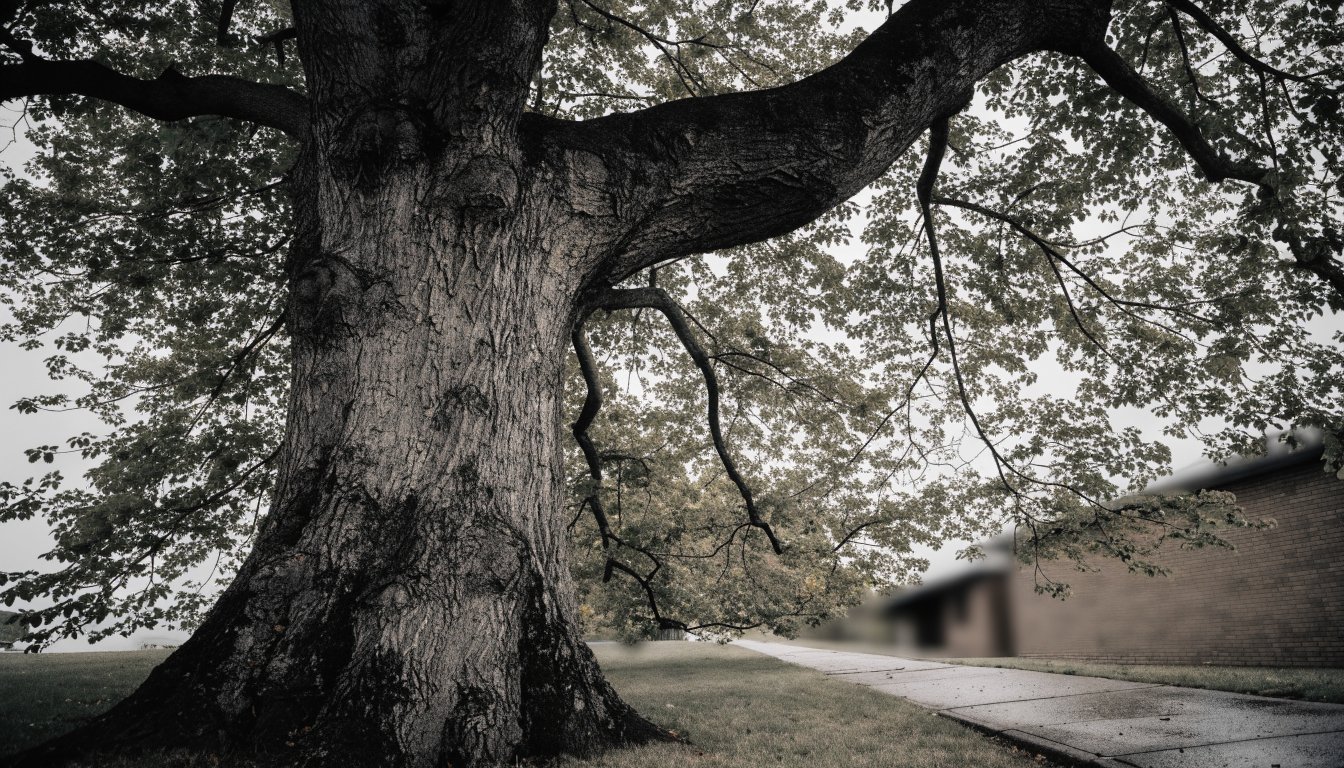
A permit is required before injuring or destroying any tree with a diameter of 30 centimetres or more measured at 1.4 metres above ground level, under section 813-12 of the Toronto Municipal Code. Section 813-29 sets “a minimum fine of $500.00 and a maximum fine of $100,000.00 per tree”, plus a separate $100,000.00 special fine. The word “injure” matters — root damage, grade change and compaction all count, not just felling. Permit fees are $145.87 per private tree for a non-construction application and $436.39 for construction, non-refundable. Permits are conditional on replanting and maintaining for two years, with cash in lieu at $583 per tree. The City states it may refuse a tree permit for a laneway or garden suite where a healthy tree would be removed.
The single most expensive mistake a Toronto homeowner can make with a chainsaw is measured in one number: 30 centimetres.
Section 813-12 of the Toronto Municipal Code requires a permit before injuring or destroying any tree with a diameter of 30 centimetres or more, measured at 1.4 metres above ground level. And section 813-29 sets the consequence: “a minimum fine of $500.00 and a maximum fine of $100,000.00 per tree”, plus a separate special fine of $100,000.00 under the City of Toronto Act, 2006.
Read the two features that make that provision unusual. It is per tree, so clearing four is not one offence. And there is a minimum, so a conviction cannot end in a nominal penalty.
What needs a permit
A permit is required to injure or destroy a protected private tree, a City-owned street tree, or a boundary tree shared with a neighbour. It is also engaged by construction within a tree protection zone and by alteration of grade in a Ravine and Natural Feature Protection area.
Note the word “injure”. This is not only about cutting a tree down. Root damage from excavation, grade changes, trenching for services and compaction from equipment can all constitute injury. A great many contraventions happen without anyone touching a trunk.
Street trees are protected regardless of the 30 centimetre threshold, because they belong to the City. And section 813-19.1 requires notice to the co-owner of a boundary tree — a tree straddling a property line is not yours alone to remove.
What a permit costs
| Application type | Private tree | City tree | Boundary or neighbour tree |
|---|---|---|---|
| Non-construction | $145.87 per tree | $436.39 per tree | $304.51 per tree |
| Construction | $436.39 per tree | $436.39 per tree | $913.58 per tree |
From the City’s application form, revision January 2026. Application fees are non-refundable — you pay whether or not the permit is granted.
An application requires an arborist report, a tree protection plan and a landscaping and replanting plan, and section 813-19 requires public notice for a period of not less than 14 days.
New Ravine and Natural Feature Protection permit fees took effect 1 September 2026: $87.57 per ravine tree non-construction, $183.03 per ravine boundary tree non-construction, $262.72 per ravine tree for construction, $549.08 per ravine boundary tree for construction, and $632.51 per application for alteration of grade with no trees.
Replanting is a condition, not a suggestion
Section 813-20 permits destruction subject to approved landscaping and replanting plans, including replanting and maintaining the trees for a period of two years.
Where there is not enough space to replant, the City accepts cash in lieu at $583 per tree — a figure the City explains as 120 per cent of the cost of planting and maintaining a tree for two years. A tree planting guarantee deposit is held and released only once construction is complete and all permit conditions are met.
Development, laneway suites and garden suites
The City states that even properties undergoing as-of-right development must obtain permits where construction impacts protected trees, that the City may require design modifications, and that it may refuse permits where trees cannot be adequately protected. For laneway and garden suites specifically it states the City “may refuse the tree permit” where a healthy tree would be removed.
That is the sentence to absorb before buying a lot on the strength of a garden suite plan. A mature tree in the wrong position is not a landscaping detail; it can be the reason the suite does not get built.
Before you buy, and before you cut
- Measure at 1.4 metres. Thirty centimetres in diameter is roughly 94 centimetres around — a trunk you can nearly wrap your arms around is very likely protected.
- Count every protected tree on and beside the lot before pricing a build. The penalty is per tree and so is the permit fee.
- Get an arborist report early if a plan touches a tree protection zone.
- Never let a contractor proceed on assurance alone. Section 813-28 makes contravention an offence, and directors and officers who knowingly concur are personally caught.
- Treat a large tree next to a proposed suite as a planning risk, not a landscaping one.
One currency note: the consolidated Chapter 813 PDF is stamped 12 May 2022, and the City’s current pages reference an ongoing Tree By-law Review. The provisions quoted here are from that consolidation; check for changes before relying on a detail.
Planning a build, an addition or a garden suite on a treed lot?
A mature tree in the wrong place is a planning constraint, not a landscaping one — the City says in terms that it may require design modifications or refuse a permit where trees cannot be adequately protected. It is much cheaper to find that out before you buy the lot than after you have drawings. Send me the property and what you are hoping to build and I will tell you what I can see; anything definitive needs an arborist and the City.
[email protected] · 833-330-1925 · Book a free consultation
Confidential. Read personally and answered within 24 hours. I never share, sell or distribute your information.
Free tool — AI home value estimator
Instant Home Valuation
What’s your home
worth today?
Answer six quick questions and get an instant value range built from current Toronto & GTA sale data — property type, size, condition, lot and location all weighted the way a real pricing conversation weighs them. Takes about ninety seconds.
Reading recent GTA sale data…
Building your estimate
Estimated market value
—
$0–$0
Most likely value $0 · roughly $0 per square foot
What moved the number
Starting from the area baseline for your property type, here’s what each answer added or subtracted.
Market context
Recent local averages for comparison.
—
A range is a starting point.
A strategy is what sells.
This model doesn’t know that your neighbour’s identical semi went $80,000 over asking last month, or which two upgrades actually pay back in your area. That conversation is free and takes twenty minutes.
Frequently asked questions
What size tree needs a permit to remove in Toronto?
Any tree with a diameter of 30 centimetres or more, measured at 1.4 metres above ground level, under section 813-12 of Toronto Municipal Code Chapter 813. The City states plainly that trees on private property measuring 30 centimetres or more in diameter require a permit. Thirty centimetres in diameter is roughly 94 centimetres in circumference. City-owned street trees are protected regardless of that threshold, and a boundary tree shared with a neighbour requires notice to the co-owner under section 813-19.1.
What is the penalty for removing a protected tree in Toronto?
Section 813-29 provides that a person convicted of an offence is liable to a minimum fine of $500.00 and a maximum fine of $100,000.00 per tree, and to a special fine of $100,000.00 under subsection 370(1)(d) of the City of Toronto Act, 2006. Two features make this unusual: the maximum is expressed per tree, so removing several is not a single offence, and there is a minimum fine, so a conviction cannot result in a nominal penalty. Under section 813-28, where a corporation contravenes the chapter every director or officer who knowingly concurs is also guilty of an offence.
How much does a tree permit cost in Toronto?
From the City’s application form revised January 2026, the non-construction application fee is $145.87 per private tree, $436.39 per City tree and $304.51 per boundary or neighbour tree. The construction application fee is $436.39 per private tree, $436.39 per City tree and $913.58 per neighbour tree. Application fees are non-refundable. New ravine and natural feature protection permit fees took effect 1 September 2026, ranging from $87.57 per ravine tree for a non-construction application to $632.51 per application for alteration of grade with no trees.
Do I have to replant if I remove a tree?
Generally yes. Section 813-20 allows permits to destroy subject to landscaping and replanting plans submitted by the applicant and approved by the General Manager, including replanting and maintaining the trees for a period of two years. Where there is inadequate space for replanting the City accepts cash in lieu at $583 per tree, which the City describes as equal to 120 per cent of the cost of planting and maintaining a tree for two years. A tree planting guarantee deposit is held and released once construction is complete and all permit conditions have been met.
Can a tree stop me building a garden suite?
It can. The City states that even properties undergoing as-of-right development must obtain permits where construction impacts protected trees, that the City may require design modifications, and that it may refuse permits where trees cannot be adequately protected. For laneway and garden suites specifically the City states that it may refuse the tree permit if a healthy tree would be removed. A mature protected tree in the wrong position should therefore be treated as a planning risk when assessing a lot for a suite.
Does the by-law only apply to cutting a tree down?
No. Section 813-12 covers injuring or destroying a tree, and a permit is also engaged by construction within a tree protection zone and by alteration of grade in a Ravine and Natural Feature Protection area. Root damage from excavation, changes to grade, trenching for services and soil compaction from equipment can all amount to injury, which means contraventions frequently occur without anyone cutting a trunk.
Related reading
- Toronto multi-tenant house licensing: the register a buyer can search
- Short-term rental rules compared across the GTA
- Lead pipes: Ontario’s legal standard is twice the federal guideline
- Property standards orders: the 14 days that decide everything
Sources
Every figure on this page traces to one of these, and each was read on 1 September 2026. Primary sources only — statute, regulation, and the government or agency that administers the rule. Where I could not verify something from a primary source, the page says so instead of guessing.
- Toronto Municipal Code Chapter 813, Trees (PDF) — City of Toronto. City of Toronto, consolidated PDF stamped 12 May 2022. Section 813-12 requires a permit before injuring or destroying any tree with a diameter of 30 centimetres or more measured at 1.4 metres above ground level. Section 813-20 allows permits to destroy subject to approved landscaping and replanting plans including replanting and maintaining trees for two years. Section 813-29 provides for a minimum fine of $500.00 and a maximum fine of $100,000.00 per tree, plus a special fine of $100,000.00 under subsection 370(1)(d) of the City of Toronto Act, 2006. Accessed 1 September 2026.
- Application to injure or remove trees, form 41-0064 (PDF) — City of Toronto. City of Toronto, form revision January 2026. Non-construction application fees are $145.87 per private tree, $436.39 per City tree and $304.51 per boundary or neighbour tree. Construction application fees are $436.39 per private tree, $436.39 per City tree and $913.58 per neighbour tree. Application fees are non-refundable. Accessed 1 September 2026.
- How to apply for a tree or ravine permit — City of Toronto. City of Toronto, date modified 31 August 2026. States that cash in lieu of replanting is accepted at $583 per tree where there is inadequate space to replant, being 120 per cent of the cost of planting and maintaining a tree for two years, and that new ravine and natural feature protection permit fees take effect 1 September 2026. Accessed 1 September 2026.
- When to apply for a tree or ravine permit — City of Toronto. City of Toronto, date modified 29 January 2026. States that a permit is required for trees on private property measuring 30 centimetres or more in diameter, that properties undergoing as-of-right development must obtain permits where construction impacts protected trees, and that the City may require design modifications or refuse permits where trees cannot be adequately protected, including for laneway and garden suites. Accessed 1 September 2026.
About the author — Jatin Dua, Broker of Record
I’m the Broker of Record at RE/MAX Quantum Realty, 799 The Queensway in Etobicoke, and I work with buyers and sellers across the west GTA. Municipal by-laws are where a lot of real estate goes wrong — the rules differ from one side of a boundary road to the other, the fees change on dates nobody announces, and the consolidated PDF on a city website is often months behind what council actually passed.
Everything below is quoted from the municipality’s own by-law or page, with the date that source carries, so you can check it against the current version rather than take my word for it. Where a published document is out of date, or where a figure simply is not published anywhere, the page says so. [email protected] or 833-330-1925.