

Published 7 August 2026 · Updated 7 September 2026 · By Jatin Dua, Broker of Record, RE/MAX Quantum Realty
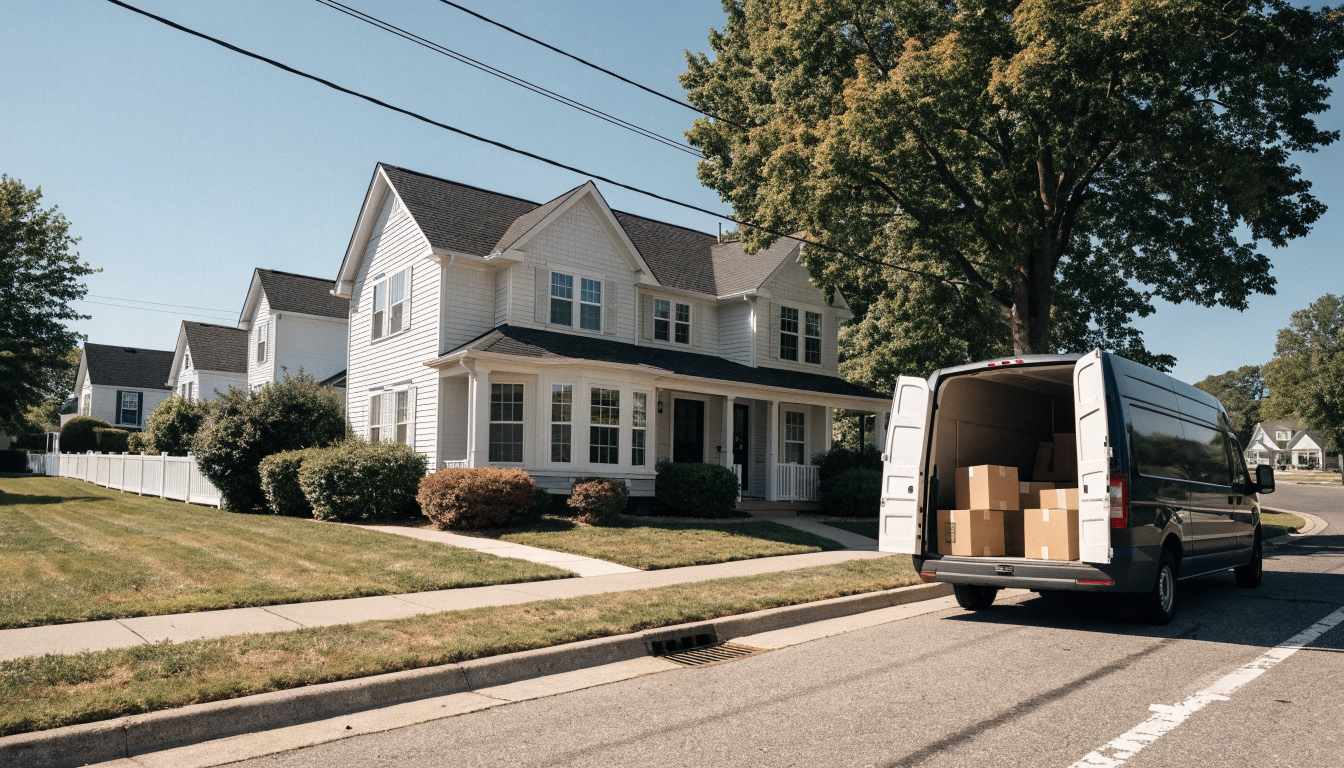
Budget 5% to 6% of your sale price. The item people miss is the HST on commission.
Budget 5% to 6% of your sale price. On a $900,000 sale that is roughly $45,000 to $54,000.
The biggest item is commission (commonly 3.5% to 5% combined) — plus 13% HST on that commission, which is the cost almost every seller forgets. Then legal fees of about $1,000 to $1,600.
The one that ruins budgets is the mortgage prepayment penalty. On a fixed-rate mortgage it can run into five figures. Get an exact payout quote from your lender before you list — not an estimate.
Use the free net proceeds calculator to see your actual number.
Most sellers work out their equity by subtracting the mortgage from the sale price. That number is always wrong, usually by tens of thousands. Here is every cost of selling a home in Ontario in 2026, what each one realistically runs, and the two that catch people out most often.
The full cost list
| Cost | Typical range | Who pays |
|---|---|---|
| Real estate commission | 3.5%–5% combined | Seller |
| HST on commission | 13% of the commission | Seller |
| Legal fees | $1,000–$1,600 | Seller |
| Mortgage discharge fee | $250–$400 | Seller |
| Mortgage prepayment penalty | $0 to five figures | Seller |
| Staging & pre-list prep | $0–$5,000+ | Seller (optional) |
| Status certificate (condos) | Up to $100 incl. tax | Usually seller |
| Closing adjustments | Varies | Apportioned |
| Land transfer tax | $0 — buyer pays | Buyer |
Land transfer tax is a buyer cost in Ontario, including Toronto’s additional municipal land transfer tax. Sellers ask about it constantly because they are usually buying next — in which case it becomes a very real cost on the purchase side.
Commission — and the HST nobody budgets for
Commission in Ontario is always negotiable and is not set by any board or association. Combined rates commonly run 3.5% to 5%, typically split between the listing side (1% to 2.5%) and the buyer’s side (around 2.5%).
Before you cut the commission
Negotiating commission is reasonable and I have no problem with the conversation. But understand which side you are cutting. Reducing the listing side affects what your agent earns. Reducing the buyer-agent side affects how often your property gets shown — and in a slower market that is a real cost, not a theoretical one. If you are going to negotiate, negotiate the listing side and leave the buyer side competitive.
What is your home actually worth today?
I will give you a real number based on comparable sales on your street — not an automated estimate. No obligation, and I will tell you plainly if now is the wrong time to sell.
Get my home valuation Call or text 833-330-1925
Jatin Dua, Broker of Record — RE/MAX Quantum Realty Inc., Brokerage. Not intended to solicit buyers or sellers currently under contract with another brokerage.
The mortgage penalty — where budgets actually break
If you are breaking a mortgage before the end of its term, you pay a prepayment penalty.
- Variable rate: usually three months’ interest. Predictable and generally modest.
- Fixed rate: the greater of three months’ interest or the interest rate differential (IRD).
The IRD is the problem. Every lender calculates it differently, and the result can be very large — five figures is not unusual on a mortgage with significant time remaining.
Call your lender and ask for an exact payout quote with a date on it. Not a ballpark, not an estimate from a website. It takes one phone call and it is the single most useful thing you can do before deciding whether to sell.
Two things that can reduce it: porting your mortgage to your next property, or timing the sale closer to your renewal date. Both are worth asking your lender about explicitly.
Capital gains — usually not, but you still have to report
If the property was your principal residence for every year you owned it, the principal residence exemption generally means no capital gains tax. But you must still report the sale on your T1 return — reporting is not optional even when the tax is nil.
If it was a rental, an investment property or a second home, capital gains will generally apply on the increase in value.
I am a real estate agent, not an accountant. On anything involving capital gains, the flipping rule, or a property that has changed use between rental and residence, get proper tax advice. It is a few hundred dollars that regularly saves people thousands.
What is genuinely worth spending before you list
The question is not what you should fix but what you will get back. Being straight with you:
Usually worth it
- Professional photography. Non-negotiable. Buyers screen on a phone in seconds.
- A floor plan. Cheap, and its absence costs showings on condos particularly.
- Decluttering and deep cleaning. The highest return per dollar of anything on this list.
- Paint, where it is genuinely tired. Neutral, and only where needed.
- Small repairs that read as neglect — a dripping tap, a cracked tile, a door that sticks. Buyers extrapolate.
Usually not worth it
- A new kitchen. You will not recover a full renovation in the sale price, and buyers often want to choose their own finishes.
- Bathroom gut jobs for the same reason.
- Anything highly personal to your taste.
- Flooring throughout in most cases, unless the existing floor is genuinely damaged.
The honest rule: fix what reads as neglect, and stop there. Renovating to sell is usually spending a dollar to gain seventy cents.
Work out your actual number
Rather than guessing, put your figures into the calculator. It handles commission, the HST on it, legal fees, your mortgage payout and the penalty, and shows what you actually walk away with.
Open the free net proceeds calculator →
It requires no email. The number appears as you type.
Get an exact seller net sheet
The calculator gets you in the right range. A proper net sheet uses your actual mortgage terms, your lawyer’s quote, and a realistic sale price based on sold comparables for your specific property.
- A realistic price range from sold comparables, not an algorithm
- Your actual commission structure, in writing
- What to budget for prep — and honestly what to skip
- Tenanted vs vacant pricing if your unit is occupied
- No cost and no obligation to list
Frequently asked questions
How much does it cost to sell a house in Ontario in 2026?
Typically 5% to 6% of the sale price all in. On a $900,000 sale that is roughly $45,000 to $54,000. The largest component is real estate commission (commonly 3.5% to 5% combined) plus 13% HST on that commission, followed by legal fees of about $1,000 to $1,600 and any mortgage discharge fee or prepayment penalty.
Do I pay HST on real estate commission in Ontario?
Yes, 13%. It is the most commonly forgotten cost. On a $900,000 sale at 5% commission, the commission is $45,000 and the HST is a further $5,850 — $50,850 in total.
What are lawyer fees for selling a house in Ontario?
Generally $1,000 to $1,600 including disbursements for a straightforward sale. Condo sales can run slightly higher because of the status certificate and additional condominium requirements. Ask for a written quote before you list.
How much is the penalty for breaking my mortgage early?
On a variable-rate mortgage, usually three months of interest. On a fixed-rate mortgage, the greater of three months of interest or the interest rate differential (IRD), which varies by lender and can run into five figures. Call your lender for an exact payout quote before listing.
Does the seller pay land transfer tax in Ontario?
No. Land transfer tax, including Toronto municipal land transfer tax, is paid by the buyer. Sellers often search this because they are buying next, where it becomes a significant purchase-side cost.
Do I pay capital gains tax when I sell my home?
If the property was your principal residence for every year you owned it, the principal residence exemption generally means no capital gains tax — but you must still report the sale on your T1 return. If it was a rental, investment or second property, capital gains generally apply. Speak to an accountant.
What is the property flipping rule in Canada?
If you sell a residential property owned for fewer than 365 consecutive days, the profit is generally treated as fully taxable business income rather than a capital gain, and the principal residence exemption does not apply. There are exceptions for genuine life events including death, disability, separation, a new job and the birth of a child.
Can I negotiate real estate commission in Toronto?
Yes — commission is always negotiable in Ontario and is not set by any board. What matters is which side you cut. Reducing the listing side affects your agent earnings; reducing the buyer-agent side can quietly reduce how often your property gets shown, which is a real cost in a slower market.
Is staging worth it when selling in Toronto?
Sometimes. Decluttering, deep cleaning and professional photography are almost always worth it. Full staging can help on a vacant or hard-to-visualise property, particularly condos. Major renovations before selling — new kitchens and bathrooms — generally do not return their cost.
How do I work out exactly what I will walk away with?
Use the free net proceeds calculator on this site, which accounts for commission, HST on commission, legal fees, your mortgage payout and any prepayment penalty. For an exact figure I can prepare a proper seller net sheet at no cost — call 833-330-1925 or email connect@jatindua.com.
Selling a home in Ontario typically costs 5% to 6% of the sale price. The main components are: real estate commission of 3.5% to 5% combined (always negotiable, not set by any board); 13% HST on that commission; legal fees of approximately $1,000 to $1,600; a mortgage discharge fee of roughly $250 to $400; and any mortgage prepayment penalty.
The prepayment penalty is the largest variable. On a variable-rate mortgage it is usually three months of interest; on a fixed-rate mortgage it is the greater of three months of interest or the interest rate differential, which can reach five figures.
Land transfer tax is a buyer cost in Ontario, including Toronto municipal land transfer tax, and is not paid by the seller. Capital gains tax generally does not apply where the principal residence exemption is available, though the sale must still be reported on a T1 return. Properties sold within 365 days of purchase fall under the property flipping rule and are generally taxed as business income.
What is your home actually worth today?
I will give you a real number based on comparable sales on your street — not an automated estimate. No obligation, and I will tell you plainly if now is the wrong time to sell.
Get my home valuation Call or text 833-330-1925
Jatin Dua, Broker of Record — RE/MAX Quantum Realty Inc., Brokerage. Not intended to solicit buyers or sellers currently under contract with another brokerage.
Sources
- Canada Revenue Agency — Principal residence and other real estate
- Canada Revenue Agency — Residential property flipping rule
- Government of Ontario — Land transfer tax
- City of Toronto — Municipal Land Transfer Tax
About the author — Jatin Dua, Etobicoke real estate agent
I’m Jatin Dua, a Realtor with RE/MAX Quantum Realty working across Etobicoke, The Queensway, Mimico, Humber Bay Shores and the wider Toronto market. I prepare a written net sheet for every seller before they list, because the gap between sale price minus mortgage and what actually lands in your account is routinely $50,000 or more.
Reach me at connect@jatindua.com or 833-330-1925, or book a free consultation.
Seller resources: Net proceeds calculator · What is my condo worth · Preparing your condo for sale · Status certificates · Selling with a tenant
Free seller tools and honest guides
Work out your real number before you commit to anything — and read the parts most agents would rather not put in writing.