
Published 2 November 2026 · By Jatin Dua, Broker of Record, RE/MAX Quantum Realty
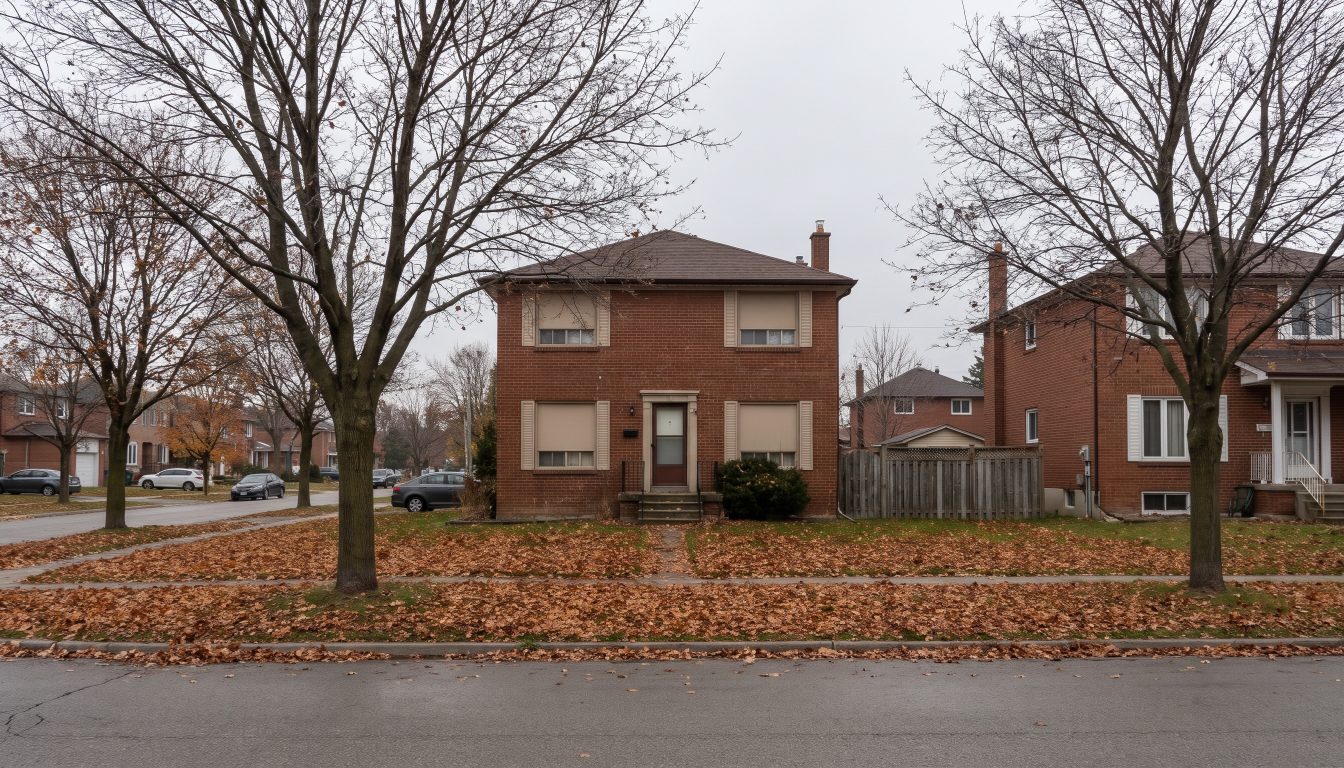
A power of sale home is sold by the lender after the owner defaults. In Ontario the lender can give notice after 15 days of default and sell 35 days later, but the owner can still pay up and cancel your deal before closing. These homes are sold as is and are rarely deep discounts, so inspect, price against nearby sales and keep your conditions.
This guide is for GTA buyers who see “power of sale” on a listing in 2027 and want to know if it is a real bargain or a trap. You will get the Ontario rules in plain English, what the latest arrears numbers say about supply, how the process works from offer to closing, and the checks I put every buyer through before they sign.
What is a power of sale home in Ontario?
A power of sale home is a property being sold by the mortgage lender, not by the owner, because the owner fell behind on the mortgage. Ontario lenders almost always use power of sale rather than foreclosure. The lender sells the home on the open market, pays itself back, and the owner keeps whatever is left.
The rules come from Ontario’s Mortgages Act. The key points for a buyer:
- The minimum clock. Where the mortgage has its own power of sale clause, section 32 says the lender cannot send the notice of sale until the default has lasted at least 15 days, and cannot sell until at least 35 days after that notice.
- The owner can still fix it. Section 22 lets the owner pay the arrears and the lender’s necessary costs “at any time before sale” and stop the process.
- Your title is protected. Section 35 says the lender’s statutory declarations about the default, the notice and the sale are conclusive evidence of compliance and give the buyer good title, subject to the Land Titles Act. Section 36 says that if the lender cut corners, the owner’s remedy is against the lender, not against your title.
- The money goes in a set order. Section 27 sets out who gets paid from the sale proceeds, with the leftover paid to the former owner.
For the full statutory detail, read my post on power of sale versus foreclosure in Ontario. This page stays on the buyer’s side of the table.
Are there more power of sale homes in the GTA in 2027?
There is no public count of power of sale listings that I can verify, so be careful with anyone who quotes one. What we do have is the Canadian Bankers Association’s monthly count of bank mortgages that are three or more months in arrears. That is the pool power of sale cases come from, although most arrears are fixed before a sale.
| Month | Ontario mortgages 90+ days in arrears | Share of all Ontario bank mortgages |
|---|---|---|
| August 2022 | 1,263 | 0.06% |
| August 2023 | 1,983 | 0.09% |
| August 2024 | 3,508 | 0.16% |
| August 2025 | 5,051 | 0.23% |
| August 2026 | 7,512 | 0.35% |
Source: Canadian Bankers Association, Number of Residential Mortgages in Arrears, month ended August 31, 2026 (Ontario table). Covers the reporting banks only, not private lenders.
Two things stand out. Ontario’s arrears count is roughly six times what it was in August 2022, and in August 2026 Ontario’s rate (0.35%) was above the national rate (0.30%). But it is still a small share: about 35 of every 10,000 bank mortgages.
Desjardins Economics, in a July 2026 report, linked the rise to borrowers renewing at higher rates and expected arrears to stabilize and then ease gradually through 2027 and 2028. That was written before the Bank of Canada raised its policy rate to 2.50% on 28 October 2026, its first hike in more than three years. Higher variable-rate payments add pressure, so I would treat any “flood of power of sales” headline with caution in both directions. My view: expect a steady trickle of these listings in 2027, not a wave, and most will look like ordinary listings with a lender’s schedule attached.
Are power of sale homes cheaper than regular listings?
Sometimes a little, often not. A lender has every reason to get a fair price: section 36 of the Mortgages Act gives the former owner a claim against the lender if the sale is mishandled, and the lender usually wants its money back in full. So most power of sale homes are listed near market value, and competing buyers can push the price up.
The bigger story in 2027 is the whole market. TRREB reported that the GTA average selling price in October 2026 was $1,024,108, down 2.7% from a year earlier, and the MLS Home Price Index composite benchmark was down 4.3%. Regular sellers are negotiating too. Here is how detached medians have moved in a few GTA cities:
| Municipality | Detached median, Jan to Oct 2026 | Change vs 2025 | Average days on market, 2026 |
|---|---|---|---|
| Brampton | $950,000 | -8.9% | 30 |
| Mississauga | $1,225,000 | -5.8% | 31 |
| Vaughan | $1,415,000 | -5.0% | 30 |
| Oshawa | $730,000 | -8.8% | 25 |
| Hamilton | $736,750 | -5.5% | 38 |
Source: TRREB MLS data via REALM, January to October 2026 vs the same period of 2025. Median sold prices and average days on market for all detached sales in each municipality, not power of sale sales only.
The point: price a power of sale home against recent sales of similar homes on the same street or in the same building, not against the asking price. A “discount” off an old list price is not a discount.
Instant Home Valuation
What’s your home
worth today?
Answer six quick questions and get an instant value range built from current Toronto & GTA sale data — property type, size, condition, lot and location all weighted the way a real pricing conversation weighs them. Takes about ninety seconds.
Reading recent GTA sale data…
Building your estimate
Estimated market value
—
$0–$0
Most likely value $0 · roughly $0 per square foot
What moved the number
Starting from the area baseline for your property type, here’s what each answer added or subtracted.
Market context
Recent local averages for comparison.
—
A range is a starting point.
A strategy is what sells.
This model doesn’t know that your neighbour’s identical semi went $80,000 over asking last month, or which two upgrades actually pay back in your area. That conversation is free and takes twenty minutes.
How does buying a power of sale property work, step by step?
- Find it. Most are listed on MLS like any other home. The listing usually says the seller is a lender or that it is a power of sale.
- View it, if you can. Some are vacant and winterized. Some are still occupied by the owner or tenants, which limits access.
- Make an offer with the lender’s schedule. Lenders attach their own terms. Expect the property to be sold as is, with no promises about condition or about which chattels and fixtures stay, and with the deal ending if the owner pays off the debt before it closes. My post on the power of sale clause walks through each part.
- Wait for a response. The seller is an institution, so answers can take longer than with a private seller.
- Do your due diligence. Inspection, financing and a lawyer’s title review, inside whatever condition period you negotiated.
- Close. Your lawyer relies on the lender’s statutory declarations under section 35 for title.
What can go wrong when you buy a power of sale home?
The owner redeems before closing
Because section 22 lets the owner pay up at any time before the sale, your deal can disappear late in the process. Your deposit comes back under the usual clause, but your inspection, appraisal, legal fees and rate hold may not. Budget for that risk.
The condition is unknown
The lender has usually never lived in the home and will not warrant anything. Vacant homes can have frozen pipes, mould or missing appliances. An inspection matters more here than on a normal sale, not less. See what a home inspection costs in Ontario in 2027.
There are tenants
Section 47 of the Mortgages Act says whoever takes title by power of sale is deemed to be the landlord under the existing tenancy. Section 48 says nobody exercising rights under a mortgage can get possession from the tenant except under the Residential Tenancies Act. So if you want vacant possession, you cannot simply ask the tenant to leave on closing day.
Title and money issues
Your lawyer still needs to search title, check property tax and utility arrears, and confirm what gets discharged on closing. Many buyers add title insurance; my guide on what title insurance covers explains the limits.
Do not waive your inspection and financing conditions just because the listing says “power of sale”. You are buying with fewer protections than usual, not more. If you must firm up quickly, inspect before you offer and have a full mortgage pre-approval in hand.
Can a tenant stay in a power of sale house after it sells?
Yes, in most cases. The tenancy survives the sale, and the buyer becomes the landlord. If you want to live in the home yourself, the Residential Tenancies Act route is a notice for a purchaser’s own use (Form N12), which applies only to buildings with three or fewer units and comes with notice periods and compensation rules. Get this sorted with a lawyer before you firm up, and build the timeline into your moving plans. Never plan a closing around a tenant leaving “voluntarily” unless that is in writing.
How do you finance a power of sale purchase?
The same way as any home, with a few extra hurdles. Your lender will order an appraisal, and a property that needs major work can appraise low or fail the lender’s condition standards.
- Down payment. The federal minimum is 5% of the first $500,000 and 10% of the portion from $500,000 to $1.5 million. At $1.5 million and above, you need 20%.
- Stress test. You qualify at the higher of 5.25% or your contract rate plus 2 points.
- Rates. The big banks moved prime to 4.70% after the 28 October 2026 Bank of Canada hike. The Bank’s next decision is 9 December 2026, then 27 January 2027.
- Renovation money. If the home needs work, ask your lender about a purchase-plus-improvements mortgage early, before your financing condition runs out.
What costs do you pay when buying a power of sale home?
You pay the same closing costs as any buyer. Land transfer tax is the big one, and inside the City of Toronto you pay both the Ontario tax and Toronto’s municipal tax.
| Purchase price | Ontario land transfer tax | Ontario plus Toronto (inside Toronto) |
|---|---|---|
| $700,000 | $10,475 | $20,950 |
| $900,000 | $14,475 | $28,950 |
| $1,200,000 | $20,475 | $40,950 |
Source: Ontario Ministry of Finance land transfer tax rates; City of Toronto MLTT rates for homes with one or two single family residences. Before first-time buyer refunds. Calculated by me.
Add legal fees, title insurance, an inspection, moving, and a repair fund. On a vacant power of sale home, I tell clients to hold back a real repair budget, because you will not know everything until you have the keys. My full list is in buyer closing costs in Ontario for 2027.
A power of sale label is not a deal on its own. The good buys I have seen came from patient buyers who knew the street’s recent sales, inspected first, and were ready to walk away. If the lender’s price is at market and the home needs work, a regular listing with full seller disclosures may be the better buy.
What to do next
- Get a full mortgage pre-approval that names the maximum price and down payment, and ask the lender how it treats homes needing repairs.
- Pull recent sold prices for similar homes nearby so you know true market value before you see the asking price.
- Book a home inspection, and inspect before you offer if you expect competition.
- Have a real estate lawyer read the lender’s schedule and check for tenants, arrears and title issues.
- Plan for the deal to fall through if the owner redeems, and do not give notice on your current home until it closes.
Need help with this? Talk to me.
I’m Jatin Dua, Broker of Record at RE/MAX Quantum Realty, and I’m the best agent to do this kind of work for you in Toronto and across the GTA. Over $100 million in GTA sales and 100+ families helped sell. Feel free to contact me any time: call or text 833-330-1925 or email [email protected].
Frequently asked questions
What is power of sale in Ontario?
Power of sale is the way most Ontario lenders recover a defaulted mortgage: the lender sells the home itself instead of going to court for foreclosure. Under the Mortgages Act, notice can go out after 15 days of default and the sale can happen 35 days after notice. The lender keeps what it is owed and the leftover goes to the former owner.
How long does a power of sale take in Ontario?
The legal minimum in Ontario is about 50 days: the default must last at least 15 days before the lender sends notice, and the lender must wait at least 35 days after notice before selling. In practice the full process, including listing and finding a buyer, usually takes longer, and the owner can stop it by paying the arrears and costs before the sale.
Can the owner cancel a power of sale after I make an offer?
Yes, in Ontario the owner can pay the arrears and the lender’s costs at any time before the sale under section 22 of the Mortgages Act. Lender schedules usually say the agreement ends if that happens and your deposit is returned. Your inspection, appraisal and legal costs are normally not refunded, so plan for that risk in 2027.
Are power of sale homes cheaper in Toronto?
Not usually by much. Toronto power of sale homes are generally listed near market value because the lender wants its money back and can be liable to the former owner for a careless sale. With GTA prices down about 3% year over year in October 2026, regular sellers are negotiating too, so compare every power of sale price with recent nearby sales.
Can I get a home inspection on a power of sale property?
Yes, you can make your offer conditional on an inspection in Ontario, although in a competitive situation a conditional offer can lose out to a firm one. Because power of sale homes are sold as is with no promises about condition, an inspection matters more than usual. If you expect competition, try to inspect before you submit your offer.
What happens to tenants when a house is sold under power of sale?
The tenants stay. Section 47 of Ontario’s Mortgages Act makes the person who takes title by power of sale the landlord under the existing tenancy, and section 48 says possession can only be obtained under the Residential Tenancies Act. A buyer who wants to move in must follow the RTA notice rules, including compensation.
Is power of sale the same as foreclosure?
No. In Ontario, power of sale lets the lender sell the property and pay any surplus to the owner, usually without going to court. Foreclosure is a court process where the lender asks to take ownership of the property itself. Lenders in Ontario overwhelmingly choose power of sale because it is faster and the buyer gets protected title.
Will there be more power of sale homes in the GTA in 2027?
Probably a few more, but not a flood. The Canadian Bankers Association counted 7,512 Ontario bank mortgages 90 or more days in arrears in August 2026, 0.35% of the total, up from 5,051 a year earlier. Desjardins expected arrears to stabilize and ease through 2027 and 2028, though the October 2026 rate hike adds pressure.
Do I pay land transfer tax on a power of sale home?
Yes. A power of sale purchase is taxed like any other purchase in Ontario: you pay Ontario land transfer tax, and inside the City of Toronto you also pay the municipal land transfer tax. On a $900,000 Toronto home that is about $28,950 combined before any first-time buyer refunds.
Sources
- Mortgages Act, R.S.O. 1990, c. M.40 (ss. 22, 27, 32, 35, 36, 47, 48)
- Residential Tenancies Act, 2006
- Canadian Bankers Association: Number of Residential Mortgages in Arrears, August 2026
- Desjardins Economic Studies: The Outlook for Mortgage Arrears in a Higher-Rate World (July 9, 2026)
- TRREB Market Watch, October 2026
- Bank of Canada: policy rate announcement, October 28, 2026
- Ontario Ministry of Finance: Calculating land transfer tax
- City of Toronto: Municipal Land Transfer Tax rates and fees
Related reading
- Biggest Condo Developers in Toronto: Track Records Buyers Should Check
- Is It a Good Idea to Buy a Condo in Toronto in 2027?
- Buying a House in Ontario on a Work Permit (2027): What the Foreign Buyer Ban Allows
- Can You Buy a House With No Down Payment in Ontario?
About the author — Jatin Dua, Toronto and GTA real estate broker
I am Jatin Dua, Broker of Record and co-founder of RE/MAX Quantum Realty Inc., Brokerage, Unit 101, 799 The Queensway, Toronto. I work with buyers and sellers across Toronto and the GTA and have helped more than 100 families sell. Four-plus years of active GTA transactions and over $100 million in sales volume.
Reach me at [email protected] or 833-330-1925, or book a call.
More from the library
- Price Per Square Foot at the Top End: Why It Breaks Down Above $3 Million
- Best Realtor in Oakville (2026): How to Choose One, With Real Numbers
- Georgina Waterfront Homes: Keswick, Jackson’s Point, Sutton and Pefferlaw on Lake Simcoe
- Toronto Condo Values in 2026: Why Your Unit May Be Worth Less Than You Paid, and What To Do About It
- Clarkson and Rattray Marsh: Mississauga’s Western Lakefront Homes
- 300 Avenue Rd: Six Condos Inside an 1890s Victorian Near Casa Loma
