
Published 2 November 2026 · By Jatin Dua, Broker of Record, RE/MAX Quantum Realty
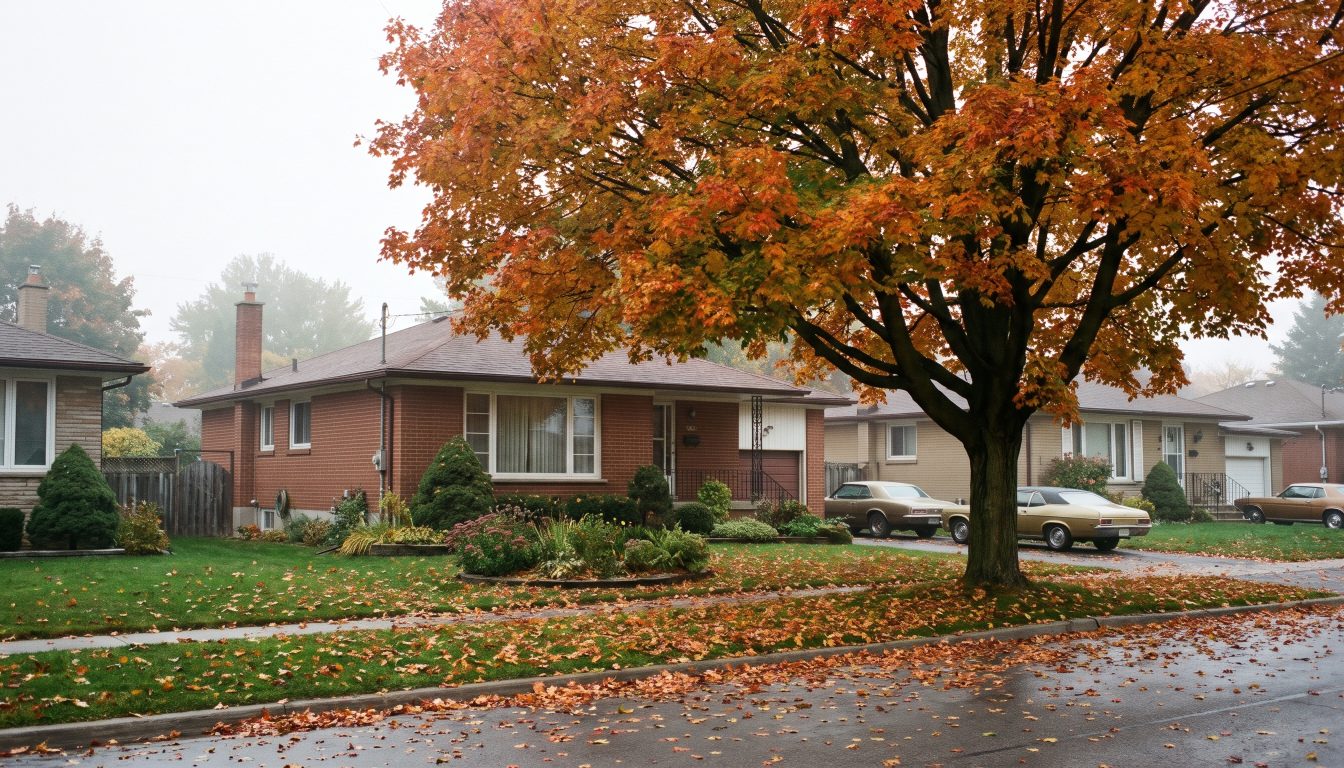
A reverse mortgage lets Ontario homeowners aged 55 or older borrow up to about 55% of their home’s value with no regular payments. Interest is added to the balance, which is repaid when you sell, move out or the last borrower dies. With GTA prices lower than in 2024, the dollar limit on most homes is lower too.
This guide is for homeowners in Ontario aged 55 and older, and their adult children, who are weighing a reverse mortgage in 2027. You will get how it works step by step, how much you could borrow at today’s GTA prices, what it really costs over time, and the questions to settle before you sign.
What is a reverse mortgage in Ontario?
A reverse mortgage is a loan secured on your home that you do not have to pay back month by month. You keep owning the home. The Financial Consumer Agency of Canada (FCAC) explains that interest is added to the loan, so the amount you owe grows over time. The loan is repaid when you sell, move out, the last borrower dies, or you default.
Ontario’s rules give the same picture. The standards for mortgage brokerages (O. Reg. 188/08) treat a mortgage as a reverse mortgage when no principal repayment is due while the last borrower lives in the home, and repayment is triggered by death, a sale, buying another principal residence, moving out with no reasonable prospect of returning, or a default.
The money is tax-free because it is a loan, not income. FCAC says it does not affect Old Age Security or the Guaranteed Income Supplement.
Who qualifies for a reverse mortgage in 2027?
According to FCAC, reverse mortgages are usually for homeowners aged 55 or older, and the home must normally be your primary residence, which means you live there at least six months a year. Other conditions you will meet:
- Everyone on title counts. The amount depends on the ages of all the people on title, the home’s type, condition and appraised value, and the lender. HomeEquity Bank’s own guide to its CHIP Reverse Mortgage says it uses the age of the youngest applicant.
- Existing debts come first. Any mortgage or home equity line of credit on the home usually has to be paid off, and the reverse mortgage can be used to do it.
- You keep paying the basics. Property tax, home insurance and upkeep stay your job. Letting the home fall into disrepair can count as a default.
- A lawyer signs off. In Ontario, a mortgage brokerage cannot arrange a reverse mortgage until it gets a lawyer’s signed statement that you received independent legal advice. HomeEquity Bank also says it requires a review with an independent lawyer.
The amount is based mainly on your age and your home rather than on your income, unlike a regular mortgage or a line of credit. That is the main reason people on a fixed pension look at it.
How much can you borrow with a reverse mortgage?
FCAC says you can usually borrow up to 55% of your home’s current value. Younger borrowers get less. Here is what 55% of a typical detached house works out to across the GTA, and how much that ceiling has moved as prices fell since 2024.
| Area (detached) | Median 2024 | Median 2026 | 55% ceiling 2024 | 55% ceiling 2026 |
|---|---|---|---|---|
| Mississauga | $1,371,085 | $1,225,000 | $754,097 | $673,750 |
| Brampton | $1,127,250 | $950,000 | $619,988 | $522,500 |
| Markham | $1,650,000 | $1,420,000 | $907,500 | $781,000 |
| Vaughan | $1,590,000 | $1,415,000 | $874,500 | $778,250 |
| Oakville | $1,763,000 | $1,625,000 | $969,650 | $893,750 |
| Burlington | $1,325,000 | $1,249,750 | $728,750 | $687,362 |
| Pickering | $1,190,000 | $1,039,999 | $654,500 | $571,999 |
Source: TRREB MLS data via REALM, January–October 2024 and January–October 2026, median sold price of detached homes by municipality. The 55% ceiling is my arithmetic on FCAC’s stated maximum; actual offers depend on age, the appraisal and the lender, and are often lower.
The 2027 lesson: the limit follows today’s appraisal, not what the house was worth at the peak. In Brampton the ceiling on a median detached house is about $97,000 lower than it would have been two years earlier. If you are counting on a reverse mortgage to pay off an existing mortgage, check the numbers against a current value, not an old one.
How do CHIP and the other reverse mortgages work?
FCAC lists HomeEquity Bank and Equitable Bank as federally regulated institutions that offer reverse mortgages, along with provincially regulated lenders and mortgage brokers. HomeEquity Bank sells the CHIP Reverse Mortgage, and many people search for “CHIP” when they mean reverse mortgages in general. FCAC notes that federally regulated institutions generally offer the protections of Canada’s Financial Consumer Protection Framework, and provincially regulated lenders may not offer the same ones.
You can usually take the money in one of three ways, according to FCAC:
- Lump sum. All of it at once. You pay interest on the full amount from day one, even on money sitting in the bank.
- Partial lump sum, then draws. Often an initial amount of about $25,000, with more later. Later draws may carry fees or change the rate.
- Regular advances. Typically about $1,000 a month or $3,000 every three months, often after an initial amount of about $20,000.
If you only need money over time, drawing it as you go usually keeps the balance smaller than taking it all at the start.
Instant Home Valuation
What’s your home
worth today?
Answer six quick questions and get an instant value range built from current Toronto & GTA sale data — property type, size, condition, lot and location all weighted the way a real pricing conversation weighs them. Takes about ninety seconds.
Reading recent GTA sale data…
Building your estimate
Estimated market value
—
$0–$0
Most likely value $0 · roughly $0 per square foot
What moved the number
Starting from the area baseline for your property type, here’s what each answer added or subtracted.
Market context
Recent local averages for comparison.
—
A range is a starting point.
A strategy is what sells.
This model doesn’t know that your neighbour’s identical semi went $80,000 over asking last month, or which two upgrades actually pay back in your area. That conversation is free and takes twenty minutes.
What does a reverse mortgage cost?
FCAC says reverse mortgage rates are usually higher than regular mortgage or line of credit rates. Costs can include an appraisal, set-up fees, legal fees, closing costs and prepayment penalties if you repay early. Some fees are added to the loan and some are paid up front. I could not find a dated, published rate sheet I could verify for this guide, so get a written quote from each lender.
The bigger cost is time. Because nothing is paid, interest is charged on interest. Here is how a $300,000 balance grows at three example rates if you make no payments.
| Example rate | After 5 years | After 10 years | After 15 years | After 20 years |
|---|---|---|---|---|
| 6% | $403,175 | $541,833 | $728,179 | $978,611 |
| 7% | $423,180 | $596,937 | $842,038 | $1,187,778 |
| 8% | $444,073 | $657,337 | $973,019 | $1,440,306 |
Source: my arithmetic, interest added twice a year, no payments, no new draws, no fees. Example rates only, not lender quotes.
At 7%, the balance roughly doubles in about ten years. Whether that is a problem depends on what the house does over the same years, and on what you want to leave. Some lenders let you make optional interest payments to slow the growth. HomeEquity Bank’s guide says it offers that option. Ask whether it applies to the product you are offered.
Did the 2026 rate hike change reverse mortgages?
Indirectly, yes. The Bank of Canada raised its policy rate from 2.25% to 2.50% on 28 October 2026, its first increase in more than three years, and said a further increase could be needed. Big-bank prime rose to 4.70%. The Bank expects inflation to average about 3% in 2027 and return to 2% by mid-2028.
Reverse mortgage rates are set by each lender, not by the Bank of Canada, but they live in the same world. Higher borrowing costs mean a growing balance grows faster. If you are choosing between a variable and a fixed rate, ask the lender how often a variable rate can change and what a five-year fixed costs. The next Bank of Canada decision is on 9 December 2026, and the 2027 dates start on 27 January.
What are the reverse mortgage pros and cons?
Pros
- No regular payments while you live in the home.
- The amount is based on your age and home, so a modest pension is less of a barrier.
- You stay in your home and keep title.
- Tax-free money that FCAC says does not affect OAS or GIS.
Cons
- Higher rates than a regular mortgage or line of credit.
- The balance grows, so there is less equity for you later and for your heirs.
- Upfront and exit costs, including prepayment penalties if you sell early.
- FCAC warns it may stop you getting a line of credit on the same home later.
FCAC warns that your estate may have to repay the loan within a set period after death, and that period may be shorter than the time it takes to settle the estate. Ask the lender for the exact deadline in writing, and what happens if one spouse moves into long-term care while the other stays home.
What happens when you die, move into care or sell?
The loan comes due. The home is usually sold and the lender is repaid first, with interest and any fees. What is left goes to you or your estate. If the home is in your estate, Ontario’s estate administration tax applies to the value above $50,000.
The “moving out” trigger is the one to read most closely. Ontario’s definition refers to vacating the home with no reasonable prospect of returning. A hospital stay is not the same as a permanent move into care, but the contract decides how each lender treats it. Families should read that clause together.
Reverse mortgage, line of credit or downsizing in 2027?
A reverse mortgage is one of three main ways to use home equity. A home equity line of credit usually costs less, but you need income to qualify and must pay at least the interest. Selling and moving somewhere smaller frees the most money with no debt, but it means moving. I compare all three in reverse mortgage vs HELOC vs selling, and the earlier reverse mortgage pros and cons guide covers the questions for couples.
Lower 2026 prices cut both ways. They shrink the reverse mortgage limit, but they also make the smaller home cheaper. In Mississauga, for example, the median detached house sold for $1,225,000 and the median condo apartment for $485,000 from January to October 2026, a gap of $740,000 before costs (TRREB MLS data via REALM). See what your house buys when you downsize for more places.
Before borrowing at all, check smaller help. Toronto and other GTA cities run property tax relief programs for eligible seniors, listed in property tax relief for seniors in the GTA.
A reverse mortgage can be the right tool for someone who wants to stay put for many years, has little room for monthly payments, and has talked it through with family. It is a poor fit for someone who might move within five years, because the fees and penalties bite hardest early. Get a current value first, then ask every lender for the projected balance at 5, 10 and 15 years and set it beside what downsizing would free.
What to do next
- Get a current value for your home with the estimator on this page, so you know what 55% really means today.
- Ask at least two lenders, or a mortgage broker, for a written quote with every fee and the projected balance at 5, 10 and 15 years.
- Read the default, move-out and estate repayment clauses with your own lawyer, as Ontario rules require for brokered reverse mortgages.
- Price the alternatives: a line of credit if you have income, and what selling would free after costs.
- If downsizing is on the table anywhere in the GTA, ask me for a written value and a plan for your next home before you decide.
Need help with this? Talk to me.
I’m Jatin Dua, Broker of Record at RE/MAX Quantum Realty, and I’m the best agent to do this kind of work for you in Toronto and across the GTA. Over $100 million in GTA sales and 100+ families helped sell. Feel free to contact me any time: call or text 833-330-1925 or email [email protected].
Frequently asked questions
How does a reverse mortgage work in Ontario?
A reverse mortgage in Ontario lets homeowners aged 55 or older borrow against their home with no regular payments. Interest is added to the balance each period, so the debt grows. The loan is repaid when you sell, move out permanently, the last borrower dies or you default, usually from the sale of the home.
How much can I get from a reverse mortgage in 2027?
In 2027 you can usually get up to 55% of your home’s current appraised value from a reverse mortgage, and younger borrowers get less. On a $1,225,000 home, the median detached price in Mississauga for January to October 2026, 55% is $673,750. The lender’s actual offer depends on age, home type and condition.
What is the CHIP reverse mortgage?
The CHIP Reverse Mortgage is the reverse mortgage sold by HomeEquity Bank, a federally regulated Canadian bank. It is for homeowners 55 and older and, like other reverse mortgages, lends up to 55% of the home’s value with no regular payments. HomeEquity Bank requires a review with an independent lawyer before it is finalized.
What are the pros and cons of a reverse mortgage?
The main pros of a reverse mortgage are no regular payments, a limit based on age and home value rather than income, and staying in your home with tax-free money. The main cons are higher rates than regular mortgages, a balance that grows every year, upfront and exit fees, and less equity left for you and your heirs in Ontario.
Do you need a lawyer for a reverse mortgage in Ontario?
Yes, in practice you need a lawyer. Ontario’s standards for mortgage brokerages (O. Reg. 188/08, s. 29) say a brokerage cannot arrange a reverse mortgage until it receives a lawyer’s signed statement that you got independent legal advice. HomeEquity Bank also requires a review with an independent lawyer before closing.
Does a reverse mortgage affect OAS or GIS?
No. The Financial Consumer Agency of Canada says money from a reverse mortgage is tax-free and does not affect Old Age Security or the Guaranteed Income Supplement. That is because it is a loan, not income. Interest still builds on the balance, so the cost shows up later when the home is sold.
What happens to a reverse mortgage when the owner dies?
When the last borrower dies, the reverse mortgage comes due and the estate repays it, usually by selling the home. FCAC warns that lenders set a repayment period that may be shorter than the time needed to settle an estate. Whatever is left after the lender is paid goes to the estate and heirs.
Can you lose your home with a reverse mortgage?
You can lose your home with a reverse mortgage if you default. FCAC lists defaults such as letting the home fall into disrepair, dishonesty in the application or breaking the contract terms, and says foreclosure is a possible result. Keeping up property tax, insurance and maintenance is the borrower’s job.
Is a reverse mortgage a good idea in 2027?
A reverse mortgage can be a good idea in 2027 for someone 55 or older who plans to stay in their home for many years and cannot carry monthly payments. With rates rising in late 2026 and GTA prices lower than in 2024, compare it with a line of credit and with downsizing before signing.
Sources
- Financial Consumer Agency of Canada: Reverse mortgages
- O. Reg. 188/08, Mortgage Brokerages: Standards of Practice, s. 29 (e-Laws)
- HomeEquity Bank: A guide to the CHIP Reverse Mortgage (brochure)
- Bank of Canada raises the policy rate by 25 basis points to 2½% (28 October 2026)
- Bank of Canada publishes its 2027 schedule for policy interest rate announcements
- Bank of Canada: Policy interest rate
Related reading
- The Bank of Canada Raised Rates: What It Means for GTA Buyers, Sellers and Owners
- Variable-Rate Mortgage After the Hike: How Much Your Payment Changes
- Should I Lock In My Variable Mortgage Before 2027?
- Mortgage Renewal in 2027 After the Rate Hike: Your Options in Ontario
About the author — Jatin Dua, Toronto and GTA real estate broker
I am Jatin Dua, Broker of Record and co-founder of RE/MAX Quantum Realty Inc., Brokerage, Unit 101, 799 The Queensway, Toronto. I work with buyers and sellers across Toronto and the GTA and have helped more than 100 families sell. Four-plus years of active GTA transactions and over $100 million in sales volume.
Reach me at [email protected] or 833-330-1925, or book a call.
More from the library
- Airbnb Rules in Toronto 2026: Registration, the 180-Night Cap and What Condo Boards Can Ban
- Staging a $4 Million Home: What Actually Changes the Price
- Moving From Toronto to Durham Region: What You Gain and Give Up (2026)
- Your tenant damaged the unit: the $50,000 trap, and why the deposit is not a damage deposit
- Top 5 Condo Buildings to Rent in Yonge and St. Clair, Toronto (2026)
- Axiom Condos, 460 Adelaide St E: Kirkor Towers With Heat Included
How this estimate is produced
The estimate blends recent selling prices for comparable units in the area with the details you entered: size, bedrooms, floor, exposure, parking, locker and condition. It is a statistical estimate, not an appraisal and not a formal opinion of value.
What it cannot see
- Interior condition and upgrades beyond what you told it
- Unit-specific issues: noise, an obstructed view, a pending special assessment
- Your reserve fund and where the maintenance fee is heading
- What is competing with you in your own building right now
What moves the number most
- Floor and exposure, which can separate otherwise identical units
- Parking and locker, each priced separately by buyers
- Kitchen and bathroom condition
- Maintenance fee per square foot against the rest of the building
Treat it as a range, not a price
A single figure to the dollar would be false precision. Use the estimate to decide whether a move is worth exploring. Before you price anything for the market, the number needs checking against what is actually selling and sitting in your building this month, and that takes a person. I will do that for you at no cost and with no obligation.
Market data is sourced from the Toronto Regional Real Estate Board. Information is deemed reliable but is not guaranteed. This tool does not provide an appraisal or a formal opinion of value, and it is not a substitute for advice on your specific property. Jatin Dua, Broker of Record, RE/MAX Quantum Realty.
