
Published 2 November 2026 · By Jatin Dua, Broker of Record, RE/MAX Quantum Realty
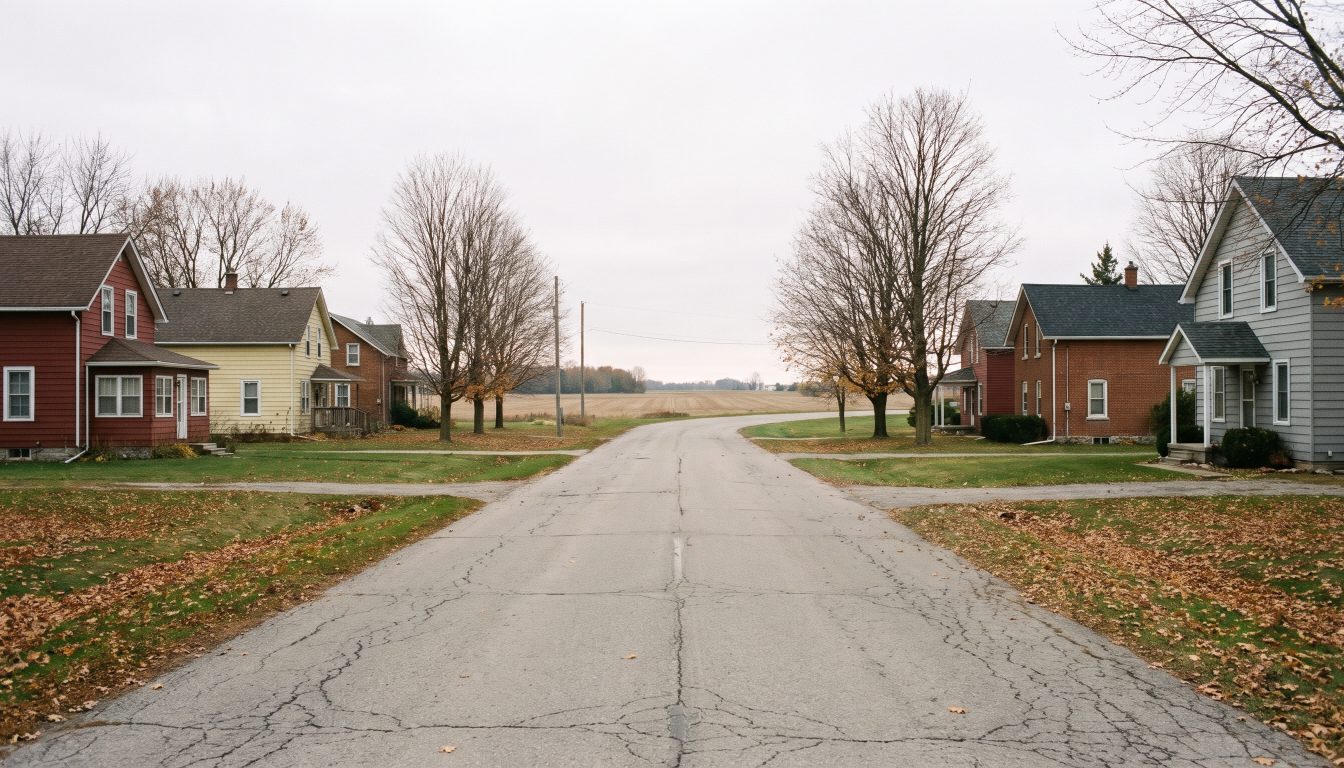
Selling in the GTA and buying in a cheaper town can free up hundreds of thousands of dollars. In 2026, detached medians were $730,000 in Oshawa and $736,750 in Hamilton, versus $1,195,000 in Toronto’s E03. Sell first if you can, report the sale as your principal residence, and test the new town before you commit.
This guide is for GTA homeowners thinking about selling and moving somewhere cheaper in 2027, whether that is Hamilton, Durham, a smaller town or another province. You will see what houses cost in the lower-priced parts of the TRREB area, how much equity a move can free up, the tax and timing rules that matter, and what to check before you buy in a new place.
Are people really moving out of Toronto?
Yes. Statistics Canada estimates that the Toronto census metropolitan area lost a net 64,794 people to the rest of Ontario between July 2024 and July 2025. That means 64,794 more people moved from the Toronto area to other parts of the province than moved the other way. That was far larger than the same kind of loss for Montréal (22,748) or Vancouver (16,166). Another net 12,698 people left for other provinces.
Statistics Canada also notes that areas outside cities and larger towns have kept gaining people from urban areas in their own province, which suggests steady interest in rural and small-town living. The overall Toronto-area population was almost unchanged that year, down 992 people, because births and immigration offset the people leaving.
Where can you move from Toronto and pay less for a house?
Within the TRREB area, the lowest detached prices in 2026 were in Hamilton, Durham Region and the towns to the north and northwest. Here is what a detached house cost from January to October 2026, compared with a few GTA benchmarks.
| Detached, Jan–Oct 2026 | Median price | Change vs 2025 | Sales | Avg days on market |
|---|---|---|---|---|
| Brock | $661,000 | -2.8% | 108 | 36 |
| Oshawa | $730,000 | -8.8% | 1,028 | 25 |
| Hamilton | $736,750 | -5.5% | 2,736 | 38 |
| Orangeville | $795,000 | -5.2% | 175 | 40 |
| Georgina | $800,000 | -2.1% | 475 | 36 |
| Clarington | $820,000 | -4.1% | 721 | 25 |
| Scugog | $885,000 | -4.7% | 201 | 39 |
| For comparison: Mississauga | $1,225,000 | -5.8% | 1,798 | 31 |
| For comparison: Toronto E03 (East York area) | $1,195,000 | -0.4% | 375 | 24 |
| For comparison: Toronto W02 (Junction, Bloor West) | $1,637,500 | -1.1% | 194 | 14 |
Source: TRREB MLS data via REALM, January–October 2026 vs the same period of 2025 (median sold price, average days on market). Covers the TRREB area only; places such as Kitchener-Waterloo, Barrie, Niagara or Ottawa are reported by their own boards.
Two things stand out. First, prices fell in the cheaper areas too, so the gap between Toronto and these towns has not widened much. Second, homes in most of these places took longer to sell than in central Toronto. That matters if you ever need to sell again. If you are looking east, my guide to moving from Toronto to Durham Region goes deeper on the towns there.
How much money can you free up by selling in Toronto and buying somewhere cheaper?
Often a lot, and the savings start with land transfer tax. Inside the City of Toronto, buyers pay both Ontario’s land transfer tax and Toronto’s municipal land transfer tax. Outside Toronto, you pay only the Ontario tax. Here is a simple example using 2026 medians, before selling costs and moving costs.
| Example | Stay in Toronto (E03) | Move to Oshawa |
|---|---|---|
| Detached house at the 2026 median | $1,195,000 | $730,000 |
| Ontario land transfer tax | $20,375 | $11,075 |
| Toronto municipal land transfer tax | $20,375 | $0 |
| Total land transfer tax | $40,750 | $11,075 |
| Price plus land transfer tax | $1,235,750 | $741,075 |
Source: my calculations using Ontario land transfer tax rates (ontario.ca) and City of Toronto MLTT rates, with REALM median prices. Before first-time buyer refunds, legal fees and moving costs.
In this example, a seller who owns a typical East York-area house and moves to a typical Oshawa house frees up about $495,000 before other costs. That money can pay down or pay off a mortgage, fund retirement, or help children. Your own numbers depend on your home’s value, your mortgage and what you buy. Do not forget the costs of selling: commission, legal fees, any mortgage penalty and moving. My breakdown of seller closing costs in Ontario for 2027 lists them.
Should you sell first or buy first when you leave the GTA?
For most people leaving the GTA, selling first is safer. You will know exactly how much money you have, and you avoid carrying two homes if your Toronto house takes longer to sell than expected. The trade-off is that you may need to rent for a short time or negotiate a long closing on your sale.
Buying first makes sense if you have found the right home in a small market where good houses rarely come up. If you do, line up bridge financing and price your Toronto home to sell, not to test the market. My guides on whether to sell first or buy first and bridge financing in Ontario walk through both paths.
Instant Home Valuation
What’s your home
worth today?
Answer six quick questions and get an instant value range built from current Toronto & GTA sale data — property type, size, condition, lot and location all weighted the way a real pricing conversation weighs them. Takes about ninety seconds.
Reading recent GTA sale data…
Building your estimate
Estimated market value
—
$0–$0
Most likely value $0 · roughly $0 per square foot
What moved the number
Starting from the area baseline for your property type, here’s what each answer added or subtracted.
Market context
Recent local averages for comparison.
—
A range is a starting point.
A strategy is what sells.
This model doesn’t know that your neighbour’s identical semi went $80,000 over asking last month, or which two upgrades actually pay back in your area. That conversation is free and takes twenty minutes.
Do you pay capital gains tax when you sell your Toronto home and move?
Usually not, if the home was your principal residence for every year you owned it. The Canada Revenue Agency says the gain on selling a home that was solely your principal residence for all those years is not taxed. But you must still report the sale on Schedule 3 of your tax return and file Form T2091(IND) to designate the home as your principal residence. Since 2016, the CRA allows the exemption only if you report the sale and designation. If you forget, a late designation may be accepted, but a penalty can apply.
It gets more complicated if you rented out part of the home, such as a basement apartment, or if it was not your main home for some years. Then part of the gain may be taxable. Speak to an accountant before you list, not after. My guide to capital gains tax when selling a home in Ontario explains the main cases.
What should you check before buying in a smaller town?
A cheaper house is only a good deal if the new place works for your daily life. Check these before you firm up.
- Commute and transit: drive the route at rush hour and check GO train or bus schedules for the exact station you would use.
- Property tax: each municipality sets its own rate, so compare the town’s residential rate with Toronto’s 2026 rate of about 0.77% of assessed value.
- Well and septic: many rural homes are not on city water and sewer. Get the well water tested and the septic system inspected as conditions of your offer.
- Internet and services: confirm the internet speed at the address, and how far you are from a hospital, schools and shopping.
- Resale speed: in places like Hamilton, Orangeville and Scugog, detached homes took 38 to 40 days on average to sell in 2026, versus 14 days in Toronto’s W02.
Do not fall in love with a house in a new town and firm up the purchase before your GTA home is sold, unless you can afford to carry both. Prices fell in 2026 in every area in the table above, and a slow sale on top of two mortgages, two sets of property taxes and bridge interest can eat a big share of the equity you were trying to free up.
What changes if you are moving to another province?
The selling side stays the same: you sell under Ontario rules, and the federal principal residence rules apply wherever you move in Canada. The buying side changes. Ontario’s land transfer tax and Toronto’s municipal tax only apply to property in Ontario and Toronto, so you will face the destination province’s own rules on transfer taxes, closing procedures and lawyers or notaries. Check that province’s government website before you budget.
Ask your lender early whether your mortgage can move with you to a property in another province, and what the penalty would be if it cannot. And give yourself extra time. A cross-province move usually needs a longer closing than a move within the GTA.
When is the best time in 2027 to sell and leave the GTA?
There is no perfect month, but there are better and worse setups. The Bank of Canada raised its policy rate to 2.50% on 28 October 2026 and said a further increase could be needed. Its next decision is on 9 December 2026. Higher rates mostly hurt buyers who need large mortgages, which describes many buyers of GTA houses. CMHC’s July 2026 baseline still expects Toronto-area sales to rise from 63,500 in 2026 to 71,500 in 2027, so more buyers may be active next year.
My own view, and it is only a view, is that spring 2027 is a sensible target for most sellers leaving the GTA, because more buyers usually shop then and you have the winter to prepare the house and research your new town. If you need to move sooner, price to recent sales and sell now rather than waiting on a forecast.
My advice to anyone leaving the GTA comes down to three things: sell first or have a firm sale before buying, spend time in the new town in winter before committing, and keep a cash cushion from the sale instead of spending it all on a bigger house. A cheaper town is a lifestyle change as much as a financial one. Test the lifestyle before you lock in the money.
What to do next
- Use the estimator above to get a starting value for your GTA home.
- Pick two or three target towns and compare their median prices and days on market with the table in this guide.
- Ask your lender for a payout statement and your accountant whether any part of the gain is taxable.
- Decide whether you will sell first or buy first, and set a closing date that fits your move.
- Book a call if you want a plan that covers pricing, timing and an agent referral where you are moving.
Need help with this? Talk to me.
I’m Jatin Dua, Broker of Record at RE/MAX Quantum Realty, and I’m the best agent to do this kind of work for you in Toronto and across the GTA. Over $100 million in GTA sales and 100+ families helped sell. Feel free to contact me any time: call or text 833-330-1925 or email [email protected].
Frequently asked questions
Where are people moving from Toronto?
Most people leaving Toronto move elsewhere in Ontario. Statistics Canada estimates the Toronto metropolitan area lost a net 64,794 people to the rest of Ontario between July 2024 and July 2025, the largest such loss in Canada, and a net 12,698 to other provinces. Statistics Canada also noted gains for rural and small-town areas from people leaving cities.
What is the cheapest place to buy a house near Toronto in 2026?
Within the TRREB area, Brock had the lowest detached median at $661,000 from January to October 2026, followed by Oshawa at $730,000 and Hamilton at $736,750. Orangeville, Georgina and Clarington were all between $795,000 and $820,000. Those compare with $1,225,000 in Mississauga, based on TRREB MLS data via REALM.
How much do you save on land transfer tax by buying outside Toronto?
Buying outside the City of Toronto saves you the Toronto municipal land transfer tax, which equals the Ontario tax on most homes up to $2 million. On a $730,000 house, that saving is $11,075. You still pay Ontario’s land transfer tax anywhere in the province. First-time buyers can get up to $4,000 back from Ontario.
Do I pay capital gains tax if I sell my house in Toronto and move?
You usually pay no capital gains tax on selling your Toronto home if it was your principal residence for every year you owned it. You must still report the sale on Schedule 3 and file Form T2091(IND) with your tax return for that year. If you rented part of the home or lived elsewhere for some years, part of the gain may be taxable.
Should I sell my house in Toronto and move to a cheaper city?
Selling in Toronto and moving to a cheaper city can free up a large amount of equity. In 2026, a median East York-area detached house cost $1,195,000 versus $730,000 in Oshawa, a gap of $465,000 before land transfer tax and selling costs. It makes most sense if your work, family and health care needs fit the new place.
Is it better to sell or buy first when moving out of the GTA?
For most people moving out of the GTA, selling first is safer. You know exactly how much you have to spend and avoid carrying two homes. Buying first can make sense in a small market where the right house rarely comes up, but only with bridge financing and a GTA home priced to sell quickly.
Are house prices falling in Hamilton and Oshawa?
Yes. From January to October 2026, the median detached price fell 5.5% to $736,750 in Hamilton and 8.8% to $730,000 in Oshawa compared with 2025, based on TRREB MLS data via REALM. Detached homes took 38 days on average to sell in Hamilton and 25 days in Oshawa, so buyers moving from Toronto have room to negotiate.
How long does it take to sell a house in Toronto before moving?
A detached house in central Toronto districts often sold in two to four weeks on average in 2026, for example 14 days in W02 and 24 days in E03, based on TRREB MLS data via REALM. Add a closing period of 30 to 90 days. Condos and suburban homes took longer, so plan for two to four months in total.
When is the best time to sell and leave the GTA in 2027?
Spring 2027 is a reasonable target for most GTA sellers who plan to move away, because more buyers usually shop then and you have winter to prepare. The Bank of Canada raised its rate to 2.50% in October 2026 and meets again on 9 December 2026, so rates may still move. If you must move sooner, price to recent sales.
Sources
- Statistics Canada, Canada’s population estimates: Subprovincial areas, 2025
- Canada Revenue Agency: Principal residence and other real estate
- Ontario: Calculating land transfer tax
- City of Toronto: Municipal Land Transfer Tax rates and fees
- City of Toronto: Property tax rates and fees
- CMHC, Summer Update: 2026 Housing Market Outlook
- Bank of Canada press release, 28 October 2026
Related reading
- Seller Closing Costs in Ontario for 2027: Every Fee Before You Get Paid
- How to Sell a House in Toronto, Step by Step (2027)
- Closing Costs on a New Build in Ontario: What Builders Add
- How Much Is My House Worth in Caledon? (2027)
About the author — Jatin Dua, Toronto and GTA real estate broker
I am Jatin Dua, Broker of Record and co-founder of RE/MAX Quantum Realty Inc., Brokerage, Unit 101, 799 The Queensway, Toronto. I work with buyers and sellers across Toronto and the GTA and have helped more than 100 families sell. Four-plus years of active GTA transactions and over $100 million in sales volume.
Reach me at [email protected] or 833-330-1925, or book a call.