
Published 30 October 2026 · By Jatin Dua, Broker of Record, RE/MAX Quantum Realty
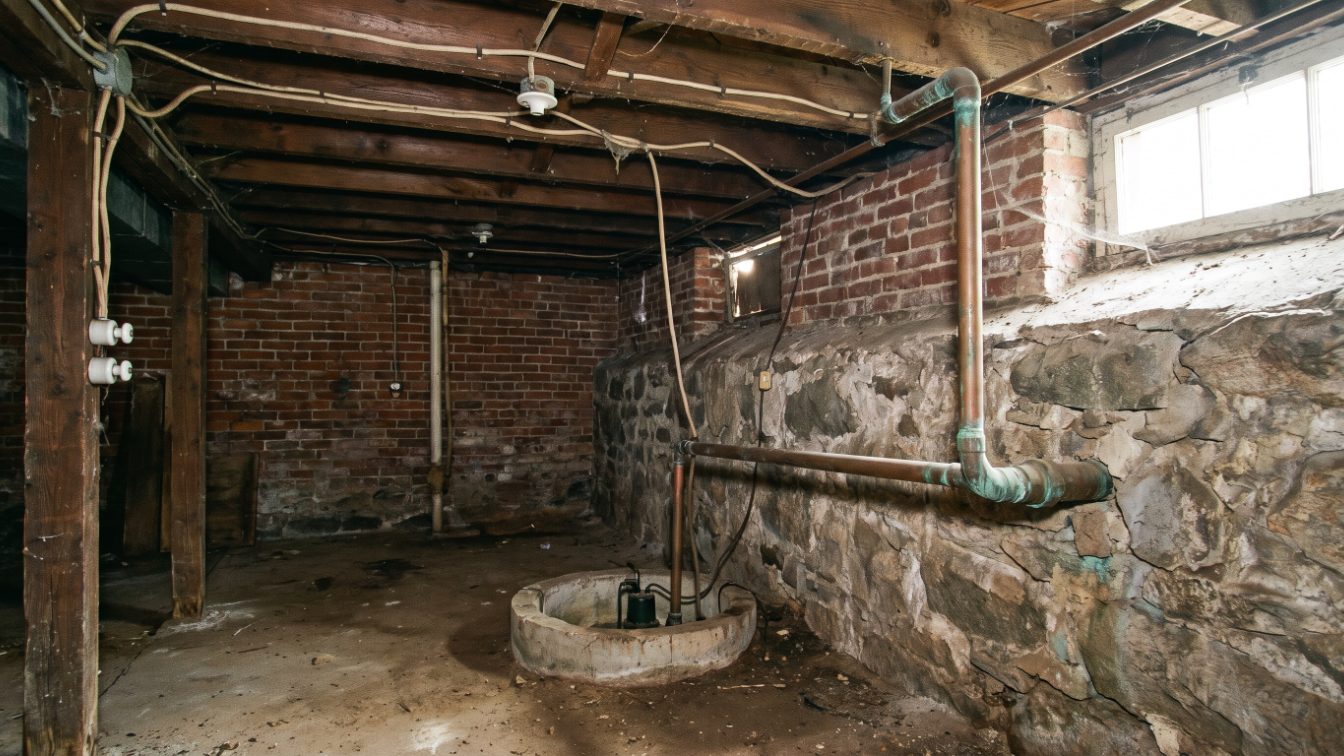
The five red flags I watch for in older Etobicoke homes are: knob-and-tube wiring (used from the early 1900s to 1940s, per ESA); a lead water service pipe (homes built before the mid-1950s); an unused underground oil tank, which TSSA says must be removed; asbestos, including vermiculite insulation; and basement water, where Toronto’s subsidy pays up to $6,650. The order is my judgement, not an official ranking.
How I chose these five
I picked the five issues that come up most often when a buyer looks at an older house in Etobicoke, and that each have a clear official rule or program behind them. A home inspector flags many things, but these are the ones that can change your insurance, your financing, your renovation budget or your health.
For each one I relied on the agency that actually sets the rules: the Electrical Safety Authority (ESA) for wiring, the City of Toronto for lead water pipes and basement flooding, the Technical Standards and Safety Authority (TSSA) for buried oil tanks, and Health Canada for asbestos. I left out anything I could not confirm on one of those pages.
This is not a substitute for a home inspection or a licensed trade. It is a list of what I want my buyers to ask about before the conditions on an offer expire.
1. Knob-and-tube (and aluminum) wiring
What it is
Knob-and-tube is an early wiring method. The ESA says it “was used in homes in the early 1900s to 1940s and is no longer used,” and that these older systems “do not have the same safety benefits as modern ones,” such as ground fault protection in bathrooms and outdoors.
The ESA does not say it must be ripped out. Its position is that knob-and-tube “is safe, provided it is properly maintained by a Licensed Electrical Contractor,” and that the current Ontario Electrical Safety Code is not retroactive.
Why it matters to buyers
The real pressure usually comes from insurance. The ESA notes that many insurers “will not provide or renew coverage on homes with this type of wiring,” and some require replacement before they will insure.
Homes built from the mid-1960s to the late 1970s may have a different issue: aluminum branch wiring. The ESA says aluminum wiring “is safe if proper connections and terminations are made,” but that some insurers want an ESA inspection and a Certificate of Acceptance before they will cover the house.
Practical notes
- Ask the seller whether any knob-and-tube remains, and whether past electrical work came with ESA paperwork.
- Have a Licensed Electrical Contractor assess the system. The ESA points out this is different from a general home inspection.
- Call your insurer before your conditions expire, not after.
Sources: ESA on knob-and-tube and ESA on aluminum wiring.
2. A lead water service pipe
What it is
The water the City treats does not contain lead, but older pipes can add it. The City of Toronto says lead service pipes “affect homes built before the mid-1950s,” and that lead can also come from solder used before 1990 and leaded-brass fixtures.
The service pipe has two owners. The City owns the section from the watermain to the property line, and the homeowner owns the section from the property line into the house.
Why it matters to buyers
The City lists pregnant people, infants and children under six as most at risk. It also recommends replacing both sides at the same time, because cutting the pipe to replace only one side can temporarily raise lead levels.
Under the City’s Priority Lead Water Service Replacement Program, a homeowner who commits to replacing the private side can ask the City to replace its side on a priority basis. The City aims to replace its portion within 12 weeks of approval, and the private side is the homeowner’s cost.
Practical notes
- A licensed plumber can confirm the pipe material. You can also ask 311 for a records check, which the City says can take up to 30 business days.
- The City offers free lead testing for residents and says “Testing is the only way to know if your water has lead.”
- Until it is replaced, the City suggests using cold water for drinking and cooking and an NSF-053 certified filter.
Sources: City of Toronto, lead in drinking water and Priority Lead Water Service Replacement Program.
3. An underground oil tank
What it is
Some older houses were heated with fuel oil stored in a buried tank, and the tank was not always removed when the house switched to gas. TSSA is direct about it: “Ontario regulations require you to remove an unused underground storage tank.”
Why it matters to buyers
The cost follows the owner. TSSA says owners are “responsible for the costs of maintaining, upgrading, and removing their underground tanks,” including cleaning up any contamination. When a tank is removed, the owner or operator must submit an Environmental Assessment Report.
Leaving a tank in the ground is not automatic. TSSA “may issue a variance” allowing it, but only after an application and an environmental assessment.
Practical notes
- Look for capped fill or vent pipes near the foundation, and ask the seller directly about past oil heat.
- Only a TSSA-registered petroleum contractor may remove a buried fuel oil tank. Ask for the registration number.
- If a tank is suspected, put a specific condition in the offer rather than relying on a general inspection clause.
I go through this in more detail in my guide to underground oil tanks in Ontario. Source: TSSA, FAQs: Storage Tanks.
4. Asbestos and vermiculite insulation
What it is
Health Canada says asbestos was mainly used before 1990 for insulation and fireproofing. In older homes it can turn up in vermiculite attic insulation, insulation around hot water pipes and tanks, floor and ceiling tiles, plaster, roofing products, siding and some heating systems.
Why it matters to buyers
The risk comes from disturbing it. Health Canada says there are no significant health risks if asbestos materials are left undisturbed, sealed behind walls or isolated in an attic, but drilling, sawing, sanding or scraping can release fibres linked to lung cancer, asbestosis and mesothelioma.
That makes it mostly a renovation budget issue. If you plan to open walls, redo an attic or remove old flooring, testing and professional removal need to be part of the plan.
Practical notes
- Health Canada advises hiring a professional to test for asbestos before renovating.
- For vermiculite, it advises not storing things in the attic, keeping children out, and not disturbing or removing it yourself.
- If asbestos is found, hire a qualified removal specialist.
Source: Health Canada, Asbestos and your health.
5. Basement water and flooding risk
What it is
Water in an older basement can come from the ground, from the roof, or from the sewer backing up. A home inspector will look for staining, efflorescence and past repairs, but the City’s programs focus on the sewer and drainage side.
Why it matters to buyers
Toronto’s Basement Flooding Protection Subsidy Program offers up to $6,650 per property for work completed on or after November 12, 2025. The City covers up to 80% of invoiced costs, with maximums of $500 for a home plumbing assessment, $1,600 per backwater valve (up to two), $2,250 for a sump pump, $300 for a battery backup and $400 for weeping tile severance and capping.
The program applies to single-family homes up to fourplexes. Downspouts must be disconnected from the sewer, which the City says is mandatory for all Toronto property owners unless an exemption is granted.
Practical notes
- Ask whether the house already has a backwater valve, and ask for the permit if it does. A backwater valve needs a building permit and inspection to qualify.
- Contractors must hold a valid City of Toronto business licence at the time of the work.
- Applications are due within two years of installation, and the City says processing can take up to 10 weeks.
My basement flooding subsidy guide walks through the application. Sources: City of Toronto subsidy program and mandatory downspout disconnection.
The five at a glance
| Red flag | Who sets the rules | Who to call | Help available |
|---|---|---|---|
| Knob-and-tube or aluminum wiring | ESA | Licensed Electrical Contractor | None listed; check insurer requirements |
| Lead water service pipe | City of Toronto | Licensed plumber, or 311 for records | City replaces its side; free testing |
| Underground oil tank | TSSA | TSSA-registered petroleum contractor | None; owner pays removal and clean-up |
| Asbestos or vermiculite | Health Canada guidance | Professional tester and removal specialist | None listed |
| Basement water | City of Toronto | City-licensed plumber or drain contractor | Subsidy up to $6,650 per property |
What this means if you’re buying or selling in Etobicoke
If you are buying an older house, the age of the home tells you which questions to ask. A house built before the mid-1950s is in the City’s range for a lead service pipe, and a house from the first half of the 1900s is in the ESA’s range for knob-and-tube. Aluminum wiring belongs to the mid-1960s to late 1970s.
None of these has to kill a deal, but each one has a cost and a timeline. I would rather a buyer price in a wiring update or a pipe replacement than discover it when the insurer calls. Plumbing questions do not stop at lead, either; my Kitec plumbing guide covers a newer problem pipe.
If you are selling, gather the paperwork before you list: ESA certificates, the backwater valve permit, any oil tank removal records and plumber invoices. Documents answer a buyer’s question in one page, and a clear answer usually keeps a conditional offer moving.
Free tool — AI home value estimator
Instant Home Valuation
What’s your home
worth today?
Answer six quick questions and get an instant value range built from current Toronto & GTA sale data — property type, size, condition, lot and location all weighted the way a real pricing conversation weighs them. Takes about ninety seconds.
Reading recent GTA sale data…
Building your estimate
Estimated market value
—
$0–$0
Most likely value $0 · roughly $0 per square foot
What moved the number
Starting from the area baseline for your property type, here’s what each answer added or subtracted.
Market context
Recent local averages for comparison.
—
A range is a starting point.
A strategy is what sells.
This model doesn’t know that your neighbour’s identical semi went $80,000 over asking last month, or which two upgrades actually pay back in your area. That conversation is free and takes twenty minutes.
Frequently asked questions
Is knob and tube wiring illegal in Ontario?
No. The ESA says knob-and-tube wiring is safe if it is properly maintained by a Licensed Electrical Contractor, and the current Ontario Electrical Safety Code is not retroactive. The practical problem is insurance: the ESA notes many insurers will not provide or renew coverage on homes with it, and some require replacement first.
How do I know if my Toronto house has a lead water pipe?
The City of Toronto says lead service pipes affect homes built before the mid-1950s. A licensed plumber can confirm the material, or you can ask 311 for a records check, which can take up to 30 business days. The City also offers free lead testing, and says testing is the only way to know if your water has lead.
Who pays to remove an underground oil tank in Ontario?
The owner. TSSA says owners of underground tanks are responsible for the costs of maintaining, upgrading and removing them, including contamination clean-up. Only a TSSA-registered petroleum contractor may remove a buried fuel oil tank, and an Environmental Assessment Report must be submitted when a tank is removed.
Is vermiculite insulation dangerous?
Health Canada says vermiculite-based insulation may contain asbestos. It poses no significant risk when left undisturbed and isolated in an attic, but renovation work can release fibres. Health Canada advises not disturbing or removing it yourself, keeping children out of the attic, and hiring trained professionals for any renovation.
How much is Toronto’s basement flooding subsidy?
For work completed on or after November 12, 2025, the City offers up to $6,650 per property, covering up to 80% of invoiced costs. Maximums include $1,600 per backwater valve (up to two), $2,250 for a sump pump, $300 for a battery backup, $500 for a plumbing assessment and $400 for weeping tile severance.
Does a home inspection check for all of these?
A general home inspection may spot signs of them, but the ESA notes that a Licensed Electrical Contractor’s assessment is different from a home inspection because it focuses only on the electrical system. Lead pipes, oil tanks and asbestos are each best confirmed by the specific trade or test the official agencies recommend.
Sources
- Knob and Tube Wiring — Electrical Safety Authority
- Aluminum Wiring — Electrical Safety Authority
- Lead in Drinking Water — City of Toronto
- Priority Lead Water Service Replacement Program — City of Toronto
- FAQs: Storage Tanks — TSSA
- Asbestos and your health — Health Canada
- Basement Flooding Protection Subsidy Program — City of Toronto
- Mandatory Downspout Disconnection — City of Toronto
Related reading
- Top 5 Home Upgrades That Add the Most Value in Toronto (2026)
- Top 5 Etobicoke Condos for Downsizers (2026)
- Top 5 Townhouse Communities in Etobicoke (2026)
- Top 5 Events in Etobicoke
About the author — Jatin Dua, Toronto and GTA real estate broker
I am Jatin Dua, Broker of Record and co-founder of RE/MAX Quantum Realty Inc., Brokerage, Unit 101, 799 The Queensway, Toronto. I work with buyers and sellers across Toronto and the GTA and have helped more than 100 families sell. Four-plus years of active GTA transactions and over $100 million in sales volume. Every figure here comes from a published table, regulator or statute linked in the sources, so you can check all of it without asking me.
Reach me at [email protected] or 833-330-1925, or book a call.