
Published 2 November 2026 · By Jatin Dua, Broker of Record, RE/MAX Quantum Realty
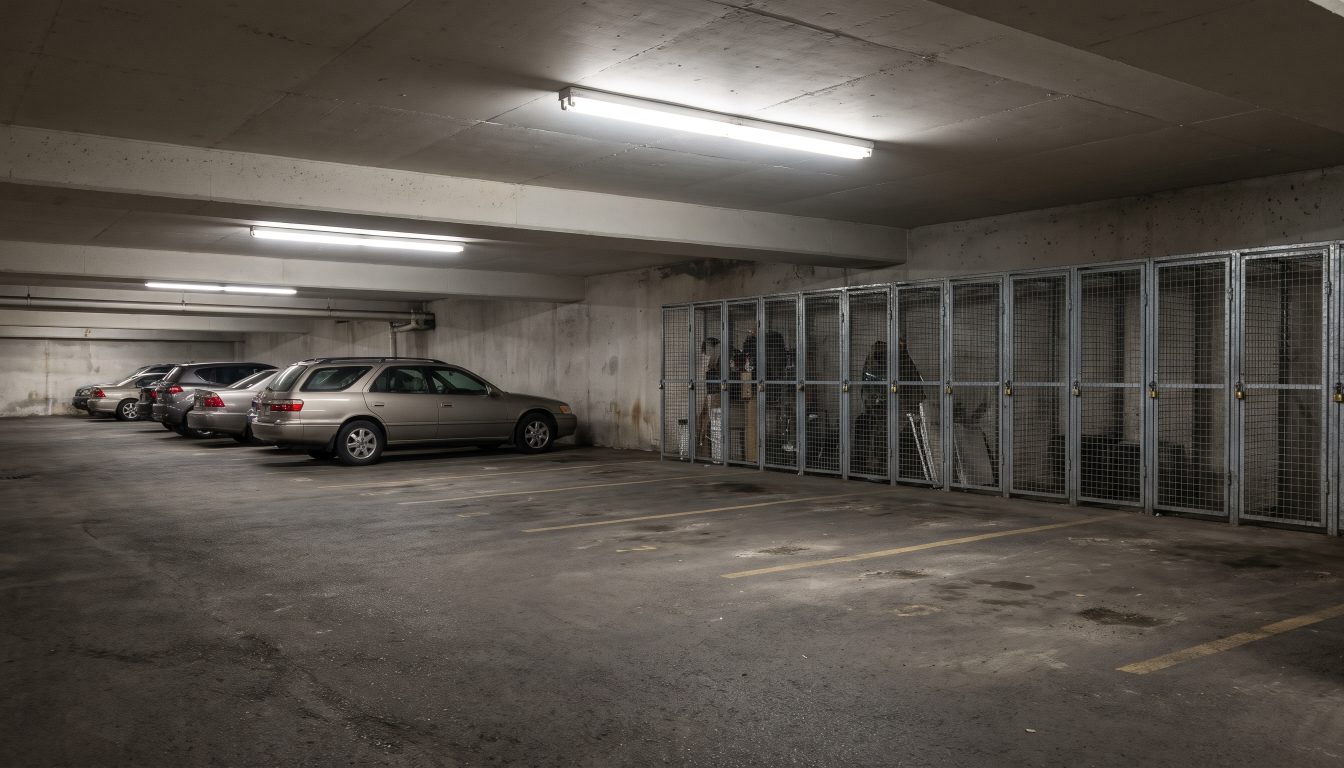
Yes, an Ontario landlord can charge for parking or a storage locker if the tenant agrees, but the charge counts as rent under the Residential Tenancies Act. It can be added mid-lease only by agreement at cost, rises only with your total rent (1.9% guideline for 2027), and cannot be removed without lowering your rent.
This guide is for Ontario tenants who have been asked to pay for a parking spot or storage locker, and for landlords who want to charge for one the right way. It explains when the charge is allowed, how much it can rise, what happens if the spot is taken away, and how to get money back if you were overcharged.
Can a landlord charge for parking in Ontario?
Yes, a landlord in Ontario can charge for parking, and for a storage locker, as long as the tenant agrees to it. But the charge is not a separate fee the landlord can set and change at will. Under the Residential Tenancies Act, 2006 (RTA), “rent” includes money paid for any services and facilities the landlord provides with the unit, and the Act lists “parking and related facilities” and “storage facilities” by name. So a parking or locker charge from your landlord is part of your rent, even if it is billed on a separate line.
Ontario’s standard lease reflects this. Section 2 of the lease lists how many parking spaces come with the unit and where they are. Section 5 lists the base rent plus any separate charges for parking or other services, and the total of those amounts is the lawful rent. Every future rent increase is worked out from that total.
Is a parking fee part of the rent under the Residential Tenancies Act?
It is, and that one point decides almost every parking question. Because the charge counts as rent, the normal rent rules apply to it. The table below shows how each rule works for a parking spot or locker your landlord provides.
| Situation | What the RTA says | Where it is |
|---|---|---|
| Parking or locker included at the start of the lease | The charge is part of the lawful rent | s. 2 (definitions of rent and services and facilities) |
| Adding a spot or locker during the tenancy | Allowed only if both sides agree; no 90-day notice or 12-month wait needed | s. 123; O. Reg. 516/06, s. 16 |
| Price of an added spot or locker | No more than the landlord’s actual cost, or a reasonable amount based on its value if there is no cost | O. Reg. 516/06, s. 16 (2) |
| Yearly increase | Counted in the total rent: guideline limit (2.1% in 2026, 1.9% in 2027), 90 days’ written notice, 12 months between increases | ss. 116, 119, 120 |
| Landlord stops providing a spot by agreement | Rent must go down | s. 125; O. Reg. 516/06, s. 16 (5) |
| Landlord removes or reduces it without agreement | Tenant can apply for a rent reduction within one year | s. 130 |
| Landlord collects more than the lawful rent | Tenant can apply for a refund within one year | ss. 134, 135 |
Source: Residential Tenancies Act, 2006 and O. Reg. 516/06 (Ontario e-Laws, current consolidation); rent increase guideline from ontario.ca, as of November 2026.
Can a landlord add a parking or storage charge in the middle of a lease?
Only if you agree. Section 123 of the RTA lets a landlord raise the rent at any time if the landlord and tenant agree that the landlord will add a parking space, or another item on a list in the regulation. That list, in O. Reg. 516/06, includes “lockers or other storage space”, along with things like an air conditioner, extra electricity for a washer or dryer, and block heater plug-ins.
Three rules protect you here:
- It must be a real addition. The landlord is adding something you did not have before. It is not a way to start charging for a spot or locker you already use under your lease.
- The price has a ceiling. The increase can be no more than the landlord’s actual cost of providing it. If there is no cost, or the cost cannot be shown, it must be a reasonable amount based on the value of the spot or locker.
- Pressure voids the deal. Under section 124, an agreement made through coercion, or based on a false or misleading statement by the landlord, is void.
Because the Act says these agreed increases are not covered by the usual notice and 12-month rules, you can add a spot in March even if your rent went up in January. Put the agreement in writing, with the price and the spot or locker number.
Can my landlord raise the parking fee every year?
Only as part of your yearly rent increase, and only within the limits. Ontario’s rent increase guideline is 2.1% for increases taking effect in 2026 and 1.9% for 2027. The landlord must give at least 90 days’ written notice, and at least 12 months must pass between increases.
Here is a simple example. Say your lease sets base rent of $1,900 plus $100 for parking, so your lawful rent is $2,000. For an increase taking effect in 2027, the most the landlord can raise the total without Board approval is 1.9%, which is $38, for a new total of $2,038. A notice that leaves your base rent alone but raises parking from $100 to $150 is a $50 increase, which is above the guideline.
One exception matters a lot in the GTA. The guideline does not apply to units in buildings first occupied for residential purposes after 15 November 2018, so many newer condo rentals have no cap on the size of the increase. The 90-day notice and 12-month rules still apply to those units. My guide to how often a landlord can raise rent in 2027 covers the exemption in more detail.
Instant Home Valuation
What’s your home
worth today?
Answer six quick questions and get an instant value range built from current Toronto & GTA sale data — property type, size, condition, lot and location all weighted the way a real pricing conversation weighs them. Takes about ninety seconds.
Reading recent GTA sale data…
Building your estimate
Estimated market value
—
$0–$0
Most likely value $0 · roughly $0 per square foot
What moved the number
Starting from the area baseline for your property type, here’s what each answer added or subtracted.
Market context
Recent local averages for comparison.
—
A range is a starting point.
A strategy is what sells.
This model doesn’t know that your neighbour’s identical semi went $80,000 over asking last month, or which two upgrades actually pay back in your area. That conversation is free and takes twenty minutes.
Can a landlord take away my parking spot or storage locker?
Not on their own. Section 125 says that if the landlord and tenant agree that the landlord will stop providing a parking space or a listed service, the landlord must lower the rent. If the spot was added under an earlier agreement, the regulation sets the minimum decrease at the most recent separate charge for it, or, if there was no separate charge, the original increase adjusted for later rent increases.
If the landlord removes your spot or locker, shrinks it, or takes away access without your agreement, you can apply to the Landlord and Tenant Board (LTB) for a rent reduction under section 130, using Form T3. The Board can lower your rent, order a rebate of rent already paid, or order a reduction for a set period if the loss was temporary, such as garage repairs. The order runs from the day the reduction began. The LTB lists a $53 filing fee for the T3.
What if my landlord charges extra for parking that was included in my lease?
That charge is not allowed. If your lease shows parking or a locker as part of the rent, a new monthly fee for it is an increase in rent dressed up as a fee. Section 134 bans landlords from collecting fees, premiums, penalties or other amounts beyond the lawful rent, and from requiring you to pay for goods or services as a condition of keeping your tenancy.
You can apply to the LTB for the money back under section 135, using Form T1. The LTB lists the fee as $53 on paper or $48 through the Tribunals Ontario Portal. My guide to the T1 rebate application walks through the form and the evidence to bring.
The same section explains why a “key fee” for the garage fob is usually not allowed either. The regulation only permits a refundable deposit for keys, fobs or remotes that is no more than the expected cost of replacing them, and charges for extra or replacement fobs at direct cost.
Time limits are short. Under the RTA, a rent amount or increase that nobody challenges within one year is deemed lawful, a T1 refund claim must be filed within one year of the overcharge, and a T3 rent reduction claim must be filed within one year of the service being cut. If you are unsure about a parking charge, raise it in writing now rather than paying it for a year and hoping to recover it later.
Can a landlord make me rent a parking spot to get the apartment?
At the start of a new tenancy, the landlord and tenant can agree on the rent, and that rent can include a parking spot. What the Act prohibits is requiring a tenant to pay for goods or services, on top of the lawful rent, as a condition of getting or keeping the tenancy. In practice, if you do not drive, ask before you sign whether the unit can be rented without the spot, and at what price. Once you sign a lease that lists a parking charge in section 5, it is part of your lawful rent and you cannot simply stop paying it. Removing it later needs the landlord’s agreement under section 125.
Does the Act cover a parking spot rented from someone other than my landlord?
Usually not. The RTA’s definition of rent covers money paid to your landlord, or the landlord’s agent, for things the landlord provides with your unit. If you rent a spot from a neighbour, another owner in your condo building or a commercial lot, that is a separate deal between you and that person, and the rent rules above do not apply to it.
In a rented condo, your landlord is the unit owner. If the owner rents you their spot with the unit, it is part of your rent. If you rent a different spot from another owner, it is not. Condo owners renting out their own spots or lockers can read my guide to owned, exclusive-use and rented parking and lockers, which applies across Toronto condos.
How should a landlord set up parking and storage charges?
- List it on the standard lease. Show the number and location of spaces in section 2 and any separate charge in section 5, so the lawful rent is clear from day one.
- Use a written agreement for anything added later. State the spot or locker, the start date and the monthly amount, and keep the amount to your actual cost or a reasonable value.
- Raise the total rent, not the parking line. Give 90 days’ notice on the LTB’s form and keep to the guideline unless the unit is exempt.
- Do not reassign or remove a spot without a deal. Agree on the rent decrease in writing first.
Most parking disputes I hear about come from leases that never wrote the parking down. Tenants: ask for the spot number and the amount in section 5 of the lease before you sign, and treat any later parking “fee” as a rent change that must follow the rules. Landlords: price parking in at the start, because once the lease is signed every change has to be agreed or fit inside a 1.9% guideline in 2027. A clear lease costs nothing and avoids an LTB hearing.
What to do next
- Find your lease and check sections 2, 5 and 6 to see whether parking or a locker is included and what it costs.
- If your landlord wants to add, raise or remove a parking or storage charge, ask for the details in writing and compare them with the rules above.
- If you were charged more than the lawful rent, file a T1 within one year; if a spot or locker was taken away, file a T3 within one year.
- For utility charges, which follow similar rules, read my guide to whether a landlord can charge for utilities.
- If a rent increase looks wrong overall, my guide to illegal rent increases in Ontario explains how to challenge it.
Need help with this? Talk to me.
I’m Jatin Dua, Broker of Record at RE/MAX Quantum Realty, and I’m the best agent to do this kind of work for you in Toronto and across the GTA. Over $100 million in GTA sales and 100+ families helped sell. Feel free to contact me any time: call or text 833-330-1925 or email [email protected].
Frequently asked questions
Is it legal for a landlord to charge for parking in Ontario?
Yes. An Ontario landlord can charge for parking if the tenant agrees, but under the Residential Tenancies Act the charge counts as part of the rent, not a separate fee. That means it is listed in section 5 of the standard lease, it is included in the lawful rent, and any later increase must follow the 90-day notice, 12-month and guideline rules. As of November 2026 the guideline is 1.9% for 2027.
Can my landlord increase my parking fee in Ontario?
Only as part of a normal rent increase. Because parking from your landlord is part of the rent, the total rent can rise once every 12 months with 90 days’ written notice, by no more than the guideline: 2.1% for 2026 and 1.9% for 2027. Units first occupied after 15 November 2018 are exempt from the guideline but not from the notice and 12-month rules.
Can a landlord charge for a storage locker in Ontario?
Yes, with the tenant’s agreement. Ontario’s Regulation 516/06 lists lockers and other storage space as items a landlord can add for a rent increase at any time if both sides agree. The increase can be no more than the landlord’s actual cost, or a reasonable amount based on the locker’s value. A locker already included in your lease cannot be turned into a new fee.
Can a landlord take away my parking space in Ontario?
Not without your agreement. Under section 125 of the Residential Tenancies Act, a landlord who stops providing a parking space by agreement must lower the rent. If the landlord removes or reduces your parking without agreement, you can apply to the Landlord and Tenant Board for a rent reduction using Form T3, within one year of losing it. The filing fee listed is $53.
Is parking included in the rent increase guideline in Ontario?
Yes. The Residential Tenancies Act defines rent to include money paid for services and facilities the landlord provides, and parking is named in that definition. So the 2027 guideline of 1.9% applies to your total rent, including any parking charge. A landlord cannot keep base rent the same and push the parking charge up by more than the guideline allows.
Do I have to pay for parking if I don’t have a car?
If parking is listed as a charge in your signed lease, it is part of your lawful rent and you must keep paying it unless your landlord agrees to remove it. Under section 125, if the landlord agrees to stop providing the spot, the rent must go down. Before signing a new Ontario lease, ask whether the unit can be rented without parking.
How do I get money back for an illegal parking fee in Ontario?
File a T1 Tenant Application for a Rebate with the Landlord and Tenant Board. In Ontario, the T1 lets a tenant recover money a landlord collected beyond the lawful rent, such as a new fee for parking already included in the lease. As of November 2026 the fee is $53 on paper or $48 through the Tribunals Ontario Portal, and you must apply within one year.
Can a landlord charge a deposit for a parking fob in Ontario?
Only a refundable one. Ontario’s Regulation 516/06 allows a refundable key, remote or card deposit that is no more than the expected cost of replacing it, and charges for extra or replacement fobs at direct cost. A non-refundable fob fee, or a deposit larger than the replacement cost, is not allowed under section 134 of the Residential Tenancies Act.
Does the Residential Tenancies Act cover parking rented from a neighbour?
Generally no. The Act’s definition of rent covers payments to your landlord for things the landlord provides with your unit. If you rent a spot in Ontario from a neighbour, another condo owner or a commercial lot, that is a separate private agreement, and the guideline, notice and Landlord and Tenant Board rules for rent do not apply to it.
Sources
- Residential Tenancies Act, 2006 (Ontario e-Laws)
- O. Reg. 516/06: General (Ontario e-Laws)
- Guide to Ontario’s standard lease (Government of Ontario)
- Residential rent increases (Government of Ontario)
- Renting in Ontario: your rights (Government of Ontario)
- Forms, filing and fees (Landlord and Tenant Board, Tribunals Ontario)
Related reading
- Can My Landlord Enter Without Notice in Ontario?
- Can a Landlord Evict You Without Going to the LTB in Ontario?
- Can My Landlord Raise the Rent Every Year in Ontario? 2027 Rules
- Can a Landlord Put Security Cameras in or Outside a Rental in Ontario?
About the author — Jatin Dua, Toronto and GTA real estate broker
I am Jatin Dua, Broker of Record and co-founder of RE/MAX Quantum Realty Inc., Brokerage, Unit 101, 799 The Queensway, Toronto. I work with buyers and sellers across Toronto and the GTA and have helped more than 100 families sell. Four-plus years of active GTA transactions and over $100 million in sales volume.
Reach me at [email protected] or 833-330-1925, or book a call.