
Published 2 November 2026 · By Jatin Dua, Broker of Record, RE/MAX Quantum Realty
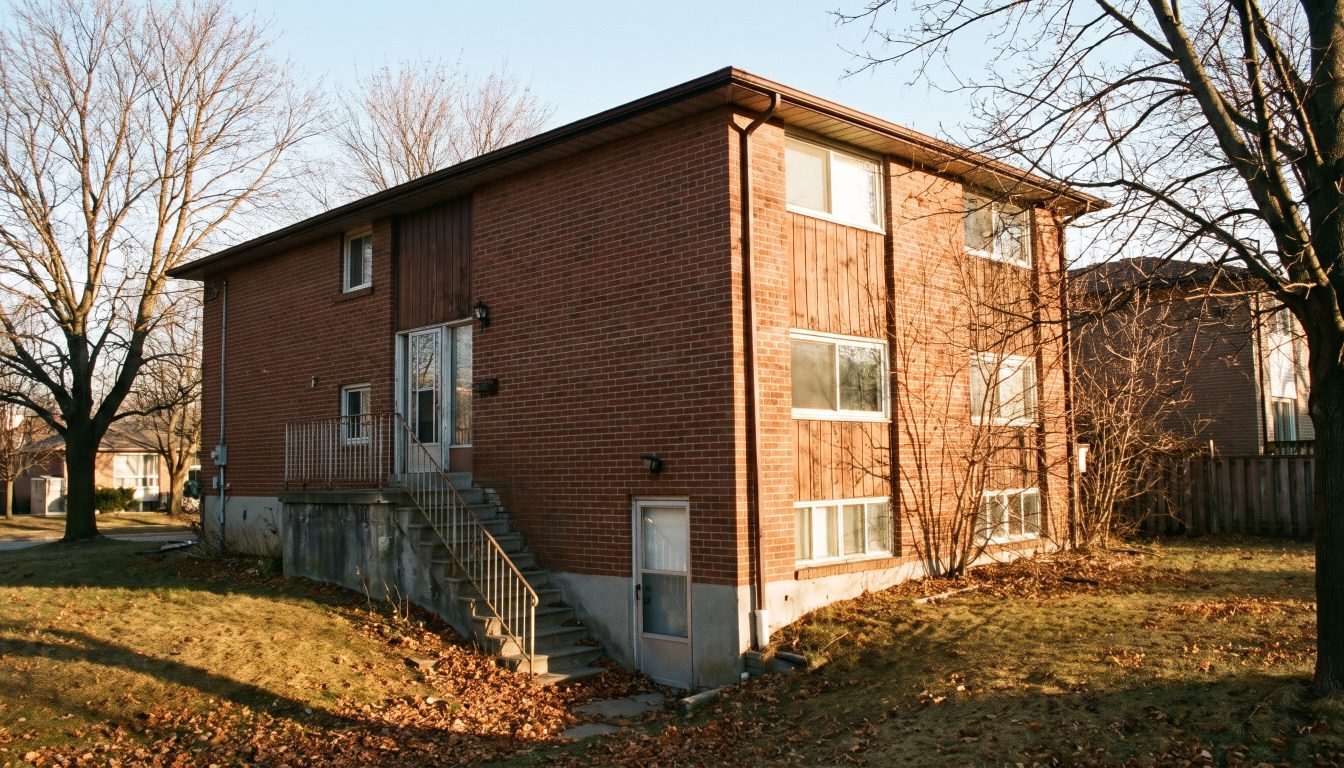
A legal basement apartment can make a GTA house easier to sell because rent from a two-unit, owner-occupied home can count toward a buyer’s mortgage income under CMHC rules. Value depends on proof: a building permit with passed inspections and any city registration. With a tenant, the seller pays one month’s rent if the buyer needs the unit.
This guide is for GTA homeowners who plan to sell a house with a basement apartment in 2027, whether the unit is fully legal, rented, empty or still waiting on paperwork. You will learn what “legal” really means to a buyer, the documents that prove it, how tenants and buyer financing work, and what detached and semi prices have done in the cities where these houses trade most.
Does a legal basement apartment add value to a house in the GTA?
Often, yes, but not by a fixed amount, and anyone who quotes you a set premium is guessing. TRREB’s MLS data does not tag sales by whether a house has a legal second unit, so there is no public figure for “legal suite versus no suite” in Brampton, Mississauga or anywhere else in the GTA.
What a legal unit does is widen and strengthen your pool of buyers:
- Owner-occupiers who need help with the mortgage. Rent from the second unit can count toward their qualifying income (more on that below).
- Multigenerational families. A separate, permitted unit for a parent or adult child is a real draw.
- Investors. They want a unit that can be rented without a by-law or insurance problem hanging over it.
The value comes from being able to prove the unit is legal and from income a buyer can rely on. A nicely finished basement with a kitchen but no permit history does not carry the same weight, because the buyer inherits the risk.
What makes a basement apartment legal in Ontario?
Ontario’s guide for homeowners lists the pieces: the unit has to be allowed by your city’s zoning, it needs a building permit, the work has to be inspected during construction, and it must meet the Building Code. Since Bill 23 (the More Homes Built Faster Act, 2022), additional residential units are permitted as of right across Ontario, so zoning is rarely the blocker it once was. The permit and inspections usually are.
Older units have their own path. Part 9.8 of the Ontario Fire Code is a retrofit standard for two-unit detached, semi-detached and row houses where the second unit was in existence on July 14, 1994. If your suite is that old and you can prove it, the fire department may assess it under the retrofit rules instead of today’s Building Code. Markham’s registration page, for example, asks owners of older two-unit houses to prove when the suite was built.
On top of provincial rules, many GTA cities run their own registration. This is where sellers get caught.
| City | What the city requires | Cost noted by the city |
|---|---|---|
| Brampton | Every additional residential unit must be registered, including older units once treated as legal non-conforming. All rental properties with 1 to 4 units also need a rental licence from January 1, 2026. | Rental licence is free. Penalty for failing to register an ARU: $1,000 to $1,500. |
| Mississauga | Second units must meet the Building Code, Fire Code and zoning and be registered under the Second Units Registration By-law. Registered units appear on a public registry list updated monthly. | No fee to register; permit and fire inspection fees may apply. |
| Markham | All two-unit houses must be registered with Markham Fire and Emergency Services after permits, inspections and a fire inspection. | $260 initial fire inspection; $246 registration. |
Source: City of Brampton Additional Residential Units page; City of Mississauga Registering a Second Unit page; City of Markham registration page for basement apartments and second suites (all read November 2026).
If you are in Toronto, Vaughan, Durham or Halton, call your city’s building department and ask exactly what it needs to call the unit legal. My guides to a legal basement apartment in Brampton and a legal basement apartment in Mississauga walk through each city’s rules step by step.
What documents prove a basement apartment is legal?
Buyers, their lawyers and their lenders will ask. Have this file ready before your listing goes live:
- Building permit number and final sign-off. Not just the permit, but proof every inspection passed. Mississauga lets you search building permit history by address, and other cities have similar tools.
- Registration proof where your city requires it, such as a Brampton registration or a Mississauga registry listing.
- Fire inspection report or clearance letter, especially for an older suite assessed under the Fire Code retrofit.
- Rental licence in Brampton if the unit is rented.
- Lease, rent history and any rent increase notices if a tenant lives there.
- Floor plans of both units, which help buyers and appraisers understand what they are paying for.
If any of these are missing, find out why before you list. A buyer’s lawyer who discovers a gap after the deal is firm is the worst possible timing for you.
Instant Home Valuation
What’s your home
worth today?
Answer six quick questions and get an instant value range built from current Toronto & GTA sale data — property type, size, condition, lot and location all weighted the way a real pricing conversation weighs them. Takes about ninety seconds.
Reading recent GTA sale data…
Building your estimate
Estimated market value
—
$0–$0
Most likely value $0 · roughly $0 per square foot
What moved the number
Starting from the area baseline for your property type, here’s what each answer added or subtracted.
Market context
Recent local averages for comparison.
—
A range is a starting point.
A strategy is what sells.
This model doesn’t know that your neighbour’s identical semi went $80,000 over asking last month, or which two upgrades actually pay back in your area. That conversation is free and takes twenty minutes.
Can I sell my house with a tenant in the basement apartment?
Yes. Selling does not end a tenancy in Ontario. If the buyer is happy to keep the tenant, the lease simply carries on with the new owner as landlord.
If the buyer wants the unit empty, section 49 of the Residential Tenancies Act applies to a residential complex with no more than three units. Once you have a firm agreement of purchase and sale, you can give the tenant notice on the buyer’s behalf (Form N12) if the buyer, their spouse, a child or parent, or a caregiver will genuinely live there. The rules:
- The termination date must be at least 60 days after the notice and fall at the end of a rental period or fixed term.
- Under section 49.1, the seller must pay the tenant one month’s rent or offer another acceptable unit. That obligation stays with you; it does not pass to the buyer.
- The 120-day notice option that removes compensation, which came into force on September 21, 2026, applies to a landlord’s own-use notice under section 48. It does not apply to a notice given for a purchaser under section 49.
A tenant who disputes the notice can stay until the Landlord and Tenant Board decides, which can push past your closing date. My guide on selling a property with tenants in Ontario covers timing and the risks in more detail.
How much are houses selling for in the GTA cities where basement apartments are common?
Basement units are most common in detached and semi-detached houses in the 905 suburbs. Here is what those homes have done over two years. These are city-wide medians, not suite-specific figures.
| City | Detached median Jan to Oct 2024 | Detached median Jan to Oct 2026 | Two-year change | Average days on market 2026 |
|---|---|---|---|---|
| Brampton | $1,127,250 | $950,000 | -15.7% | 30 |
| Mississauga | $1,371,085 | $1,225,000 | -10.7% | 31 |
| Vaughan | $1,590,000 | $1,415,000 | -11.0% | 30 |
| Markham | $1,650,000 | $1,420,000 | -13.9% | 29 |
| Oshawa | $835,000 | $730,000 | -12.6% | 25 |
| Ajax | $1,050,000 | $925,000 | -11.9% | 23 |
Source: TRREB MLS data via REALM, January to October 2026 vs the same period of 2024; median sold prices and average days on market, municipality level.
Semis followed the same path. Brampton’s semi-detached median fell from $923,000 to $790,000 over the same two years, and Mississauga’s from $999,999 to $885,000.
The October 2026 picture from TRREB’s Market Watch: detached homes across the TRREB area had a median price of $1,110,000, sold at an average of 97% of list price and took an average of 29 days. Across all home types there were 4.6 months of inventory. Buyers have choice and time, so they compare carefully. A house that can show a clean permit file and a documented rent roll stands out against one that cannot.
Can buyers use the basement rent to qualify for a mortgage?
For many buyers, yes, and this is one of the strongest reasons a legal unit matters. CMHC’s rules for insured mortgages allow up to 100% of the gross rental income from a two-unit, owner-occupied property that is being financed to be added to the buyer’s income. Three- and four-unit properties use a 50% gross approach or a net income approach.
Each lender still makes its own decision and will usually want to see the lease and the unit. A lender that cannot confirm the unit is a lawful second dwelling may give the rent little or no weight, and an appraiser may value the space as a finished basement instead. That is a real gap in buying power when your buyer is stretching to qualify after the Bank of Canada’s October 2026 hike to 2.50%.
When I list a two-unit house, the permit file goes into the listing package on day one, not after an offer arrives. Buyers in this market are cautious, and paperwork removes the reason to discount. I also price from comparable sales, then use the rent to explain the value, rather than treating the rent as a formula for the price. If your unit is not fully legal, I would rather we say so plainly and price for it than have a deal collapse on a lawyer’s question three weeks later.
What if my basement apartment is not legal?
You still have options, and none of them involve pretending.
- Legalize first. Apply for the permit, complete the inspections and register where required. This takes time, so start months before you plan to list.
- Sell it as a basement with a kitchen, not a legal unit. Describe it accurately and price it as a single-family house with a finished lower level. Some buyers want exactly that.
- Disclose what you know. If you know the unit was built without a permit, tell your agent and your lawyer. My guide to seller disclosure in Ontario explains where the legal line falls.
Do not let anyone describe a unit as “legal” in your listing unless you can hand over the permit sign-off and any required registration. In Brampton, failing to register an ARU carries a $1,000 to $1,500 penalty, and fines under the Planning Act, Building Code Act and Municipal Act can be far higher. A buyer who relied on the word “legal” may also have a claim against you after closing.
Should I sell with the basement apartment vacant or tenanted?
It depends on who your likely buyer is.
- Tenanted suits investors and buyers who need the rent to qualify. A long-term tenant paying fair rent, with a clean payment history, is a selling point. A tenant paying well below market, or one with arrears, is not.
- Vacant suits families who want the space for relatives and buyers who want to set their own rent. Vacant units are also easier to show and photograph.
If you go vacant, plan the timing well ahead. If the tenant leaves on their own terms before you list, you avoid the section 49 notice and compensation entirely. If you are thinking about the buyer’s side of this decision, my guide to buying a house with a basement apartment shows what they will be checking.
What to do next
- Pull your building permit history and confirm every inspection on the second unit passed.
- Call your city’s building or fire department to confirm whether the unit is registered, and register it if needed before you list.
- Gather the lease, rent records and floor plans of both units into one file for buyers.
- Decide whether a tenanted or vacant sale suits your most likely buyer, and plan any notice timing with your lawyer.
- Get a price based on comparable two-unit sales in your area, not on a rent multiplier.
Need help with this? Talk to me.
I’m Jatin Dua, Broker of Record at RE/MAX Quantum Realty, and I’m the best agent to do this kind of work for you in Toronto and across the GTA. Over $100 million in GTA sales and 100+ families helped sell. Feel free to contact me any time: call or text 833-330-1925 or email [email protected].
Frequently asked questions
Does a legal basement apartment increase home value in Ontario?
Usually it helps, but there is no published premium for a legal suite in Ontario as of November 2026. TRREB’s MLS data does not separate sales by whether a house has a legal second unit. The value comes from a wider buyer pool, rent that can help a buyer qualify for a mortgage, and fewer legal questions. An unpermitted suite rarely earns the same credit.
How do I prove my basement apartment is legal when selling?
Give buyers the building permit number with proof that every inspection passed, plus any registration your city requires. In Mississauga that means being on the City’s Second Units Registry, in Brampton an ARU registration, and in Markham a registration with Markham Fire. Add a fire inspection report for older suites and keep the lease and rent records ready for 2027 buyers and lenders.
Can I sell my house in Ontario with a tenant living in the basement?
Yes. A sale does not end a tenancy under Ontario’s Residential Tenancies Act, so the tenant stays and the buyer becomes the landlord unless the tenancy is properly ended. If the buyer or a close family member will move in, the seller can serve an N12 notice for the buyer once the deal is firm, giving at least 60 days to the end of a rental period.
Do I have to pay my basement tenant to leave when I sell my house in Ontario?
Yes, if you end the tenancy for a buyer who will live there. Section 49.1 of the Residential Tenancies Act requires the seller to pay one month’s rent or offer another acceptable unit. The new 120-day no-compensation option in force since September 21, 2026 applies only to a landlord’s own-use notice under section 48, not to purchaser notices.
Can a buyer use basement apartment rent to qualify for a mortgage in Canada?
Often yes. CMHC’s insured mortgage rules let lenders add up to 100% of the gross rent from a two-unit, owner-occupied home being financed to the buyer’s income. Each lender still decides and will usually ask for the lease and confirm the unit is a lawful second dwelling. Without that proof, the rent may count for little, which reduces what the buyer can pay in 2027.
Do I need to register my basement apartment in Brampton before selling?
Brampton requires every additional residential unit to be registered, including older units once treated as legal non-conforming, and all rental properties with 1 to 4 units need a free rental licence since January 1, 2026. Selling does not trigger registration by itself, but buyers and lenders will ask for it. The City lists a $1,000 to $1,500 penalty for failing to register an ARU.
What is the Ontario Fire Code retrofit for two-unit houses?
It is Section 9.8 of the Ontario Fire Code, a set of fire safety rules for detached, semi-detached and row houses with two units where the second unit existed on July 14, 1994. Older suites that can prove their age may be assessed under these retrofit rules instead of current Building Code standards. Newer suites need a building permit and inspections under the Building Code.
Can I call my basement apartment legal in my listing if it was never inspected?
No, not honestly. A unit is legal in Ontario only when it meets zoning, the Building Code and Fire Code, and any local registration, and without permit sign-offs you cannot show that. Describe it accurately, for example as a finished basement with a kitchen, and price it that way. Misdescribing it risks a failed deal or a claim from the buyer after closing.
Is it better to sell a two-unit house vacant or with tenants in the GTA?
It depends on the buyer you expect. Investors and buyers who need rent to qualify often prefer a tenant with a clean payment history at fair rent. Families who want the unit for relatives prefer vacant possession. In the 2026 to 2027 GTA market, with detached homes averaging about 30 days on market in most 905 cities, decide early so notice timing does not delay closing.
Sources
- Government of Ontario: Add a second unit in your house
- Ontario Fire Code, O. Reg. 213/07, Section 9.8 Two Unit Residential Occupancies
- Residential Tenancies Act, 2006 (sections 48, 48.1, 49 and 49.1)
- City of Brampton: Additional Residential Units
- City of Mississauga: Registering a second unit
- City of Markham: Registration of basement apartments and second suites
- CMHC: Rental income for mortgage loan insurance
- TRREB Market Watch, October 2026
Related reading
- Seller Closing Costs in Ontario for 2027: Every Fee Before You Get Paid
- How to Sell a House in Toronto, Step by Step (2027)
- Closing Costs on a New Build in Ontario: What Builders Add
- How Much Is My House Worth in Caledon? (2027)
About the author — Jatin Dua, Toronto and GTA real estate broker
I am Jatin Dua, Broker of Record and co-founder of RE/MAX Quantum Realty Inc., Brokerage, Unit 101, 799 The Queensway, Toronto. I work with buyers and sellers across Toronto and the GTA and have helped more than 100 families sell. Four-plus years of active GTA transactions and over $100 million in sales volume.
Reach me at [email protected] or 833-330-1925, or book a call.