
Published 2 November 2026 · By Jatin Dua, Broker of Record, RE/MAX Quantum Realty
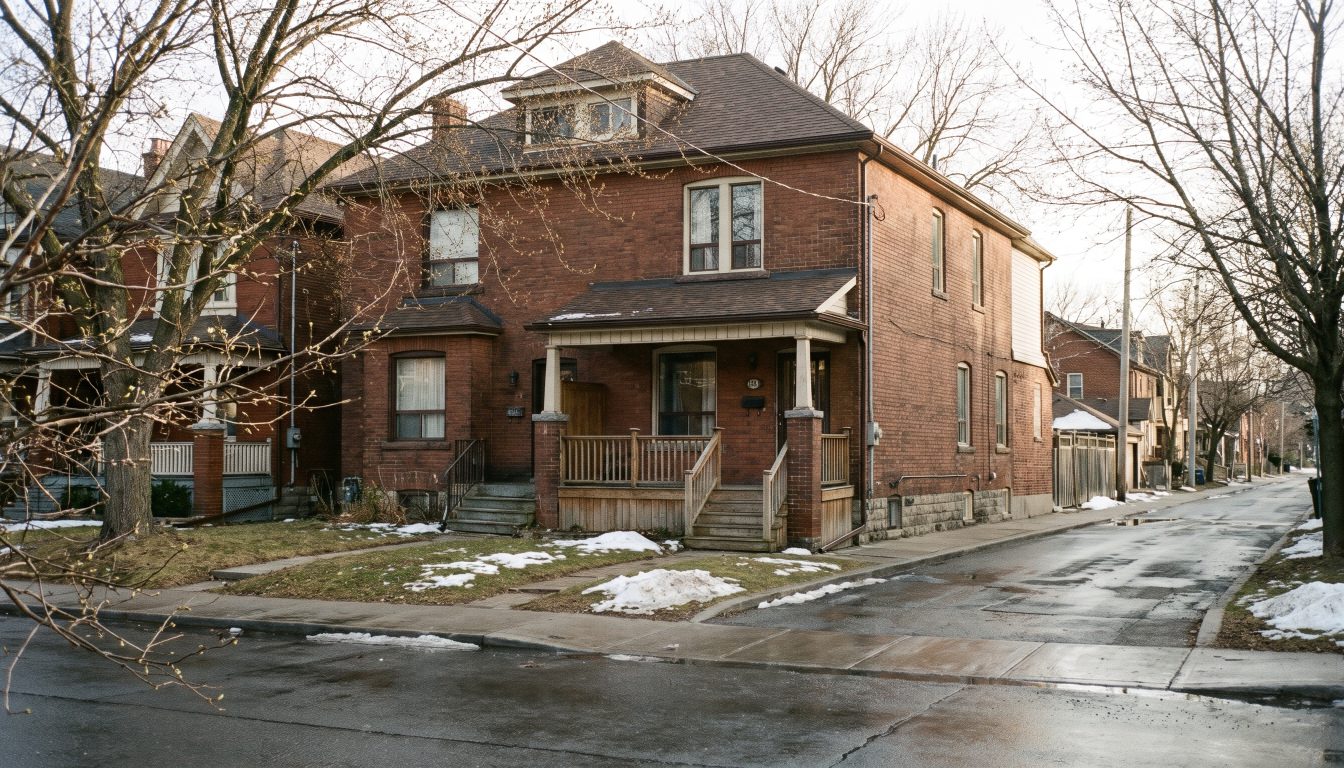
Price your GTA home from sales in the last 60 to 90 days, not from 2024 or 2025: detached medians are 6% to 16% below 2024 in most GTA cities. In October 2026, homes sold for about 97% of list price on average, so list close to what buyers are paying now and review the price after two to three weeks.
This guide is for GTA homeowners who plan to list in 2027 and want a price that sells without leaving money behind. It shows how much prices have moved since 2024, what share of list price each home type is getting, which price points change who can buy, and when to adjust. For the step-by-step comparable-sales method, see my Toronto pricing guide; this post focuses on what is different for 2027.
How do you price a house to sell in the GTA in 2027?
A good list price comes from four checks, done in this order:
- Recent sold prices. Homes like yours, nearby, that sold in the last 60 to 90 days. Not asking prices, and not sales from the 2024 or 2025 market.
- Your competition. The homes a buyer will see in the same week as yours. If five similar homes are listed, the best value usually sells first.
- The sale-to-list ratio for your home type and area. This tells you whether buyers are paying over, at or under the asking price.
- Buyer financing lines. Some prices, such as $1.5 million, change how much cash a buyer needs.
The rest of this post walks through each check with current numbers.
How much have GTA home prices changed since 2024?
If your price idea comes from a neighbour’s 2024 sale, it is probably too high. Detached medians fell in every city in the table below.
| City | Detached median, Jan–Oct 2024 | Detached median, Jan–Oct 2026 | Change |
|---|---|---|---|
| Richmond Hill | $1,774,400 | $1,485,000 | -16.3% |
| Brampton | $1,127,250 | $950,000 | -15.7% |
| Newmarket | $1,265,000 | $1,070,000 | -15.4% |
| Markham | $1,650,000 | $1,420,000 | -13.9% |
| Pickering | $1,190,000 | $1,039,999 | -12.6% |
| Vaughan | $1,590,000 | $1,415,000 | -11.0% |
| Mississauga | $1,371,085 | $1,225,000 | -10.7% |
| Milton | $1,260,000 | $1,130,000 | -10.3% |
| Whitby | $1,065,000 | $977,000 | -8.3% |
| Oakville | $1,763,000 | $1,625,000 | -7.8% |
| Burlington | $1,325,000 | $1,249,750 | -5.7% |
Source: TRREB MLS data via REALM, median sold price for detached homes, January to October 2024 vs the same period of 2026. City-wide figures; individual streets can differ.
A median is the middle sale, so your home can sit above or below it. What matters is direction. Prices fell in both 2025 and 2026, and TRREB’s October 2026 report showed the average GTA selling price still down 2.7% from a year earlier. My GTA detached price guide has more cities and home types.
Semis and freehold townhouses moved the same way. In Mississauga, for example, the semi-detached median fell from $999,999 in January to October 2024 to $885,000 in the same months of 2026, and in Markham from $1,280,000 to $1,025,000 (TRREB MLS data via REALM). My GTA semi-detached price guide lists the rest.
What sale-to-list ratio should you expect for your home type?
The sale-to-list ratio is the average sale price divided by the average list price. Above 100% means buyers are competing. Below 100% means they are negotiating down.
| Home type and area (October 2026) | Avg sale-to-list | Avg days on market |
|---|---|---|
| Semi-detached, City of Toronto | 102% | 18 |
| Semi-detached, GTA | 101% | 22 |
| Detached, Toronto East | 100% | 23 |
| Freehold townhouse, GTA | 99% | 28 |
| Detached, GTA | 97% | 29 |
| Condo apartment, GTA | 97% | 38 |
| Detached, Oakville | 95% | 37 |
| Detached, King | 92% | 37 |
Source: TRREB Market Watch, October 2026 (average sale price to average list price, and average listing days on market for homes that sold that month).
If you own a semi in the city, a price at or slightly under recent sales can still draw more than one offer. If you own a larger detached home in Halton or York, expect buyers to negotiate, and leave room for it without overreaching.
Here is how to use the ratio. Say three similar detached homes near you sold for about $1,160,000 in the last two months, and detached homes in your area are selling at about 97% of list. Those sellers were probably listed somewhere near $1,195,000. A list price close to that band looks normal to buyers. A list price of $1,300,000 asks buyers to believe your home is worth far more than its neighbours, and most will not book a showing to find out. The ratio is an average, so treat it as a guide to the gap buyers expect, not a formula.
Instant Home Valuation
What’s your home
worth today?
Answer six quick questions and get an instant value range built from current Toronto & GTA sale data — property type, size, condition, lot and location all weighted the way a real pricing conversation weighs them. Takes about ninety seconds.
Reading recent GTA sale data…
Building your estimate
Estimated market value
—
$0–$0
Most likely value $0 · roughly $0 per square foot
What moved the number
Starting from the area baseline for your property type, here’s what each answer added or subtracted.
Market context
Recent local averages for comparison.
—
A range is a starting point.
A strategy is what sells.
This model doesn’t know that your neighbour’s identical semi went $80,000 over asking last month, or which two upgrades actually pay back in your area. That conversation is free and takes twenty minutes.
Which price points matter to GTA buyers in 2027?
Buyers search and borrow in brackets. A few lines change who can buy your home.
- $1.5 million. CMHC insures homeowner mortgages only when the purchase price is below $1,500,000. At $1.5 million and up, a buyer needs at least 20% down. Listing at $1,525,000 instead of $1,499,000 can cut out every buyer with less than 20% down.
- $500,000 to $1.5 million. In this range the minimum down payment is 5% of the first $500,000 plus 10% of the rest, so each extra $100,000 adds $10,000 to a buyer’s minimum cash.
- Round numbers. Most listing sites let buyers filter by price. A home at $1,010,000 can miss buyers whose filter stops at $1 million.
Buyers also have to pass the federal mortgage stress test, which checks that they could still carry the payments at a higher rate than the one they sign for. Higher rates in late 2026 mean the same buyer qualifies for a little less than they did in the summer.
Should you list under value, at value or above value?
| Strategy | Best for | Main risk |
|---|---|---|
| Slightly under recent sales, with an offer date | Semis, freehold towns and well-located homes where buyers are competing | If only one buyer shows up, you negotiate from a low number |
| At recent sales, offers any time | Most detached homes and condos in 2027 | Needs good launch marketing to create urgency |
| Above recent sales to test the market | Rarely the right choice in a slower market | Buyers skip it, it goes stale, and you cut later |
Source: my own guidance, informed by the TRREB October 2026 sale-to-list ratios above.
Underpricing works only when your home type is getting multiple offers. My guide to an offer date versus offers any time explains when each one fits.
Why is your property tax assessment not your selling price?
Your MPAC assessment is not a market value for today. MPAC says Ontario’s province-wide reassessment has been postponed, and property assessments for the 2026 tax year are still based on January 1, 2016 values. Buyers do not use that number, and neither should you.
Online estimates are a starting point at best. They cannot see your renovations, your layout, a busy road or a backyard that backs onto a park. Use them to get a range, then check it against real sales with someone who can see the home.
How do you adjust the price for condition, lot and upgrades?
- Start with the closest true comparables: same home type, similar size, same pocket of the city, sold recently.
- Adjust for what buyers pay for: extra bedrooms or bathrooms, parking, lot width, a finished basement with good ceiling height, and recent big-ticket items like a roof or furnace.
- Adjust down for what buyers fear: water history, old wiring, a main road, or work done without permits.
- Do not add the cost of your renovation to the price. Buyers pay for how the home compares with others, not for what you spent.
In my view, the single biggest pricing mistake heading into 2027 is anchoring to a past number: what you paid, what a neighbour got in 2024, or what you need to clear your mortgage. Buyers only compare your home with what else is for sale this month. Price to that, and you control the outcome instead of chasing it.
When should you lower your price, and by how much?
In October 2026, GTA homes that sold spent an average of 31 days on the market. In my view, if you have had steady showings and no offers after about two to three weeks, it is time to review. If you have had few showings at all, the price is likely keeping buyers from booking.
Small, repeated cuts can make a listing look like it has a problem. Buyers’ agents can see the full history, and TRREB’s October 2026 data showed homes averaging 49 property days on market against 31 listing days, which means relaunched listings take much longer to sell. One clear change, made early, usually works better than three small ones. My guide to the top reasons GTA homes do not sell covers the other causes.
How will interest rates affect what buyers pay in 2027?
The Bank of Canada raised its policy rate to 2.50% on 28 October 2026 and said a further increase could be needed. Its next decision is 9 December 2026, and its first 2027 announcements are scheduled for January 27, March 3 and April 28. Buyers think in monthly payments, so a higher rate shrinks what they can offer even if prices do not change.
That is one more reason to price from this month’s sales, not from a hope that the spring will rescue a high number. If rates move during your listing, review your price against fresh sales rather than waiting. Remember too that your net proceeds depend on your selling costs; see seller closing costs in Ontario for 2027.
What to do next
- Pull sold prices for homes like yours from the last 60 to 90 days, and ignore anything from 2024.
- Check the sale-to-list ratio and days on market for your home type and area in the latest TRREB report.
- Check whether your price sits just above a key line such as $1.5 million or a round number, and adjust if it does.
- Choose a strategy (under, at or above recent sales) that matches how buyers are behaving for your home type.
- Agree on a price review date with your agent before you list.
Need help with this? Talk to me.
I’m Jatin Dua, Broker of Record at RE/MAX Quantum Realty, and I’m the best agent to do this kind of work for you in Toronto and across the GTA. Over $100 million in GTA sales and 100+ families helped sell. Feel free to contact me any time: call or text 833-330-1925 or email [email protected].
Frequently asked questions
How do I price my house to sell in 2027?
Price your house from comparable homes that sold in the last 60 to 90 days, then adjust for size, condition and location. In the GTA in 2027, that usually means a lower number than 2024 sales suggest, because detached medians fell 6% to 16% in most cities between January to October 2024 and the same period of 2026 (TRREB MLS data via REALM).
How much below asking do houses sell for in the GTA in 2026?
GTA homes sold for about 97% of their final list price on average in October 2026, according to TRREB, so the typical discount was about 3%. It varies by home type: GTA semis averaged 101% and City of Toronto semis 102%, while detached homes in Oakville averaged 95% and in King 92%.
Should I list my house below market value to get multiple offers in Toronto?
Only if homes like yours are still drawing several buyers. In October 2026, City of Toronto semis sold at about 102% of list price, so a slightly lower price with an offer date can work for them. For most GTA detached homes and condos, which sold at about 97% of list, pricing at recent sales with offers any time is usually safer.
Is my MPAC assessment the same as market value in Ontario?
No. MPAC says property assessments for the 2026 tax year are still based on January 1, 2016 values because the province-wide reassessment has been postponed. That number sets your property tax share, not your selling price. Buyers and lenders in 2027 look at recent comparable sales and appraisals instead.
What is the $1.5 million rule when selling a house in Ontario?
CMHC insures homeowner mortgages only when the purchase price is below $1,500,000, so buyers of homes at $1.5 million or more need at least 20% down. If your home is worth close to that line in 2027, listing just under it, such as $1,499,000, keeps buyers with smaller down payments in the pool.
How accurate are online home value estimates in the GTA?
Online estimates are a rough range, not a list price. They use public sales and listing data but cannot see your layout, condition, renovations or street. In the 2026 GTA market, where prices shifted month to month, an estimate built partly on older sales can be well off. Check it against recent sales of truly similar homes.
How often should I reduce my list price in the GTA?
In my view, review your price once after about two to three weeks, then make one clear change if needed. In October 2026, GTA homes that sold averaged 31 days on the market but 49 days when earlier relaunched listings were counted (TRREB), so slow listings tend to stay slow. Several small cuts usually work worse than one meaningful adjustment.
Are GTA house prices lower in 2026 than in 2024?
Yes. Detached median sale prices from January to October 2026 were below the same period of 2024 in every major GTA city, for example down 16.3% in Richmond Hill, 15.7% in Brampton, 10.7% in Mississauga and 5.7% in Burlington (TRREB MLS data via REALM). The October 2026 GTA average price was also 2.7% below a year earlier.
Who sets the list price, the seller or the real estate agent?
The seller decides the list price in Ontario; the agent advises. A good agent should show you recent sold comparables, current competition and sale-to-list ratios for your area before you choose. RECO recommends interviewing several agents and asking how each would market and price your home, so compare their reasoning, not just their numbers.
Sources
- TRREB Market Watch, October 2026
- TRREB news release, October 2026 market (4 Nov 2026)
- CMHC: Purchase (homeowner mortgage loan insurance eligibility)
- Financial Consumer Agency of Canada: Saving for a down payment
- MPAC: Assessment cycle
- Bank of Canada increases policy rate to 2.5% (28 Oct 2026)
- Bank of Canada 2027 schedule for policy interest rate announcements
- RECO: How do I choose a real estate agent as a seller?
Related reading
- Seller Closing Costs in Ontario for 2027: Every Fee Before You Get Paid
- How to Sell a House in Toronto, Step by Step (2027)
- Closing Costs on a New Build in Ontario: What Builders Add
- How Much Is My House Worth in Caledon? (2027)
About the author — Jatin Dua, Toronto and GTA real estate broker
I am Jatin Dua, Broker of Record and co-founder of RE/MAX Quantum Realty Inc., Brokerage, Unit 101, 799 The Queensway, Toronto. I work with buyers and sellers across Toronto and the GTA and have helped more than 100 families sell. Four-plus years of active GTA transactions and over $100 million in sales volume.
Reach me at [email protected] or 833-330-1925, or book a call.