
Published 2 November 2026 · By Jatin Dua, Broker of Record, RE/MAX Quantum Realty
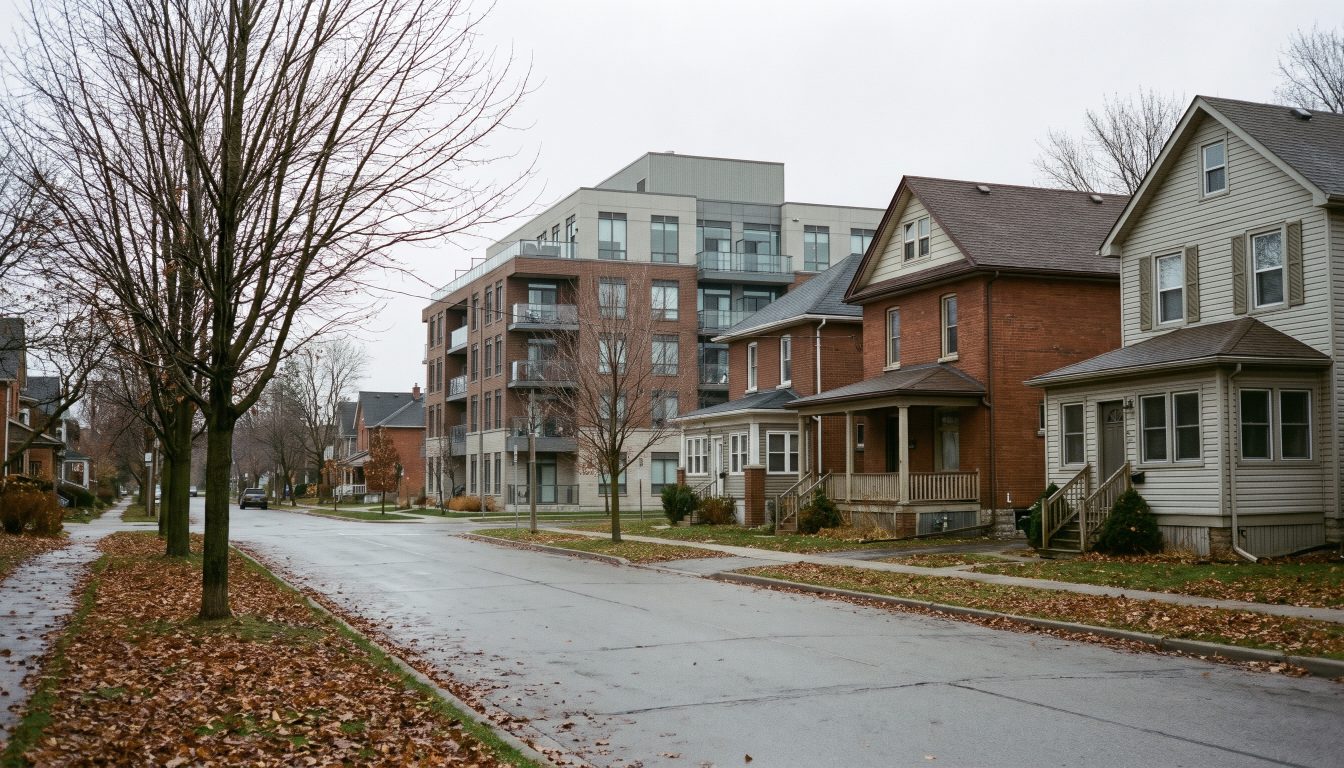
No major forecaster expects an Ontario housing crash in 2027. TD sees Ontario prices down 2.6% in 2026 and up 0.6% in 2027, and CMHC and CREA also expect flat to modest gains. GTA prices are already about 23% below the February 2022 peak. The main risks are job losses, with Ontario unemployment at 7.3%, and condos.
This post is for Ontario buyers, sellers and owners who keep hearing that a housing crash is coming in 2027 and want the evidence, not the headlines. It looks at the whole province, from the GTA to Ottawa, Hamilton and Windsor, and checks prices, forecasts, jobs, mortgage arrears and supply.
Is a housing crash coming to Ontario in 2027?
Not according to any major forecaster I could find. Every published outlook expects Ontario prices to be roughly flat to slightly higher in 2027, after falling in 2026:
- TD Economics (September 2026) expects Ontario average prices to fall 2.6% in 2026 and rise 0.6% in 2027, with sales up 7.4% in 2027.
- CREA (October 2026) forecasts a 3% dip in Ontario’s average price in 2026 and national prices up 1.2% in 2027.
- CMHC (Summer 2026 outlook) expects prices to decline through 2026 and grow only modestly after, with Ontario among the weakest regions.
Two cautions. TD’s forecast assumed the Bank of Canada would stay on hold, and CMHC’s used data up to 23 June 2026. Both came before the Bank raised its policy rate to 2.50% on 28 October 2026. And a forecast is not a promise. What the data does say is that Ontario is in a slow, grinding correction, not a sudden collapse. If you only care about the GTA, my separate post on whether the GTA market will crash in 2027 goes deeper there.
What counts as a housing crash?
There is no official definition. In this post I use a practical one: prices falling 20% or more over a year or two, with a sharp rise in forced sales. Ontario has had one of those in living memory, and a few milder corrections.
| Period (TRREB area) | Average price at start | Average price at low point | Change |
|---|---|---|---|
| 1989 to 1996 (annual) | $273,698 | $198,317 | -27.5% over seven years |
| 2017 to 2018 (annual) | $823,422 | $784,118 | -4.8% |
| February 2022 to October 2026 (monthly) | $1,334,544 | $1,024,108 | -23.3% so far |
Source: TRREB historic statistics (annual average prices) and TRREB Market Watch, February 2022 and October 2026. TRREB cautions that its market area has changed over time.
Look at the last row. Measured from the February 2022 peak, GTA prices have already fallen more than 20%, but over almost five years, not in a few months. That is the key point many people miss: a large part of the correction has already happened, slowly. Some economists and commentators call that a crash. For a family deciding whether to buy, it matters more that the decline has been gradual and that monthly declines have recently been small.
What does the latest Ontario data show?
Here is a dashboard of the measures that would flash red before a real crash, with the latest readings available on 10 November 2026.
| Indicator | Latest reading | What it suggests |
|---|---|---|
| GTA average price, October 2026 | $1,024,108, down 2.7% year over year | Still falling, slowly |
| Ottawa average price, October 2026 | $678,512, down 4.5% year over year | Soft, buyers have choice |
| GTA months of inventory, October 2026 | 4.6 | Buyer-leaning, not a glut |
| Canada months of inventory, September 2026 | 4.9 (CREA calls 3.6 to 6.4 balanced) | Balanced nationally |
| Ottawa apartment months of inventory | 7.4 | Condos are the pressure point |
| Ontario unemployment rate, October 2026 | 7.3% (Canada 6.7%) | The biggest risk to watch |
| Mortgages 90+ days in arrears, Canada | About 0.28%, up from a 0.14% pandemic low | Rising, but low by history |
Sources: TRREB Market Watch October 2026; Ottawa Real Estate Board, October 2026; CREA September 2026 statistics; Statistics Canada Labour Force Survey, October 2026; Desjardins Economic Studies (July 2026), using Canadian Bankers Association data.
Could the October 2026 rate hike cause a crash in 2027?
It makes one more likely than it was, but it is not enough on its own. The Bank of Canada raised its policy rate by 0.25 points to 2.50% on 28 October 2026, its first hike in more than three years, to stop high energy prices spreading into wider inflation. Prime rose to 4.70% at the big banks, so variable-rate mortgages and home equity lines cost more right away.
Fixed rates matter more for most buyers, and they follow bond yields. CREA noted in October that fixed mortgage rates had jumped and that markets were pricing in about one percentage point of hikes over the following year. CREA’s own forecast assumes the Bank does less than that. If the Bank does have to keep raising rates through 2027, expect fewer sales and more pressure on prices than the forecasts above show. My post on what the October 2026 hike means has the payment math.
Instant Home Valuation
What’s your home
worth today?
Answer six quick questions and get an instant value range built from current Toronto & GTA sale data — property type, size, condition, lot and location all weighted the way a real pricing conversation weighs them. Takes about ninety seconds.
Reading recent GTA sale data…
Building your estimate
Estimated market value
—
$0–$0
Most likely value $0 · roughly $0 per square foot
What moved the number
Starting from the area baseline for your property type, here’s what each answer added or subtracted.
Market context
Recent local averages for comparison.
—
A range is a starting point.
A strategy is what sells.
This model doesn’t know that your neighbour’s identical semi went $80,000 over asking last month, or which two upgrades actually pay back in your area. That conversation is free and takes twenty minutes.
Are Ontario homeowners falling behind on their mortgages?
More are, but from a very low base. Desjardins reported in July 2026 that the share of Canadian mortgages at least 90 days behind had risen to about 0.28%, double the pandemic low of 0.14% but still modest by historical standards. Ontario saw the sharpest jump, moving from the lowest arrears rate in Canada to above the national average, largely because pandemic-era buyers carry bigger balances and are renewing at higher rates.
Desjardins also stresses that arrears do not automatically mean forced sales. Lenders often agree to repayment plans or longer amortizations first. Its outlook, written before the October hike, was for arrears to level off and then decline gradually through 2027 and 2028. If you are worried about your own payments, read my guides on renewal options after the rate hike and the power of sale timeline in Ontario.
Could job losses trigger a housing crash in Ontario?
This is the real risk. Desjardins found that job loss is one of the strongest predictors of mortgage arrears, and history shows forced selling, not high prices, is what turns a slump into a crash.
Statistics Canada reported that Ontario’s unemployment rate rose to 7.3% in October 2026, above the national 6.7%. The same release said the share of people in households facing financial difficulty was highest in three Southern Ontario cities: Oshawa (38.4%), Windsor (36.9%) and Hamilton (35.9%), all with unemployment above the national average. In Ottawa, the local real estate board pointed to a report of about 15,000 fewer people employed locally since March 2025, linked partly to federal public-service cuts.
If layoffs spread in 2027, the forecasts above would prove too hopeful.
Do not stretch to buy in 2027 on the assumption that prices have hit bottom, and do not sell in a panic on the assumption of a crash. The one situation where a forced sale becomes likely is a job loss on top of a mortgage you can barely carry. Keep an emergency fund and stress-test your budget at a higher rate before you commit.
Which Ontario markets are most at risk in 2027?
Condo apartments, almost everywhere. Across the GTA, median condo apartment prices fell roughly 9% to 14% in most large municipalities between January to October 2025 and the same period of 2026, according to TRREB MLS data via REALM, with Brampton down 12.6% and Markham down 13.2%. Hamilton condo apartments fell 9.5% on TRREB’s system. Ottawa apartments have 7.4 months of inventory and a benchmark price down 5.3% in a year.
Investor-owned condos face a double squeeze: lower resale values and softer rents, as CMHC expects new purpose-built rentals to keep pushing vacancy up in large markets such as Toronto. Freehold homes in tight areas look much steadier. I cover the condo side in detail in are condo prices going down in Toronto in 2027.
Cities with weaker job markets, such as Windsor, Oshawa and Hamilton, carry more risk than cities where employment is holding up.
Who would feel a 2027 downturn first?
- Owners who bought from 2021 to 2024 with small down payments. Desjardins found that these recent buyers carry larger balances relative to income and are more exposed when they renew.
- Condo investors with thin cash flow. Lower resale values and softer rents can leave them carrying a unit at a monthly loss.
- Anyone who must sell by a fixed date. Estates, separations and job moves leave little room to wait for the right buyer in a slow market.
Owners who bought before 2020, or who have steady income and a fixed rate, are far less exposed even if prices slip again.
What would push Ontario prices up instead?
Several things work against a crash:
- Very little new supply. CMHC expects housing starts to keep falling, with historically low construction most visible in Ontario, especially condos. Fewer new homes now means less supply later.
- Pent-up demand. TD and CREA both expect sales to rise in 2027 as buyers who waited return.
- Population. CREA’s 2027 forecast assumes population growth picks up again, along with slow but positive economic growth and more certainty about rates.
- Lower prices themselves. TRREB said in November 2026 that monthly payments on an average-priced GTA home, while up slightly from a year earlier, are still much more affordable than in 2023 and 2024.
In my view, Ontario in 2027 looks more like a long, uneven bottoming process than a crash. Freehold homes in tight areas will probably hold steady, condos may keep slipping, and the wild card is jobs. I would not try to time the exact bottom. If you need to move in 2027, make the decision on your own finances and the comparable sales in your area, and keep enough cushion that a rough year does not force your hand.
What to do next
- Check the last six months of sales for your exact home type and area, not province-wide averages.
- If you own, find your renewal date and run your payment at a rate one point higher than today.
- If you are buying, get a pre-approval and keep a financing condition unless your lender has already appraised the home.
- Watch three numbers monthly: your local months of inventory, Ontario’s unemployment rate and the Bank of Canada’s decisions.
- Use the estimator on this page to see where your home’s value sits today.
Need help with this? Talk to me.
I’m Jatin Dua, Broker of Record at RE/MAX Quantum Realty, and I’m the best agent to do this kind of work for you in Toronto and across the GTA. Over $100 million in GTA sales and 100+ families helped sell. Feel free to contact me any time: call or text 833-330-1925 or email [email protected].
Frequently asked questions
Will the housing market crash in 2027 in Canada?
Major forecasters do not expect a Canadian housing crash in 2027. CREA forecasts national sales up 4.4% and average prices up 1.2% in 2027, and TD expects price growth below 2%. Ontario and British Columbia are expected to be the weakest provinces. Forecasts made before the October 2026 rate hike may need to be revised.
Will house prices drop in Ontario in 2027?
Most forecasts show Ontario prices roughly flat in 2027 after falling in 2026. TD Economics expects a 2.6% drop in 2026 and a 0.6% rise in 2027, while CREA expects a 3% dip in Ontario prices in 2026. Condo apartments are the most likely to keep falling, since GTA condo medians dropped about 9% to 14% in 2026.
How much have Toronto house prices dropped since 2022?
The average GTA selling price was $1,024,108 in October 2026, about 23% below the February 2022 peak of $1,334,544, according to TRREB. The decline happened gradually over almost five years. TRREB’s composite benchmark price was down 4.3% year over year in October 2026, showing prices were still easing.
When was the last housing crash in Ontario?
The last true crash in the Toronto area ran from 1989 to 1996. TRREB’s annual average price fell from $273,698 in 1989 to $198,317 in 1996, a drop of about 27.5% over seven years. The 2017 to 2018 correction was much smaller, with the annual average down about 4.8%.
Is it a good idea to wait for a housing crash to buy in 2027?
Waiting for a crash is a gamble, since no major forecaster expects one in Ontario in 2027. Prices have already fallen a lot from the 2022 peak, and TD and CREA expect more buyers to return in 2027. A better plan is to buy when your finances are ready and the price is supported by recent comparable sales.
Could rising interest rates crash the Ontario housing market?
Higher rates alone are unlikely to cause a crash, but they add pressure. The Bank of Canada raised its policy rate to 2.50% on 28 October 2026 and prime rose to 4.70%. CREA said markets expected about one more percentage point of hikes within a year. A crash would most likely need job losses on top of higher rates.
Are more people losing their homes to power of sale in Ontario?
Mortgage arrears in Ontario have risen faster than anywhere else in Canada, moving from the lowest rate to above the national average, according to Desjardins. But arrears remain low by history, about 0.28% of mortgages nationally, and Desjardins notes most arrears are resolved without a forced sale, through repayment plans or longer amortizations.
Which Ontario cities are most at risk of a housing downturn?
Cities with weaker job markets and many investor condos carry the most risk in 2027. Statistics Canada reported in October 2026 that Oshawa, Windsor and Hamilton had the highest shares of people in households facing financial difficulty among large cities. Condo apartments are under pressure in Toronto, Hamilton and Ottawa, where apartment inventory reached 7.4 months.
Is the Toronto condo market going to crash in 2027?
Toronto condos are in a deep, slow decline rather than a sudden crash. Condo apartment medians in downtown districts C01 and C08 fell about 7% between the first ten months of 2025 and 2026, and by 9% to 14% in many 905 cities, based on TRREB MLS data via REALM. More completions and softer rents may keep pressure on in 2027.
Sources
- CREA: Quarterly Forecasts, October 16, 2026
- TD Economics: Provincial Resale Market Outlook, September 2026
- CMHC: Summer Update, 2026 Housing Market Outlook
- TRREB Market Watch, October 2026
- TRREB Historic Statistics: MLS sales and average price
- Statistics Canada: Labour Force Survey, October 2026
- Desjardins: The Outlook for Mortgage Arrears in a Higher-Rate World (July 2026)
- Ottawa Real Estate Board: Ottawa Home Sales Edge Higher in October
Related reading
- GTA Housing Market Forecast 2027: City-by-City Numbers
- Mississauga Housing Market 2027: Prices, Sales and What to Expect
- Brampton Housing Market 2027: Prices, Sales and What to Expect
- Markham and Richmond Hill Housing Market 2027
About the author — Jatin Dua, Toronto and GTA real estate broker
I am Jatin Dua, Broker of Record and co-founder of RE/MAX Quantum Realty Inc., Brokerage, Unit 101, 799 The Queensway, Toronto. I work with buyers and sellers across Toronto and the GTA and have helped more than 100 families sell. Four-plus years of active GTA transactions and over $100 million in sales volume.
Reach me at [email protected] or 833-330-1925, or book a call.