

Published 7 August 2026 · Updated 7 September 2026 · By Jatin Dua, Broker of Record, RE/MAX Quantum Realty
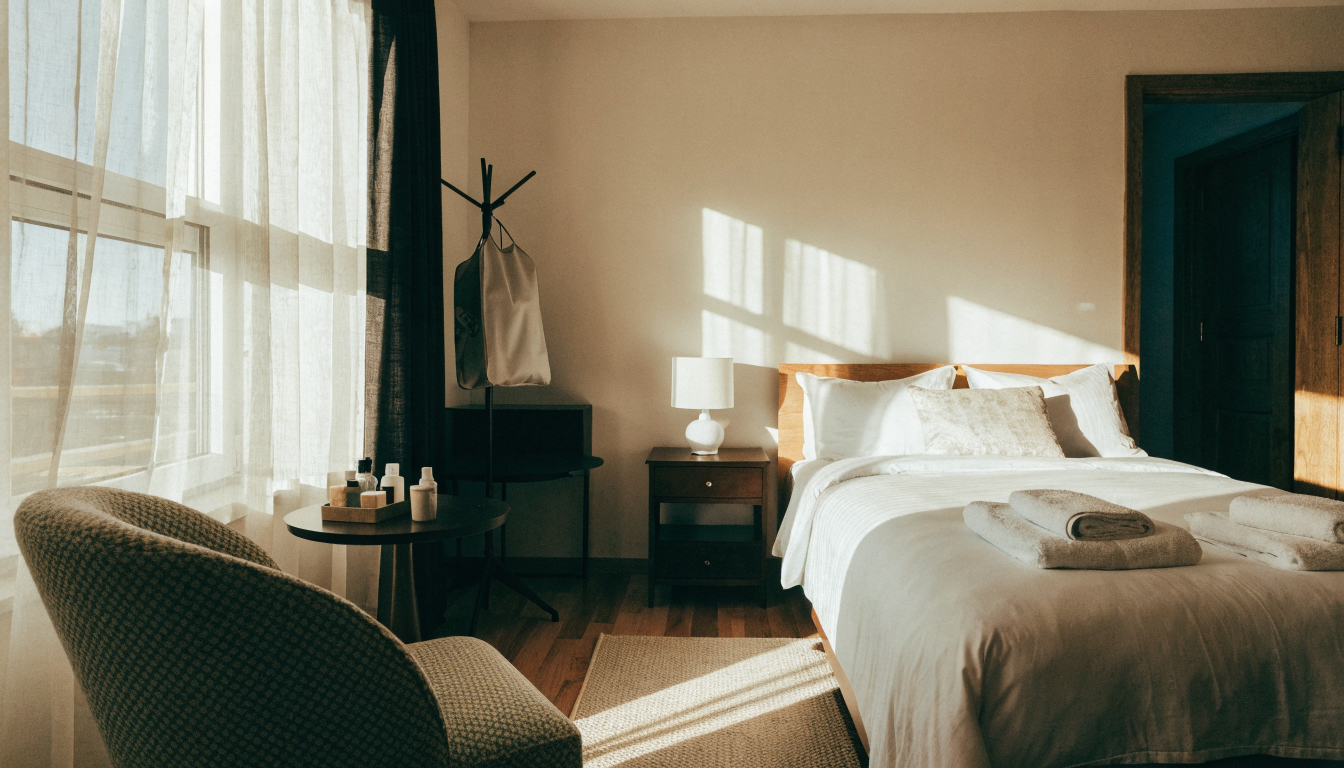
Short-term rentals are legal in Toronto but only in your principal residence — the address on your driver’s licence, tax filings and utility bills. You must register with the City ($375 initial, $390 annual renewal) and display the registration number on every listing. Entire-unit rentals are capped at 180 nights per year; renting a room while you still live there has no night cap. The Municipal Accommodation Tax is 8.5% on stays under 28 days (in effect June 1, 2025 to July 31, 2026 under By-law 1259-2024, reverting to 6% after unless Council acts), and hosts must file a MAT report quarterly even when Airbnb collects it. Fines start around $1,000 and reach $100,000. And a separate point people miss: your condo declaration can prohibit it regardless of what the City allows.
I get asked this most often by investors evaluating a Humber Bay Shores or Queensway condo, and the honest answer usually disappoints them.
You cannot buy an investment condo in Toronto and run it as a short-term rental. The principal residence requirement is the whole regime — short-term rentals in Toronto are designed for people renting their own home, not for operating units as accommodation businesses. If the unit is not where you actually live, it does not qualify. Full stop.
What you can do is short-term rent the home you live in, subject to registration, a night cap and tax obligations. That is a genuine option for a lot of people — and it is also more administratively involved than most hosts realise.
Enforcement has also changed materially. The City launched an API in late 2025 that platforms must use to verify registration numbers and share booking data automatically. Exceeding the night cap without detection is now much harder than it was.
The principal residence rule — the one that decides everything
Short-term rentals in Toronto are restricted to your principal residence. The City defines that as where you actually live — the address on your driver’s licence, your tax filings and your utility bills.
What this rules out
Buying a condo purely to run as an Airbnb. Converting a rental unit you own into short-term accommodation. Operating multiple units. Running a “co-host” arrangement on someone else’s investment property as a short-term rental.
Renting a non-principal-residence unit is among the most common violations the City pursues.
What it allows
Renting your own home while you travel. Renting a room in your home while you live there. Renting a secondary suite in the home you live in — subject to the same registration, cap and tax rules, and subject to that suite being legal in the first place.
Why this matters for Etobicoke investors specifically
Investors evaluating Humber Bay Shores or Queensway condos sometimes model short-term rental yields. Those models do not apply. Model long-term rental income only, and if the numbers only work on short-term assumptions, the deal does not work.
What this means for you: If the unit is not where you actually live, short-term renting it is not permitted. Investment condos must be modelled on long-term rent.
Registration, the 180-night cap and what it costs
Registration
You must register with the City. The initial fee is $375 and annual renewal is $390. Your registration number must be displayed on every listing, on every platform.
Operating without registration is one of the three most common violations the City pursues.
The 180-night cap
Entire-unit rentals are capped at 180 nights per year. That is the whole home rented out while you are not there.
Partial-unit rentals have no annual night cap — renting a room while you remain in the home can run year-round. This distinction is significant and frequently misunderstood.
Enforcement has changed
The City launched an API in late 2025 that platforms including Airbnb must use to verify registration numbers and share booking data automatically. Night counts and registration status are now visible to the City directly rather than relying on complaints.
If you were relying on the cap being unenforceable, that assumption no longer holds.
Penalties
Fines start around $1,000 for first-time infractions and reach $100,000 for serious or repeated offences, with additional daily fines for continuing violations. This is not a parking ticket.
What this means for you: Register, display the number, and count your nights. Automatic data sharing between platforms and the City means the 180-night cap is now genuinely enforced.
Renting or leasing in the GTA?
Whether you are looking for a place or filling a vacancy, I can help you move faster and avoid the paperwork mistakes that cost people money.
Call or text 833-330-1925 Send me a message
Jatin Dua, Broker of Record — RE/MAX Quantum Realty Inc., Brokerage. Not intended to solicit buyers or sellers currently under contract with another brokerage.
The Municipal Accommodation Tax — and the filing nobody expects
Toronto applies a Municipal Accommodation Tax (MAT) on stays of fewer than 28 days.
The rate
The current rate is 8.5%, in effect from June 1, 2025 to July 31, 2026 under By-law 1259-2024. After that it reverts to 6% unless Council acts otherwise. Check the current rate before pricing your listing — it has moved and it may move again.
The part that catches hosts
Platforms such as Airbnb collect and remit MAT on behalf of operators through a Voluntary Collection Agreement. That is convenient and it leads a lot of hosts to assume they have no further obligation.
You must still file a MAT report each quarter, regardless. Collection and filing are separate obligations. Failing to collect and remit MAT properly is the third of the three most common violations.
If you list on more than one platform, or take any direct bookings, be especially careful — a platform’s collection agreement covers that platform’s bookings only.
Practical advice
Put the quarterly filing dates in your calendar the day you register. Keep your own booking records rather than relying solely on platform reports. If your volume is meaningful, talk to an accountant about MAT alongside your income tax and HST position — short-term accommodation can have GST/HST implications that long-term residential rent does not.
What this means for you: Airbnb collecting the tax does not discharge your filing obligation. Quarterly MAT reports are required regardless, and missed filings are a common enforcement trigger.
Your condo board can say no — and often does
This is the part that catches condo owners after they have done everything right with the City.
Two separate layers of permission
City registration makes short-term renting lawful under the by-law. It does not override your condominium declaration, by-laws and rules, which are a separate and independently enforceable layer.
Many Toronto condominium corporations have adopted provisions restricting short-term rentals — commonly by imposing a minimum lease term such as six months or one year, which makes nightly rental impossible regardless of what the City permits.
How corporations enforce
Concierge and security logs, fob and elevator access records, and neighbour complaints. Enforcement can include chargebacks for costs, compliance orders and legal action, with costs recoverable against the unit.
In practice, buildings with heavy short-term rental activity tend to move against it, because the residents who live there full time push the board to act.
What to do before you buy
If short-term renting your own residence is part of your plan, get the declaration and rules in writing from property management before your conditions expire and have your lawyer review them alongside the status certificate. Do not rely on a listing description, a salesperson, or the fact that you have seen short-term guests in the building.
Houses
A freehold house has no condominium layer, so City rules govern. If a home in Mimico, Long Branch or Alderwood is your principal residence, the regime above is the whole picture.
What this means for you: City permission and condo permission are separate. A minimum lease term in the declaration overrides your City registration entirely — check it before you buy.
Toronto short-term rental rules at a glance
| Requirement | Detail |
|---|---|
| Principal residence only | Must be where you actually live — licence, tax filings, utility bills |
| Registration fee | $375 initial · $390 annual renewal |
| Registration number | Must be displayed on every listing |
| Entire-unit night cap | 180 nights per year |
| Room rental night cap | None — no annual cap when you remain in the home |
| Municipal Accommodation Tax | 8.5% on stays under 28 days (to July 31, 2026; then 6% unless Council acts) |
| MAT filing | Quarterly report required even when Airbnb collects |
| Enforcement | City API since late 2025 — platforms verify registration and share booking data |
| Fines | From ~$1,000 to $100,000, plus daily fines for continuing violations |
| Condo rules | Separate layer — declaration can prohibit it outright |
Evaluating an Etobicoke condo as an investment?
Short-term rental yields do not apply to investment units in Toronto — so let me model it honestly on long-term rent instead. I will pull achievable rents for the specific building, check the condo rules, and tell you what the numbers actually look like.
Talk to JatinFree home valuationNet proceeds calculatorConfidential. Reviewed personally and answered within 24 hours. I never share, sell or distribute your information.
Free tool — AI condo value estimator
Condo Valuation
What’s your condo
worth today?
Three quick steps. Condos don’t price like houses — your floor, your view, and whether you own parking move the number more than anything else. This weighs all of them.
Reading recent condo sales…
Estimated market value
—
$0–$0
Most likely $0 · about $0 per square foot
What moved the number
Starting from what comparable units in your area sell for, here’s what your specifics added or subtracted.
Market context
—
—
Two units, same floor plan,
$90,000 apart.
That happens constantly in condos — one has the parking, the right exposure, or a board that keeps the reserve fund healthy. A model can’t see your status certificate. I can.
Frequently asked questions
Can I Airbnb my condo in Toronto?
Only if it is your principal residence — the address on your driver’s licence, tax filings and utility bills. Toronto’s short-term rental rules do not permit operating an investment unit as nightly accommodation. If it is your principal residence you must register with the City for $375 initially and $390 annually, display your registration number on every listing, observe the 180-night annual cap on entire-unit rentals, and handle Municipal Accommodation Tax obligations. Separately, your condominium declaration and rules may prohibit short-term rentals regardless of what the City permits — commonly by imposing a minimum lease term.
What is the 180-night cap in Toronto?
Entire-unit short-term rentals — where the whole home is rented while you are not there — are capped at 180 nights per calendar year. Partial-unit rentals, meaning renting a room while you remain living in the home, have no annual night cap. Since late 2025 the City has operated an API that platforms including Airbnb must use to verify registration numbers and share booking data automatically, so night counts and registration status are visible to the City directly rather than depending on complaints.
How much is the Municipal Accommodation Tax in Toronto?
The Municipal Accommodation Tax applies to stays of fewer than 28 days. The current rate is 8.5%, in effect from June 1, 2025 to July 31, 2026 under By-law 1259-2024, after which it reverts to 6% unless Council decides otherwise. Platforms such as Airbnb collect and remit it on behalf of operators through a Voluntary Collection Agreement, but hosts must still file a MAT report each quarter regardless. Collection by the platform and your filing obligation are separate things, and failing to handle MAT properly is one of the most common violations the City pursues.
What are the penalties for breaking Toronto short-term rental rules?
Fines start at around $1,000 for first-time infractions and can reach $100,000 for serious or repeated offences, with additional daily fines for continuing violations. The three most common violations are operating without registration, renting a unit that is not your principal residence, and failing to collect and remit the Municipal Accommodation Tax. Enforcement became substantially more effective after the City launched an API in late 2025 requiring platforms to verify registration numbers and share booking data.
Can my condo board stop me from short-term renting even if the City allows it?
Yes. City registration makes short-term renting lawful under the by-law but does not override your condominium declaration, by-laws and rules, which are an independently enforceable layer. Many Toronto corporations have adopted provisions restricting short-term rentals, commonly through a minimum lease term of six months or a year, which makes nightly rental impossible. Corporations enforce using concierge and security logs, fob and elevator access records and neighbour complaints, and can pursue chargebacks, compliance orders and legal action with costs recoverable against the unit. Obtain the declaration and rules in writing from property management before your conditions expire.
Can I short-term rent an investment property in Etobicoke?
No. Toronto’s short-term rental regime is restricted to principal residences, so a unit you own but do not live in does not qualify regardless of location. Investors evaluating Humber Bay Shores, Queensway or Mimico condos should model long-term rental income only. If a deal only works on short-term rental assumptions, it does not work. You may short-term rent your own home, or a room in it, or a legal secondary suite within the home you live in, subject to registration, the night cap and tax obligations.
Short-term rentals in Toronto are legal but restricted to a host’s principal residence, defined as the address on their driver’s licence, tax filings and utility bills, which means investment units cannot be operated as short-term accommodation. Hosts must register with the City for an initial fee of $375 and an annual renewal of $390, and must display the registration number on every listing. Entire-unit rentals are capped at 180 nights per year, while partial-unit rentals where the host remains in the home have no annual night cap. The Municipal Accommodation Tax applies to stays under 28 days at a rate of 8.5%, in effect from June 1, 2025 to July 31, 2026 under By-law 1259-2024, reverting to 6% afterwards unless Council acts; platforms including Airbnb collect and remit it under a Voluntary Collection Agreement but hosts must still file a quarterly MAT report. The City launched an API in late 2025 requiring platforms to verify registration numbers and share booking data automatically, making the night cap substantially more enforceable. Fines range from approximately $1,000 for first offences to $100,000 for serious or repeated violations, with daily fines for continuing breaches. Separately, condominium declarations and rules may prohibit short-term rentals regardless of City permission, commonly through minimum lease term requirements.
Renting or leasing in the GTA?
Whether you are looking for a place or filling a vacancy, I can help you move faster and avoid the paperwork mistakes that cost people money.
Call or text 833-330-1925 Send me a message
Jatin Dua, Broker of Record — RE/MAX Quantum Realty Inc., Brokerage. Not intended to solicit buyers or sellers currently under contract with another brokerage.
Sources and further reading
City of Toronto short-term rental by-law, registration requirements and fees · City of Toronto Municipal Accommodation Tax and By-law 1259-2024 · City of Toronto short-term rental platform data-sharing API introduced late 2025 · Ontario Condominium Act provisions on declarations, by-laws and rules. Rates, fees, caps and enforcement mechanisms change — verify current requirements directly with the City of Toronto before registering or listing.
Looking at Etobicoke more broadly? Start with my Etobicoke community guide — the neighbourhoods, what each pocket is like, and where they sit relative to one another.
General information prepared August 2026. This is not legal, tax or accounting advice. Short-term rental registration requirements, fees, night caps, Municipal Accommodation Tax rates and filing obligations, and penalties are set by the City of Toronto and change — verify current requirements at toronto.ca before listing. The Municipal Accommodation Tax rate of 8.5% is stated as in effect to July 31, 2026 under By-law 1259-2024 and is scheduled to revert to 6% absent further Council action; confirm the current rate. Condominium restrictions on short-term rentals are set out in each corporation’s declaration, by-laws and rules and must be confirmed in writing with property management. Short-term accommodation may carry GST/HST and income tax consequences that differ from long-term residential rent — consult an accountant. Jatin Dua is a Realtor with RE/MAX Quantum Realty and is not a lawyer, accountant or tax advisor.