
Published 2 November 2026 · By Jatin Dua, Broker of Record, RE/MAX Quantum Realty
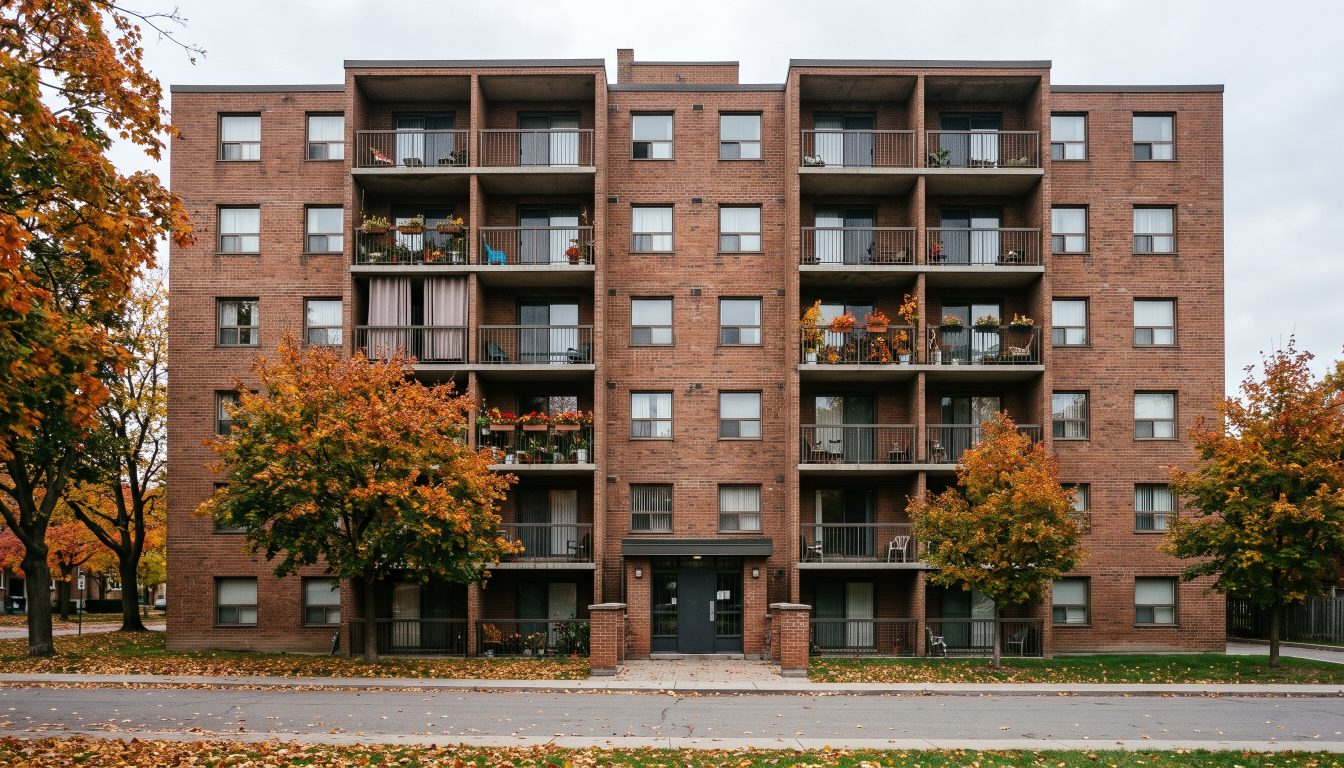
Set your budget and loan route, rebuild the NOI from the rent roll, make a conditional offer, then complete a building condition assessment, Phase 1 environmental review and rent audit before closing. In late 2026 conventional apartment loans were priced near 4.9%–5.6%, so debt coverage, not loan-to-value, usually sets how much you can borrow.
This guide is for investors with $1 million to $10 million who want to buy their first apartment building in Toronto or the wider GTA, often after owning condos or selling a business. You will get the steps in the order they happen, the financing rules as of November 2026, an illustrative 10-unit underwriting with the arithmetic shown, and the checks that protect you before you firm up.
How do you buy an apartment building in Toronto, step by step?
Buying an apartment building is closer to buying a small business than buying a house. You are buying a stream of rent, a set of tenants with legal rights, and a building that needs ongoing capital. The process usually runs in this order:
- Set your budget and choose a financing route.
- Pick the market and building type that fit that budget.
- Read the rent roll and work out the real net operating income.
- Make an offer with proper conditions.
- Complete due diligence: building, environment, tenants and paperwork.
- Arrange the mortgage and close.
- Take over management and plan the first year.
The rest of this guide walks through each one. My role is to find buildings on MLS and by approaching owners off-market, underwrite the numbers with you, negotiate, and run the deal with your lawyer, accountant, lender and inspectors.
Step 1: How much cash and what kind of loan do you need?
Buildings with five or more units are financed as commercial loans, not regular home mortgages. Lenders look at two limits and give you the lower one:
- Loan-to-value (LTV): the loan as a share of the price or appraised value.
- Debt service coverage ratio (DSCR): net operating income divided by the yearly mortgage payments. A DSCR of 1.20 means the building earns 20% more than the payments.
There are three main routes in 2027:
- Conventional loans. In October 2026, lenders priced conventional apartment loans at about 1.30 to 2.00 percentage points over the 5-year Government of Canada bond yield, which was 3.60% on 2 October. That implies roughly 4.9% to 5.6% all-in. This is derived from yield plus spread, so your quote will differ.
- CMHC-insured loans. CMHC insures loans on existing rental buildings with at least five units, up to 85% loan-to-value. The borrower needs a net worth of at least 25% of the loan and relevant management experience, or a property manager who has it. Insured spreads were about 0.55 to 1.00 points over the bond yield, or roughly 4.15% to 4.6%. CMHC also charges an insurance premium.
- New private mortgage insurance. Federal rules announced in November 2026 let private insurers cover loans on buildings with 5 to 50 units for lender applications submitted on or after 1 February 2027. For existing buildings the limits are up to 85% LTV and up to 40 years of amortization, with a minimum debt coverage ratio of 1.15 on 5-year terms. Products may vary by insurer and lender.
My guide to financing an apartment building in Canada compares these routes in detail.
Step 2: Where in the GTA should you look?
Apartment buildings are trading again. Altus Group reported $4.1 billion of GTA multifamily investment through Q3 2026, up 273% from a year earlier, with buyers favouring stable income-producing buildings. Most of that money went into large buildings, but it shows that lenders and buyers are active.
Your budget decides the field. With $5 million of cash, most buyers look at older walk-ups and small mid-rise buildings rather than towers. Location also changes your closing costs. Inside Toronto you pay both Ontario and Toronto land transfer tax. In Mississauga, Hamilton or Kitchener you pay only the Ontario tax. Many of my investor clients compare Toronto with apartment buildings in Hamilton and Kitchener-Waterloo before they decide.
Step 3: How do you read a rent roll and work out the real NOI?
A rent roll is the seller’s list of every unit, its tenant, its rent, the lease start date and any deposits. Net operating income (NOI) is all income minus vacancy and operating costs, before mortgage payments. The cap rate is NOI divided by price.
Never accept the seller’s NOI as given. Rebuild it from the rent roll, the last two years of statements, tax bills and utility bills. Here is an illustrative 10-unit building, with every assumption stated.
| Line (illustrative) | Assumption | Per year |
|---|---|---|
| Gross rent | 10 units × $1,700 a month | $204,000 |
| Other income | Laundry and parking | $6,000 |
| Vacancy and bad debt | 3% of gross rent | −$6,120 |
| Effective gross income | $203,880 | |
| Property tax | From the tax bill | −$18,000 |
| Insurance | Quote | −$11,000 |
| Utilities | Owner pays heat and water | −$21,000 |
| Repairs and maintenance | Two-year average | −$14,000 |
| Management | 4% of effective gross income | −$8,155 |
| Reserve for replacements | $400 per unit | −$4,000 |
| Admin, legal, accounting | Allowance | −$3,000 |
| Net operating income | Expenses are 38.8% of income | $124,725 |
Source: illustrative example built by Jatin Dua; arithmetic checked. Rent assumption set below CMHC’s 2025 GTA average purpose-built two-bedroom rent of $2,034 to reflect an older, rent-controlled building.
At a 4.25% cap rate this NOI supports a price of about $2,934,700 ($293,470 per unit). At 4.5% it is about $2,771,700 ($277,170 per unit), and at 4.75% about $2,625,800 ($262,580 per unit). A small change in cap rate moves the price by hundreds of thousands, which is why your NOI must be right. For comparison, Lee & Associates reported an average Toronto multifamily cap rate of 4.21% in Q3 2026.
Now test the loan. If you paid $2,770,000 and took a conventional loan at 5.25% over 30 years with a 1.20 DSCR, the most the building could carry is about $1,568,500, or roughly 57% of the price. Debt coverage, not LTV, sets the loan.
To see what your own cash buys and how the cash flow compares across building types, use the calculator below. It is set to $5 million, but you can change every number.
Loading the investment calculator…
Step 4: What should your offer and conditions include?
An offer on an apartment building is normally conditional for several weeks. The conditions protect you while you check what the seller has told you. Ask your lawyer to include at least:
- a financing condition long enough for a commercial lender’s appraisal and review;
- a due diligence condition covering the building, environment, leases and records;
- a list of documents the seller must deliver within a set number of days;
- tenant estoppel certificates where possible. An estoppel is a signed statement from a tenant confirming their rent, deposit and lease terms, so the rent roll cannot be quietly wrong; and
- seller representations about work orders, disputes before the Landlord and Tenant Board and any notices served.
Ask for the documents up front: two years of operating statements, the rent roll, every lease, the last rent increase notices, tax and utility bills, service contracts, and any reports the seller already has.
Step 5: What due diligence do you need before you firm up?
Due diligence on a building is about three risks: physical, environmental and legal.
- Building condition assessment (BCA). An engineer reviews the roof, structure, boiler, windows, electrical, plumbing and elevators, and estimates what must be spent over the next 10 years or so.
- Phase 1 environmental site assessment (ESA). A review of the site’s history and records to flag possible contamination, such as old fuel tanks or a former dry cleaner next door. Lenders often require one.
- Rent roll audit. Match each unit’s rent to its lease, its bank deposits and its last increase notice. Look for units below market and for any that were first occupied after 15 November 2018, which are exempt from the rent increase guideline.
- Legal and city checks. Search for work orders, permits and zoning. In Toronto, buildings of three or more storeys and 10 or more units must be registered under RentSafeTO, and the city publishes evaluation scores you can look up.
The most expensive surprises I see are capital items the price did not allow for: an old boiler, a failing roof, knob-and-tube or aluminium wiring, or rents on the roll that tenants are not actually paying. A rent roll can also hide disputes before the Landlord and Tenant Board. Do not waive conditions until the engineer’s report and the rent audit are in your hands.
My due diligence checklist for apartment buildings lists every document and question in order.
Step 6: What does it cost to close?
Land transfer tax is the largest closing cost. For a building with more than two units, Ontario and Toronto both charge 0.5% up to $55,000, 1% to $250,000, 1.5% to $400,000 and 2% above that. On the $2,770,000 example, the Ontario tax is $51,875. Inside Toronto you pay the same again to the city, for $103,750 in total. My guide to land transfer tax on commercial and multi-residential property has more examples.
The sale of an existing residential building is generally exempt from GST/HST, but there are exceptions, such as a building that was substantially renovated or sold by its builder. Add legal fees, the lender’s appraisal and fees, the BCA, the Phase 1 ESA, title insurance and, if insured, the insurance premium. Confirm the tax position with your lawyer and accountant before you sign.
Step 7: What happens after you take over the building?
On closing day you inherit every tenancy exactly as it is. You cannot raise rents because the building sold. For units covered by rent control, the 2027 guideline is 1.9%, increases need at least 12 months between them and 90 days’ written notice. Units first occupied after 15 November 2018 are exempt from the guideline, which my post on the rent control exemption for newer units explains.
In the first 90 days, most owners set up management and rent collection, fix any safety items from the BCA, and plan which capital work comes first.
For a first building, I would rather see a client buy a slightly smaller, well-kept building with clean records than stretch for more units with a long list of deferred repairs. Underwrite at today’s rates, assume the existing tenants stay, and only count rent growth you can prove from turnover history. If the deal only works with optimistic numbers, keep looking.
What to do next
- Decide your cash budget and keep a reserve of at least several months of expenses outside the purchase.
- Speak to a commercial mortgage broker or lender about which route fits you: conventional, CMHC-insured or the new private insurance from 1 February 2027.
- Rebuild the NOI on any building you like, line by line, and test it in my rental cash flow calculator.
- Line up your lawyer, accountant, engineer and environmental consultant before you make an offer, so the conditional period is not wasted.
- Run your numbers in the $5 million calculator above, then book a call with me to walk through a specific building and its rent roll.
Need help with this? Talk to me.
I’m Jatin Dua, Broker of Record at RE/MAX Quantum Realty, and I’m the best agent to do this kind of work for you in Toronto and across the GTA. Over $100 million in GTA sales and 100+ families helped sell. Feel free to contact me any time: call or text 833-330-1925 or email [email protected].
Frequently asked questions
How do I buy an apartment building in Toronto?
Buying an apartment building in Toronto follows seven steps: set your budget and financing, choose the market, rebuild the net operating income from the rent roll, make a conditional offer, complete due diligence, arrange the commercial mortgage and close, then take over management. Buildings with five or more units use commercial loans, which lenders size by debt coverage as well as loan-to-value.
How much down payment do you need for an apartment building in Canada?
It depends on the loan. CMHC-insured loans on existing rental buildings can reach 85% loan-to-value, so 15% down plus costs. Conventional loans in late 2026 were often limited by a 1.20 debt coverage ratio, which in my illustrative Toronto example capped the loan near 57% of the price. Private insurers can cover 5 to 50 unit buildings from 1 February 2027.
What is a rent roll?
A rent roll is the seller’s list of every unit in a building with the tenant, monthly rent, lease start date, last increase and deposits. In Ontario apartment deals, buyers check it against leases, bank deposits and rent increase notices before firming up. It is the starting point for working out the building’s real net operating income and value.
What is an estoppel certificate in an apartment building purchase?
An estoppel certificate is a signed statement from a tenant confirming their rent, deposit and lease terms. Buyers of Ontario apartment buildings ask for them so the seller’s rent roll cannot be wrong without anyone noticing. Not every residential tenant will sign one, so buyers also audit leases and bank records.
Do you pay HST when you buy an apartment building in Ontario?
Usually no. The sale of an existing, previously occupied residential building in Ontario is generally exempt from GST/HST. Exceptions include buildings that were substantially renovated, sales by the builder and buildings used for short-term rentals. Confirm the position for your purchase with your lawyer and accountant before you sign.
What land transfer tax do you pay on an apartment building in Toronto?
For a building with more than two units, Ontario and Toronto each charge 0.5% to $55,000, 1% to $250,000, 1.5% to $400,000 and 2% above. On a $2,770,000 Toronto building that is $51,875 to Ontario and $51,875 to the city, $103,750 in total. Outside Toronto only the Ontario tax applies.
What is a good cap rate for an apartment building in Toronto in 2027?
There is no single good number, but published averages give a benchmark. Lee and Associates reported a 4.21% average Toronto multifamily cap rate for Q3 2026, almost unchanged through the year. Older small buildings vary widely with rents, condition and location, so rebuild the NOI yourself rather than relying on the seller’s figure.
What due diligence is needed when buying an apartment building in Ontario?
Most buyers of Ontario apartment buildings order a building condition assessment, a Phase 1 environmental site assessment and a full rent roll audit, then check work orders, permits, zoning, Landlord and Tenant Board history and, in Toronto, RentSafeTO registration. Lenders often require the engineering and environmental reports before they will fund the loan.
Can I raise the rent after buying an apartment building in Ontario?
Not because of the purchase. You take over every tenancy as it is. For rent-controlled units, increases in 2027 are limited to the 1.9% guideline, at least 12 months apart, with 90 days’ written notice. Units first occupied after 15 November 2018 are exempt from the guideline, so check each unit’s first occupancy date.
Sources
- Altus Group: Toronto commercial real estate market update, Q3 2026
- Lee & Associates: Toronto Multifamily Q3 2026
- Canadian Mortgage Professional: What persistently high bond yields could mean for commercial mortgages (Oct 2026)
- Department of Finance Canada: Mortgage insurance rule changes to support missing middle housing (5 Nov 2026)
- CMHC: Standard rental housing mortgage loan insurance
- CMHC: Rental Market Reports, major centres (2025)
- City of Toronto: Apartment building standards (RentSafeTO)
- CRA GST/HST Memorandum 19-2-1: Residential real property sales
Related reading
- How to Invest $5 Million in GTA Real Estate (2027): Your Real Options
- What $5 Million Buys in GTA Real Estate in 2027: Houses, Buildings, Plazas and Land
- A $5 Million House or a $5 Million Apartment Building in Toronto? The 2027 Math
- Commercial vs Residential Real Estate Investment in the GTA (2027)
About the author — Jatin Dua, Toronto and GTA real estate broker
I am Jatin Dua, Broker of Record and co-founder of RE/MAX Quantum Realty Inc., Brokerage, Unit 101, 799 The Queensway, Toronto. I work with buyers and sellers across Toronto and the GTA and have helped more than 100 families sell. Four-plus years of active GTA transactions and over $100 million in sales volume.
Reach me at [email protected] or 833-330-1925, or book a call.
More from the library
- Medical and Dental Office Buildings: Etobicoke, Mississauga 2027
- Buying a Restaurant? What to Check in the Lease Before You Sign (Ontario)
- Cellphone Repair Store Premises in Ontario: Zoning, Second-Hand Rules, Batteries and the Lease
- Selling a House After a Death in Ontario: Probate, Tax and Timing
- Buying a Rural Lot in Ontario: Septic Systems and Wells Explained
- Richmond Mews, 287 Richmond St E: 15 Lofts in an Old Instrument Factory
