
Published 2 November 2026 · By Jatin Dua, Broker of Record, RE/MAX Quantum Realty
What's Your Home Worth Right Now?
Get a free AI-powered price range for your property in under 90 seconds, based on recent GTA comparable sales. No name or address required.
Get My Free Estimate →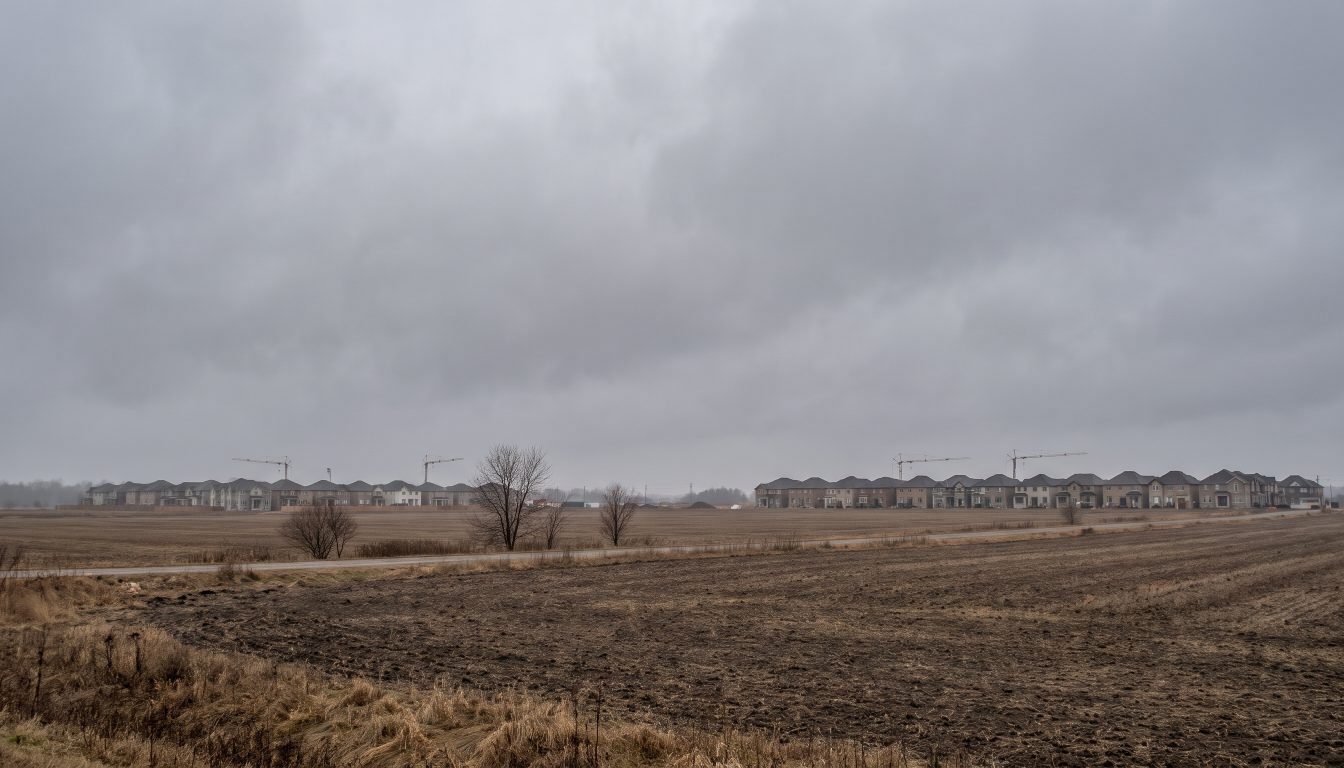
Land banking means holding raw land until it can be sold to a builder. Buying land yourself is a real estate purchase, but buying units in a land banking company is usually a securities investment, so the seller generally must be registered. Raw land pays no income, approvals may never come, and investors have lost everything.
This guide is for anyone who has been offered a “land banking” or pre-development land investment in Ontario, or who is thinking of buying raw land to hold for the long term. You will learn how these offerings usually work, why most of them are securities under the law, what has gone wrong in past cases and how to check a seller with the Ontario Securities Commission before any money moves.
What is land banking?
Land banking means buying undeveloped land, often farmland near a growing town, and holding it until it can be sold to a builder at a higher price. The British Columbia Securities Commission’s investor site describes it simply as raw land held for resale to a developer in the future.
It comes in two very different forms:
- Direct ownership. You buy a parcel yourself, your name goes on title, and you decide when to sell. This is a real estate purchase.
- A pooled offering. A company or partnership buys the land and sells investors units, shares or small “fractional” interests in it. The promoter manages the plan to get approvals and sell. This is usually a securities investment, even if the marketing talks about owning land.
The rest of this guide focuses mostly on the second form, because that is where investors get hurt. To be clear about my role: I am a real estate broker. I do not offer, sell or arrange land banking investments or any pooled fund. When I work with investors on land, it is a direct purchase of a property in their own name or company.
Is a land banking investment a security in Ontario?
Usually, yes. Securities law covers “investment contracts”. The courts look at whether there is an investment of money, in a common enterprise, with profits expected to come from the efforts of others. A guidance note from the Canadian Investment Regulatory Organization warns that investments in undivided interests in land may be found to be investment contracts, and that how a product is labelled does not change the analysis.
Regulators have applied this to land before. In 2002 an Alberta Securities Commission panel found that undivided interests in subdivision land sold to the public were investment contracts, and that selling them without registration or a prospectus broke the law. The B.C. regulator lists land banking among its real estate-based securities.
What this means for you:
- A person or firm selling the investment in Ontario generally must be registered with a securities regulator, or must rely on a specific legal exemption.
- Most offerings are sold in the “exempt market” without a full prospectus, so you get less disclosure and fewer protections than with a public investment.
- Registration is a minimum check, not a promise that the investment is good. You can still lose money with a registered seller.
This is general information, not legal advice. Confirm with your lawyer before you invest in or sign anything.
How does a typical land banking offering work?
The details vary, but most pitches follow a pattern:
- A promoter buys or options a parcel, often outside the current urban boundary.
- The land is placed in a company or partnership and divided into units, sometimes priced per acre or per fraction of an acre.
- Investors are shown maps of future growth, nearby highways and a target holding period, usually several years.
- The promoter says it will seek rezoning and sell to a builder, then share the proceeds after fees.
Note what is missing: income. Raw land usually pays nothing while you wait. The B.C. regulator points out that property taxes and management fees keep running, that a builder may not get permits or financing, and that payments made during the hold may simply be your own money coming back.
What are the main risks of land banking?
| Risk | What it looks like | Question to ask |
|---|---|---|
| Approval never comes | Land stays farmland; protected areas such as the Greenbelt can only change by legislation | What approvals exist today, in writing? |
| Land values fall | Toronto high-density land fell 37% from its 2021 peak by Q2 2025; approved land fell 43% | What happens to my money if the land is worth less? |
| No way out | Units cannot be resold, or only back to the promoter | Is there any redemption right, and what is the history? |
| Markup and fees | Investors pay well above what the promoter paid | What did the company pay for the land, and when? |
| Debt on the land | A lender can foreclose ahead of investors | Is there a mortgage, and who ranks first? |
| Promoter failure | The company runs out of cash before a sale | Who holds title, and what happens if the manager fails? |
Source: BCSC InvestRight on real estate-based securities; land value figures from RENX, 19 August 2025 (Bullpen Research and Batory data).
The OSC’s investor education site makes the same point about real estate partnerships that buy undeveloped land: if a project is never completed or sold, you could lose some or all of your money, and you may not be able to resell your investment when you want, or at all.
If you would rather compare what the same cash could earn in a property you own directly, use the calculator below; it is set to $5 million but you can change every number.
Loading the investment calculator…
What has gone wrong with land banking in Canada?
Several public cases show how these investments fail:
- Two Alberta land companies (Ontario order, 2018). Investors bought shares that each carried an interest in one acre, at $39,000 and $53,000 per share. The B.C. Securities Commission found illegal distributions to 23 investors for $910,650 in one company and 15 investors for about $1.09 million in the other. After the land lost value, the mortgage was foreclosed and investors in the first company lost everything. Ontario’s regulator later made a reciprocal order on 22 June 2018.
- A receivership in Ontario (2025 onward). On 6 March 2025 the Ontario Superior Court appointed a receiver over a land banking investment program that bought vacant land across Canada with money from over 1,000 investors, many from Asia. The receiver has sold properties and is holding the money while claims are sorted out. The claims deadline in the second claims process is 26 January 2027, and nothing will be paid out until the court approves a distribution.
- A large western land company (2017). A Calgary-based group that grew out of land banking received creditor protection in 2017 after losing $67.3 million over three years, while holding about 43,000 hectares of land.
The common thread is time. Land held for growth can sit for years longer than planned, and debt, fees and taxes do not wait.
How do you check a land banking seller with the OSC?
Do this before you send any money, however small the amount:
- Check registration. The OSC’s Check Before You Invest page points you to the Canadian Securities Administrators’ National Registration Search. Look up both the firm and the individual.
- Check the warning list. The OSC publishes investor alerts and a list of companies and people that may pose a risk. It has named land-related firms that were not registered to trade securities.
- Read the offering document with your own lawyer, especially the risk factors, fees, who holds title and how you exit.
- Search title yourself through your lawyer to confirm who owns the land, what was paid and what mortgages are registered.
- Report pressure. The OSC asks people to contact it if they are approached by anyone not registered.
The OSC lists four classic red flags of investment fraud: high returns with little or no risk, a hot tip or insider information, pressure to buy, and a seller who is not registered.
Be very careful with land pitches that promise a fixed return, a sale “within three years”, or land “next to” a future highway or boundary expansion. Take extra care if the pitch comes through a seminar or a personal introduction rather than a registered firm. If the seller is not registered, stop and contact the OSC.
Is buying raw land yourself different from land banking?
Yes. When you buy land directly, you hold title, choose your own planner and lawyer, see every document and decide when to sell. Your agent’s role is to help you buy the property, not to sell you an investment product.
The land risks do not disappear, though. Approvals can stall and values can fall. Holding costs are also real. In an illustrative example, $5 million of land in Toronto held for three years gives up about $559,700 compared with a 3.60% government bond yield, plus $192,950 of land transfer tax, or about 15% of the price before property tax and consultants. My guide to buying development land in the GTA covers approvals, costs and checks in detail, and my guide on property tax on vacant land explains the ongoing bill.
If you want exposure to land, own it directly or not at all. You keep control, you can see the title and the planning file, and you choose when to sell. If you prefer to hand your money to a manager, treat it as a securities investment: check registration, read every page with your own lawyer, and only put in money you could afford to lose entirely.
What to do next
- If you have been offered a land investment, look up the seller on the National Registration Search and the OSC warning list today.
- Ask for the offering document, title search, appraisal and fee schedule in writing, and take them to your own lawyer.
- If you want land you control, read my guides on Greenbelt land and how land is priced first.
- Compare any land idea with an income property using the calculator above, and read my guide on real estate syndication if you are weighing pooled options.
- Book a call with me if you want to buy land directly in your own name; I search MLS and approach owners off-market, and we review the planning status before you commit.
Need help with this? Talk to me.
I’m Jatin Dua, Broker of Record at RE/MAX Quantum Realty, and I’m the best agent to do this kind of work for you in Toronto and across the GTA. Over $100 million in GTA sales and 100+ families helped sell. Feel free to contact me any time: call or text 833-330-1925 or email [email protected].
Frequently asked questions
Is land banking legal in Ontario?
Buying and holding land yourself is legal. Selling the public units or shares in a land banking company is usually a securities distribution in Ontario, so the seller generally must be registered with a securities regulator or rely on a legal exemption. Check the firm and the person on the National Registration Search, as the OSC recommends, before investing any money.
Is land banking a good investment in Canada?
It is a high-risk investment for most people. Raw land pays no income, approvals can take years or never come, and land values can fall: Toronto high-density land dropped 37% from its 2021 peak by Q2 2025. Canadian cases include investors who lost everything after foreclosure. Only consider it with money you could afford to lose.
What are the risks of land banking investments?
The main risks are that rezoning never happens, land values fall, you cannot sell your units, fees and markups eat the gain, a lender forecloses ahead of you, or the promoter fails. Regulators also warn that payments during the hold may simply return your own money, while property taxes and management fees continue.
How do I check if a land investment company is registered in Ontario?
Use the Canadian Securities Administrators’ National Registration Search, which the Ontario Securities Commission recommends on its Check Before You Invest page. Search both the company and the salesperson. Then check the OSC’s investor warnings list. If the seller is not registered, the OSC asks you to contact it before you invest.
Are fractional land interests securities in Canada?
Often, yes. If you invest money in a common enterprise and expect profit from the promoter’s efforts, regulators can treat it as an investment contract, which is a security. An Alberta Securities Commission panel reached that finding on undivided land interests in 2002, and CIRO guidance warns that labelling does not change the analysis. Confirm a specific offering with a securities lawyer.
What happens if a land banking company goes bankrupt?
Investors usually wait while a court-appointed receiver or monitor sells the land, pays secured lenders first and runs a claims process. In an Ontario receivership ordered on 6 March 2025 over a land program with more than 1,000 investors, the second claims deadline is 26 January 2027, and no payouts happen until the court approves a distribution.
Is pre-development land a safe investment in the GTA?
No land investment is safe in the sense of protected capital. Pre-development land around the GTA depends on approvals, servicing and the builder market, and the Greenbelt can only change by legislation. Investors in Canadian land offerings have lost their whole stake when values fell. Buying directly with clear approvals reduces, but does not remove, the risk.
What red flags should I watch for in a land banking pitch?
The OSC lists four classic red flags: high returns with little or no risk, a hot tip or insider information, pressure to buy, and a seller who is not registered. In land pitches, also watch for fixed return promises, firm sale dates, maps of future highways presented as certain, and no clear answer on who holds title.
Sources
- OSC GetSmarterAboutMoney: Understanding real estate investments
- Ontario Securities Commission: Check before you invest
- Ontario Securities Commission: Investor warnings and alerts
- BCSC InvestRight: Real estate-based securities
- CIRO guidance note: Undivided interests in land
- Capital Markets Tribunal: 2018 Ontario land banking decision (reasons)
- Gowling WLG: Receivership of the Ontario Land Banking Investment Program (representative counsel page)
- RENX: High-density land values drop dramatically in Greater Toronto Area (Aug 2025)
Related reading
- How to Invest $5 Million in GTA Real Estate (2027): Your Real Options
- What $5 Million Buys in GTA Real Estate in 2027: Houses, Buildings, Plazas and Land
- A $5 Million House or a $5 Million Apartment Building in Toronto? The 2027 Math
- Commercial vs Residential Real Estate Investment in the GTA (2027)
About the author — Jatin Dua, Toronto and GTA real estate broker
I am Jatin Dua, Broker of Record and co-founder of RE/MAX Quantum Realty Inc., Brokerage, Unit 101, 799 The Queensway, Toronto. I work with buyers and sellers across Toronto and the GTA and have helped more than 100 families sell. Four-plus years of active GTA transactions and over $100 million in sales volume.
Reach me at [email protected] or 833-330-1925, or book a call.
More from the library
- Funeral Home Succession Planning in Ontario: Selling to Family, Staff or an Outside Buyer
- Mixed-Use Buildings in the GTA (2027): Stores Below, Apartments Above
- Funeral Home Premises in Ontario: Zoning, Holding and Embalming Rooms, and the Building Code
- Buying a Condo in Humber Bay Shores vs Islington-City Centre West
- Retirement Home Property in Ontario: Zoning, Fire Code Sprinklers and What to Inspect
- Deer Park Residences, 1 Deer Park Cres: Intracorp’s Boutique at St. Clair
