
Published 2 November 2026 · By Jatin Dua, Broker of Record, RE/MAX Quantum Realty
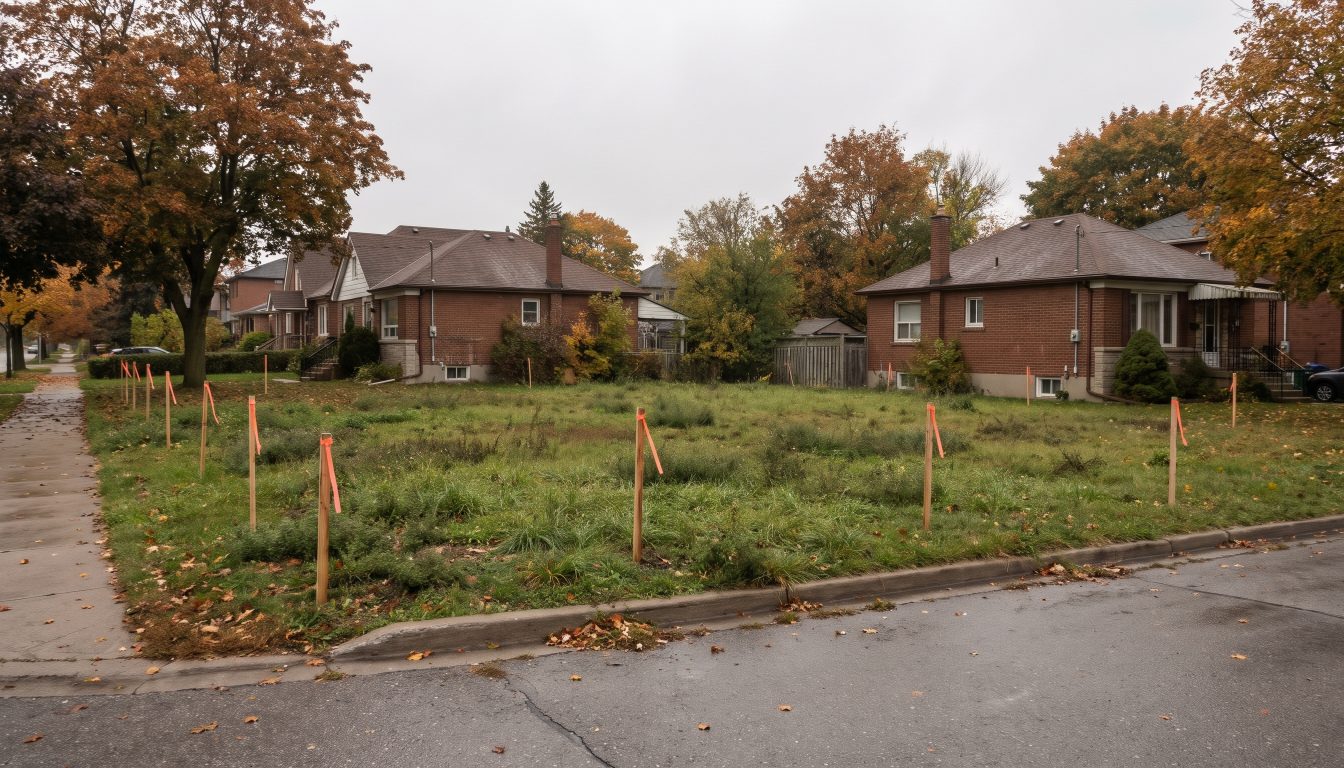
Yes, vacant land in Ontario pays property tax every year. The bill is the MPAC assessed value times the rate for the land’s class. A Toronto residential lot assessed at $500,000 pays about $3,837 for 2026. Farmland, managed forest and some land awaiting development can qualify for lower rates in 2026.
This guide is for anyone who owns, is buying or has inherited vacant land in Ontario, from a building lot in Toronto to acreage in Caledon. It answers the basic question first, then explains how MPAC values land, which tax class applies, the programs that can cut the bill, and the tax surprises that hit when you build, using 2026 rates from official sources.
Is property tax applicable on vacant land in Ontario?
Yes. Vacant land in Ontario pays property tax every year, the same as land with a building on it. There is no general exemption just because a lot is empty.
The bill follows the same formula as any property: MPAC assessed value x the tax rate for the land’s property class. What changes with vacant land is the class. A residential building lot, a commercial site, a farm and a forest can all be “vacant,” but they are taxed at very different rates.
The land is taxed even if it earns nothing. That is the carrying cost every land buyer needs to plan for.
How does MPAC assess vacant land?
MPAC lists “vacant land that is available for residential use” as one of the property types in its residential class. For residential property, MPAC mainly uses the direct comparison approach: it compares your property with similar ones that sold in the area.
The timing matters. For the 2026 tax year, Ontario assessments are still based on values as of January 1, 2016. As of November 2026, the Province has not announced the next province-wide reassessment. So a lot bought in 2025 for far more than its 2016 value is usually still taxed on the older figure, unless something about the property changes.
If you think the assessed value or the class is wrong, contact MPAC before the deadline on your notice. My guide on why assessments still say 2016 explains how the frozen value feeds your bill.
What tax class is vacant land in, and what rate applies?
The class depends on zoning and use. The City of Toronto explains its own rules clearly:
- Low-density residential vacant land (lots for single-family or semi-detached homes) is taxed at the residential rate.
- High-density residential vacant land (such as a future condo site) is taxed at the multi-residential rate until the building is occupied, then at the residential rate.
- Commercial and industrial vacant land is taxed at a rate about 30% below the full commercial or industrial rate in Toronto.
| Vacant land type (Toronto, 2026) | Tax class | 2026 rate | Tax on $500,000 assessment | Tax on $1,000,000 |
|---|---|---|---|---|
| Single or semi-detached building lot | Residential | 0.767311% | $3,837 | $7,673 |
| High-density site (e.g. future condo) | Multi-residential | 1.208792% | $6,044 | $12,088 |
Source: City of Toronto, Property Tax Rates and Fees, 2026 rates and vacant land notes. Tax amounts are my calculations, rounded.
Outside Toronto, the rules vary. In Peel’s 2026 schedule, for example, commercial vacant land in Mississauga, Brampton and Caledon carries the same total rate as other commercial property. Do not assume a discount without checking the municipality’s rate schedule.
Do farmland and land awaiting development get a lower rate?
Yes, in some cases. Land that is still farmed but is planned for development can fall into a farmland awaiting development subclass with a reduced rate. The discount is set locally, so it differs by city:
| Municipality | Regular residential rate, 2026 | Residential farmland awaiting development (Phase I), 2026 | Share of residential rate |
|---|---|---|---|
| Brampton | 1.253381% | 0.376015% | 30% |
| Caledon | 0.982207% | 0.294662% | 30% |
Source: Region of Peel, total 2026 tax rates (class codes RT and R1). Shares are my calculation from the published rates.
Worked example: a parcel in Brampton assessed at $1,000,000 in this subclass pays about $3,760 for 2026, compared with $12,534 at the full residential rate. The discount is tied to the development phase, so it can end as the land moves toward building.
Working farms are different again. Under Ontario’s Farm Property Class Tax Rate Program, eligible farmland is taxed at no more than 25% of the municipal residential rate. To qualify, the land must be assessed as farmland, used for a farm business with a valid Farm Business Registration number, and owned by Canadian citizens or permanent residents. Agricorp runs the program. The farmhouse and its lot are still taxed at the residential rate.
Instant Home Valuation
What’s your home
worth today?
Answer six quick questions and get an instant value range built from current Toronto & GTA sale data — property type, size, condition, lot and location all weighted the way a real pricing conversation weighs them. Takes about ninety seconds.
Reading recent GTA sale data…
Building your estimate
Estimated market value
—
$0–$0
Most likely value $0 · roughly $0 per square foot
What moved the number
Starting from the area baseline for your property type, here’s what each answer added or subtracted.
Market context
Recent local averages for comparison.
—
A range is a starting point.
A strategy is what sells.
This model doesn’t know that your neighbour’s identical semi went $80,000 over asking last month, or which two upgrades actually pay back in your area. That conversation is free and takes twenty minutes.
Can forest land lower your vacant land tax?
Ontario’s managed forest program can reduce tax on rural land that is kept as woodland:
- Managed Forest Tax Incentive Program. You need at least 4 hectares (9.88 acres) of forest on one property, and an approved 10-year Managed Forest Plan prepared or approved by a Managed Forest Plan Approver. Enrolled forest is taxed at 25% of the municipal residential rate. The deadline to add land for the next tax year is June 30.
The program does not cover a house or the land used with it. It also comes with commitments: a forest plan, a progress report in year five and a renewal after ten years. If you plan to build soon, these are rarely a fit. See my guide to Greenbelt and Oak Ridges Moraine land for what you can build on protected rural land.
Does Toronto’s Vacant Home Tax apply to vacant land?
No. Toronto’s Vacant Home Tax is charged on residential properties that sit empty, at 3% of the assessed value. The City says owners do not need to make a declaration for vacant land without a structure. An empty building lot is taxed only at its normal property class rate.
The picture changes the moment a house is on the lot. If you buy a house to tear down, the house is a residential property until it is demolished, and a declaration is required each year. The repairs or renovations exemption needs major work that kept the home unoccupied for at least six months of the year, done with any required permits and without unnecessary delay. My guide on buying a teardown to build in Toronto covers the timing.
What happens to property tax when you build on vacant land?
Your tax goes up once there is a building, but the bill often arrives late. MPAC has to assess the new building first, and then the municipality issues a supplementary tax bill for the added value.
The City of Mississauga explains it plainly: if your house was recently built and, at the time you bought it, you only paid taxes on the vacant land’s value, you will get a supplementary bill. It is prorated from the effective date of the new assessment, so it can cover months that have already passed.
Supplementary bills are separate from your regular interim and final bills, with their own due dates, so watch the mail after MPAC sends a change notice.
Many new-home buyers and lot owners budget only for the land tax they see today. When the supplementary bill arrives, it can cover a year or more of added value at once. Ask MPAC or the city when the new assessment is likely, and set money aside each month from the date you move in. Also note that buying land can trigger HST, which is a separate tax from property tax.
How much does it cost to hold a vacant lot each year?
Property tax is the biggest fixed cost, but not the only one. For a Toronto lot assessed at $700,000, the 2026 property tax is about $5,371 a year, or $448 a month. In Brampton, the same assessment at the full residential rate is about $8,774.
Other holding costs to budget for, which vary by property and are not set by the city:
- Insurance on the land.
- Interest on any land loan.
- Upkeep such as grass cutting, snow clearing and fencing, which your city’s property standards bylaw may require.
- Design and permit costs if you plan to build.
If you are still deciding, my step-by-step guide on how to buy a vacant lot in the GTA covers due diligence, and my guide to HST on land sales explains when HST is added to the price.
With land clients, I start by pulling the MPAC class and assessment, not just the price. A lot in the farmland awaiting development subclass can carry a much lower bill today, but that discount ends when the land moves to the next phase. Before you buy, ask the seller for the last two tax bills and check the property class code on the bill. That one line tells you which rate you are really paying.
What to do next
- Get the land’s MPAC assessment and property class from the latest tax bill or MPAC AboutMyProperty.
- Look up the 2026 rate for that class on the municipality’s website and multiply.
- If the land is farmed or forested, check eligibility for the farm, managed forest or conservation programs and note their deadlines.
- If you plan to build, set aside money for a supplementary tax bill from the date of occupancy.
- If you are selling land instead, read my guide on how to sell vacant land in Ontario.
Need help with this? Talk to me.
I’m Jatin Dua, Broker of Record at RE/MAX Quantum Realty, and I’m the best agent to do this kind of work for you in Toronto and across the GTA. Over $100 million in GTA sales and 100+ families helped sell. Feel free to contact me any time: call or text 833-330-1925 or email [email protected].
Frequently asked questions
Is property tax applicable for vacant land in Ontario?
Yes. Vacant land in Ontario pays property tax every year. The tax equals the MPAC assessed value times the rate for the land’s property class, such as residential, multi-residential, commercial or farm. A Toronto residential building lot assessed at $500,000 pays about $3,837 for 2026 at the 0.767311% residential rate.
How is vacant land assessed in Ontario?
MPAC assesses vacant residential land mainly by comparing it with similar properties that sold in the same area. For the 2026 tax year, Ontario assessments are still based on January 1, 2016 values. If you think the value or the class is wrong, contact MPAC before the deadline on your notice.
Is vacant land taxed at a lower rate in Toronto?
Low-density residential vacant land in Toronto is taxed at the regular residential rate of 0.767311% for 2026, not a lower rate. Commercial and industrial vacant land is taxed about 30% below the full rate. High-density residential sites, such as future condo land, pay the higher multi-residential rate of 1.208792%.
Do I have to pay Toronto’s Vacant Home Tax on an empty lot?
No. Toronto’s Vacant Home Tax applies to residential properties with a home on them that sit empty, at 3% of assessed value. The City says no declaration is needed for vacant land without a structure. If there is still a house on the lot, a yearly declaration is required.
How can I reduce property tax on rural land in Ontario?
Ontario has two main programs for rural owners. Eligible farmland used for a farm business is taxed at no more than 25% of the municipal residential rate. Managed forest of at least 4 hectares (9.88 acres) with an approved 10-year plan is taxed at 25% of the residential rate.
What is farmland awaiting development tax rate?
Farmland awaiting development is a subclass for land planned for development that gets a reduced rate set locally. In 2026, Phase I land in Brampton and Caledon is taxed at 30% of the residential rate (0.376015% and 0.294662%). Other cities set different discounts, so check the local rate schedule. The discount can end as the land moves toward development.
Why did I get a supplementary tax bill after building my house?
You get a supplementary property tax bill in Ontario when MPAC adds the value of a new building to land that was taxed as vacant. The city bills the extra tax from the effective date of the new assessment, so it can cover months that have already passed. It is separate from your regular bills.
Is HST charged on vacant land in Ontario?
HST may apply to the sale of vacant land in Ontario in some cases, depending on the seller and the land’s history. It is a one-time tax on the purchase, separate from yearly property tax. Ask your lawyer to confirm the HST status before you sign, and read the agreement’s HST clause closely.
Is a house on farmland taxed at the farm rate in Ontario?
No. Under Ontario’s Farm Property Class Tax Rate Program, the farmhouse and the land used with it are taxed at the municipality’s residential rate. Only the eligible farmland itself is taxed at no more than 25% of that rate. The land must be used for a farm business with a valid Farm Business Registration number.
Sources
- City of Toronto: Property tax rates and fees (vacant land rate)
- MPAC: Residential property assessments
- Region of Peel: Total 2026 tax rates
- Ontario: Farm Property Class Tax Rate Program
- Ontario: Managed Forest Tax Incentive Program
- MPAC: The assessment cycle
- City of Toronto: Vacant Home Tax
- City of Mississauga: Supplementary tax bill
Related reading
- Average Property Tax in Toronto for 2027: Per Year, Per Month, by Home Value
- Toronto Property Tax Due Dates and Payment Options Explained
- GTA Property Tax Rates Compared: Toronto, Mississauga, Brampton, Vaughan and More
About the author — Jatin Dua, Toronto and GTA real estate broker
I am Jatin Dua, Broker of Record and co-founder of RE/MAX Quantum Realty Inc., Brokerage, Unit 101, 799 The Queensway, Toronto. I work with buyers and sellers across Toronto and the GTA and have helped more than 100 families sell. Four-plus years of active GTA transactions and over $100 million in sales volume.
Reach me at [email protected] or 833-330-1925, or book a call.