
Published 2 September 2026 · Updated 29 September 2026 · By Jatin Dua, Broker of Record, RE/MAX Quantum Realty
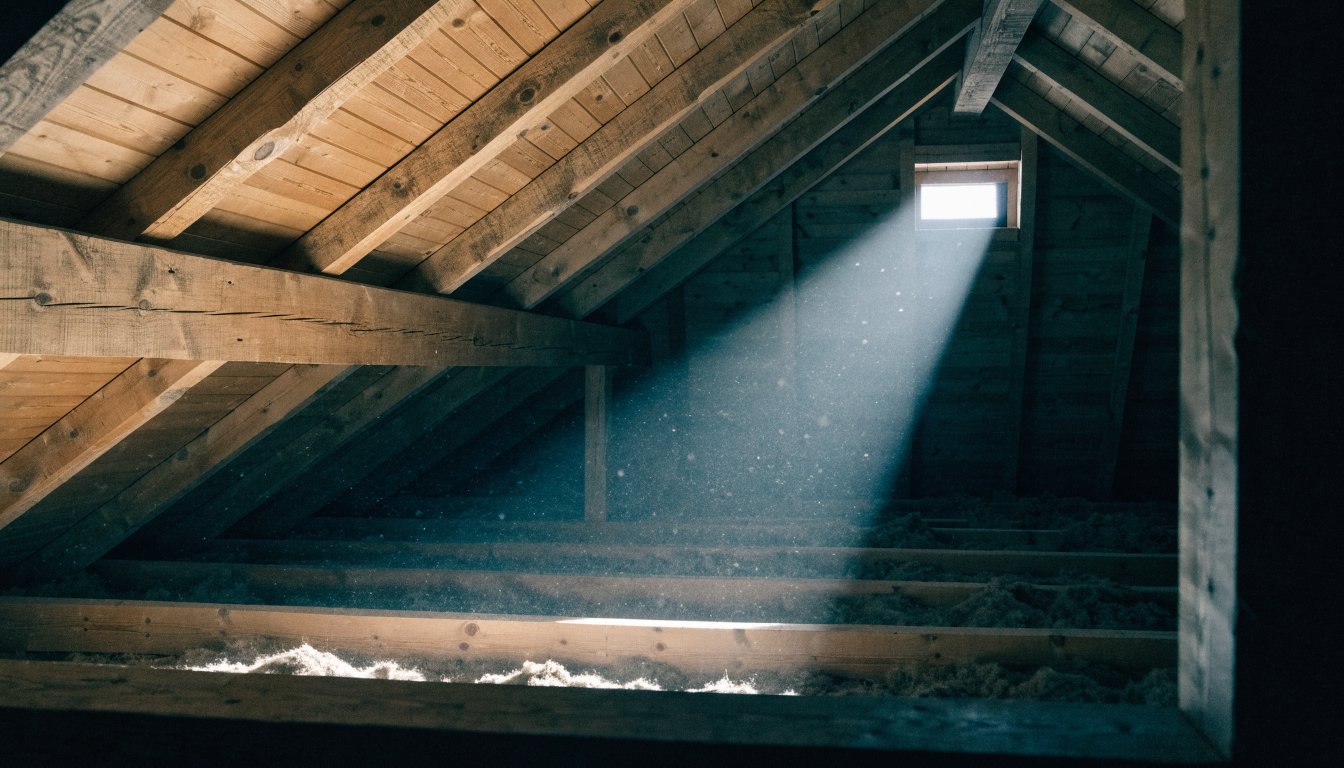
The Canadian guideline is 200 becquerels per cubic metre, and Health Canada recommends acting within one year above it. Testing must run a minimum of 91 days, with at least 91 days in the heating season, in the lowest lived-in level. Health Canada states that “short term measurements are not appropriate for informing mitigation decisions” — so a test squeezed into a two-week conditional period does not meet the standard. The published federal data for this area is old and thin: from the 2009-11 Cross-Canada Survey, 2.7% of Toronto homes tested above the guideline on a sample of 73, and 0% in Peel on a sample of 89. Radon varies house to house; a regional percentage says nothing about a specific basement.
Most radon tests done during a real estate transaction do not meet Health Canada’s standard. Not because the labs are wrong, but because a conditional period is usually two weeks and the standard is 91 days.
Health Canada’s Guide for radon measurements in homes, last updated 22 May 2026, requires a minimum of 91 days of measurement, with at least 91 days occurring during the heating season, to estimate an annual average. And it says this:
“Short term measurements are not appropriate for informing mitigation decisions.”
That single sentence is the most useful thing on this page. A three-day radon reading taken during a conditional period is not a Health Canada-compliant test, and it is not a sound basis for either walking away or relaxing. It is a screening indication and nothing more.
The number, and what it means
The Canadian guideline for radon in indoor air in dwellings is 200 becquerels per cubic metre. Above it, Health Canada’s reduction guide, modified 24 September 2025, says: “Health Canada recommends that you take action to lower the level within 1 year… The higher the radon concentrations, the sooner action should be taken.”
For context, the World Health Organization’s own fact sheet of 25 January 2023 recommends a national reference level of 100 Bq/m³, and says that where that cannot be reached under prevailing country-specific conditions the level should not exceed 300.
I could not find any Health Canada or Canada.ca page that sets the WHO figure alongside the Canadian one. The 100 comes from the WHO’s own publication, which is primary for its own recommendation, but the comparison is mine, not the federal government’s. Treat it as context rather than as a Canadian standard.
How to test properly
| Requirement | Health Canada’s guide |
|---|---|
| Minimum duration | 91 days, with at least 91 days during the heating season |
| Season | Testing during the heating season “will generally provide a conservative estimate of the annual radon level” |
| Where | The lowest lived-in level — areas normally used four or more hours a day, prioritising bedrooms |
| Devices | Alpha track detectors, electret ion chambers, or electronic radon monitors — C-NRPP-approved only |
| Short-term tests | “Not appropriate for informing mitigation decisions” |
If a level above the guideline is confirmed, the reduction guide names active soil depressurization as “the most effective and reliable radon reduction technique”. It also covers sump-hole and drain-tile depressurization, sub-membrane systems for crawlspaces, and mechanical ventilation — noting that sealing entry routes on its own is not sufficient.
What the published local data actually says
Health Canada’s Cross-Canada Survey remains the reference dataset. It surveyed the 2009-10 and 2010-11 heating seasons and produced 13,807 valid results.
| Area | Homes above 200 Bq/m³ | Sample size |
|---|---|---|
| Canada | 6.9% of Canadians living above the guideline | 13,807 valid results |
| Ontario | 4.6% population weighted (8.2% raw) | — |
| City of Toronto health unit | 2.7% | 73 homes |
| Peel Regional health unit | 0% | 89 homes |
Do not read the Peel zero as reassurance. It is a 0-for-89 result from a survey conducted fifteen years ago, and the report itself notes that 13 of 36 health regions had more than 10 per cent of homes above the guideline. Radon varies house to house on the same street, driven by soil, foundation and ventilation. A regional percentage tells you nothing about a specific basement. I have quoted the sample sizes deliberately, because a figure like “0 per cent” is meaningless without them.
On testing behaviour rather than concentrations: Statistics Canada reported that in 2021, 56% of Canadian households had heard of radon, and only 9% of non-apartment households that had heard of it had ever tested.
How to handle it in a transaction
- Do not expect a compliant test inside a conditional period. Ninety-one days does not fit in ten. Anyone promising a definitive radon answer in a week is not following the guide.
- A short test can still be worth doing as a screen — just do not treat a low short-term reading as clearance or a high one as proof.
- Ask the seller whether the home has ever been tested, and for the results and dates. A previous long-term test is far more valuable than a new short one.
- Test properly after closing, over a full heating season, in the lowest lived-in level.
- If you are above the guideline, you have a year by Health Canada’s own recommendation, and mitigation is a known, engineered fix rather than an emergency.
Radon is the rare house problem that is cheap to measure, well understood to fix, and almost never worth walking away from — provided you measure it the way the guide says rather than the way the calendar allows.
Worried about radon in a house you are buying?
The honest answer is that you almost certainly cannot get a Health Canada-compliant test done before your conditions expire, and anyone telling you otherwise is not following the guide. What you can do is ask the right questions of the seller, write the condition sensibly, and plan a proper test for after closing. Tell me the property and I will help you think it through. I am not a radon professional and for measurement or mitigation you want a C-NRPP-certified one.
[email protected] · 833-330-1925 · Book a free consultation
Confidential. Read personally and answered within 24 hours. I never share, sell or distribute your information.
Free tool — AI home value estimator
Instant Home Valuation
What’s your home
worth today?
Answer six quick questions and get an instant value range built from current Toronto & GTA sale data — property type, size, condition, lot and location all weighted the way a real pricing conversation weighs them. Takes about ninety seconds.
Reading recent GTA sale data…
Building your estimate
Estimated market value
—
$0–$0
Most likely value $0 · roughly $0 per square foot
What moved the number
Starting from the area baseline for your property type, here’s what each answer added or subtracted.
Market context
Recent local averages for comparison.
—
A range is a starting point.
A strategy is what sells.
This model doesn’t know that your neighbour’s identical semi went $80,000 over asking last month, or which two upgrades actually pay back in your area. That conversation is free and takes twenty minutes.
Frequently asked questions
What is the radon guideline in Canada?
Two hundred becquerels per cubic metre of indoor air in dwellings. Health Canada publishes this in Radon — Is It in Your Home?, revised April 2018, and repeats it in its reduction guide, modified 24 September 2025, which states that where a home is above the guideline Health Canada recommends taking action to lower the level within one year, and that the higher the concentration the sooner action should be taken.
How long does a radon test have to run?
A minimum of 91 days, with at least 91 days occurring during the heating season, according to Health Canada’s Guide for radon measurements in homes, last updated 22 May 2026. The guide states that testing during the heating season will generally provide a conservative estimate of the annual level, and that short term measurements are not appropriate for informing mitigation decisions.
Can I do a radon test during my conditional period?
You can do a short-term test, but it will not meet Health Canada’s standard. The guide requires a minimum of 91 days and states expressly that short term measurements are not appropriate for informing mitigation decisions. A short test is a screening indication only: a low reading is not clearance and a high reading is not proof. The better approach is to ask the seller whether a long-term test has ever been done and to test properly after closing over a full heating season.
Where in the house should radon be measured?
In the lowest lived-in level, meaning areas normally occupied four or more hours a day, with bedrooms prioritised. Health Canada recognises three device categories — alpha track detectors, electret ion chambers and electronic radon monitors — and recommends only devices approved under the Canadian National Radon Proficiency Program.
Is radon a problem in Toronto and Peel?
The only published federal figures are old and based on very small local samples. Health Canada’s Cross-Canada Survey, covering the 2009-10 and 2010-11 heating seasons, found 2.7 per cent of homes above the guideline in the City of Toronto health unit on a sample of 73 homes, and 0 per cent in the Peel Regional health unit on a sample of 89 homes. Ontario overall was 4.6 per cent population weighted. Those numbers should always be quoted with their sample sizes and should not be read as meaning a particular house is safe. Radon varies from house to house depending on soil, foundation and ventilation.
What is done to fix a high radon level?
Health Canada’s reduction guide names active soil depressurization as the most effective and reliable radon reduction technique. It also describes sump-hole depressurization, drain-tile depressurization, sub-membrane depressurization for crawlspaces, and mechanical ventilation using a heat or energy recovery ventilator, which it describes as producing modest reductions. The guide notes that sealing entry routes on its own is not sufficient.
Related reading
- Home inspection in Ontario: still not a licensed profession
- Asbestos and vermiculite: what the rules actually require
- Knob-and-tube and aluminum wiring: neither is illegal
- Kitec plumbing: the claims deadline closed in 2020
Sources
Every figure on this page traces to one of these, and each was read on 1 September 2026. Primary sources only — statute, regulation, and the government or agency that administers the rule. Where I could not verify something from a primary source, the page says so instead of guessing.
- Radon — Is It in Your Home? (PDF) — Health Canada. Health Canada, revised April 2018. States that the Canadian guideline for radon in indoor air for dwellings is 200 becquerels per cubic metre, and that Health Canada recommends a long term test of a minimum of three months, ideally during the fall and winter. Accessed 1 September 2026.
- Guide for radon measurements in homes — Health Canada. Health Canada, last updated 22 May 2026. Requires a minimum of 91 days of measurement with at least 91 days during the heating season to estimate an annual average, recommends testing the lowest lived-in level, and states that short term measurements are not appropriate for informing mitigation decisions. Accessed 1 September 2026.
- Radon — Reduction Guide for Canadians — Health Canada. Health Canada, date modified 24 September 2025. States that where a home tests above the Canadian guideline of 200 becquerels per cubic metre, Health Canada recommends taking action to lower the level within one year, and describes active soil depressurization as the most effective and reliable radon reduction technique. Accessed 1 September 2026.
- Cross-Canada Survey of Radon Concentrations in Homes, final report — Health Canada. Health Canada, 2012 report, date modified 15 January 2025. Surveyed the 2009-10 and 2010-11 heating seasons with 13,807 valid results. Reports 6.9 per cent of Canadians living above the 200 becquerel guideline nationally and 4.6 per cent population weighted in Ontario. The Peel Regional Health Unit figure is 0 per cent above the guideline on a sample of 89 homes; the City of Toronto figure is 2.7 per cent on a sample of 73 homes. Accessed 1 September 2026.
- Radon and health — World Health Organization. World Health Organization fact sheet dated 25 January 2023. Recommends a national annual average residential reference level of 100 becquerels per cubic metre, and states that if that level cannot be reached under prevailing country-specific conditions the reference level should not exceed 300. No Health Canada page was located that states the World Health Organization figure alongside the Canadian guideline. Accessed 1 September 2026.
- Households and the Environment: radon awareness and testing, 2021 — Statistics Canada. Statistics Canada, The Daily, released 18 October 2022. Reports that in 2021, 56 per cent of Canadian households had heard of radon, and that 9 per cent of non-apartment households that had heard of radon had tested at some point. Accessed 1 September 2026.
- O. Reg. 163/24, Building Code, under the Building Code Act, 1992. Government of Ontario e-Laws, read 2 September 2026. The current Ontario Building Code, which revoked and replaced O. Reg. 332/12 on 1 January 2025. It adopts the National Building Code of Canada 2020 together with Ontario amendments. Because the technical content is adopted by reference it is not reproduced on e-Laws. Accessed 1 September 2026.
About the author — Jatin Dua, Broker of Record
I’m the Broker of Record at RE/MAX Quantum Realty, 799 The Queensway in Etobicoke, and I work with buyers and sellers across the west GTA. I am not an inspector, an engineer, an electrician or a remediation contractor, and nothing on this page is a substitute for one.
What I can do is read the primary source and quote it accurately. Everything below comes from Health Canada, the Government of Ontario, a regulator or a municipality, with the date the source itself carries, so you can check it rather than take my word for it. Where a widely repeated claim turns out not to be in any official document, the page says so. [email protected] or 833-330-1925.
The other basement problem worth money: Toronto pays up to $6,650 towards flooding protection.