
Published 2 September 2026 · Updated 29 September 2026 · By Jatin Dua, Broker of Record, RE/MAX Quantum Realty
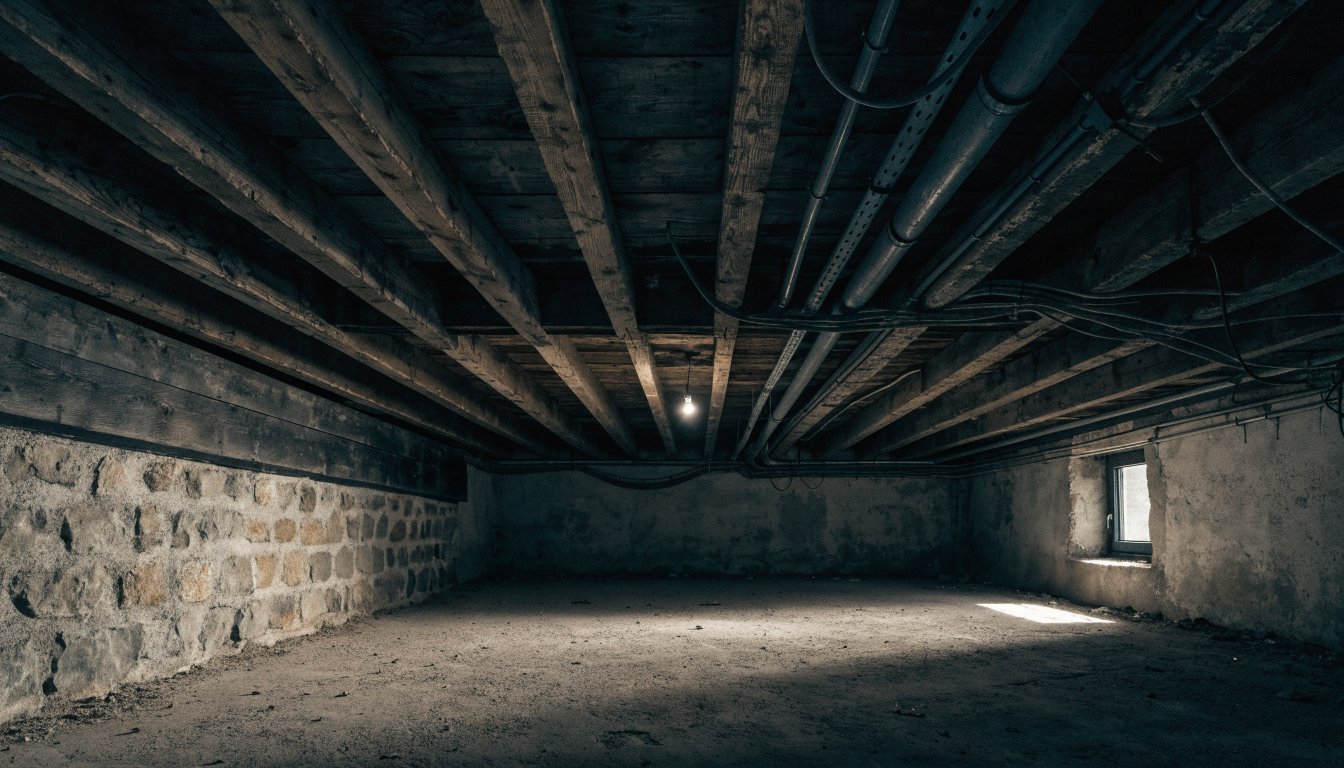
Neither is illegal. The Electrical Safety Authority states that “The Ontario Electrical Safety Code (OESC) permits the installation of aluminum wiring”, and that aluminum “is safe if proper connections and terminations are made without damaging the wire”. On knob-and-tube, the Code deleted the installation rules but is not retroactive: existing concealed conductors supplying lighting and receptacle circuits are “permitted to remain in place” if protected by 15 amp devices, not overloaded by added outlets, and visibly undamaged. Knob-and-tube dates from the early 1900s to the 1940s; aluminum from the mid 1960s to the late 1970s. The obstacle is usually insurance, not law — ESA itself notes that many insurers will not cover knob-and-tube, and that an ESA Certificate of Acceptance is often what they want.
Two kinds of wiring get houses declined by insurers and abandoned by buyers. Neither of them is illegal, and the Electrical Safety Authority says so in writing.
On aluminum, the ESA is unambiguous: “The Ontario Electrical Safety Code (OESC) permits the installation of aluminum wiring.” On knob and tube, the Code deleted the installation rules but “the OESC is not retroactive”, and existing concealed knob-and-tube may lawfully remain in place if certain conditions are met.
Knob and tube: what may stay
ESA Flash notice 19-16-FL, dated June 2019, sets out the test:
“Existing knob and tube conductors concealed in walls, floor spaces, etc; supplying general lighting and receptacle circuits are permitted to remain in place if” they are protected by 15 amp fuses or breakers, no outlets have been added such that the circuit is overloaded, and visible conductors appear undamaged.
Knob and tube was a wiring method of the early 1900s to the 1940s. The ESA consumer page says it “is safe, provided it is properly maintained”, while noting these systems do not have the safety benefits of modern ones — there is no ground fault protection for wet locations, for instance.
The Flash notice also warns against extension cords used as permanent wiring, requires a licensed electrician for modifications, and requires any new receptacle to meet current code including grounding and GFCI protection where applicable.
Aluminum: what makes it safe
ESA Flash notice 19-30-FL, June 2019: aluminum was installed in residential properties “from the mid 1960’s until the late 1970’s”, the Code permits it, and existing aluminum wiring may remain if properly maintained with compliant devices.
The ESA consumer page puts the engineering point in one line: “Aluminum wiring is safe if proper connections and terminations are made without damaging the wire.” The failure mode is at the connections, not in the conductor.
| Requirement | What ESA specifies |
|---|---|
| Devices | Marked CO/ALR or AL–CU, depending on device and amperage |
| Code rules | Rule 12-118 on terminations, splicing and joint compounds; Rule 12-3036 on outlet box volume |
| Who does the work | A Licensed Electrical Contractor familiar with the techniques for aluminum |
| Proof | An assessment, necessary repairs, and the work inspected by ESA |
The insurance question, answered carefully
What an individual insurer will do is not a government fact and I am not going to invent one. What can be stated is what the ESA itself publishes:
- On knob and tube: ESA states “Many insurers will not provide or renew coverage on homes with this type of wiring. They consider it to be a higher risk.”
- On aluminum: ESA states “Some insurers will not provide or renew insurance coverage on homes without an ESA inspection. You may need to repair or replace the wiring and provide your insurer with a copy of the ESA Certificate of Acceptance.”
No premium figures, no named insurers, and no claim that anyone requires full replacement — because no primary source says so.
The certificate that actually resolves it
The document that satisfies both an insurer and a buyer is an ESA Certificate of Acceptance. The process:
- Almost all electrical work must be reported to ESA by filing a notification, and it “should be filed before the work starts”.
- Inspections come in three kinds: service (before power is restored on a service upgrade), rough-in (after wiring, before it is concealed), and final.
- Non-compliant work produces a defect notice listing the corrections required.
- Once passed, ESA issues the Certificate of Acceptance to the person who filed the notification.
If a previous owner cannot produce a copy, ESA accepts an access-to-information request by email. That is worth knowing on a resale where work was clearly done but no paperwork survives.
Homeowners may do their own electrical work in their own home — O. Reg. 570/05 exempts work by an owner or occupant from the contractor licensing requirement — but they must still file a notification with ESA. Unpermitted DIY wiring is one of the most common findings on older Etobicoke houses.
One correction worth making
The ESA’s own consumer material still refers to the “Ontario Electrical Safety Code (OESC) 28th Edition 2021”. That is out of date. Under O. Reg. 164/99, consolidated 1 May 2025, the adopted code is CSA C22.1:24 together with the Ontario Amendments dated 12 June 2024, adopted by O. Reg. 449/24. Both ESA Flash notices quoted above are dated June 2019 and predate the current edition — they remain ESA’s published position, but check for anything newer before relying on a detail.
What to do as a buyer
- Neither wiring type disqualifies a house. Both are legal; both have conditions.
- Get a Licensed Electrical Contractor assessment, not an opinion from a general inspector.
- Ask the seller for any ESA Certificate of Acceptance. If none exists, ESA can be asked directly.
- Talk to your insurer before your conditions expire, not after. This is the real constraint, and it is theirs, not the law’s.
- On knob and tube, check the three conditions: 15 amp protection, no overloading from added outlets, visible conductors undamaged.
A house you like has old wiring and your insurer is hesitating?
This is one of the most common reasons a good older house gets passed over, and the legal position is usually not the problem — the insurance position is. The sequence that works is an assessment by a Licensed Electrical Contractor, the work inspected by ESA, and the Certificate of Acceptance in your insurer’s hands. Tell me the property and where you are in your conditions and I will help you sequence it. I am not an electrician and the assessment has to come from one.
[email protected] · 833-330-1925 · Book a free consultation
Confidential. Read personally and answered within 24 hours. I never share, sell or distribute your information.
Free tool — AI home value estimator
Instant Home Valuation
What’s your home
worth today?
Answer six quick questions and get an instant value range built from current Toronto & GTA sale data — property type, size, condition, lot and location all weighted the way a real pricing conversation weighs them. Takes about ninety seconds.
Reading recent GTA sale data…
Building your estimate
Estimated market value
—
$0–$0
Most likely value $0 · roughly $0 per square foot
What moved the number
Starting from the area baseline for your property type, here’s what each answer added or subtracted.
Market context
Recent local averages for comparison.
—
A range is a starting point.
A strategy is what sells.
This model doesn’t know that your neighbour’s identical semi went $80,000 over asking last month, or which two upgrades actually pay back in your area. That conversation is free and takes twenty minutes.
Frequently asked questions
Is knob and tube wiring illegal in Ontario?
No. The Electrical Safety Authority states that the Ontario Electrical Safety Code has deleted the installation rules for knob and tube but that the Code is not retroactive. Its Flash notice 19-16-FL, dated June 2019, states that existing knob and tube conductors concealed in walls and floor spaces supplying general lighting and receptacle circuits are permitted to remain in place if they are protected by 15 amp fuses or breakers, no outlets have been added such that the circuit is overloaded, and visible conductors appear undamaged.
Is aluminum wiring illegal in Ontario?
No, expressly the opposite. The Electrical Safety Authority states in Flash notice 19-30-FL and on its consumer page that the Ontario Electrical Safety Code permits the installation of aluminum wiring, and that aluminum wiring is safe if proper connections and terminations are made without damaging the wire. Aluminum was installed in residential properties from the mid 1960s until the late 1970s. Replacement devices must be marked CO/ALR or AL-CU depending on the device and amperage.
Will insurance cover a house with knob and tube wiring?
That depends on the insurer and it is not a question any government source answers. What can be said is what the Electrical Safety Authority publishes: on its knob and tube page it states that many insurers will not provide or renew coverage on homes with this type of wiring and consider it a higher risk; on its aluminum wiring page it states that some insurers will not provide or renew coverage on homes without an ESA inspection, and that you may need to repair or replace the wiring and provide your insurer with a copy of the ESA Certificate of Acceptance. Speak to your own insurer before your conditions expire.
What is an ESA Certificate of Acceptance?
It is the document the Electrical Safety Authority issues once electrical work has been reviewed and passed, to the person who filed the notification. ESA states it proves the work meets the Ontario Electrical Safety Code and that it matters for insurance, resale and homeowner assurance. Almost all electrical work must be reported to ESA by filing a notification, which should be filed before the work starts. Where a contractor cannot supply a copy, ESA accepts an access to information request by email.
Can I do my own electrical work in Ontario?
In your own home, yes, with a condition. O. Reg. 570/05 provides that the electrical contractor licensing requirement does not apply to work done on electrical equipment or installations within a residential dwelling if done by an owner or occupant of the dwelling. But the Electrical Safety Authority states that homeowners doing their own electrical work must still file a notification of work with ESA. Unnotified do-it-yourself wiring is a common finding in older houses and can complicate both insurance and resale.
Which edition of the Electrical Safety Code is current?
Under O. Reg. 164/99, consolidated 1 May 2025 and last amended by O. Reg. 449/24, the adopted code is the CSA Canadian Electrical Code Part 1, C22.1:24, together with the Ontario Amendments dated 12 June 2024. Note that the Electrical Safety Authority’s own consumer pages still refer in places to the 28th Edition 2021, which is not the current adopted edition, and that both of the ESA Flash notices on knob and tube and aluminum wiring are dated June 2019 and predate the current code.
Related reading
- Home inspection in Ontario: still not a licensed profession
- Radon in Ontario homes: the 91-day rule most tests fail
- Asbestos and vermiculite: what the rules actually require
- Kitec plumbing: the claims deadline closed in 2020
Sources
Every figure on this page traces to one of these, and each was read on 1 September 2026. Primary sources only — statute, regulation, and the government or agency that administers the rule. Where I could not verify something from a primary source, the page says so instead of guessing.
- ESA Flash notice 19-16-FL, knob and tube wiring in residential installations (PDF). Electrical Safety Authority, dated June 2019, superseding 16-16-FL. States that existing knob and tube conductors concealed in walls and floor spaces supplying general lighting and receptacle circuits are permitted to remain in place if protected by 15 amp overcurrent devices, not overloaded by added outlets, and visibly undamaged. Accessed 1 September 2026.
- ESA Flash notice 19-30-FL, aluminum wiring in residential installations (PDF). Electrical Safety Authority, dated June 2019, superseding 16-30-FL. States that the Ontario Electrical Safety Code permits the installation of aluminum wiring, that it was installed in residential properties from the mid 1960s until the late 1970s, and that replacement devices must be marked CO/ALR or AL-CU. Accessed 1 September 2026.
- Knob and tube wiring — Electrical Safety Authority. Electrical Safety Authority consumer page, read 2 September 2026. The page carries no publication or updated date. States that knob and tube was used in homes from the early 1900s to the 1940s, that the Code has deleted the installation rules but is not retroactive, that the wiring is safe provided it is properly maintained, and that many insurers will not provide or renew coverage on homes with this type of wiring. Accessed 1 September 2026.
- Aluminum wiring — Electrical Safety Authority. Electrical Safety Authority consumer page, read 2 September 2026. The page carries no publication or updated date. States that the Ontario Electrical Safety Code permits the installation of aluminum wiring, that aluminum wiring is safe if proper connections and terminations are made without damaging the wire, and that some insurers will not provide or renew coverage on homes without an ESA inspection. Accessed 1 September 2026.
- Notifications and inspections — Electrical Safety Authority. Electrical Safety Authority, read 2 September 2026, page undated. States that the Ontario Electrical Safety Code requires almost all electrical work to be reported to the Authority by filing a notification before the work starts, and that homeowners may do their own electrical work but must file a notification. Accessed 1 September 2026.
- Obtain a certificate of acceptance — Electrical Safety Authority. Electrical Safety Authority, read 2 September 2026, page undated. States that once electrical work has been reviewed and passed, the Authority issues a Certificate of Acceptance to the person who filed the notification, and that a copy may be requested through an access to information form where a contractor cannot supply one. Accessed 1 September 2026.
- O. Reg. 164/99, Electrical Safety Code, under the Electricity Act, 1998. Government of Ontario e-Laws, consolidation period 1 May 2025, last amended by O. Reg. 449/24. Adopts CSA Canadian Electrical Code Part 1, C22.1:24 together with the Ontario Amendments dated 12 June 2024 as the Electrical Safety Code, and requires every act or omission in connection with the use of electricity in Ontario to comply with it. Accessed 1 September 2026.
- O. Reg. 570/05, Licensing of Electrical Contractors and Master Electricians. Government of Ontario e-Laws, consolidation period 1 January 2025, last amended by O. Reg. 184/24. Section 2 provides that the regulation does not apply to work done on electrical equipment or installations within a residential dwelling if done by an owner or occupant of the dwelling. Accessed 1 September 2026.
About the author — Jatin Dua, Broker of Record
I’m the Broker of Record at RE/MAX Quantum Realty, 799 The Queensway in Etobicoke, and I work with buyers and sellers across the west GTA. I am not an inspector, an engineer, an electrician or a remediation contractor, and nothing on this page is a substitute for one.
What I can do is read the primary source and quote it accurately. Everything below comes from Health Canada, the Government of Ontario, a regulator or a municipality, with the date the source itself carries, so you can check it rather than take my word for it. Where a widely repeated claim turns out not to be in any official document, the page says so. [email protected] or 833-330-1925.