

Published 17 September 2026 · By Jatin Dua, Broker of Record, RE/MAX Quantum Realty
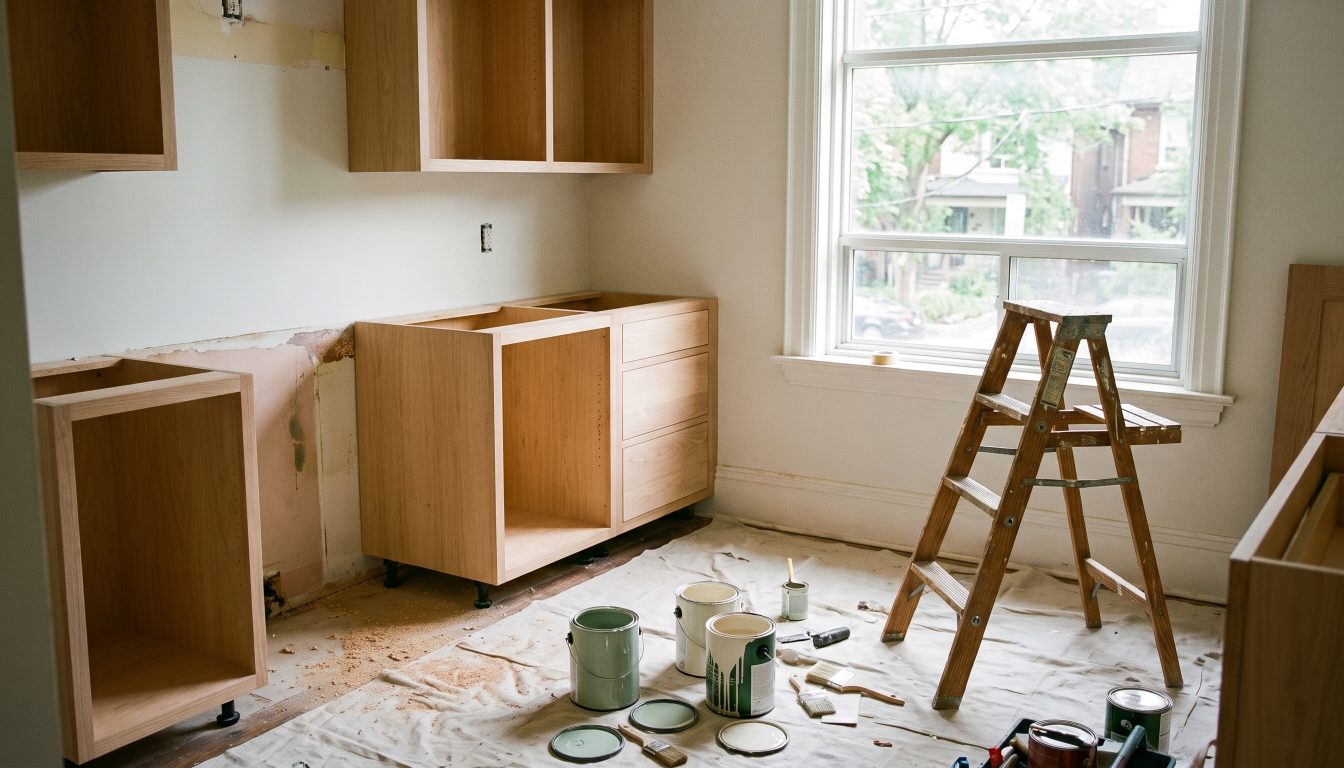
In Toronto, moving means paying Ontario and Toronto land transfer tax on the new home, commission and HST on the sale, legal fees and moving costs, none of which improves your home. Renovating avoids those costs but carries budget overruns, permits and disruption. Compare the full cost of each against what you would end up with.
When your home stops fitting your life, you have two choices: change the house or change houses. In Toronto the cost of moving is higher than most people expect, which makes renovating look better than it is in some cases and worse in others.
The cost of moving is mostly tax and fees
On a move-up purchase in Toronto you typically pay:
- Land transfer tax, twice over: Ontario land transfer tax plus Toronto municipal land transfer tax on the new home. Combined, that is $122,950 on a $3 million purchase. There is no first-time rebate for move-up buyers. See the Toronto real estate facts page.
- Commission and HST on the home you sell.
- Legal fees on both deals, plus title insurance and adjustments.
- Moving, storage and set-up.
- A possible mortgage penalty if you break your mortgage rather than port it.
None of that money goes into the house you live in.
The cost of renovating is mostly uncertainty
- Construction: priced by quotes, and prices often rise once walls are open.
- Permits and design: architectural drawings, permits, and possibly minor variances from the Committee of Adjustment.
- Living elsewhere: rent during major work.
- Time: months of disruption.
Know what your home is worth
Your equity drives every number above. Get a free AI estimate of your home’s value in about a minute.
Free tool — AI home value estimator
Instant Home Valuation
What’s your home
worth today?
Answer six quick questions and get an instant value range built from current Toronto & GTA sale data — property type, size, condition, lot and location all weighted the way a real pricing conversation weighs them. Takes about ninety seconds.
Reading recent GTA sale data…
Building your estimate
Estimated market value
—
$0–$0
Most likely value $0 · roughly $0 per square foot
What moved the number
Starting from the area baseline for your property type, here’s what each answer added or subtracted.
Market context
Recent local averages for comparison.
—
A range is a starting point.
A strategy is what sells.
This model doesn’t know that your neighbour’s identical semi went $80,000 over asking last month, or which two upgrades actually pay back in your area. That conversation is free and takes twenty minutes.
Check what your lot allows first
Before pricing an addition, confirm what the zoning allows: height, lot coverage and density, and whether a garden suite, laneway suite or extra units are possible. Our free lot report pulls this from City data for any Toronto address.
Five questions that usually decide it
- Does the renovation fix the real problem, or is it the neighbourhood, the school or the commute?
- After renovating, would your home be the most expensive on the street? Over-improving rarely returns its cost.
- Can you get the space you need within zoning, or would it need variances?
- How long do you plan to stay? Renovations pay off best over many years.
- What would the same space cost to buy nearby, including every closing cost?
A simple comparison
Add up the total cost of moving: taxes, fees, commission, moving and the price difference. Compare it with a realistic renovation budget plus a 15–20% contingency. Then compare what each option leaves you with. Get a current home value first, because your sale price drives the moving side of the math.
The takeaway
Price the full cost of moving, get real renovation quotes plus a 15–20% contingency, check what your lot’s zoning allows, and decide on how long you plan to stay.
Talk it through with me
Get a first-time buyer plan
Tell me your savings, income range and target area. I will send a realistic price range and next steps.
I will come back to you personally, usually the same day. If it is urgent, call or text 833-330-1925.
Frequently asked questions
Is it cheaper to renovate or move in Toronto?
It depends on the size of the renovation and your price range. Toronto’s double land transfer tax makes moving expensive, but large renovations often run over budget.
What does it cost to move within Toronto?
Mainly land transfer tax on the new home, commission on the sale, legal fees and moving costs.
Should I check zoning before renovating?
Yes. Zoning limits height, coverage and density, and extra units or suites have their own rules.
Sources
- City of Toronto — municipal land transfer tax — rates and brackets
- Ontario — land transfer tax — provincial rates
Related reading
- Kitchen and Bathroom Renovation ROI Before You Sell in the GTA (2026)
- What Actually Moves a House’s Value in Toronto and the GTA (and How to Check Yours in 90 Seconds)
- Aging in Place or Downsizing in Etobicoke: An Honest Comparison
- Upsizing in Toronto: a move-up buyer’s guide for 2026
- Bridge financing in Ontario: buying your next home before the old one closes
About the author — Jatin Dua, Toronto and GTA real estate broker
I am Jatin Dua, Broker of Record and co-founder of RE/MAX Quantum Realty Inc., Brokerage, Unit 101, 799 The Queensway, Etobicoke. I work with buyers and sellers across Toronto and the GTA, with deep local knowledge of the west end. Four-plus years of active GTA transactions and over $100 million in sales volume. Every market figure here comes from TRREB’s published tables and every rule from RECO or Ontario legislation, so you can check all of it without asking me.
Reach me at connect@jatindua.com or 833-330-1925, or book a call.