

Published 25 September 2026 · By Jatin Dua, Broker of Record, RE/MAX Quantum Realty
What's Your Home Worth Right Now?
Get a free AI-powered price range for your property in under 90 seconds, based on recent GTA comparable sales. No name or address required.
Get My Free Estimate →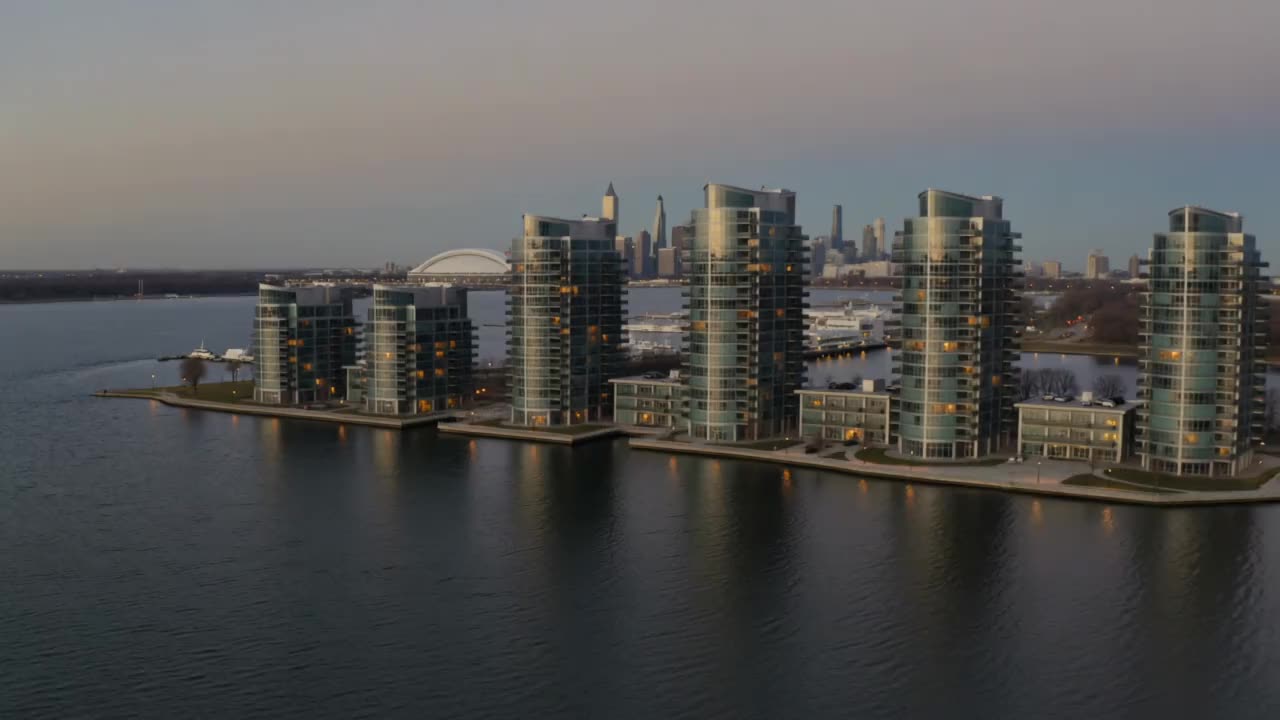
Lake Ontario does not freeze over, and that is the problem. Open water all winter means wind off the lake carries moisture, spray and salt onto the first rows of buildings for four or five months a year. Waterfront condos see ice on lake-facing balconies, salt film on glazing, higher heating loads on the exposed face and faster wear on envelopes and railings. Waterfront houses see the same plus drifting, frozen shore protection, and driveways and stairs that ice up from spray. None of it is a reason not to buy; all of it costs money and shows up in reserve funds and utility bills. Buyers who visit in July should ask the questions a February resident would.
Why the lake makes winter different
Inland, winter is cold and still. On the lake it is cold and moving. Lake Ontario rarely freezes across, so for most of the winter the first rows of buildings face open water, and the prevailing westerly and south-westerly winds arrive with nothing to slow them. Wind chill on a lake-facing balcony is materially worse than on a sheltered one two blocks back. Spray freezes on railings and glass. Blowing snow drifts against the exposed face and piles on balconies that are never used until April.
The other thing open water does is hold heat into December and give it back as fog and damp, then act as a giant cold plate from January onward. Lake-facing units feel both.
What it does to a condo building
| Element | Winter effect | Where it shows up |
|---|---|---|
| Glazing and window frames | Salt film, condensation, freeze-thaw stress on seals | Reserve fund study; window replacement timing |
| Balconies | Ice, drifted snow, spray corrosion on railings and membranes | Balcony restoration line in the reserve fund; rules about balcony use |
| Building envelope | Wind-driven moisture into cladding joints, faster caulking failure | Envelope repair cycles, fee levels |
| Heating plant | Higher load on the lake face; cold suites on that side | Utility costs, especially if heat is in the fee |
| Entrances and garage ramps | Ice from spray and drift; salt tracked in | Snow and ice management contract cost |
A well-run lake-facing building plans for all of this. The reserve fund study will show shorter cycles on windows, caulking and balconies than an inland building of the same age, and the fee will be higher for that reason. A poorly run one will show the same items deferred, and a special assessment somewhere in its future. Read how to read a waterfront building’s status certificate.
What it does to a house
Everything above, plus the ground. Shoreline protection — armour stone, revetments, walls — takes its hardest beating in winter, when ice pushes against it and freeze-thaw works into every joint. A stair down to the water may be unusable for months. Driveways and paths exposed to spray ice repeatedly. On a bluff, freeze-thaw is one of the three erosion mechanisms TRCA describes, and the one that can remove a metre or more of tableland in a single event. Heating a house with a whole wall facing open water costs more than heating the same house inland, and older waterfront houses were often built before that was a design consideration.
The questions to ask in July
- Which way does the unit or the main living space face, and is that the lake side?
- Ask the corporation or the seller: what does a January heating bill look like on this side of the building?
- When were the windows and balcony membranes last done, and what does the reserve fund study say about the next cycle?
- Are there rules about balcony use, storage or furniture in winter? Some lake-facing buildings restrict them for good reason.
- For a house: who maintains the shoreline protection, when was it last inspected, and is there a permit for it?
- For a house: how is the driveway and any water stair kept clear, and what does that cost?
What it costs, in the only honest terms
I do not publish a dollar figure for winter on the waterfront because it depends on the building, the exposure, the age of the glazing and whether heat is in the fee. What I can say is where to look: the fee relative to an inland building of the same age and amenities, the reserve fund study’s envelope and balcony cycles, and a real utility bill from the coldest month. Between those three you will see the cost. If the fee is inland-level in a lake-facing building, be suspicious rather than pleased.
The upside nobody mentions
Winter is also when the waterfront is quiet. The trail empties, the festivals stop, the summer parking and crowds disappear, and a lake-facing unit gets a view of weather that no inland unit has. Some owners buy for exactly that. The point of this guide is not that winter is bad; it is that winter is a cost, and a buyer who knows the cost in advance pays the right price.
The takeaway
Open water all winter means wind, spray, ice and salt on the first rows of the GTA shoreline for months a year, and it shows up in envelopes, balconies, heating bills and shoreline walls. Ask which way the unit faces, get a winter utility bill and the reserve fund study, check who maintains any shoreline protection, and if you are buying in July, imagine February before you sign.
Where I fit
I sell on the water year-round and I know which buildings look the same in February as they do in July and which do not. If you are choosing between two waterfront units, book a call and I will tell you what each one’s winter looks like, or run the estimator below on the one you own.
Free tool — AI condo value estimator
Condo Valuation
What’s your condo
worth today?
Three quick steps. Condos don’t price like houses — your floor, your view, and whether you own parking move the number more than anything else. This weighs all of them.
Reading recent condo sales…
Estimated market value
—
$0–$0
Most likely $0 · about $0 per square foot
What moved the number
Starting from what comparable units in your area sell for, here’s what your specifics added or subtracted.
Market context
—
—
Two units, same floor plan,
$90,000 apart.
That happens constantly in condos — one has the parking, the right exposure, or a board that keeps the reserve fund healthy. A model can’t see your status certificate. I can.
Frequently asked questions
Are waterfront condos colder in winter?
Lake-facing suites face open water and prevailing winds for most of the winter and typically carry a higher heating load than inland or sheltered suites. Ask for a January utility bill for that exposure.
Does Lake Ontario freeze?
Rarely across its full width. Near-shore ice forms in cold spells, but for most of the winter the first rows of buildings face open water, which is why wind, spray and salt reach them.
Do waterfront condos have higher maintenance fees?
Usually, relative to an inland building of the same age and amenities, because windows, caulking, balconies and envelopes are replaced on shorter cycles. A lake-facing building with an inland-level fee should prompt a close read of the reserve fund study.
Can I use my balcony on a lake-facing condo in winter?
Physically, rarely in comfort; some corporations restrict balcony storage and furniture in winter because of wind and ice. Ask for the rules before you buy for the balcony.
What winter costs does a waterfront house have that a condo does not?
Shoreline protection maintenance, ice and spray on driveways and water stairs, and, on a bluff, freeze-thaw erosion. Ask who maintains the shore, when it was inspected and whether it is permitted.
Should I buy a waterfront property in winter?
If you can, view it in winter even if you buy in summer. A windy January visit tells you more about the building’s envelope and the unit’s comfort than any July showing.
Sources
- TRCA — Three ways that water has shaped the Scarborough Bluffs — freeze-thaw as an erosion mechanism
- Environment and Climate Change Canada — Great Lakes ice cover — seasonal ice conditions
- Condominium Authority of Ontario — Reserve funds — how reserve fund studies work
Related reading
- Georgina waterfront homes on Lake Simcoe
- Innisfil waterfront homes: Alcona to Friday Harbour
- Waterfront House Taxes and Carrying Costs in the GTA
- When to Sell a Waterfront House in the GTA
- Buying a 20-year-old waterfront condo
- Humber Bay condo maintenance fees
- Choosing condo exposure
- Scarborough Bluffs: buying on the edge
- Heat pumps, rebates and home value
About the author — Jatin Dua, Toronto and GTA real estate broker
I am Jatin Dua, Broker of Record and co-founder of RE/MAX Quantum Realty Inc., Brokerage, Unit 101, 799 The Queensway, Etobicoke. I work with buyers and sellers across Toronto and the GTA, with deep local knowledge of the west end and the Lake Ontario shoreline. Four-plus years of active GTA transactions and over $100 million in sales volume. Every market figure here comes from TRREB’s published tables and every rule from the regulator or the legislation, so you can check all of it without asking me.
Reach me at connect@jatindua.com or 833-330-1925, or book a call.