

Published 26 September 2026 · By Jatin Dua, Broker of Record, RE/MAX Quantum Realty
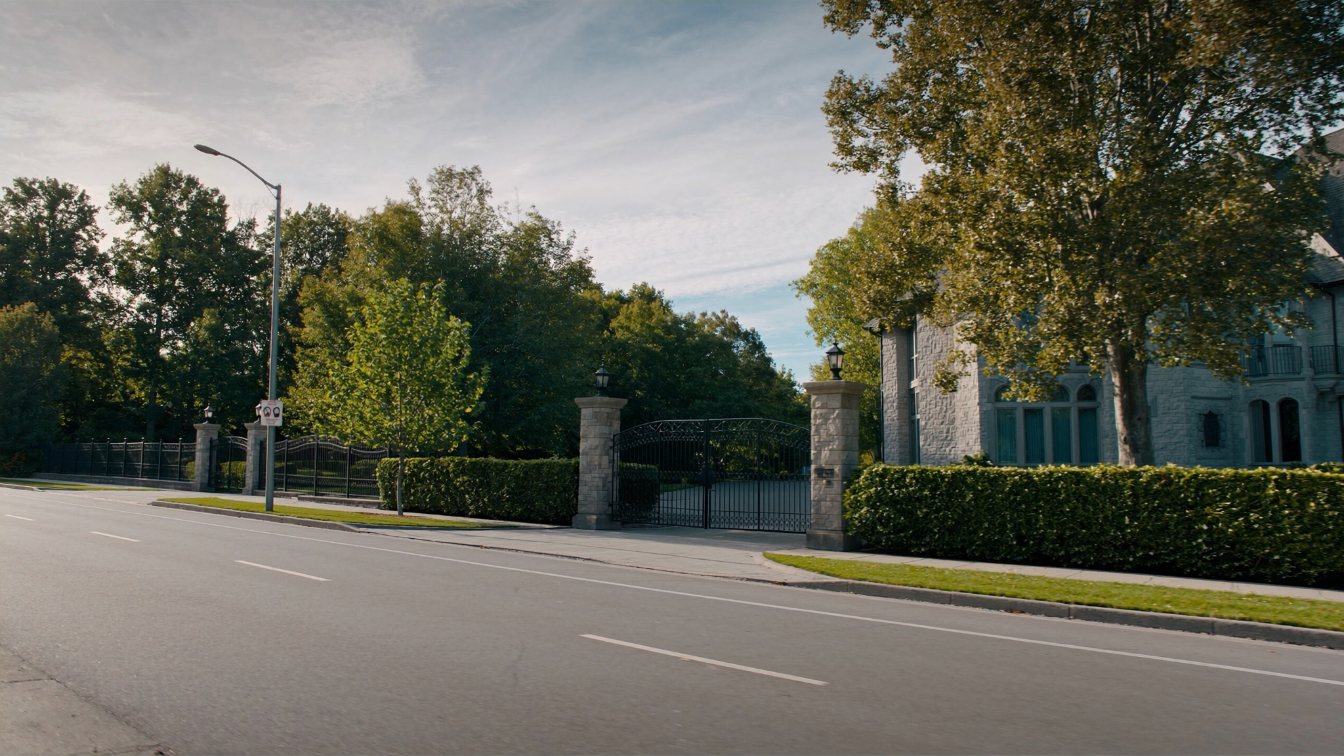
Southeast Oakville, from the harbour east along Lakeshore Road through Eastlake and Morrison to Winston Churchill Boulevard, holds the largest concentration of estate-scale lakefront lots in the GTA. The pattern was set a century ago when Toronto families built summer estates on deep lots running to the water; Gairloch Gardens, left to the Town in 1971, is the surviving public example. Today the lots are governed by three things: Oakville’s zoning, renamed in June 2026 and capping floor area at 33 percent on the largest lots; Conservation Halton’s shoreline setback of 30 metres plus a stable slope; and, for properties west of Second Street, one of Oakville’s four heritage conservation districts. Comparable sales are rare and often a year or more apart. Price it as a range, check the district boundary, and get the setback in writing before you plan a house.
Where the estates are
Lakeshore Road East leaves downtown Oakville at the harbour and runs east through the neighbourhoods Wikipedia and the Town both list as Old Oakville, Eastlake and Morrison, leaving Oakville at Winston Churchill Boulevard, the Peel–Halton boundary. The lots on the south side run to the water; the streets behind, laid out perpendicular to the lake in the nineteenth-century grid, hold large houses on large lots that were once the back acres of the estates in front.
Oakville itself began in 1827, when William Chisholm bought 960 acres around the creeks at auction, and grew on shipbuilding at Navy Street and Sixteen Mile Creek. The town merged with Bronte, Palermo, Sheridan and the rest of Trafalgar Township in 1962. Lakeshore Road is historic Highway 2 and, at 38.5 kilometres across Burlington, Oakville and Mississauga, the spine of the entire western shoreline.
The estate era, and what it left
From the early twentieth century Toronto’s wealthy built lakefront estates here. The one you can walk through is Gairloch Gardens at 1306 Lakeshore Road East: 4.4 hectares left to the Town in 1971 by James Gairdner, with a Tudor Revival house, Chestnut Point, built around 1923 for Lieutenant-Colonel William MacKendrick, a 1948 studio and 15,000 annuals planted each summer. The Town’s designation notice for Gairloch cites the early-twentieth-century lakefront estates as the heritage context, and that context is what a buyer is paying for on the private lots either side: depth to the water, mature trees, and frontage that no one is creating again.
Four heritage districts: which one touches your lot
Oakville has four heritage conservation districts under Part V of the Ontario Heritage Act, and two of them reach the lake.
| District | Designated | Where | Reaches the shore? |
|---|---|---|---|
| Old Oakville | 1981 (By-law 1982-44; plan updated 2025, By-law 2025-063) | South of Robinson Street to the lake, Sixteen Mile Creek to Allan Street; 162 residences | Yes |
| First and Second Street | 1989 (By-law 2015-112) | Lakeshore Road East to the lake, Allan Street to Second Street | Yes |
| Trafalgar Road | 1994 (By-law 1994-134) | Sixteen Mile Creek to Reynolds and Allan, Spruce Street to Sumner Avenue | No |
| Downtown Oakville | 2013 (By-law 2013-004) | Navy Street to Dunn Street, north of Randall to the south side of Lakeshore Road East | No |
Council updated the Old Oakville district plan on 17 March 2025 with more emphasis on landscape and views, mature tree protection, and the scale and massing of new buildings. East of Second Street, through Eastlake and Morrison, there is no district; individual houses may still be designated or listed, so check the Town’s register for the address. Inside a district a demolition or exterior alteration needs a heritage permit. Read how heritage designation works before you buy with a rebuild in mind.
Zoning after June 2026, and the -0 ratio
Oakville’s Zoning By-law 2014-014 was amended on 15 June 2026 by By-law 2026-088, which renamed the Residential Low zones R1 to R6. R1, the largest-lot zone and the one most of this shore falls into, requires a minimum lot of 1,350 square metres with 30 metres of frontage. The -0 overlay caps the residential floor area ratio on a sliding scale that reaches 33 percent on lots of 1,450 square metres or more, limits height to 10 metres with a sloped roof or 8 metres flat, and prohibits balconies above the first storey. The 2026 review also specifically addressed zoning inside the three residential heritage districts.
The practical meaning for an estate lot: a 3,000-square-metre lakefront lot does not get a 3,000-square-metre house. It gets roughly a third of that in floor area, and the Town’s Livable Oakville plan requires the result to be compatible in scale, height, massing and character with the neighbourhood. Anyone quoting the old RL1-0 figures is quoting a by-law that no longer exists.
Conservation Halton and the shoreline
The Official Plan is explicit that hazard lands, including the long-term stable top of bank, are delineated and regulated by the conservation authority. Conservation Halton’s policies define the erosion hazard as 30 metres plus a stable-slope allowance, the flooding hazard as the 100-year level plus 15 metres for wave uprush, and a regulated area 15 metres beyond the furthest of those. Replacement of an existing house inside the hazard is dealt with under specific policies and is not a given. Shoreline protection must leave five metres of maintenance access and is assessed over a 35-year design life. The Town itself protects the eight kilometres of shore it owns with armour stone, revetments and groynes and inspects them every five years; a private owner is expected to meet the same standard at their own cost.
Transit and the border
Oakville GO at 214 Cross Avenue has 2,724 parking spaces, VIA and Amtrak service, and is a drive from the estate lots. For the far east end, Clarkson GO at 1110 Southdown Road in Mississauga, with 2,539 spaces and described as the busiest GO station outside Union, is often closer. The border itself is Winston Churchill Boulevard, and across it Mississauga’s Clarkson shoreline continues the same pattern of deep lots at a different price and under a different conservation authority, Credit Valley Conservation.
How to price a southeast Oakville lakefront lot
Estate lakefront trades rarely. Start with every lakefront sale from Oakville harbour to Winston Churchill over the last three years, not six months. Adjust for frontage, depth, elevation above the water, shoreline condition and permits, the Conservation Halton setback, heritage district status, and whether the house is a keeper or a teardown under the -0 ratio. That produces a range for the land; add the house only if a buyer would keep it. The near-lakefront streets behind are a separate, deeper market of large Oakville houses with a lake walk, and they should not be blended in. Read the pricing method for the full approach.
The takeaway
Southeast Oakville is the GTA’s estate lakefront, shaped by a century-old pattern of deep lots to the water and governed today by a zoning by-law renamed in June 2026, a conservation setback of 30 metres plus a stable slope, and two heritage districts that reach the shore west of Second Street. Check the district boundary, model the -0 floor-area ratio for the lot size, get the setback in writing, and price the lot as a range built from three years of sales.
Where I fit
I work across Toronto and the GTA and southeast Oakville is where I most often see a seller misjudge the buildable value of a lot or a buyer assume a district rule that does not apply to their side of Second Street. If you own here or are considering it, run the estimator below for a baseline, or book a call and we will build the range from the actual sales.
Free tool — AI home value estimator
Instant Home Valuation
What’s your home
worth today?
Answer six quick questions and get an instant value range built from current Toronto & GTA sale data — property type, size, condition, lot and location all weighted the way a real pricing conversation weighs them. Takes about ninety seconds.
Reading recent GTA sale data…
Building your estimate
Estimated market value
—
$0–$0
Most likely value $0 · roughly $0 per square foot
What moved the number
Starting from the area baseline for your property type, here’s what each answer added or subtracted.
Market context
Recent local averages for comparison.
—
A range is a starting point.
A strategy is what sells.
This model doesn’t know that your neighbour’s identical semi went $80,000 over asking last month, or which two upgrades actually pay back in your area. That conversation is free and takes twenty minutes.
Frequently asked questions
Which Oakville heritage districts reach the lake?
Two: Old Oakville, from Sixteen Mile Creek to Allan Street south of Robinson Street, and First and Second Street, from Allan Street to Second Street south of Lakeshore Road East. Eastlake and Morrison are not in a district, though individual houses may be designated.
What is the maximum house size on an Oakville estate lot?
Under the -0 overlay of Zoning By-law 2014-014, as amended in June 2026, floor area is capped on a sliding scale that reaches 33 percent of lot area on lots of 1,450 square metres or more, with a 10-metre height limit for sloped roofs.
Can I demolish a house in Old Oakville?
Not without a heritage permit. Inside a heritage conservation district, demolition and exterior alterations require Town approval under the district plan, which was updated in March 2025.
Who sets the shoreline setback in Oakville?
Conservation Halton, not the Town. Its erosion hazard is 30 metres plus a stable-slope allowance and its flood hazard is the 100-year level plus 15 metres; the regulated area extends a further 15 metres.
Where is the boundary between Oakville and Mississauga on the lake?
Winston Churchill Boulevard, which forms the Peel–Halton boundary. East of it the shore is Clarkson, Mississauga, under Credit Valley Conservation.
Which GO station serves southeast Oakville?
Oakville GO on Cross Avenue for most of the area; Clarkson GO in Mississauga is often closer for the far east end. Both are a drive from the lakefront.
What is Gairloch Gardens?
A 4.4-hectare former lakefront estate at 1306 Lakeshore Road East left to the Town in 1971 by James Gairdner, with a Tudor Revival house built around 1923 and formal gardens. It is the public survivor of the early-twentieth-century estate era.
Sources
- Town of Oakville — Heritage districts and properties — four HCDs, boundaries, by-laws
- Town of Oakville, April 2025 — Heritage guidelines updated for Old Oakville — March 2025 plan update
- Town of Oakville — Zoning By-law 2014-014 Part 6, Residential Zones (consolidated June 2026) — R1 minimums, -0 overlay
- Town of Oakville — Notice of intention to designate Gairloch Gardens — estate history
- Livable Oakville Official Plan — Part D, Land Use — compatibility, hazard lands
- Conservation Halton — Policies and Guidelines (amended June 2024) — shoreline hazards
- Wikipedia — Oakville, Ontario — founding, 1962 merger, neighbourhoods
Related reading
- What $3 million buys on the GTA waterfront
- What $5 million and up buys on the GTA waterfront
- The Oakville, Burlington and Hamilton waterfront at every budget
- Old Oakville lakefront homes
- West Oakville lakefront homes
- Clarkson and Rattray Marsh lakefront homes
- Heritage designation under the Ontario Heritage Act
- How to price a lakefront house in the GTA
About the author — Jatin Dua, Toronto and GTA real estate broker
I am Jatin Dua, Broker of Record and co-founder of RE/MAX Quantum Realty Inc., Brokerage, Unit 101, 799 The Queensway, Etobicoke. I work with buyers and sellers across Toronto and the GTA, with deep local knowledge of the west end and the Lake Ontario shoreline. Four-plus years of active GTA transactions and over $100 million in sales volume. Every market figure here comes from TRREB’s published tables and every rule from the regulator or the legislation, so you can check all of it without asking me.
Reach me at connect@jatindua.com or 833-330-1925, or book a call.