

Published 26 September 2026 · By Jatin Dua, Broker of Record, RE/MAX Quantum Realty
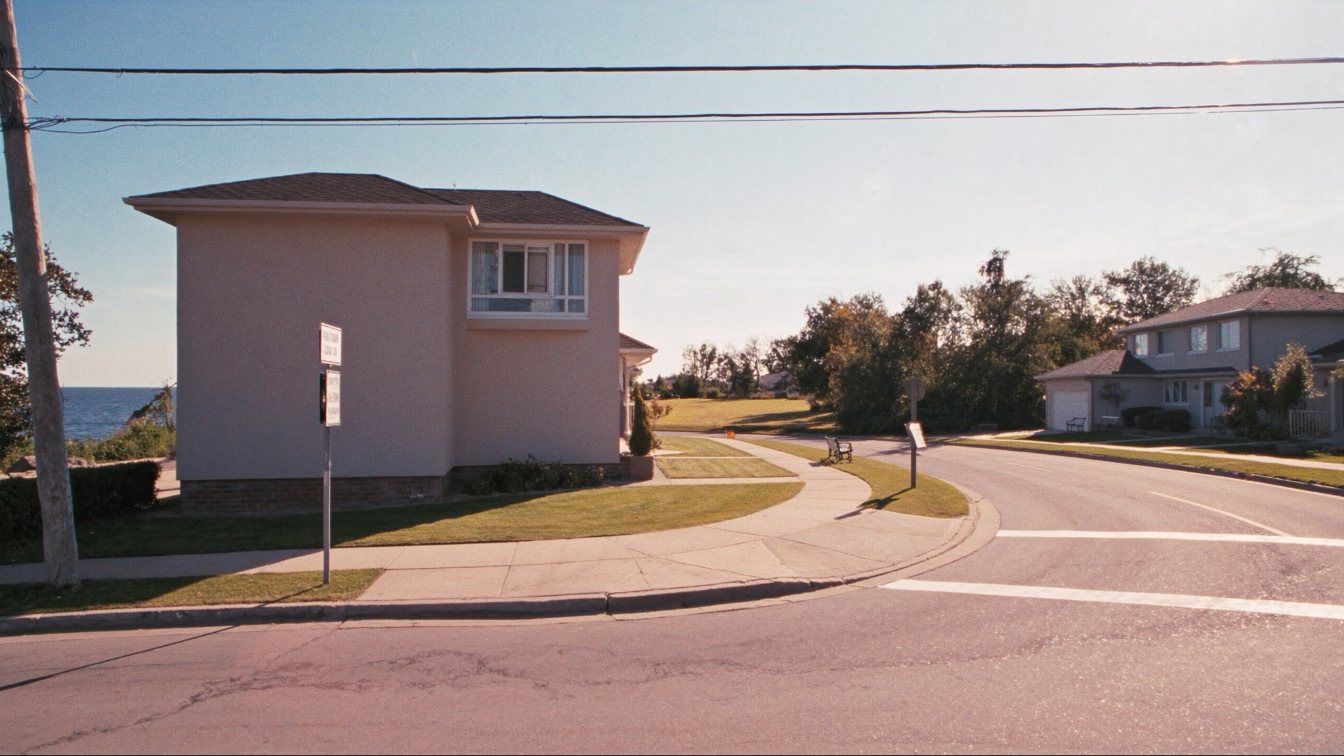
Long Branch is where Toronto still has a street of freehold houses with Lake Ontario in the backyard. It began in 1884 as a summer resort of about 250 villa lots, with Lake Promenade as its lakeside street; the cottages were winterized through the 1930s and the village became part of Etobicoke in 1967. The City’s Long Branch Neighbourhood Character Guidelines, adopted in January 2018, describe the waterfront properties as comparatively deep lots of 46 to 80 metres, set 9.5-metre height overlays, and require every Committee of Adjustment application to explain how it meets them, after years of fights over splitting 9-to-15-metre lots into 6-to-8-metre ones. TRCA regulates the shore. New Toronto, to the east, has the same era of housing but its lake edge is largely Colonel Samuel Smith Park. Long Branch GO, the 507 streetcar and Toronto’s land transfer tax all apply.
The resort that became a neighbourhood
In 1883 James and Martha Eastwood sold about 64 acres south of Lake Shore Road to Toronto financiers, who filed a plan of about 250 villa lots in 1884 and called it Sea Breeze Park. Thomas Wilkie bought it in 1886 and renamed it Long Branch Park after the New Jersey resort. A hotel with Japanese-style balconies and pagoda towers stood by 1887; steamers ran commuters to Toronto six days a week and streetcars arrived by 1895. The first cottage lot went in 1886 to architect Richard Ough, whose own cottage still stands at 262 Lake Promenade. From the 1930s the resort faded and the larger cottages were winterized into year-round homes; the Village of Long Branch, incorporated in 1930, joined Etobicoke in 1967.
That history is the neighbourhood’s shape today: a grid of numbered streets running from Lake Shore Boulevard down to Lake Promenade, with the deepest lots on the water and a housing stock that ranges from surviving cottages to post-war bungalows to the custom rebuilds that have caused a decade of planning argument.
Marie Curtis Park and what Hazel did
At the neighbourhood’s west end, Marie Curtis Park covers 41 hectares at the mouth of Etobicoke Creek, on the Toronto–Mississauga boundary. It exists because of Hurricane Hazel: in October 1954, 28 centimetres of rain in a day destroyed at least 56 residences at the creek mouth and the government expropriated 164 properties. The park opened in 1959, is owned by TRCA, and has a swimming beach, an off-leash area and the Waterfront Trail. It is a reminder that this low shore was once a floodplain with houses on it, and that the creek, not the lake, was the danger.
The Character Guidelines and the severance fight
Through the 2010s Long Branch became Toronto’s test case for lot splitting. Builders sought consents to divide lots of 9 to 15 metres into two of 6 to 8 metres and build tall, narrow houses; residents documented inconsistent rulings from the Committee of Adjustment and the Toronto Local Appeal Body on near-identical applications. On 31 January 2018 City Council adopted the Long Branch Neighbourhood Character Guidelines, covering the area from Lake Ontario to the rail corridor and from Twenty Third Street to Marie Curtis Park.
The Guidelines describe the neighbourhood as characterized by moderate to wide frontages of 9.0 to 15.24 metres, state that recent severances producing 6-to-8-metre frontages do not meet the intent of the zoning by-law, set 9.5-metre height overlays in specified areas, and note that typical lot depths are 35 to 45 metres while waterfront properties are comparatively deep lots of 46 to 80 metres. Every Committee of Adjustment application in Long Branch must now include a rationale on the performance standards checklist explaining how it meets the Guidelines. For a lakefront owner that cuts both ways: the deep lot is the most valuable thing you own and the hardest thing to split.
TRCA at the water
The Long Branch and New Toronto shoreline is in the Toronto and Region Conservation Authority’s regulated area under Ontario Regulation 41/24. TRCA describes the Etobicoke sector as a relatively uniform shore cliff ranging from sandy sloping beaches to six-metre bluffs. A new house, addition, deck, pool, wall or fill at the edge needs a TRCA permit before the City will issue a building permit, and TRCA has been explicit that its erosion assistance programs exclude Lake Ontario waterfront properties: the shoreline in front of your lot is your cost. The City and federal government funded a $84-million waterfront erosion project in 2019 for roughly ten kilometres of public shoreline from Etobicoke to Scarborough; that money is for public land, not yours.
New Toronto: same era, different edge
New Toronto, between Twenty Third Street and Dwight Avenue, became a village in 1913 and a town in 1920 on the back of factories: Goodyear from 1916 to 1987, Campbell Soup’s Art Deco plant from about 1931. Its lake edge is mostly Colonel Samuel Smith Park, 78 hectares on the grounds of the former Lakeshore Psychiatric Hospital, which ran from 1889 to 1979 and whose buildings, designated by the Province in 1988, are now Humber College’s Lakeshore campus under a 99-year lease signed in 1991. The park’s harbour was built by lakefill in the 1980s and hosts a yacht club and a skating trail. New Toronto houses are near the lake rather than on it, and should be priced that way; whether any freehold houses front the water directly on its streets is not something I would assert without a survey in hand.
Transit and Toronto costs
Long Branch GO at 20 Brow Drive opened in 1967 and is one of two Lakeshore West stations that are not accessible, with modernization scheduled. The 507 Long Branch streetcar, restored in November 2023, runs from Long Branch Loop to Humber Loop along Lake Shore Boulevard West, with the 501 covering late evenings. This is the City of Toronto, so the municipal land transfer tax applies on top of the provincial one, with the higher tiers on the portion above $3 million raised on 1 April 2026, and the Vacant Home Tax at three percent requires an annual declaration even for an occupied home. Read waterfront taxes and carrying costs for the numbers.
How to price Long Branch lakefront
Lake Promenade lakefront lots are a thin market priced against each other over two or three years, adjusted for depth, frontage, shoreline condition and permits, and whether the house is a keeper or a rebuild under the Guidelines. The streets between Lake Promenade and Lake Shore are Long Branch houses of their era with a lake walk, priced against each other. New Toronto is a third pool. The deep waterfront lot commands a premium for what it is, not for what a builder once hoped to split it into. Read the pricing method and the lake premium in Etobicoke.
The takeaway
Long Branch is Toronto’s last street of attainable freehold lakefront houses, built on an 1880s resort plan and governed since 2018 by Character Guidelines written to stop the lot-splitting that defined the previous decade. The deep Lake Promenade lots are the prize and the constraint. TRCA regulates the edge at your cost, Toronto’s land transfer and vacant home taxes apply, and New Toronto next door is near the lake rather than on it. Price the lot as one lot and the shoreline as yours to maintain.
Where I fit
My office is on The Queensway and Long Branch is my home ground. I have watched the severance fight from the Committee of Adjustment gallery and I know which Lake Promenade lots have permitted shorelines and which do not. Run the estimator below on your current home, or book a call.
Free tool — AI home value estimator
Instant Home Valuation
What’s your home
worth today?
Answer six quick questions and get an instant value range built from current Toronto & GTA sale data — property type, size, condition, lot and location all weighted the way a real pricing conversation weighs them. Takes about ninety seconds.
Reading recent GTA sale data…
Building your estimate
Estimated market value
—
$0–$0
Most likely value $0 · roughly $0 per square foot
What moved the number
Starting from the area baseline for your property type, here’s what each answer added or subtracted.
Market context
Recent local averages for comparison.
—
A range is a starting point.
A strategy is what sells.
This model doesn’t know that your neighbour’s identical semi went $80,000 over asking last month, or which two upgrades actually pay back in your area. That conversation is free and takes twenty minutes.
Frequently asked questions
Which street in Long Branch has houses on the lake?
Lake Promenade, the lakeside street of the original 1884 resort plan. The City’s 2018 Character Guidelines describe the waterfront properties as comparatively deep lots of 46 to 80 metres.
Can I sever a Long Branch lot?
The Long Branch Neighbourhood Character Guidelines, adopted by Council on 31 January 2018, state that severances producing 6-to-8-metre frontages do not meet the intent of the zoning by-law, and every Committee of Adjustment application must explain how it meets the Guidelines. Do not buy assuming a split.
Who regulates the Long Branch shoreline?
The Toronto and Region Conservation Authority under Ontario Regulation 41/24. A TRCA permit is needed before a City building permit for work near the edge, and TRCA’s erosion assistance excludes Lake Ontario waterfront properties.
Is Long Branch GO accessible?
Not yet. It is one of two Lakeshore West stations that are not fully accessible, with modernization scheduled.
Does New Toronto have lakefront houses?
Its lake edge is mostly Colonel Samuel Smith Park. New Toronto houses are near the lake rather than on it, and I would not assert direct water frontage on any street without a survey.
Does Toronto’s land transfer tax apply in Long Branch?
Yes. Long Branch is in the City of Toronto, so the municipal land transfer tax applies on top of the provincial one, and the Vacant Home Tax declaration is required every year.
What is Marie Curtis Park?
A 41-hectare TRCA park at the mouth of Etobicoke Creek on the Mississauga boundary, created after Hurricane Hazel destroyed dozens of homes there in 1954 and 164 properties were expropriated.
Sources
- City of Toronto — Long Branch Neighbourhood Character Guidelines (January 2018) — frontages, depths, height overlays
- City of Toronto — Committee of Adjustment forms and submission guidelines — Guidelines requirement for Long Branch applications
- Etobicoke Historical Society — Long Branch, once a summer cottaging destination — resort history, 262 Lake Promenade
- Wikipedia — Long Branch, Toronto — 1884 plan, incorporation, amalgamation
- Wikipedia — Marie Curtis Park — Hurricane Hazel, TRCA ownership
- TRCA — Erosion risk management — private waterfront excluded from assistance
- TRCA — Lake Ontario waterfront hot topics — Etobicoke sector shoreline description
- The Cultural Landscape Foundation — Colonel Samuel Smith Park — park size, hospital heritage, lakefill
- Wikipedia — 507 Long Branch — streetcar restoration
Related reading
- What $1.2 million buys on the GTA waterfront
- What $2 million buys on the GTA waterfront
- The Etobicoke waterfront at every budget
- The lake premium: waterfront vs inland in Etobicoke
- Mimico lakefront homes: houses, not condos
- Mineola, Port Credit and Lakeview houses
- Toronto land transfer tax increase 2026
- Teardown or renovate on a lakefront lot
About the author — Jatin Dua, Toronto and GTA real estate broker
I am Jatin Dua, Broker of Record and co-founder of RE/MAX Quantum Realty Inc., Brokerage, Unit 101, 799 The Queensway, Etobicoke. I work with buyers and sellers across Toronto and the GTA, with deep local knowledge of the west end and the Lake Ontario shoreline. Four-plus years of active GTA transactions and over $100 million in sales volume. Every market figure here comes from TRREB’s published tables and every rule from the regulator or the legislation, so you can check all of it without asking me.
Reach me at connect@jatindua.com or 833-330-1925, or book a call.