

Published 29 September 2026 · By Jatin Dua, Broker of Record, RE/MAX Quantum Realty
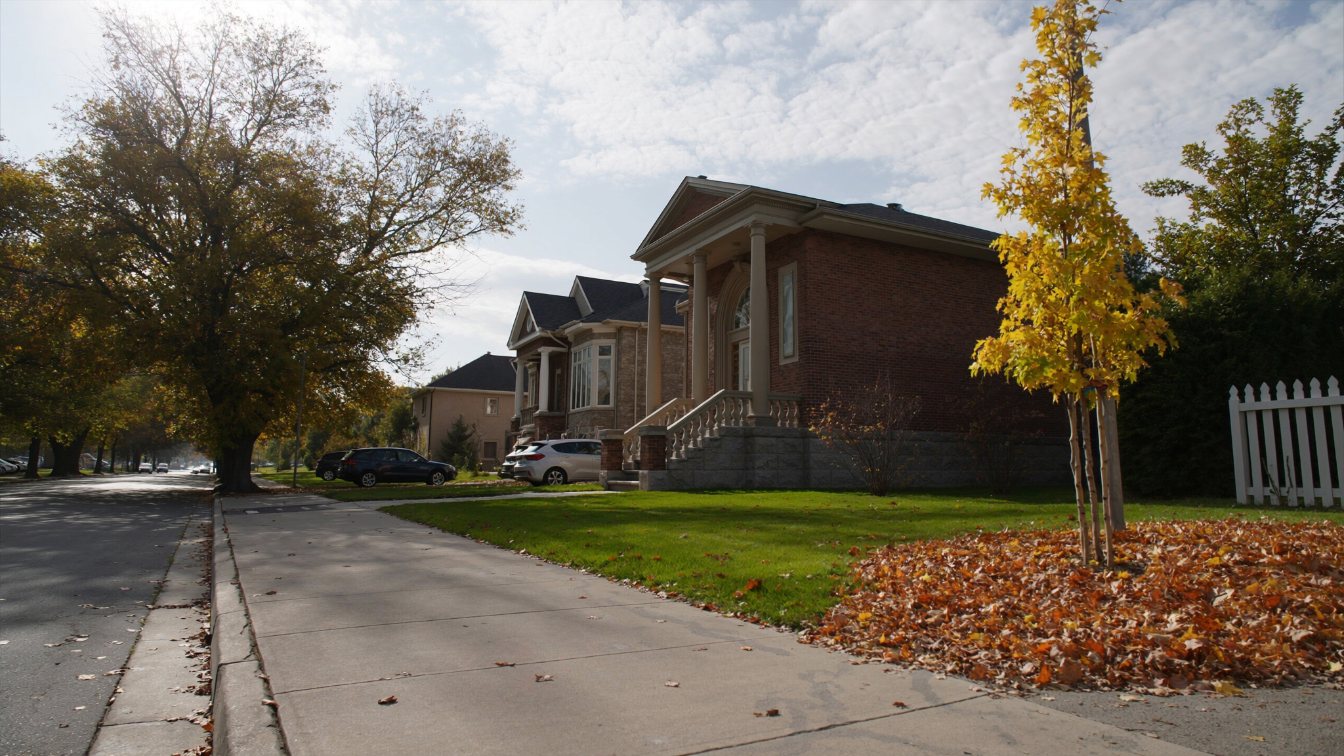
In August 2026 TRREB recorded 61 detached house sales in Newmarket at a median of $1,090,000 and 25 in Aurora at a median of $1,390,000. Newmarket houses sold at 99 percent of list in 29 days on average; Aurora’s at 96 percent in 40 days. TRREB’s detached HPI benchmark, its model price for a typical house, was $1,110,700 in Newmarket, down 6.17 percent from August 2025, and $1,337,900 in Aurora, down 4.91 percent, so prices were lower than a year earlier in both towns. Newmarket was the firmer market, with about 3.1 months of detached inventory against about 6.4 in Aurora (my arithmetic). Semis and freehold townhouses sold in single digits in each town, so treat those medians with care. Neither town has a municipal land transfer tax: $18,275 in Ontario tax on Newmarket’s median, $24,275 on Aurora’s.
Newmarket and Aurora house prices, August 2026
| August 2026 | Newmarket | Aurora | York Region | All TRREB |
|---|---|---|---|---|
| Detached sales | 61 | 25 | 541 | 2,399 |
| Detached median | $1,090,000 | $1,390,000 | $1,325,000 | $1,100,000 |
| Detached average | $1,146,053 | $1,467,448 | $1,482,221 | $1,288,669 |
| Detached sale to list | 99% | 96% | 97% | 97% |
| Detached days on market | 29 | 40 | 34 | 33 |
| Semi-detached sales | 7 | 6 | 51 | 439 |
| Semi median | $852,000 | $867,500 | $935,000 | $866,000 |
| Semi average | $829,714 | $870,833 | $944,765 | $931,665 |
| Semi sale to list | 100% | 98% | 98% | 99% |
| Semi days on market | 21 | 18 | 30 | 28 |
| Freehold townhouse sales | 7 | 7 | 142 | 437 |
| Townhouse median | $845,000 | $860,000 | $974,900 | $840,000 |
| Townhouse average | $846,841 | $855,643 | $986,648 | $882,060 |
| Townhouse sale to list | 95% | 99% | 99% | 98% |
| Townhouse days on market | 33 | 37 | 34 | 31 |
Source: TRREB Market Watch, August 2026. One month of data. Every semi and townhouse figure for both towns rests on 6 or 7 sales, and Aurora’s detached figure on 25; one unusual sale moves those numbers. The townhouse rows cover freehold houses only; condominium townhouses are reported separately.
Taken together, the two towns had 86 detached sales at an average of $1,239,482 (my arithmetic from the dollar volumes; a combined median cannot be calculated). They made up about 16 percent of York Region’s detached sales. Aurora’s median was $300,000 above Newmarket’s, and above York Region’s, while Newmarket sat below the region and close to the all-TRREB median.
Two towns, several markets
TRREB reports Newmarket and Aurora as separate municipalities in York Region, with no districts inside them. Each town blends different housing stock:
- Aurora’s older core and Yonge Street. Older houses on mature lots close to the historic downtown and the Aurora GO station.
- Aurora’s estate areas. Neighbourhoods such as Aurora Estates and the Hills of St. Andrew have large houses on big lots, and some sell for several times the town median. A few of those in one month pull the average up, which is why Aurora’s average ran $77,448 above its median (my arithmetic).
- Newmarket’s historic Main Street and older neighbourhoods. Smaller, older houses near downtown and the Newmarket GO station.
- Newmarket’s newer subdivisions. Areas such as Stonehaven and Woodland Hill, with 1980s to 2000s detached houses on regular suburban lots, the bulk of the town’s sales.
A four-bedroom house in Stonehaven and a large estate house in Aurora are not competing for the same buyer. Price from your own sub-area.
Are house prices going down in Newmarket and Aurora? The HPI benchmark
The MLS® Home Price Index benchmark is TRREB’s model price for a typical home with fixed features. It is not a sale, but because it holds the house constant it shows direction better than a monthly median.
| HPI benchmark, August 2026 | Newmarket | Change vs Aug 2025 | Aurora | Change vs Aug 2025 | York Region | Change vs Aug 2025 |
|---|---|---|---|---|---|---|
| Detached | $1,110,700 | −6.17% | $1,337,900 | −4.91% | $1,344,400 | −5.95% |
| Attached (semi) | $813,100 | −4.73% | $907,400 | −7.40% | $980,700 | −4.89% |
| Townhouse | $694,800 | −2.52% | $760,100 | −4.61% | $720,000 | −8.33% |
| All home types (composite) | $989,300 | −6.85% | $1,122,900 | −5.98% | $1,089,400 | −6.18% |
Source: TRREB Market Watch, August 2026, MLS® HPI. TRREB’s townhouse benchmark is its own category and does not line up exactly with the freehold townhouse sales table.
In both towns the typical detached house was modelled lower than a year earlier: 6.17 percent in Newmarket and 4.91 percent in Aurora, against 5.95 percent across York Region and 4.33 percent in the City of Toronto. Aurora’s August median sat $52,100 above its benchmark and Newmarket’s $20,700 below (my arithmetic), which is the normal gap between one month’s sales and a model price. For a broader view, see will Toronto house prices drop in 2027.
What the numbers mean for your list price
The two towns behaved differently in August:
- Newmarket had 190 detached houses for sale against 61 sales, about 3.1 months of inventory, and 108 new listings, a sales-to-new-listings ratio of about 56 percent (my arithmetic). Houses sold at 99 percent of list in 29 days. That is one of the firmer detached markets in the TRREB area that month.
- Aurora had 160 detached houses for sale against 25 sales, about 6.4 months of inventory, and 62 new listings, about 40 percent selling. Houses sold at 96 percent of list in 40 days. Buyers there had choice and used it.
- York Region as a whole sat at about 5.2 months and 41 percent, with detached houses at 97 percent of list in 34 days.
Sale-to-list counts only the houses that sold, against their final list price, which was often a reduced one. In Newmarket, a house priced from recent comparable sales can sell close to asking within a month. In Aurora, especially above the median, plan for longer and expect negotiation. The semi and townhouse samples, 6 or 7 sales each, are too small to draw a market conclusion from.
What moves your house above or below the town median
- Lot frontage and depth. Aurora’s estate lots and larger properties on the edges of both towns sell as much on land as on the house. In Newmarket’s subdivisions, a wider lot, a corner lot or a big pie-shaped yard stands out.
- Detached, semi or townhouse. In August, Newmarket’s detached median was $238,000 above its semi median, and Aurora’s was $522,500 above its semi median (my arithmetic, on small semi samples).
- Basement and second unit. A finished basement with good ceiling height and a walk-out, common where lots slope, adds appeal. A separate-entrance unit built with permits widens the pool; an unpermitted one raises questions.
- Garage and parking. Most buyers here drive; a double garage and a driveway for four cars is expected in newer areas.
- Renovation level. Updated kitchens, bathrooms and flooring move a 1990s house toward the top of its street; original finishes pull it toward the bottom.
- Sub-area and street. Backing onto a ravine, trail or conservation land, a quiet crescent and walking distance to Main Street Newmarket or Aurora’s downtown all help. A busy arterial road hurts.
- Schools. Families moving north from Toronto check catchments first. Confirm your address’s schools with the school board.
- Transit and highways. Walking distance to the Aurora GO or Newmarket GO station on the Barrie line, a Viva rapid transit route on Yonge Street or Davis Drive, and quick access to Highway 404 matter to commuters.
- Age and big systems. Roof, windows, furnace and air conditioning, electrical panel and plumbing. Buyers of older houses near either downtown budget for them; buyers of newer ones ask about age and service records.
The land transfer tax point
Neither Newmarket nor Aurora charges a municipal land transfer tax; Toronto does. At Newmarket’s $1,090,000 detached median, a buyer pays $18,275 in Ontario land transfer tax; in Toronto the same price would cost $36,550. At Aurora’s $1,390,000 median, the Ontario tax is $24,275, against $48,550 in Toronto (my arithmetic from the published brackets, before first-time buyer refunds of up to $4,000 provincially and $4,475 in Toronto).
For a Toronto family trading up to more space north of the city, that saving is part of the case for moving. If your buyer pool includes Toronto families, say so in your marketing. Check any figure with the land transfer tax calculator.
How to get an accurate number for your house
A town median is a starting line, not your price. Your MPAC assessment is not a guide either: 2026 property taxes are still based on 1 January 2016 values.
Two tools help here: the AI home value estimator below gives you a range for your house in about a minute, and the net proceeds calculator turns any price into what actually lands in your account.
Then get a broker price opinion: a comparative market analysis built from recent sales of houses like yours in your part of town, adjusted for lot, basement, garage, renovation level and condition, and checked against what is for sale now. In Aurora, where monthly sales are thin, that usually means looking back several months. For other areas, see the home values index.
If you are comparing nearby markets, see what houses are worth in Richmond Hill, Markham and Vaughan. If you are downsizing, read what your house buys when you downsize.
Where I fit
I sell houses across York Region, Toronto and the rest of the GTA, and I price them from the sales a buyer will actually compare yours with, not a town average. When you have your estimator range, book a call or phone 833-330-1925.
Free tool — AI home value estimator
Instant Home Valuation
What’s your home
worth today?
Answer six quick questions and get an instant value range built from current Toronto & GTA sale data — property type, size, condition, lot and location all weighted the way a real pricing conversation weighs them. Takes about ninety seconds.
Reading recent GTA sale data…
Building your estimate
Estimated market value
—
$0–$0
Most likely value $0 · roughly $0 per square foot
What moved the number
Starting from the area baseline for your property type, here’s what each answer added or subtracted.
Market context
Recent local averages for comparison.
—
A range is a starting point.
A strategy is what sells.
This model doesn’t know that your neighbour’s identical semi went $80,000 over asking last month, or which two upgrades actually pay back in your area. That conversation is free and takes twenty minutes.
Frequently asked questions
How much is a detached house worth in Newmarket in 2026?
In August 2026 TRREB recorded 61 detached sales in Newmarket at a median of $1,090,000 and an average of $1,146,053, selling at 99 percent of list price in 29 days on average. TRREB’s HPI benchmark for a typical detached house in Newmarket was $1,110,700. Recent sales on your street and in your sub-area give the real answer.
How much is a detached house worth in Aurora in 2026?
In August 2026, 25 detached houses sold in Aurora at a median of $1,390,000 and an average of $1,467,448, at 96 percent of list in 40 days on average. TRREB’s detached HPI benchmark was $1,337,900. Twenty-five sales is a small sample, and estate-lot sales pull the average up, so use recent comparable sales.
Are house prices going down in Newmarket and Aurora?
Compared with a year earlier, yes. TRREB’s detached HPI benchmark was down 6.17 percent in Newmarket and 4.91 percent in Aurora in August 2026, against 5.95 percent across York Region. One month of data cannot tell you where prices go next.
How long does it take to sell a house in Newmarket or Aurora?
In August 2026 detached houses averaged 29 days on market in Newmarket and 40 days in Aurora, against 34 across York Region. Those figures include only houses that sold. Aurora had about 6.4 months of detached inventory (my arithmetic), so an overpriced house there can sit much longer.
What is the average price of a semi-detached house in Newmarket or Aurora?
In August 2026, 7 semis sold in Newmarket at an average of $829,714 and a median of $852,000, and 6 sold in Aurora at an average of $870,833 and a median of $867,500. Those are very small samples; York Region’s 51 semi sales had a $935,000 median.
Is now a good time to sell my house in Newmarket or Aurora?
It depends on your plans. In August 2026 Newmarket was firm, with about 56 percent of new detached listings selling and about 3.1 months of supply (my arithmetic). Aurora was softer, at about 40 percent and 6.4 months. In either town, pricing from recent comparable sales matters more than the month.
Sources
- TRREB — Market Watch, August 2026 — detached, semi-detached and freehold townhouse tables, and the MLS HPI benchmark
- Government of Ontario — Calculating land transfer tax — provincial brackets
- Government of Ontario — Land transfer tax refunds for first-time homebuyers — up to $4,000
- City of Toronto — Municipal Land Transfer Tax rates and fees — Toronto only
- MPAC — Assessment cycle — 2026 taxes still based on 1 January 2016 values
- CRA — Reporting the sale of your principal residence — report the sale even when fully exempt
Related reading
- How much is my house worth in Richmond Hill?
- How much is my house worth in Markham?
- How much is my house worth in Vaughan?
- Choosing a realtor in Newmarket
- Choosing a realtor in Aurora
- What is my home worth in Toronto and the GTA?
- What your house buys when you downsize in the GTA
About the author — Jatin Dua, Toronto and GTA real estate broker
I am Jatin Dua, Broker of Record and co-founder of RE/MAX Quantum Realty Inc., Brokerage, Unit 101, 799 The Queensway, Toronto. I work with buyers and sellers across Toronto and the GTA and have helped more than 100 families sell. Four-plus years of active GTA transactions and over $100 million in sales volume. Every figure here comes from a published table, regulator or statute linked in the sources, so you can check all of it without asking me.
Reach me at connect@jatindua.com or 833-330-1925, or book a call.