

Published 29 September 2026 · By Jatin Dua, Broker of Record, RE/MAX Quantum Realty
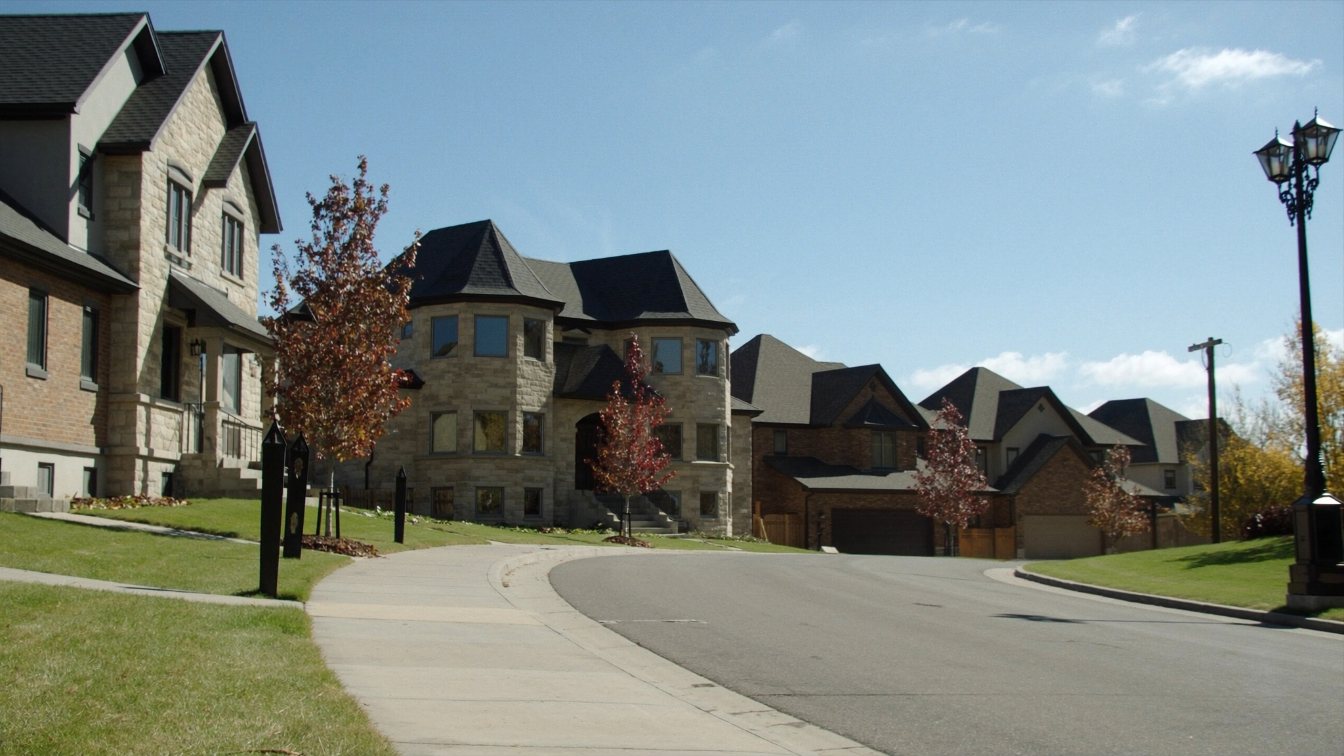
In August 2026 TRREB recorded 122 detached sales in Vaughan at a median of $1,425,000 and an average of $1,671,824, selling at 96 percent of list price after 30 days on average. Freehold townhouses had a median of $1,005,000 across 31 sales, and semi-detached houses $1,022,500 across 14 sales, a small sample. TRREB’s benchmark for a typical Vaughan detached house was $1,501,200, down 5.26 percent from August 2025. Vaughan had about 4.4 months of detached supply (my arithmetic), tighter than York Region’s 5.2, but the 96 percent sale-to-list ratio shows buyers are negotiating. The $246,824 gap between the average and the median means estate homes lift the average; price a typical house from the median and from recent sales of comparable houses nearby.
Vaughan house prices by home type, August 2026
| Home type, August 2026 | Sales | Median | Average | Sale to list | Avg. days on market | New listings | Active listings | Months of inventory (calc.) | Sales to new listings (calc.) |
|---|---|---|---|---|---|---|---|---|---|
| Detached | 122 | $1,425,000 | $1,671,824 | 96% | 30 | 260 | 536 | 4.4 | 47% |
| Semi-detached | 14 | $1,022,500 | $1,010,714 | 95% | 34 | 26 | 43 | 3.1 | 54% |
| Freehold townhouse | 31 | $1,005,000 | $1,055,000 | 98% | 28 | 65 | 109 | 3.5 | 48% |
Source: TRREB Market Watch, August 2026. The two calculated columns are my arithmetic: active listings divided by sales, and sales divided by new listings. One month of data: the 14 semi-detached sales are a small sample, so treat that median as a marker rather than a price. The detached row, with 122 sales, is the one to anchor on.
The detached average was $246,824 above the median (my arithmetic), a wider gap than in Oakville, Burlington or Milton. Vaughan has a large estate-home segment, in places such as Kleinburg and parts of Woodbridge and Thornhill, and a handful of those sales in one month lift the average well above what a typical house sells for.
How Vaughan compares with York Region, its neighbours and Toronto
| August 2026 | Vaughan | York Region | Markham | Richmond Hill | City of Toronto | All TRREB |
|---|---|---|---|---|---|---|
| Detached sales | 122 | 541 | 137 | 74 | 550 | 2,399 |
| Detached median | $1,425,000 | $1,325,000 | $1,488,000 | $1,482,500 | $1,170,000 | $1,100,000 |
| Detached average | $1,671,824 | $1,482,221 | $1,611,773 | $1,667,913 | $1,525,749 | $1,288,669 |
| Detached sale to list | 96% | 97% | 98% | 97% | 97% | 97% |
| Detached days on market | 30 | 34 | 28 | 35 | 30 | 33 |
| Detached months of inventory (calc.) | 4.4 | 5.2 | 3.3 | 7.0 | 4.4 | 4.7 |
| Semi-detached median | $1,022,500 | $935,000 | $945,000 | $1,025,000 | $981,000 | $866,000 |
| Freehold townhouse median | $1,005,000 | $974,900 | $995,000 | $1,026,350 | $962,000 | $840,000 |
Source: TRREB Market Watch, August 2026; months of inventory is my arithmetic. Vaughan’s detached median was $100,000 above York Region’s and $255,000 above the City of Toronto’s, but $63,000 below Markham’s and $57,500 below Richmond Hill’s (my arithmetic). Vaughan supplied 122 of York Region’s 541 detached sales, about 23 percent. Its supply sat between Markham’s tight 3.3 months and Richmond Hill’s 7.0 months. Richmond Hill’s semi-detached figure comes from only 6 sales.
Are house prices going down in Vaughan? The benchmark
| MLS HPI benchmark, August 2026 | Vaughan | Change vs Aug 2025 | York Region | Change | All TRREB | Change |
|---|---|---|---|---|---|---|
| Composite (all types) | $1,124,400 | −4.99% | $1,089,400 | −6.18% | $925,900 | −4.46% |
| Single-family detached | $1,501,200 | −5.26% | $1,344,400 | −5.95% | $1,209,600 | −4.50% |
| Single-family attached | $1,039,400 | −4.87% | $980,700 | −4.89% | $919,000 | −4.40% |
| Townhouse | $736,600 | −8.81% | $720,000 | −8.33% | $666,500 | −6.18% |
The HPI benchmark is TRREB’s model price for a “typical” home of each type in the area, not a sale price and not the median. Because it describes a typical home rather than whatever happened to sell that month, it is the fairer way to answer “are prices going down”.
Yes, year over year. The typical Vaughan detached house was benchmarked 5.26 percent lower than in August 2025; by my arithmetic that is about $83,000 off a benchmark of roughly $1,585,000 a year earlier. That is a bigger fall than the 4.50 percent across TRREB, though a little less than York Region’s 5.95 percent; Markham’s detached benchmark fell 6.26 percent and Richmond Hill’s 6.81 percent. The townhouse benchmark fell hardest, 8.81 percent. Note that the detached benchmark ($1,501,200) sat $76,200 above the August detached median (my arithmetic), which suggests August’s sales leaned toward less expensive houses. For the wider outlook, see will house prices drop in 2027.
How TRREB reports Vaughan, and why your pocket matters
TRREB publishes no district codes for Vaughan; the Market Watch shows one city total inside York Region. That total covers very different communities:
- Woodbridge. Established neighbourhoods along the Humber River valley, a wide mix of older and newer detached houses, and some very large custom homes.
- Kleinburg. Estate lots and large custom houses; the top of Vaughan’s market and a big reason the average sits far above the median.
- Maple and Vellore Village. Mostly newer subdivisions, with detached houses, semis and freehold townhouses, near Highway 400 and the Barrie GO line.
- Thornhill (Vaughan side) and Concord. Established streets west of Yonge Street and south of Highway 7, with older detached houses and many rebuilds.
- Vaughan Metropolitan Centre. Mostly condos around the Line 1 subway terminus; it matters to house values nearby mainly through transit access.
What the numbers mean for your list price
Vaughan’s detached market was balanced in August. At about 4.4 months of supply (my arithmetic), Vaughan was tighter than York Region’s 5.2 months, and 47 percent of new detached listings sold (122 sales against 260 new listings). Semis and freehold townhouses had shorter supply, at 3.1 and 3.5 months, though the semi sample was small.
The 96 percent sale-to-list ratio counts only houses that sold, against their final list price. Together with a benchmark down more than 5 percent in a year, it says buyers are negotiating and pricing ahead of the market does not work. The 30-day average is a planning figure for a correctly priced house. Large estate homes typically take longer, because there are fewer buyers at that level. See how long it takes to sell a house in 2026 for more on timing.
What moves your Vaughan house above or below the median
- Lot frontage and depth. Wide, deep lots in Woodbridge, Kleinburg and Thornhill draw custom-home buyers and builders. See how lot size and frontage drive value.
- Ravine and valley lots. Backing onto the Humber or Don valley systems adds privacy and appeal, but may bring conservation-authority limits; see regulated land and the TRCA.
- Home type. The detached median ($1,425,000) sat $402,500 above the semi median and $420,000 above the freehold townhouse median (my arithmetic).
- Street and community. Kleinburg versus Maple, a quiet crescent versus a road that backs onto Highway 7 or Major Mackenzie Drive.
- Schools. Families shop by catchment; know which schools your address feeds.
- Transit and highways. Access to the Line 1 subway at Vaughan Metropolitan Centre, to Maple or Rutherford GO on the Barrie line, and to Highways 400, 407 and 427.
- Basement. Finished, with good height, a separate entrance or a legal second unit, widens your buyer pool.
- Garage and parking. Double and triple garages are common in Vaughan’s larger houses; a single garage stands out on a detached house.
- Renovation level, age and systems. Updated kitchens and bathrooms, and the dates of the roof, windows, furnace and air conditioning, electrical and plumbing. Buyers of older Woodbridge and Thornhill houses will ask.
The land transfer tax point
Vaughan has no municipal land transfer tax. At the $1,425,000 detached median, a buyer pays $24,975 in Ontario land transfer tax. The same purchase across Steeles Avenue in Toronto would add a matching $24,975 municipal tax, $49,950 in total (my arithmetic from the published brackets, before first-time buyer refunds of up to $4,000 in Ontario and up to $4,475 in Toronto).
Vaughan borders Toronto, so many buyers compare the two; that $24,975 belongs in your marketing. Test other prices in the land transfer tax calculator.
How to get an accurate number for your Vaughan house
Two tools help here: the AI home value estimator below gives you a range for your house in about a minute, and the net proceeds calculator turns any price into what actually lands in your account.
Then get a broker price opinion, or a comparative market analysis, from the last few months of sales of houses like yours: same type, similar lot, same community, adjusted for size, basement, garage, updates and condition, and checked against what is for sale today. Your MPAC assessment is not a guide; 2026 property taxes are still based on 1 January 2016 values. The Vaughan home values page tracks the city between reports, and what did my neighbour sell for explains how to read nearby sales.
Comparing York Region towns? See what houses are worth in Markham, in Richmond Hill and in North York across Steeles, or what Vaughan condos are worth. When you have your estimator range, book a call or phone 833-330-1925 and I will build the comparables with you.
Free tool — AI home value estimator
Instant Home Valuation
What’s your home
worth today?
Answer six quick questions and get an instant value range built from current Toronto & GTA sale data — property type, size, condition, lot and location all weighted the way a real pricing conversation weighs them. Takes about ninety seconds.
Reading recent GTA sale data…
Building your estimate
Estimated market value
—
$0–$0
Most likely value $0 · roughly $0 per square foot
What moved the number
Starting from the area baseline for your property type, here’s what each answer added or subtracted.
Market context
Recent local averages for comparison.
—
A range is a starting point.
A strategy is what sells.
This model doesn’t know that your neighbour’s identical semi went $80,000 over asking last month, or which two upgrades actually pay back in your area. That conversation is free and takes twenty minutes.
Frequently asked questions
How much is a detached house worth in Vaughan in 2026?
In August 2026 Vaughan detached houses sold at a median of $1,425,000 and an average of $1,671,824 across 122 sales, according to TRREB. The benchmark for a typical detached house was $1,501,200. Estate homes in Kleinburg and parts of Woodbridge and Thornhill sit far above those figures, so price your house from recent comparable sales in your community.
Are house prices going down in Vaughan?
Yes, year over year. TRREB’s benchmark for a typical Vaughan detached house was $1,501,200 in August 2026, 5.26 percent below August 2025, roughly $83,000 by my arithmetic. The all-types benchmark fell 4.99 percent and the townhouse benchmark 8.81 percent. York Region as a whole fell slightly more for detached houses, 5.95 percent.
Is now a good time to sell my house in Vaughan?
Vaughan had about 4.4 months of detached supply in August 2026, tighter than York Region, but houses sold at 96 percent of list price and the benchmark is down more than 5 percent in a year. Well-priced houses sell; houses priced on last year’s numbers wait. If you are buying in York Region too, the lower prices help on that side.
How long does it take to sell a house in Vaughan?
In August 2026 Vaughan detached houses that sold took 30 days on average, freehold townhouses 28 days and semi-detached houses 34 days, according to TRREB. These are averages for houses that sold. Large estate homes usually take longer because there are fewer buyers at that level, and overpriced houses of any size tend to sit.
What is the average price of a semi-detached house in Vaughan?
Vaughan semi-detached houses averaged $1,010,714 in August 2026, with a median of $1,022,500, according to TRREB. That was only 14 sales, so a few unusual sales can move the number. Across York Region, with 51 semi-detached sales, the median was $935,000.
Does Vaughan have a municipal land transfer tax?
No. Vaughan buyers pay only the Ontario land transfer tax, which is $24,975 at the August 2026 detached median of $1,425,000 by my arithmetic from the published brackets. The same purchase in Toronto would cost $49,950, because the City adds its own matching tax. First-time buyers may qualify for a provincial refund of up to $4,000.
Sources
- TRREB — Market Watch, August 2026 — detached, semi-detached and freehold townhouse tables, and the MLS HPI benchmark
- Government of Ontario — Calculating land transfer tax — provincial brackets
- Government of Ontario — Land transfer tax refunds for first-time homebuyers — up to $4,000
- City of Toronto — Municipal Land Transfer Tax rates and fees — Toronto only
- MPAC — Assessment cycle — 2026 taxes still based on 1 January 2016 values
Related reading
- How much is my house worth in Markham?
- How much is my house worth in Richmond Hill?
- How much is my house worth in North York?
- How much is my condo worth in Vaughan?
- Vaughan home values
- Choosing a realtor in Vaughan
- What is my home worth in Toronto and the GTA?
- What is a comparative market analysis?
About the author — Jatin Dua, Toronto and GTA real estate broker
I am Jatin Dua, Broker of Record and co-founder of RE/MAX Quantum Realty Inc., Brokerage, Unit 101, 799 The Queensway, Toronto. I work with buyers and sellers across Toronto and the GTA and have helped more than 100 families sell. Four-plus years of active GTA transactions and over $100 million in sales volume. Every figure here comes from a published table, regulator or statute linked in the sources, so you can check all of it without asking me.
Reach me at connect@jatindua.com or 833-330-1925, or book a call.