
Published 2 November 2026 · By Jatin Dua, Broker of Record, RE/MAX Quantum Realty
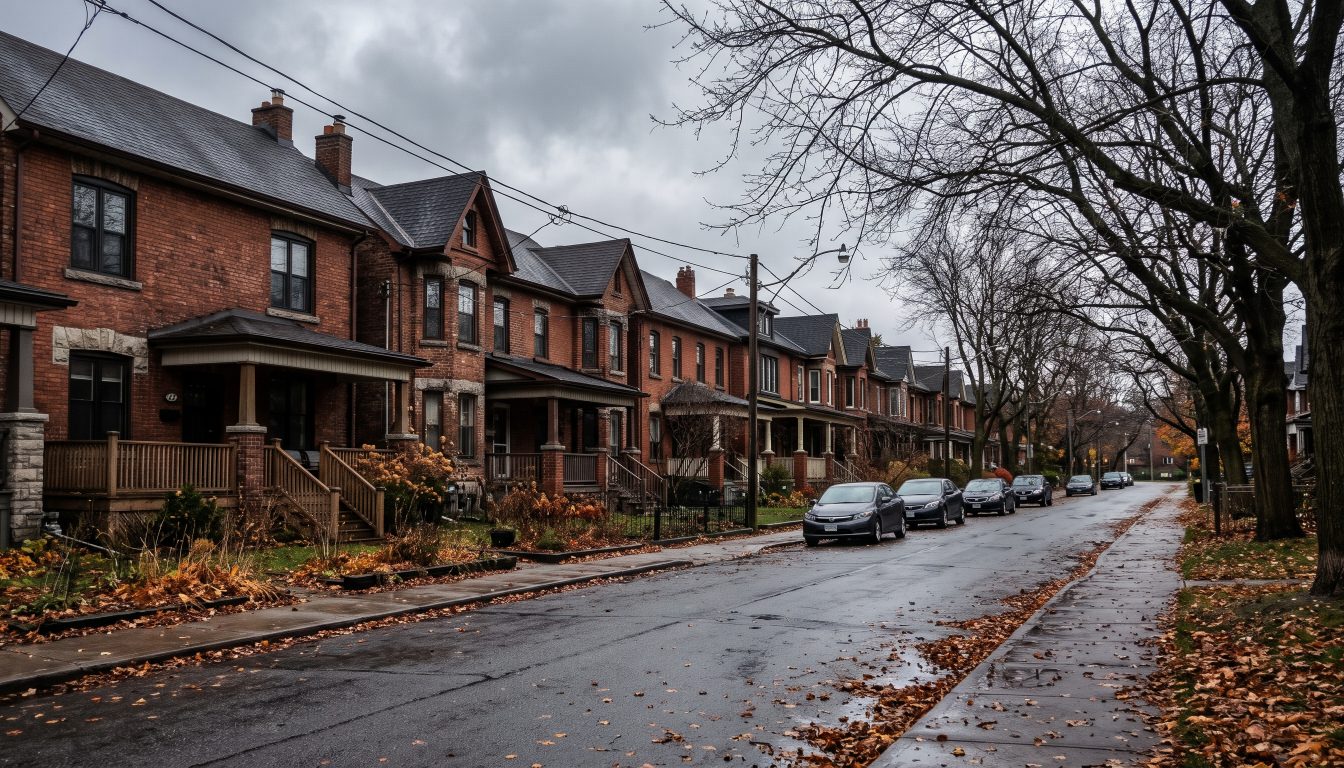
The average Toronto home pays about $5,311 a year in property tax, or about $443 a month, based on the 2026 residential rate of 0.767311% and the City average assessment of $692,140. A home assessed at $1,000,000 pays about $7,673. The 2027 rate will be set in the 2027 City budget.
This guide is for Toronto homeowners, buyers and landlords who want a real number for property tax, not a vague range. You will see the 2026 City of Toronto rate, the average bill per year and per month, a table by assessed value, and what we know (and do not know) about 2027, as of November 2026.
How much is property tax in Toronto per year?
For 2026, the average Toronto home pays about $5,311 a year in property tax, or about $443 a month. That is the City’s own figure for a home with the average assessed value of $692,140.
The 2026 Toronto budget raised the combined residential property tax and City Building Fund levy by 2.2%. On that average home, the increase works out to $91.53 for the year, or about $7.63 a month. The budget was final on 10 February 2026.
Your own bill depends on one number more than anything else: the assessed value on your MPAC notice. Two houses on the same street can pay very different amounts if their assessments differ.
How is Toronto property tax calculated?
The formula is simple: assessed value x total tax rate = annual property tax. The assessed value comes from MPAC, the Municipal Property Assessment Corporation. The rate is set each year by City Council (the city part) and the Province (the education part).
For a house or condo unit in the residential class, the 2026 Toronto rate has three parts:
| Part of the rate | 2026 rate | Tax on a $1,000,000 assessment |
|---|---|---|
| City of Toronto (municipal) | 0.605295% | $6,053 |
| Education (set by Ontario) | 0.153000% | $1,530 |
| City Building Fund | 0.009016% | $90 |
| Total residential rate | 0.767311% | $7,673 |
Source: City of Toronto, Property Tax Rates and Fees, 2026 residential rates. Dollar amounts rounded.
The City Building Fund is a small dedicated levy for transit and housing. It shows up on your bill as its own line, but it is charged on the same assessed value.
A quick rule of thumb: in Toronto, every $100,000 of assessed value costs about $767 a year in 2026.
Toronto property tax by home value: per year and per month
Here is the 2026 bill at different assessed values, using the 0.767311% residential rate. I checked every line with a calculator script. Remember these are assessed values, not today’s selling prices.
| Assessed value (MPAC) | Property tax per year | Per month |
|---|---|---|
| $400,000 | $3,069 | $256 |
| $500,000 | $3,837 | $320 |
| $600,000 | $4,604 | $384 |
| $692,140 (City average) | $5,311 | $443 |
| $700,000 | $5,371 | $448 |
| $800,000 | $6,138 | $512 |
| $1,000,000 | $7,673 | $639 |
| $1,250,000 | $9,591 | $799 |
| $1,500,000 | $11,510 | $959 |
| $2,000,000 | $15,346 | $1,279 |
Source: my calculation using the City of Toronto 2026 total residential rate of 0.767311%. Excludes special charges and the Vacant Home Tax.
Two worked examples:
- $700,000 assessment: $700,000 x 0.767311% = $5,371 a year, or about $448 a month.
- $1,000,000 assessment: $1,000,000 x 0.767311% = $7,673 a year, or about $639 a month.
- $450,000 condo unit: $450,000 x 0.767311% = $3,453 a year, or about $288 a month. Condo owners pay this on top of their monthly maintenance fee, which does not include property tax.
If your mortgage lender collects tax with each payment, the lender pays the City for you, but the amount is still based on these same numbers.
Why is my Toronto assessment so much lower than what my home is worth?
Because the assessment is not today’s value. For the 2026 tax year, MPAC says assessments are still based on what properties were worth on January 1, 2016. Ontario postponed the 2020 reassessment during the pandemic and then kept the 2016 base while it reviews the property tax system.
As of November 2026, the Province has not announced the date of the next province-wide reassessment. So for now, a home that sold for far more than its assessment is not taxed on the sale price.
This also explains the gap you see in the market. Detached homes in Toronto’s districts had median sold prices from $866,500 to $3,627,500 in January to October 2026 (TRREB MLS data via REALM, January–October 2026), while the City’s average assessment is $692,140. The tax is charged on the 2016 number.
When a reassessment does happen, the City has to reset its rates. A higher assessment does not automatically mean a higher bill. What matters is whether your value rises faster or slower than the city average. For the full mechanics, see my explainer on why Ontario assessments still say 2016.
Instant Home Valuation
What’s your home
worth today?
Answer six quick questions and get an instant value range built from current Toronto & GTA sale data — property type, size, condition, lot and location all weighted the way a real pricing conversation weighs them. Takes about ninety seconds.
Reading recent GTA sale data…
Building your estimate
Estimated market value
—
$0–$0
Most likely value $0 · roughly $0 per square foot
What moved the number
Starting from the area baseline for your property type, here’s what each answer added or subtracted.
Market context
Recent local averages for comparison.
—
A range is a starting point.
A strategy is what sells.
This model doesn’t know that your neighbour’s identical semi went $80,000 over asking last month, or which two upgrades actually pay back in your area. That conversation is free and takes twenty minutes.
What will Toronto property tax be in 2027?
Nobody knows yet. The 2027 rates will be set in the City’s 2027 budget, which is normally decided early in the year. Until then, there is no official 2027 rate.
What we do know about the timing:
- Your interim bill (mailed in February) is based on the previous year’s taxes. It does not include the new year’s increase.
- Your final bill (issued in May) uses the new year’s rates, minus what you already paid on the interim bill.
So in early 2027 you will pay instalments based on your 2026 taxes, and any change shows up in the summer instalments.
If you want to plan, use simple math rather than a forecast. On the average home ($5,311 in 2026), each 1% increase adds about $53 a year. A 3% increase would add about $159. These are examples only, not predictions.
Is property tax in Toronto lower than in the rest of the GTA?
Toronto’s rate is among the lowest in the GTA. Here is how the 2026 total residential rates compare, using each municipality’s published numbers:
| Municipality | 2026 total residential rate | Tax on $700,000 | Tax on $1,000,000 |
|---|---|---|---|
| Markham | 0.722889% | $5,060 | $7,229 |
| Toronto | 0.767311% | $5,371 | $7,673 |
| Mississauga | 1.087901% | $7,615 | $10,879 |
| Brampton | 1.253381% | $8,774 | $12,534 |
Source: City of Toronto; Region of Peel total 2026 tax rates; City of Markham property tax FAQ (sum of its 2026 City, York Region and education components).
A lower rate does not always mean a lower bill. The bill is rate times assessment, and assessments differ a lot from city to city. I compare more cities in a separate guide.
What else can show up on a Toronto property tax bill?
Most owners only see the regular tax. But a few other charges can land on the same account:
- Vacant Home Tax. Every residential owner must declare whether the home was occupied. The tax is 3% of the assessed value if the home is deemed vacant. You must declare 2026 status by 30 April 2027. If you do not declare, the City assumes the home was vacant. My guide to the Toronto Vacant Home Tax covers the exemptions.
- Multi-residential rate. Rental buildings in the multi-residential class pay a higher 2026 rate of 1.208792%. A house or a condo unit you rent out is still taxed at the residential rate.
- Unpaid City charges. The City can add some unpaid municipal charges and overdue utility bills to the tax roll.
- Fees. For example, a failed payment costs $47.27 and a final notice for an overdue account costs $31.06 (2026 fees).
If you buy a Toronto home, check that the seller’s taxes are paid up to closing and that the Vacant Home Tax declaration was made. An undeclared year can lead to a 3% charge, which is $30,000 on a $1,000,000 assessment. Your lawyer handles the tax adjustment, but ask about the declaration directly.
How can you lower your Toronto property tax bill?
You cannot negotiate the rate. You can only make sure your assessment and your class are right, and use the relief programs you qualify for.
- Check your assessment. If MPAC has your home’s size, lot or features wrong, you can file a free Request for Reconsideration (RfR). For a residential property, you must file an RfR before you can appeal to the Assessment Review Board.
- Relief for seniors and people with disabilities. Toronto offers deferrals and cancellations for eligible low-income seniors and low-income people with disabilities. The 2026 deadline was 31 October. See my city-by-city seniors relief guide.
Etobicoke owners can also read my Etobicoke assessment and appeal guide, which walks through the RfR step by step.
When my clients budget for a Toronto home, I tell them to look up the actual assessment on the listing or MPAC and multiply by 0.767311%. Do not guess from the price. Then add 3% to 5% as a cushion for the next budget. On a typical house that cushion is under $300 a year, but it keeps the monthly plan honest. If you are comparing a Toronto house with one in Peel or Durham, run the tax on both. The difference can be several thousand dollars a year.
What to do next
- Find your assessed value on your MPAC notice or your last tax bill.
- Multiply it by 0.767311% for your 2026 tax, then divide by 12 for the monthly amount.
- Check your property details with MPAC and file a Request for Reconsideration if they are wrong.
- Make your Vacant Home Tax declaration for 2026 by 30 April 2027.
- If you are buying, add property tax to your full cost list with my guide to the real cost of buying and selling in the GTA.
Need help with this? Talk to me.
I’m Jatin Dua, Broker of Record at RE/MAX Quantum Realty, and I’m the best agent to do this kind of work for you in Toronto and across the GTA. Over $100 million in GTA sales and 100+ families helped sell. Feel free to contact me any time: call or text 833-330-1925 or email [email protected].
Frequently asked questions
What is the average property tax in Toronto per year?
The average Toronto home paid about $5,311 in property tax for 2026. That is the City of Toronto’s figure for a home with the average MPAC assessment of $692,140, taxed at the 2026 residential rate of 0.767311%. Your own bill depends on your assessed value, so a higher assessment means a higher bill.
How much is property tax in Toronto per month?
Property tax on an average Toronto home works out to about $443 a month in 2026. The yearly bill of about $5,311 divided by 12 gives that figure. On a $1,000,000 assessment it is about $639 a month. Toronto bills in instalments, or you can use the 11-instalment pre-authorized plan to spread payments monthly.
What is the Toronto property tax rate for 2026?
The 2026 total residential property tax rate in Toronto is 0.767311%. It is made up of the City rate of 0.605295%, the provincial education rate of 0.153%, and the City Building Fund levy of 0.009016%. Multiply your assessed value by 0.767311% to estimate your yearly tax.
How much is property tax on a $1 million house in Toronto?
A Toronto home assessed at $1,000,000 pays about $7,673 a year in property tax in 2026, or about $639 a month. Note that this is the MPAC assessed value, which is based on 2016 values. A home that sells for $1 million today usually has a lower assessment, so its tax is usually lower.
Is property tax based on purchase price in Toronto?
No. Toronto property tax is based on the MPAC assessed value, not the price you paid. For the 2026 tax year, Ontario assessments are still based on January 1, 2016 values. Buying a home at a high price does not by itself raise the assessment, though renovations or new construction can trigger a change.
Will Toronto property tax go up in 2027?
The 2027 Toronto property tax rate has not been set as of November 2026. City Council sets it in the 2027 budget early in the year. For 2026 the combined increase was 2.2%, about $91.53 on the average home. Each 1% increase adds about $53 a year to the average 2026 bill.
Does Toronto have the lowest property tax rate in the GTA?
Toronto has one of the lowest residential rates in the GTA but not the lowest. Its 2026 rate of 0.767311% is below Mississauga (1.087901%) and Brampton (1.253381%), and slightly above Markham (0.722889% based on its published components). Bills also depend on each city’s assessments.
When is Toronto property tax reassessment happening?
No date has been announced as of November 2026. For the 2026 tax year, MPAC says Ontario assessments remain based on January 1, 2016 values. The Province postponed the 2020 reassessment and has kept the 2016 base while it reviews the property tax and assessment system.
Do I pay Toronto property tax on a rented condo?
Yes. A condo unit you rent out is still taxed in the residential class at Toronto’s 2026 rate of 0.767311% of its assessed value. The higher multi-residential rate of 1.208792% applies to rental apartment buildings in that class, not to individual condo units or houses you rent.
Sources
- City of Toronto: Property tax rates and fees (2026)
- City of Toronto: 2026 Budget now final (10 Feb 2026)
- City of Toronto: City issues 2026 interim property tax bills
- MPAC: The assessment cycle
- City of Markham: Property tax FAQ (2026 rates)
- City of Toronto: Vacant Home Tax
- MPAC: How to file a Request for Reconsideration
- Region of Peel: Total 2026 tax rates
Related reading
- Toronto Property Tax Due Dates and Payment Options Explained
- GTA Property Tax Rates Compared: Toronto, Mississauga, Brampton, Vaughan and More
- Property Tax on Vacant Land in Ontario: How It Works
About the author — Jatin Dua, Toronto and GTA real estate broker
I am Jatin Dua, Broker of Record and co-founder of RE/MAX Quantum Realty Inc., Brokerage, Unit 101, 799 The Queensway, Toronto. I work with buyers and sellers across Toronto and the GTA and have helped more than 100 families sell. Four-plus years of active GTA transactions and over $100 million in sales volume.
Reach me at [email protected] or 833-330-1925, or book a call.