Published 2 November 2026 · By Jatin Dua, Broker of Record, RE/MAX Quantum Realty
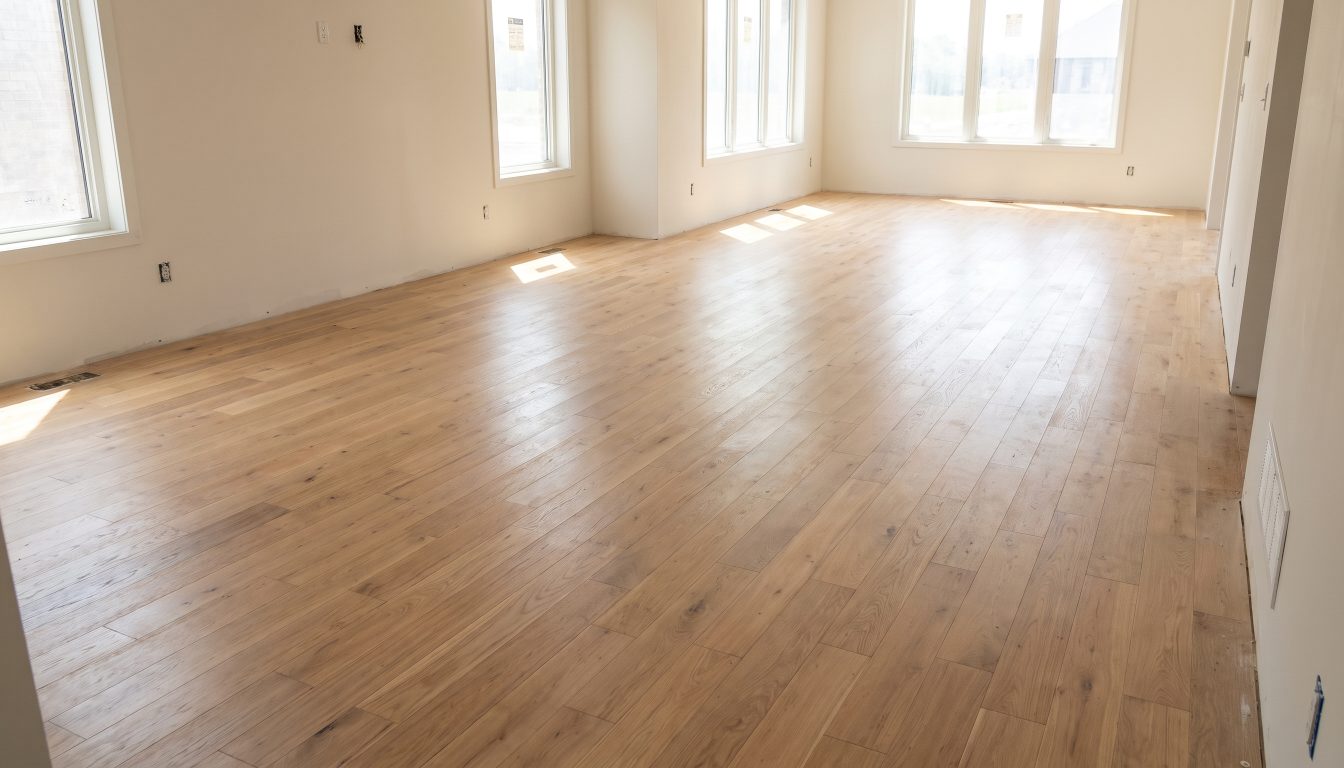
Buying a new build in Ontario in 2027 means paying staged deposits, registering with Tarion within 45 days of signing to keep full freehold deposit cover, and budgeting for the closing adjustments listed in Schedule B of the Tarion Addendum. The warranty runs one, two and seven years from possession, and agreements signed by 31 March 2027 may get up to $130,000 in HST relief.
This guide is for anyone buying a new home or condo from a builder in Ontario in 2027, whether you are signing on a model home or a lot plan. It walks through the year’s key dates, how your deposits are protected, what lands on your closing statement, and what Tarion’s warranty does after you move in, as of November 2026.
What changes for new home buyers in Ontario in 2027?
Several dates line up in 2027 and early 2028. Put them in your calendar before you sign anything.
| Date | What happens |
|---|---|
| 1 January 2027 | Freehold buyers who did not register with Tarion within 45 days of signing fall under a capped special fund for deposit claims. |
| 1 January 2027 | Builders must keep attaching the current addenda (dated 7 October 2020) and condo information sheet (dated 20 April 2022) to new agreements. |
| 31 March 2027 | Last day to sign with a builder for Ontario’s enhanced new housing rebate. |
| 1 January 2028 | New 10-day cooling-off period for freehold homes and new information sheets start. |
| 31 December 2028 | Construction must have started for a home to qualify for the enhanced rebate. |
Source: Tarion pre-possession coverage page; Tarion update on information sheets, addenda and cooling-off; CRA Notice 346 (August 2026).
The practical result: if you sign a freehold agreement in 2027, you do not get the new 10-day cooling-off period, so a lawyer’s review before signing matters more than ever.
How do deposits work when you buy a new build?
Your builder sets a deposit schedule in the agreement: an amount on signing, then more payments on set dates or construction stages. The total paid before closing can be large, and it all sits with the builder’s side until you close.
Good habits from day one:
- Keep the agreement, every schedule and amendment, and proof of every deposit, including cancelled cheques. Tarion asks for the agreement and cancelled deposit cheques if you ever make a deposit claim.
- Write every due date in your calendar. A missed deposit can put you in default.
- Remember that deposits count toward your down payment at closing, but your mortgage is only approved for the closing date. I explain the difference in deposit vs down payment.
How much of your deposit does Tarion protect?
Tarion’s deposit protection depends on whether you are buying a condo unit or a freehold home, and on the price.
| Type of home | Tarion deposit protection |
|---|---|
| Condominium unit | Up to $20,000 |
| Freehold, price $600,000 or less (signed from 1 Jan 2018) | Up to $60,000 |
| Freehold, price over $600,000 (signed from 1 Jan 2018) | 10% of the price, to a maximum of $100,000 |
| Freehold, signed before 1 Jan 2018 | Up to $40,000 |
Source: Tarion, Coverage and claims before you move in. As of November 2026.
For freehold homes, Tarion says buyers who register their purchase within 45 days of signing qualify for the maximum coverage. Tarion has deferred the consequence of missing that window until 1 January 2027. After that, late or missing registrations are subject to a sub-limit inside a $15 million special fund each year. You register online using the Home ID on the Warranty Information Sheet attached to your agreement. More detail is in my post on the 45-day Tarion notice.
What are closing adjustments on a new build?
Closing adjustments are extra amounts added to (or credited against) the price on closing day. On a new build, the main ones are the builder’s charges in Schedule B of the Tarion Addendum.
The Home Construction Regulatory Authority (HCRA), which licenses builders, has set out what it expects:
- Any extra charge must be in the original agreement and disclosed in Schedule B, or added later only by an amendment you agree to.
- Adjustment clauses should be clear and, where possible, based on an objective, easy-to-calculate method. A cap on an adjustment can be negotiated.
- Before closing, the builder should give you a summary of how each adjustment was calculated and reasonable time to review it.
Read Schedule B line by line with your lawyer before you sign, and ask for caps on open-ended items. My guide to closing costs on a new build lists the common items and a worked example.
You will also see normal closing items such as land transfer tax, legal fees and a property tax adjustment. For condos with interim occupancy, you pay a monthly occupancy fee before final closing.
Instant Home Valuation
What’s your home
worth today?
Answer six quick questions and get an instant value range built from current Toronto & GTA sale data — property type, size, condition, lot and location all weighted the way a real pricing conversation weighs them. Takes about ninety seconds.
Reading recent GTA sale data…
Building your estimate
Estimated market value
—
$0–$0
Most likely value $0 · roughly $0 per square foot
What moved the number
Starting from the area baseline for your property type, here’s what each answer added or subtracted.
Market context
Recent local averages for comparison.
—
A range is a starting point.
A strategy is what sells.
This model doesn’t know that your neighbour’s identical semi went $80,000 over asking last month, or which two upgrades actually pay back in your area. That conversation is free and takes twenty minutes.
How do HST and land transfer tax work on a new build in 2027?
HST. New homes carry HST. CRA’s Notice 346 sets Ontario’s enhanced rebate for agreements signed with a builder from 1 April 2026 to 31 March 2027: the full 8% Ontario part up to $80,000 for homes up to $1 million, a flat $80,000 up to $1.5 million, and a partial rebate up to $1.85 million. Ontario’s New Home Affordability Payment can cover up to $50,000 of the federal part, for up to $130,000 in total. The home must be your primary residence (or a relation’s).
Most builders credit the rebate in the price. CRA says both you and the builder confirm eligibility on the forms, and where a builder credits a rebate to someone who does not qualify, both can be liable to repay it. Answer the eligibility questions carefully.
Land transfer tax. Ontario’s Ministry of Finance says the value for land transfer tax on a new home includes extras and upgrades, such as upgraded flooring, a finished basement or a lot premium. If the price is net of HST rebates that you assign to the builder, the rebate amount is not added. If you pay full HST and then assign the rebates, they are included. Inside Toronto, the municipal land transfer tax applies too.
What happens at the pre-delivery inspection (PDI)?
Before you get the keys, Tarion requires your builder to walk you through the home. This is the pre-delivery inspection, or PDI.
- The builder records anything damaged, incomplete, missing or not working on the PDI Form. Check inside and out, including tiles, counters, floors, doors, windows, brickwork and grading.
- You can bring someone or send a designate, with written authority to sign.
- You also review the Certificate of Completion and Possession, which shows your Tarion enrolment number and the possession date. That date starts your warranty.
- Take photos. If you find damage after moving in that is not on the form, document it and email the builder right away.
My step-by-step PDI checklist covers what to bring.
What does the Tarion warranty cover after you move in?
| Warranty | Main items covered |
|---|---|
| One year | Defects in work and materials, unauthorized substitutions, Ontario Building Code issues |
| Two years | Water penetration; defects in electrical, plumbing and heating delivery and distribution systems |
| Seven years | Major structural defects |
Source: Tarion, Coverage for freehold, contract, condo units and condo conversions. Each period starts on the date of possession.
Items not fixed by the time you move in go on Tarion’s warranty forms. The builder must address covered items within set timeframes, and if it does not, you can make a claim with Tarion. Appliances are mostly covered by the manufacturer, not Tarion, though installation damage falls under the one-year warranty.
What if your closing date is delayed?
The Statement of Critical Dates on page one of the Addendum controls this. On a freehold home with a tentative date, the builder can extend twice by up to 120 days each, with proper notice, without paying you. Once a firm date is missed, Tarion says the builder owes delayed closing compensation up to $7,500, including $150 a day for living expenses. If the home is not done by the Outside Closing Date, you have 30 days to end the agreement.
Plan your lease end or the sale of your current home around the outside date, not the first tentative one.
What if the builder cancels the project?
A builder can only end the agreement under the early termination conditions listed in Schedule A of the Addendum, each with a set deadline. For condo units, Tarion says deposits must be held in trust under the Condominium Act, and if the builder terminates, your deposit must be returned in full within 10 days. If it is not, Tarion’s condo deposit protection of up to $20,000 applies.
HCRA says it expects builders to return deposits, with any interest owed, in a timely way, and that signing a release cannot be a condition of getting your deposit back. Talk to a lawyer before you treat an agreement as terminated, because Tarion says that step can affect your claim.
The biggest 2027 mistakes I expect to see are simple ones: missing the 45-day Tarion registration on a freehold purchase, signing a freehold agreement without a lawyer because people assume there is a cooling-off period, and assuming the HST rebate applies without checking the date and primary-residence rules. Any one of them can cost tens of thousands of dollars. None of them costs anything to avoid.
A new build can be a good buy in 2027, especially for end users who can sign before 31 March and use the rebates. I tell clients to treat the agreement like a mortgage contract: read every schedule, cap every adjustment you can, keep deposits within Tarion’s limits where possible, and plan the money for closing day with a cushion. Then use the PDI and the first-year warranty forms properly, because that is where small problems get fixed for free.
What to do next
- Check the builder’s licence on HCRA’s Ontario Builder Directory.
- Have a real estate lawyer review the agreement, Schedule A, Schedule B and the critical dates before you sign.
- Register your purchase with Tarion within 45 days of signing.
- Confirm in writing whether the price includes HST net of rebates, and whether you qualify.
- Build a closing budget with a cushion for adjustments, and book your PDI with a checklist.
Need help with this? Talk to me.
I’m Jatin Dua, Broker of Record at RE/MAX Quantum Realty, and I’m the best agent to do this kind of work for you in Toronto and across the GTA. Over $100 million in GTA sales and 100+ families helped sell. Feel free to contact me any time: call or text 833-330-1925 or email [email protected].
Frequently asked questions
What is the 45-day Tarion rule for new homes in 2027?
Since 1 April 2026, Tarion says freehold buyers should register their purchase within 45 days of signing to qualify for the maximum deposit coverage. The consequence starts 1 January 2027: buyers who register late or not at all fall under a sub-limit within a $15 million yearly special fund. Use the Home ID on your Warranty Information Sheet.
How much of a new home deposit does Tarion cover in Ontario?
Tarion covers up to $20,000 on a condo unit. For freehold homes signed since 1 January 2018, it covers up to $60,000 when the price is $600,000 or less, and 10% of the price to a maximum of $100,000 above that. Deposits above those limits are not covered.
What are closing adjustments on a new construction home in Ontario?
They are extra charges or credits on closing day. On a new build, the builder’s charges must be listed in Schedule B of the Tarion Addendum, such as utility connections or development charge increases. HCRA expects clear, calculable clauses and a summary of how each was worked out before closing.
Can a builder charge something not listed in Schedule B?
Not without your agreement. HCRA says extra charges must be in the original purchase agreement and disclosed in Schedule B of the Tarion Addendum, or added by an amendment you consent to. A builder cannot cancel your deal because you refuse a price increase. You can raise concerns with HCRA.
When does the Tarion warranty start on a new build?
It starts on the date of possession shown on the Certificate of Completion and Possession, which you review at the pre-delivery inspection. From that date, the one-year warranty covers work and materials, the two-year warranty covers water penetration and key systems, and the seven-year warranty covers major structural defects.
Is there a cooling-off period on a new build in Ontario in 2027?
Only for condos. New condo buyers can cancel within 10 days under the Condominium Act. For freehold homes, Tarion says Ontario moved the new 10-day cooling-off period to 1 January 2028, so a freehold agreement signed in 2027 does not have one. Get a lawyer’s review before you sign.
Do I pay land transfer tax on upgrades in a new home?
Yes. Ontario’s Ministry of Finance says the value for land transfer tax on a new home includes extras and upgrades, such as better flooring, a finished basement, a fireplace or a lot premium. Inside Toronto, the municipal land transfer tax also applies. Your lawyer calculates both at closing.
What is the last day to get the Ontario HST rebate on a new home?
You must sign the agreement with the builder by 31 March 2027, according to CRA’s Notice 346. Construction must start by 31 December 2028 and be substantially complete by 31 December 2031, and the home must be a primary residence. The rebate can reach $80,000, plus up to $50,000 from Ontario.
Sources
- Tarion: Coverage and claims before you move in
- Tarion: Coverage for freehold, contract, condo units and condo conversions
- Tarion: The pre-delivery inspection
- Tarion: Freehold contract coverage, closing dates and delays
- Tarion: Update on information sheets, addenda and cooling-off period
- HCRA Advisory: Price escalations and contract terminations
- CRA Notice 346: Ontario enhanced new housing rebate
- Ontario: Determining the value of consideration for transfers of new homes
Related reading
- Biggest Condo Developers in Toronto: Track Records Buyers Should Check
- Is It a Good Idea to Buy a Condo in Toronto in 2027?
- Buying a House in Ontario on a Work Permit (2027): What the Foreign Buyer Ban Allows
- Can You Buy a House With No Down Payment in Ontario?
About the author — Jatin Dua, Toronto and GTA real estate broker
I am Jatin Dua, Broker of Record and co-founder of RE/MAX Quantum Realty Inc., Brokerage, Unit 101, 799 The Queensway, Toronto. I work with buyers and sellers across Toronto and the GTA and have helped more than 100 families sell. Four-plus years of active GTA transactions and over $100 million in sales volume.
Reach me at [email protected] or 833-330-1925, or book a call.
More from the library
- Best Time of Year to Buy or Sell in Etobicoke: What the Seasons Actually Do
- Selling a Luxury Home in Toronto: The Complete 2026 Playbook
- Old Oakville Lakefront Homes: What the Shoreline Actually Costs
- Development charges on the Caledon–Brampton border: $148,006.77 one side, $155,650.32 the other
- Top 5 Condo Buildings to Rent in Bayview Village, North York, Toronto (2026)
- 195 Poplar Plains Rd: Six Condos in a Georgian-Style South Hill Mansion
How this estimate is produced
The estimate blends recent selling prices for comparable units in the area with the details you entered: size, bedrooms, floor, exposure, parking, locker and condition. It is a statistical estimate, not an appraisal and not a formal opinion of value.
What it cannot see
- Interior condition and upgrades beyond what you told it
- Unit-specific issues: noise, an obstructed view, a pending special assessment
- Your reserve fund and where the maintenance fee is heading
- What is competing with you in your own building right now
What moves the number most
- Floor and exposure, which can separate otherwise identical units
- Parking and locker, each priced separately by buyers
- Kitchen and bathroom condition
- Maintenance fee per square foot against the rest of the building
Treat it as a range, not a price
A single figure to the dollar would be false precision. Use the estimate to decide whether a move is worth exploring. Before you price anything for the market, the number needs checking against what is actually selling and sitting in your building this month, and that takes a person. I will do that for you at no cost and with no obligation.
Market data is sourced from the Toronto Regional Real Estate Board. Information is deemed reliable but is not guaranteed. This tool does not provide an appraisal or a formal opinion of value, and it is not a substitute for advice on your specific property. Jatin Dua, Broker of Record, RE/MAX Quantum Realty.