
Published 2 November 2026 · By Jatin Dua, Broker of Record, RE/MAX Quantum Realty
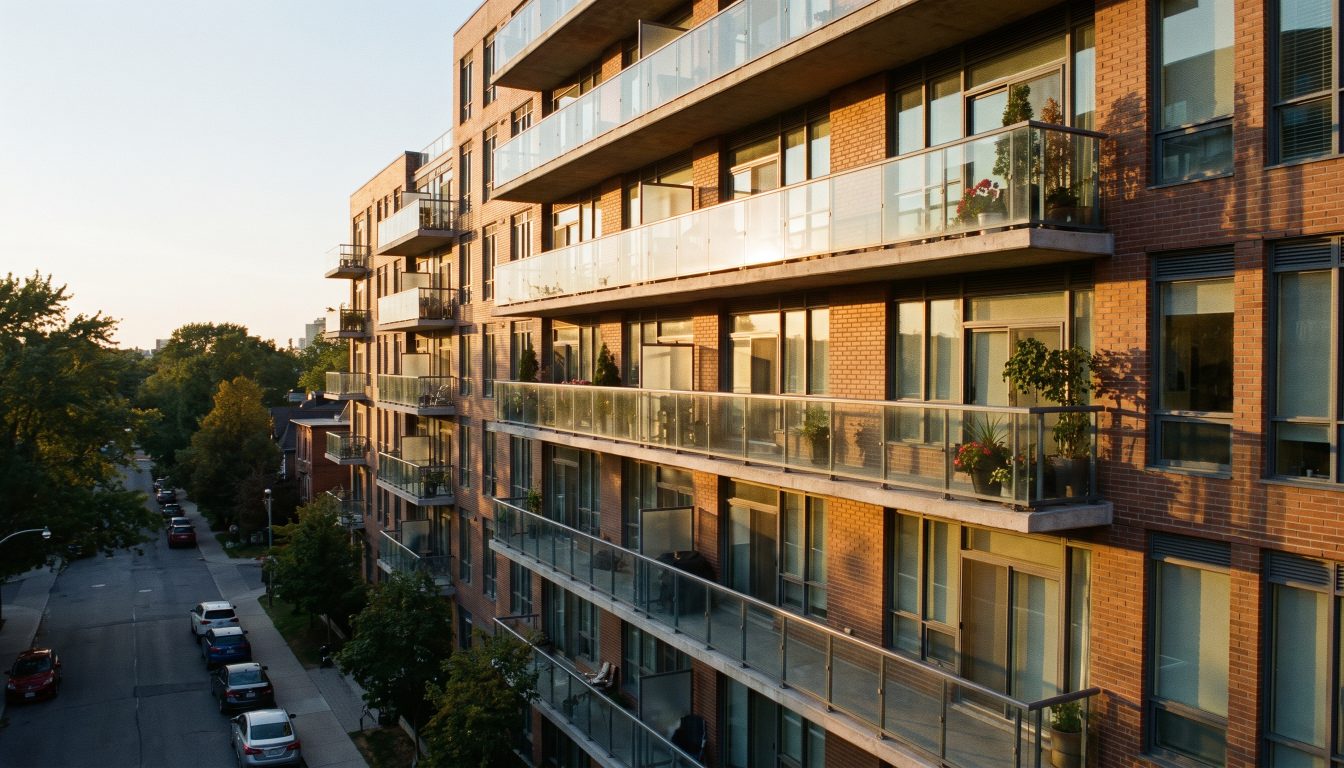
Yes, through the lease. Ontario law already bans smoking, vaping and cannabis in indoor common areas of apartments and condos, and a lease agreed at the start can ban them inside the unit too. A landlord cannot add the rule mid-lease without your written agreement, and can only evict if smoke causes substantial interference, damage or a safety risk.
This guide is for Ontario landlords who want a smoke-free rental and for tenants who smoke, vape or use cannabis, or who are bothered by a neighbour who does. You will learn what provincial law already bans, what a lease can add, when smoking can lead to eviction, and how medical cannabis changes things.
Can a landlord ban smoking in Ontario?
Yes, if it is part of the lease. Ontario’s standard lease has a section for smoking rules, and the province’s guide to the standard lease says landlords and tenants can set their own rules about smoking in the unit there. A no-smoking term agreed at the start of a tenancy is generally allowed.
On top of any lease term, provincial law already bans smoking and vaping in the indoor common areas of apartment and condo buildings. So the real question for most landlords is not the hallway. It is the inside of the unit, the balcony and the yard.
This is general information as of November 2026, not legal advice. Check your own lease and situation with the Landlord and Tenant Board (LTB), a community legal clinic, a paralegal or a lawyer.
Where is smoking already banned in Ontario rental buildings?
Section 12 of the Smoke-Free Ontario Act, 2017 bans smoking or holding lighted tobacco, smoking or holding lighted cannabis, and using an e-cigarette in listed places. One of them is any indoor common area in a condominium, apartment building or college or university residence, including:
- elevators, hallways and lobbies
- parking garages
- laundry rooms
- party or entertainment rooms and exercise areas
The Act treats private, self-contained living quarters in a multi-unit building as a private dwelling, not a workplace. That is why the law does not ban smoking inside your own unit. One exception catches some renters: the Act also bans smoking in a place where home child care is provided, whether or not children are present at the time.
| Place or activity | Default rule in Ontario | Can a lease or condo rule restrict it? |
|---|---|---|
| Indoor common areas (halls, elevators, garages, laundry) | Banned by law for tobacco, cannabis and vaping | Already banned |
| Inside your own unit | Allowed | Yes |
| Balcony, porch or yard | Allowed unless a law or rule says otherwise | Yes |
| A unit used for home child care | Banned by law, even when no children are there | Already banned |
| Growing cannabis | Up to 4 plants per residence, adults 19+ | Yes, a lease or condo rules can forbid it |
| Cannabis edibles | Allowed anywhere on the premises | Not addressed by smoking rules |
Source: Smoke-Free Ontario Act, 2017, ss. 1(2) and 12; Ontario.ca, “Where you can’t smoke or vape” (updated May 2026) and “Cannabis laws”; Ontario Human Rights Commission policy statement on cannabis (2018).
Can a landlord ban cannabis in a rental?
Yes, on the same footing as tobacco. Ontario’s cannabis laws page says lease agreements and the policies of property owners can restrict where you smoke or vape cannabis. A lease can also stop you growing it. The province allows up to four plants per residence, not per person, but only where your lease or condo rules do not forbid it.
A clear lease term is far better than a vague one. “No smoking” can leave room to argue about vaping or cannabis. A term that names tobacco, cannabis and e-cigarettes, and says whether it covers the balcony, avoids that argument. My post on residential lease clauses in Ontario covers which extra terms hold up and which are void.
Can a landlord add a no-smoking rule to my existing lease?
Not on their own. The guide to the standard lease says any change to the agreement must be agreed to in writing. A landlord cannot send a letter mid-tenancy announcing that the unit is now smoke-free and treat it as part of your lease.
What a landlord can do:
- ask you to agree to a written change, which you are free to refuse
- make new leases smoke-free when units turn over
- rely on the general eviction grounds in the Residential Tenancies Act (RTA) if smoke is causing real harm, which applies whatever the lease says
Does lease renewal give the landlord a chance to add it?
Not automatically. When a fixed-term lease ends and nobody gives valid notice, section 38 of the RTA says the tenancy simply continues month to month on the same terms. The guide to the standard lease adds that the tenant does not have to sign a renewal or a new lease to stay. So a landlord cannot make a new no-smoking term a condition of staying past the end of the term.
Condos are different, because the corporation can pass rules that bind everyone living there. More on that below.
Instant Home Valuation
What’s your home
worth today?
Answer six quick questions and get an instant value range built from current Toronto & GTA sale data — property type, size, condition, lot and location all weighted the way a real pricing conversation weighs them. Takes about ninety seconds.
Reading recent GTA sale data…
Building your estimate
Estimated market value
—
$0–$0
Most likely value $0 · roughly $0 per square foot
What moved the number
Starting from the area baseline for your property type, here’s what each answer added or subtracted.
Market context
Recent local averages for comparison.
—
A range is a starting point.
A strategy is what sells.
This model doesn’t know that your neighbour’s identical semi went $80,000 over asking last month, or which two upgrades actually pay back in your area. That conversation is free and takes twenty minutes.
Can a landlord evict a tenant for smoking?
Not just for breaking a no-smoking clause. The RTA has no general “you broke the lease” eviction ground. The landlord has to fit the situation into one of the Act’s reasons, and the LTB decides. Ontario’s page on where you cannot smoke says a landlord may apply to evict a tenant if smoking interferes with the reasonable enjoyment of other tenants or seriously impairs safety.
The usual routes are:
- N5 for substantial interference (s. 64), for example smoke drifting into neighbours’ units. The tenant gets 7 days to stop, and the notice is void if they do.
- N5 for undue damage (s. 62), such as heavy smoke staining or burns. The tenant gets 7 days to repair or pay.
- N7 for serious safety risk (s. 66), such as repeated fire hazards, with 10 days’ notice and no chance to fix.
If you get an N5 and stop, but the problem starts again more than 7 days and less than six months later, the landlord can serve a second notice with a shorter 14-day date and no chance to fix it (s. 68). Treat a first N5 for smoke as a serious warning. My guide to the N5 notice explains the timeline.
When a tenant moves out, a landlord can also claim the cost of undue damage caused by smoking, such as burns or heavy staining, as with any other damage.
What about medical cannabis?
Medical use brings in the Ontario Human Rights Code. The Ontario Human Rights Commission’s policy statement on cannabis says housing providers have a duty to accommodate people who use cannabis for a medical purpose related to a disability, up to the point of undue hardship. Tenants may need to provide medical or other information to support the request.
Key points from the policy:
- There is no duty to accommodate recreational cannabis use.
- Smoking or vaping cannabis in indoor common areas stays banned, even for medical users.
- Accommodation does not have to mean smoking. Edibles can be consumed anywhere on the premises, and other forms may solve the problem.
- The duty also runs the other way. Residents with disabilities, such as chemical sensitivities, who are affected by someone else’s cannabis use are also owed accommodation.
The Commission gives an example of a property manager who moved a cannabis-using neighbour to another floor and resealed the affected units. Practical solutions like that usually beat a hearing.
What can I do about a neighbour’s smoke coming into my unit?
- Write to your landlord or property manager. Give dates, times and where the smoke enters. Your landlord, not you, can serve the smoking tenant an N5 if it substantially interferes with others.
- Ask about sealing. Gaps around pipes, outlets and doors are a maintenance issue the landlord can fix.
- Raise any health condition. If smoke affects a disability such as asthma or a chemical sensitivity, say so in writing. The Human Rights Code duty to accommodate can apply.
- In a condo, also tell the corporation. Condo rules may restrict smoking, and they bind tenants too.
My post on noise complaints in Toronto condos and houses uses the same build-a-record approach for another common neighbour problem.
Do condo smoking rules apply to tenants?
Yes. Section 119 of the Condominium Act, 1998 says every occupier of a unit must comply with the declaration, by-laws and rules, and owners must take reasonable steps to make sure their tenants and guests do. Many corporations now restrict smoking inside units as well as common areas.
For a landlord renting out a condo, that means two layers: your lease and the building’s rules. Give your tenant a copy of the rules with the lease. My post on Ontario condo rules on pets, smoking and short-term rentals explains how those rules are made.
If you want a smoke-free rental, decide before you list it. Say so in the ad, name tobacco, cannabis and vaping in the lease, and say whether the balcony counts. Trying to impose it on a tenant already living there rarely works and often sours the relationship. For tenants who smoke, read the lease before you sign. A clause you agreed to will matter if neighbours start complaining, and smoke damage can cost you at move-out.
What to do next
- Landlords: put a clear no-smoking term covering tobacco, cannabis, vaping and balconies in Section 10 of new standard leases.
- Tenants: check your lease and, in a condo, the building rules before smoking or growing cannabis.
- If you need medical cannabis, raise accommodation in writing and discuss options other than smoking.
- If smoke is drifting into your unit, report it in writing with dates and ask the landlord to act.
- If you receive an N5, stop the conduct within 7 days and get advice.
Need help with this? Talk to me.
I’m Jatin Dua, Broker of Record at RE/MAX Quantum Realty, and I’m the best agent to do this kind of work for you in Toronto and across the GTA. Over $100 million in GTA sales and 100+ families helped sell. Feel free to contact me any time: call or text 833-330-1925 or email [email protected].
Frequently asked questions
Can a landlord ban smoking in an apartment in Ontario?
Yes, through the lease. Ontario’s current standard lease has a section where landlords and tenants can agree to smoking rules for the unit, and a no-smoking term agreed at the start is generally allowed. Separately, the Smoke-Free Ontario Act, 2017 already bans smoking and vaping in indoor common areas of apartment and condo buildings, such as hallways, elevators and laundry rooms.
Can a landlord ban cannabis in Ontario?
Yes. Ontario’s cannabis laws page says lease agreements and property owners’ policies can restrict where you smoke or vape cannabis, and a lease or condo rules can forbid growing it. Smoking cannabis is already banned by law in indoor common areas of apartments and condos. The main exception is medical cannabis, where the Human Rights Code duty to accommodate may apply.
Can my landlord add a no-smoking rule in the middle of my lease?
No, not without your agreement. Ontario’s current guide to the standard lease says any change to the agreement must be agreed to in writing. A landlord can ask you to sign a change, and you can refuse. The landlord can still act under the Residential Tenancies Act if smoke substantially interferes with other tenants or seriously impairs safety.
Can I be evicted for smoking in my apartment in Ontario?
Only if it fits a ground in the Residential Tenancies Act. An Ontario landlord can serve an N5 if smoke substantially interferes with other tenants or causes undue damage, giving you 7 days to stop or fix it. A serious safety risk can support a 10-day N7. Only the Landlord and Tenant Board can order an eviction.
Can I smoke on my balcony in an Ontario apartment?
Usually yes, unless your lease, condo rules or another law says otherwise. The Smoke-Free Ontario Act, 2017 bans smoking in indoor common areas but does not ban it on private balconies. The Ontario Human Rights Commission notes residents can smoke on a balcony except where laws or rules prohibit it, so check your lease and building rules first.
Does my landlord have to allow medical cannabis in Ontario?
Your landlord must try to accommodate it. The Ontario Human Rights Commission says housing providers have a duty to accommodate medical cannabis use related to a disability, up to undue hardship, and may ask for supporting information. That does not always mean allowing smoking. Edibles or other forms may be a reasonable solution. There is no duty to accommodate recreational use.
How many cannabis plants can I grow in a rental in Ontario?
Up to four plants per residence, not per person, if you are 19 or older and the starting material comes from an authorized source. In a rental, your lease can forbid growing, and in a condo the corporation’s rules can too. Check both before you start, because breaking those terms can lead to disputes with your landlord or the condo board.
What can I do about smoke from a neighbour’s unit in Ontario?
Report it to your landlord in writing with dates and times. In Ontario in 2027, your landlord can serve the smoking tenant an N5 notice if the smoke substantially interferes with other tenants, and can seal gaps where smoke enters. If the smoke affects a disability, ask for accommodation under the Human Rights Code. In a condo, also report it to the corporation.
Is vaping treated the same as smoking in Ontario rentals?
Mostly yes. The Smoke-Free Ontario Act, 2017 bans using an e-cigarette in the same places as smoking, including indoor common areas of apartments and condos. Inside a unit, vaping depends on the lease. If your landlord wants a vape-free unit, the lease should name e-cigarettes and vaping expressly, so there is no argument later about what was banned.
Sources
- Smoke-Free Ontario Act, 2017, S.O. 2017, c. 26, Sched. 3 (e-Laws)
- Ontario: Where you can’t smoke or vape in Ontario
- Ontario: Cannabis laws
- Ontario Human Rights Commission: Policy statement on cannabis and the Human Rights Code
- Ontario: Guide to Ontario’s standard lease
- Residential Tenancies Act, 2006, S.O. 2006, c. 17 (e-Laws, current consolidation)
- Condominium Act, 1998, S.O. 1998, c. 19 (e-Laws)
Related reading
- Can My Landlord Enter Without Notice in Ontario?
- Can a Landlord Evict You Without Going to the LTB in Ontario?
- Can My Landlord Raise the Rent Every Year in Ontario? 2027 Rules
- Can a Landlord Put Security Cameras in or Outside a Rental in Ontario?
About the author — Jatin Dua, Toronto and GTA real estate broker
I am Jatin Dua, Broker of Record and co-founder of RE/MAX Quantum Realty Inc., Brokerage, Unit 101, 799 The Queensway, Toronto. I work with buyers and sellers across Toronto and the GTA and have helped more than 100 families sell. Four-plus years of active GTA transactions and over $100 million in sales volume.
Reach me at [email protected] or 833-330-1925, or book a call.