
Published 2 November 2026 · By Jatin Dua, Broker of Record, RE/MAX Quantum Realty
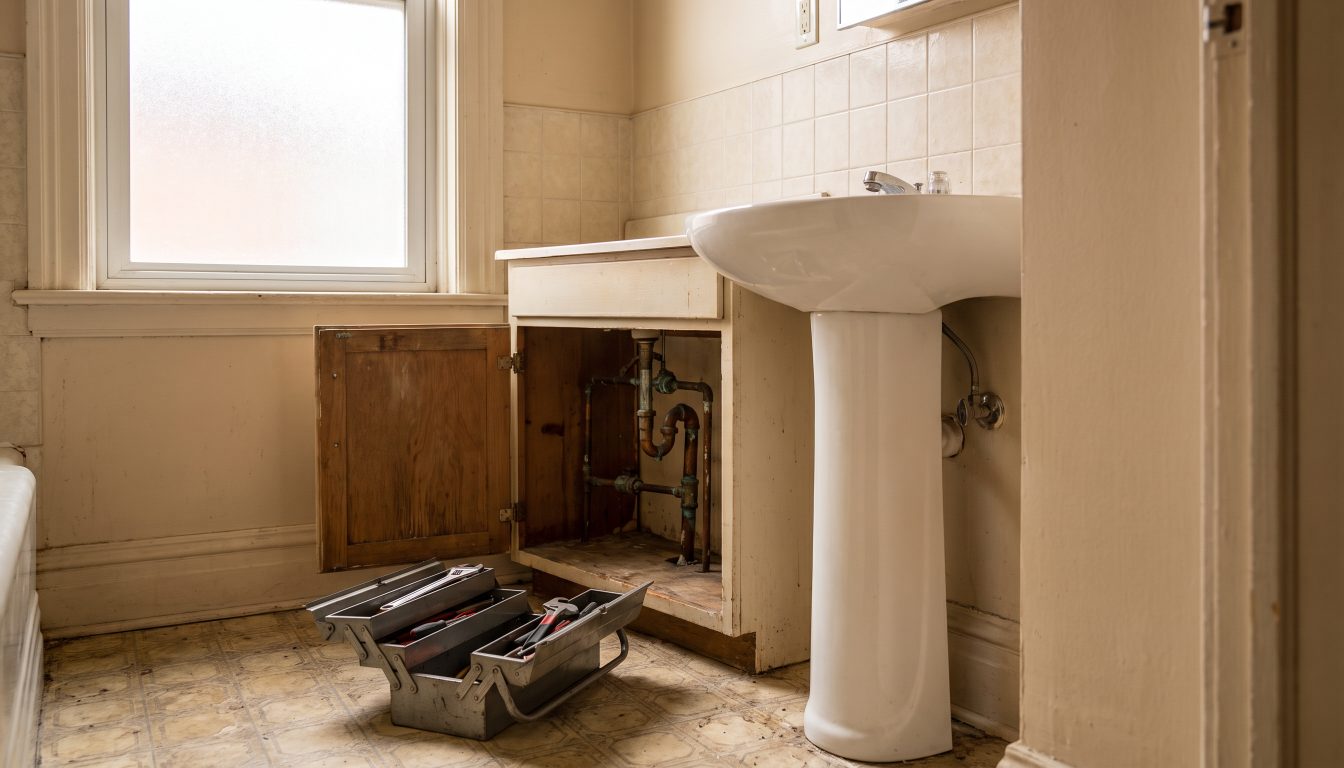
Usually not. In Ontario the landlord must keep the unit in good repair, even if you knew about the problem when you moved in, and a lease cannot shift that duty to you. You pay only for undue damage that you, someone living with you, or your guest caused on purpose or through carelessness. Breakdowns and normal use are the landlord’s cost.
This guide is for Ontario tenants who were handed a repair bill, and for landlords who want to know when they can fairly charge a tenant. You will get the rule from the Residential Tenancies Act, 2006 (RTA), how it applies to common problems like plumbing, why lease clauses rarely change the answer, and the right way for each side to recover money. It is general information as of November 2026. Confirm your own case with the Landlord and Tenant Board (LTB), a licensed paralegal or a lawyer.
Who pays for repairs in a rental in Ontario?
The landlord, in almost every case. Section 20 of the RTA makes the landlord responsible for keeping the building and every unit in a good state of repair, fit to live in, and up to health, safety, housing and maintenance standards. That duty applies even if you knew about the problem before you signed the lease.
The tenant has two narrower duties:
- Ordinary cleanliness of the unit, under section 33, unless the lease says the landlord cleans.
- Repairing undue damage that the tenant, another occupant, or a guest caused wilfully or through carelessness, under section 34.
So the question is never “who uses it?” or “who lives there?”. It is “what caused the problem?”. Age, normal use and breakdowns are the landlord’s cost. Damage caused on purpose or by careless conduct is the tenant’s.
Can a lease make the tenant pay for repairs?
Not for repairs that are the landlord’s job. Section 4 of the RTA says any lease term that conflicts with the Act is void. The Ontario government’s guide to the standard lease gives this exact example of a void extra term: one that requires the tenant to pay for all or part of repairs that are the landlord’s responsibility. Section 13 of the standard lease, which covers maintenance and repairs, cannot be changed.
The LTB’s Interpretation Guideline 5 says the same. If a tenant agreed in a lease to take on maintenance of any part of the unit or building, beyond ordinary cleanliness and damage, that promise is not enforceable at the Board.
One wrinkle in Toronto. The City’s renter page notes that if a lease makes the tenant responsible for maintaining part of a property, the City may hold the tenant responsible under its property standards bylaw, just like the owner. That is about City enforcement. It does not change who the LTB says must pay under the RTA. My guide to residential lease clauses covers which extra terms hold up.
Who pays for plumbing repairs in an Ontario rental?
Plumbing is where most disputes start, because the cause is not always obvious. The City of Toronto’s renter page names a clogged drain and leaking pipes as things the landlord must fix. The exception is a problem the landlord can show the tenant caused through careless or deliberate conduct.
| Problem | Usually paid by | Why |
|---|---|---|
| Leaking pipe, dripping tap, worn-out fixture | Landlord | Age and normal use fall under the landlord’s repair duty (s. 20) |
| Slow or clogged drain from normal use | Landlord | City of Toronto lists a clogged drain as a landlord repair |
| Toilet blocked by something a tenant or guest flushed | Tenant, if the landlord shows carelessness | Negligent conduct causing undue damage (s. 34) |
| Flood from a bathtub left running | Tenant, if the landlord shows carelessness | Negligent conduct causing undue damage (s. 34) |
| Landlord-supplied fridge or stove breaks down | Landlord | City of Toronto lists a broken refrigerator as a landlord repair |
| Mice or cockroaches | Landlord | City of Toronto says the landlord must remove pests; tenants must cooperate with treatment |
| Hole in a wall or broken window from a tenant’s party | Tenant | Wilful or careless damage by a tenant or guest (s. 34) |
Source: Residential Tenancies Act, 2006, ss. 20, 33 and 34; City of Toronto, Renter Rights & Landlord Information. Examples are general; the LTB decides each disputed case on its evidence.
Evidence decides it. LTB Guideline 5 says that when a landlord claims a repair was really the tenant’s responsibility, an LTB member decides it on the evidence. A plumber’s written note on what caused the blockage is often the most useful document either side can have.
What counts as undue damage by a tenant?
Damage beyond what normal living causes, done on purpose or through carelessness. Three points matter:
- Guests count. Section 34 covers damage by the tenant, anyone else living in the unit, and anyone the tenant lets into the building.
- Accidents are not automatically the tenant’s fault. The test is wilful or negligent conduct. A pipe that bursts from age is not negligence.
- Proof matters. The LTB’s brochure on ending a tenancy says a landlord using the faster 10-day notice for deliberate damage must prove it was wilful, or the application is dismissed.
Instant Home Valuation
What’s your home
worth today?
Answer six quick questions and get an instant value range built from current Toronto & GTA sale data — property type, size, condition, lot and location all weighted the way a real pricing conversation weighs them. Takes about ninety seconds.
Reading recent GTA sale data…
Building your estimate
Estimated market value
—
$0–$0
Most likely value $0 · roughly $0 per square foot
What moved the number
Starting from the area baseline for your property type, here’s what each answer added or subtracted.
Market context
Recent local averages for comparison.
—
A range is a starting point.
A strategy is what sells.
This model doesn’t know that your neighbour’s identical semi went $80,000 over asking last month, or which two upgrades actually pay back in your area. That conversation is free and takes twenty minutes.
Can a landlord take repair costs out of your deposit?
No. Section 105 says the only security deposit an Ontario landlord may collect is a rent deposit. Section 106 says it must be applied to the rent for the last rental period. The LTB’s new-tenant brochure says it cannot be used for any other reason, such as paying for damage. Damage deposits are not allowed at all.
A landlord who believes a former tenant caused damage has to claim it through the LTB. My post on recovering for tenant damage covers the forms and the deadline.
How does a landlord charge a tenant for damage they caused?
Through the LTB, not by sending a bill and threatening the tenant. The main routes are:
- N5 notice. For wilful or careless undue damage, the termination date must be at least 20 days after the notice for a first notice. The tenant can void it by repairing the damage or paying the reasonable cost within 7 days.
- N7 notice. For damage the landlord can prove was wilful, a 10-day notice applies, and it cannot be voided.
- Money claim. Section 89 lets a landlord ask the LTB to order a tenant to pay reasonable repair or replacement costs. File Form L2 while the tenant still lives there, or Form L10 within one year after they move out.
The landlord filing fee for an L2 or L10 is $201, or $186 through the Tribunals Ontario Portal. Tenants can dispute any of these at a hearing. My guide to the N5 notice and the 7 days that matter explains how voiding works.
What should a tenant do if asked to pay for a repair?
Do not pay on the spot, and do not ignore it. Ask the landlord in writing what broke, what they think caused it, and for a copy of any contractor’s invoice or report. If the problem came from age or normal use, reply in writing that section 20 makes it the landlord’s cost.
If you did cause the damage, paying a fair, documented amount often ends the matter. If you already paid a charge you believe was not owed, you may be able to ask the LTB to order it returned, as money collected in breach of the Act under section 135.
Do not hold back rent to force a repair or to protest a bill. The City of Toronto warns that withholding rent can lead to an eviction application. And since September 21, 2026, a tenant facing a hearing for unpaid rent who wants to raise repair problems must first pay half of the claimed arrears at least seven days before the hearing, under section 82 of the RTA and Regulation 516/06. Keep paying rent and use the proper route instead.
What if the landlord will not fix something?
Use the steps the City of Toronto lays out:
- Ask in writing. Describe the problem, include photos, and keep a copy with the date.
- Call 311 in Toronto. If the landlord does not act within a reasonable time, the City can investigate under its Property Standards Bylaw. Outside Toronto, contact your city’s bylaw office.
- Use RentSafeTO if it applies. In Toronto apartment buildings with three or more storeys and 10 or more units, landlords must respond to urgent requests, like no heat or water, within 24 hours and to other requests within seven days.
- File a T6 with the LTB. The fee is $53, or $48 through the portal, and you must apply within one year.
Under section 30, the LTB can order the work done, reduce your rent, pay you for damaged belongings, or authorize a repair and order the landlord to pay for it. Do not do the repair and deduct it from rent on your own. Let the Board authorize it. My T6 guide covers the evidence to gather.
Most of the repair fights I see between small landlords and tenants come down to one missing document: who said what caused the problem. Landlords, have your plumber or contractor write the cause on the invoice, and fix first, then claim if it was the tenant’s fault. Tenants, report problems early and in writing, because a small leak reported quickly is the landlord’s problem, while a large one you hid can become yours. Both sides should carry insurance. My guide to tenant insurance explains the liability part.
What to do next
- Find out the cause of the problem before anyone talks about money.
- Read your lease, but remember section 13 of the standard lease and the RTA override any term that shifts landlord repairs to you.
- Keep every request, photo and invoice in one folder.
- Use 311, RentSafeTO, an N5 or a T6, not rent withholding or surprise bills.
- Confirm your own case with the LTB, a community legal clinic or a licensed paralegal.
Need help with this? Talk to me.
I’m Jatin Dua, Broker of Record at RE/MAX Quantum Realty, and I’m the best agent to do this kind of work for you in Toronto and across the GTA. Over $100 million in GTA sales and 100+ families helped sell. Feel free to contact me any time: call or text 833-330-1925 or email [email protected].
Frequently asked questions
Can a landlord make you pay for repairs in Ontario?
Only for damage you caused. Under Ontario’s Residential Tenancies Act, the landlord must keep the unit in good repair even if you knew about problems when you moved in. A tenant pays only for undue damage caused wilfully or carelessly by the tenant, another occupant or a guest. Breakdowns from age and normal use are the landlord’s cost in 2026.
Who pays for plumbing repairs, the landlord or the tenant?
The landlord, unless the tenant caused the problem carelessly or on purpose. The City of Toronto lists clogged drains and leaking pipes as landlord repairs. Under section 34 of Ontario’s Residential Tenancies Act, a tenant pays only if they, an occupant or a guest caused undue damage, such as a blockage from something flushed. The LTB decides disputes on the evidence. This is the rule as of November 2026.
Is a lease clause making the tenant pay for repairs valid in Ontario?
No, not for repairs that are the landlord’s job. Ontario’s guide to the standard lease says an extra term requiring a tenant to pay all or part of the landlord’s repairs is void, and section 13 of the standard lease cannot be changed. The LTB’s Guideline 5 says such clauses are not enforceable beyond ordinary cleanliness and tenant-caused damage. That is the position in Ontario as of November 2026.
Can a landlord deduct damages from last month’s rent deposit in Ontario?
No. In Ontario the only deposit a landlord may hold is a rent deposit, and section 106 of the Residential Tenancies Act says it must be applied to the last month’s rent. It cannot be used to pay for damage. A landlord who wants repair costs must apply to the Landlord and Tenant Board, using Form L2 or L10. These rules are current as of November 2026.
Who pays for a broken appliance in a rental in Ontario?
The landlord, if the appliance came with the unit and broke from normal use or age. The City of Toronto lists a broken refrigerator as a landlord repair, and section 20 of Ontario’s Residential Tenancies Act covers everything the landlord supplies. A tenant pays only if they or a guest damaged it wilfully or carelessly, which the landlord must show. This reflects Ontario law as of November 2026.
Can I withhold rent until my landlord makes repairs in Ontario?
No, it is risky and can lead to eviction. The City of Toronto warns tenants not to withhold rent. Since September 21, 2026, an Ontario tenant facing a rent-arrears hearing must pay half the claimed arrears at least seven days before it to raise repair issues there. Use a written request, 311 in Toronto, or a T6 application instead.
How long does a landlord have to make repairs in Toronto?
A reasonable time, and faster in large apartment buildings. In Toronto buildings with three or more storeys and 10 or more units, RentSafeTO requires landlords to respond to urgent requests such as heat or water within 24 hours and other requests within seven days. Elsewhere, the LTB judges reasonableness by how serious the problem is and whether parts and contractors were available. This is the rule as of November 2026.
Can a landlord charge a tenant for pest control in Ontario?
Generally no. The City of Toronto says the landlord is responsible for getting rid of pests such as cockroaches and mice, and tenants must cooperate with the treatment plan. Under Ontario’s Residential Tenancies Act, a tenant could be liable only if the landlord proves the tenant wilfully or carelessly caused undue damage, which the LTB decides on the evidence. That is the position in Ontario as of November 2026.
What can a tenant do if the landlord won’t fix things in Ontario?
Ask in writing first, then escalate. In Toronto, call 311 so the City can investigate under its Property Standards Bylaw, or use RentSafeTO in larger apartment buildings. Anywhere in Ontario, file a T6 with the Landlord and Tenant Board within one year. The LTB can order repairs, reduce rent, or authorize a repair and make the landlord pay. These rules are current as of November 2026.
Sources
- Residential Tenancies Act, 2006 (e-Laws, consolidated from September 21, 2026)
- LTB Interpretation Guideline 5: Breach of Maintenance Obligations
- Government of Ontario: Guide to Ontario’s standard lease
- City of Toronto: Housing Property Standards
- City of Toronto: Renter Rights & Landlord Information
- LTB brochure: How a Landlord Can End a Tenancy
- LTB brochure: Information for New Tenants
- Tribunals Ontario: LTB forms, filing and fees
Related reading
- Can My Landlord Enter Without Notice in Ontario?
- Can a Landlord Evict You Without Going to the LTB in Ontario?
- Can My Landlord Raise the Rent Every Year in Ontario? 2027 Rules
- Can a Landlord Put Security Cameras in or Outside a Rental in Ontario?
About the author — Jatin Dua, Toronto and GTA real estate broker
I am Jatin Dua, Broker of Record and co-founder of RE/MAX Quantum Realty Inc., Brokerage, Unit 101, 799 The Queensway, Toronto. I work with buyers and sellers across Toronto and the GTA and have helped more than 100 families sell. Four-plus years of active GTA transactions and over $100 million in sales volume.
Reach me at [email protected] or 833-330-1925, or book a call.