
Published 2 November 2026 · By Jatin Dua, Broker of Record, RE/MAX Quantum Realty
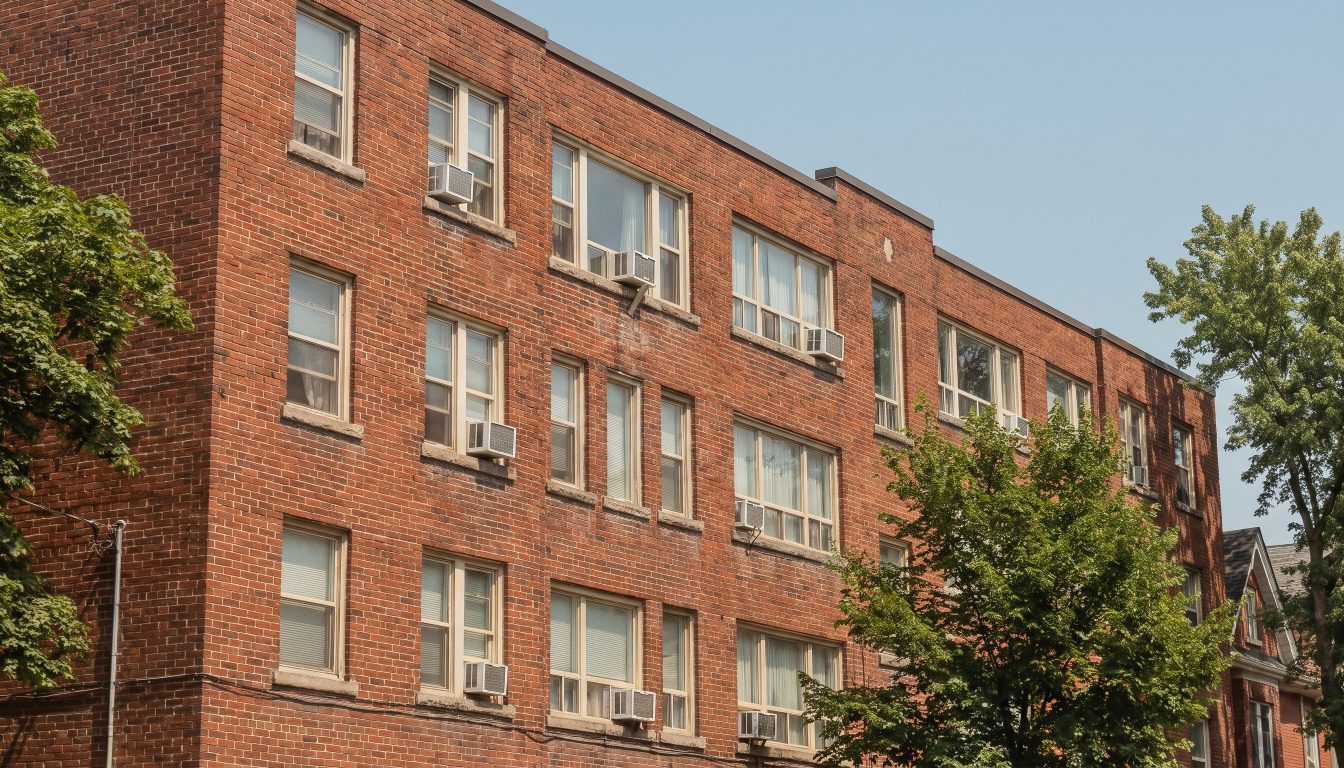
Yes. Since July 1, 2026, section 36.1 of Ontario’s Residential Tenancies Act lets a tenant install a window or portable air conditioner where the landlord does not supply one, even if the lease says no, as long as the tenant gives written notice and installs it safely without damage. If the landlord pays the hydro, they can add only the actual electricity cost, seasonally.
This guide is for Ontario tenants who want a window or portable air conditioner, and for landlords who want to know what they can still control. You will get the new rule that took effect on July 1, 2026, the conditions a tenant must meet, when a landlord can charge for the electricity, and what to do if the two sides disagree. It is general information as of November 2026, not legal advice.
Can a tenant install an air conditioner in Ontario?
Yes, in most rentals, since July 1, 2026. Section 36.1 of the Residential Tenancies Act, 2006 (RTA) now says a tenant may install and use a window or portable air conditioner in a unit where the landlord does not supply air conditioning, as long as the tenant meets the conditions in the Act. The section was added by the Helping Homebuyers, Protecting Tenants Act, 2023, and came into force on July 1, 2026.
The Landlord and Tenant Board (LTB) brochure on the new rule makes the key point plainly: a tenant who meets all the conditions can install their own unit even if the lease says air conditioners are not allowed or the landlord objects. A lease clause that tries to take this right away is void, because section 4 of the RTA voids any term that conflicts with the Act.
What the rule does not cover
- Central air, ductless split systems or heat pumps. The right covers window and portable units only. Ontario’s standard lease says a tenant needs the landlord’s permission for changes to the unit beyond decorative items.
- Units that already have landlord-supplied air conditioning. The right applies where the landlord does not supply it.
- Mobile home parks and land lease communities. Section 36.1 does not apply there.
What conditions must a tenant meet before installing an air conditioner?
Section 36.1(3) lists them. All of them must be met:
| Condition | What it means in practice |
|---|---|
| Written notice first | Tell the landlord in writing before you install. The LTB adds that you should say when you plan to use it, for example June to August, and tell them in writing when you remove it or stop using it. |
| Energy information, if the landlord pays hydro | Share whatever you have on the unit’s energy efficiency and how much you expect to run it. |
| No damage | The unit, its installation and its use must not damage the rental unit or the building. |
| Safe and secure | It must be installed safely and securely. |
| Follows local law | It cannot break a municipal property standards by-law or other law, and must be installed and maintained to meet them. |
Source: Residential Tenancies Act, 2006, s. 36.1 (in force July 1, 2026); LTB brochure “Rules for Air Conditioners in Rental Units”, July 2026.
The Act also allows the province to add more conditions by regulation. I did not find any added as of November 2026.
What if my air conditioner was already in before July 1, 2026?
The safety, damage and local-law conditions apply to it too. The written-notice and energy-information steps do not, according to section 36.1(12) and the LTB brochure. Sending your landlord a short note anyway costs nothing and avoids arguments later.
Can my landlord stop me from having an air conditioner?
Only in narrow cases. Section 36.1(2) lets a landlord prohibit an air conditioner in “prescribed circumstances”, meaning situations listed in a regulation. As of November 2026, the LTB brochure lists none, and I found none in the current version of Ontario Regulation 516/06. So a landlord’s personal dislike of window units is not enough.
Other rules can still limit what you install:
- Condo rules. Steps to Justice, the legal information site run by Community Legal Education Ontario, notes that condominium buildings may ban certain types of air conditioners. If you rent a condo unit, read the building’s rules before you buy.
- Municipal by-laws. Some cities restrict certain types or installations. Check your city’s property standards rules.
- Safety. A unit that is not secure, or that damages the building, does not meet the conditions, so the right does not protect it.
Can a landlord charge me for running an air conditioner?
Only if the landlord pays for your electricity under the lease. In that case section 36.1(5) lets the landlord raise the rent for an air conditioner installed on or after July 1, 2026. The limits are strict:
- Actual cost only. The increase cannot be more than the landlord’s actual cost of the electricity to run your unit. If that cannot be worked out, it must be a reasonable estimate based on the energy and usage information you gave.
- Seasonal. The rent must go back down by the same amount when you remove the unit or stop using it for the season. It can go up again when you start using it the next summer.
- No 90-day notice or 12-month wait. The LTB says the usual rent-increase rules, including notice on an LTB form and the 12-month rule, do not apply to this charge.
- Not if your lease says so. If the lease expressly lets you install a window or portable unit with no rent increase, the landlord cannot add one.
If you pay your own hydro, there is no rent increase at all. You simply pay the higher bill.
The LTB suggests that the landlord tell you the dates the rent will go up and down, and by how much. I recommend getting that in writing, with how the number was worked out.
Instant Home Valuation
What’s your home
worth today?
Answer six quick questions and get an instant value range built from current Toronto & GTA sale data — property type, size, condition, lot and location all weighted the way a real pricing conversation weighs them. Takes about ninety seconds.
Reading recent GTA sale data…
Building your estimate
Estimated market value
—
$0–$0
Most likely value $0 · roughly $0 per square foot
What moved the number
Starting from the area baseline for your property type, here’s what each answer added or subtracted.
Market context
Recent local averages for comparison.
—
A range is a starting point.
A strategy is what sells.
This model doesn’t know that your neighbour’s identical semi went $80,000 over asking last month, or which two upgrades actually pay back in your area. That conversation is free and takes twenty minutes.
How is the air conditioner electricity charge worked out?
The Act sets the cap, not a formula, so the landlord has to show the number is the actual cost or a reasonable estimate. A fair estimate usually multiplies three things:
- Power draw: the unit’s rated wattage from its label or specification sheet, converted to kilowatts.
- Hours of use: the tenant’s own estimate of daily or weekly use, which the tenant must share when the landlord pays hydro.
- Rate: the price per kilowatt-hour the landlord actually pays on the building’s electricity bill.
Kilowatts times hours gives kilowatt-hours; times the rate gives the monthly cost. A more efficient unit, or one run only on hot evenings, should cost less, and the charge should reflect that. If the building has a separate meter for your unit, the actual cost is easier to prove. If the landlord’s number looks far above what your unit could use, ask in writing how it was calculated before you pay it.
What should landlords put in writing about air conditioners?
Landlords keep the most control by being clear early. A short written policy, handed to every tenant, can cover:
- how to give the written notice the Act requires, and to whom;
- which brackets or supports are acceptable for window units, and where portable units should vent;
- how the landlord will inspect, with 24 hours’ written notice;
- if the landlord pays hydro, how the seasonal charge is calculated and when it starts and stops.
A policy cannot take the right away. Any lease term that conflicts with the Act is void. But it can make installations safer and charges easier to defend. My guide to residential lease clauses in Ontario explains which terms hold up.
Can my landlord inspect or remove my air conditioner?
A landlord can inspect it. Section 36.1(4) says a reasonable inspection to check for damage, safe installation and by-law compliance is a valid reason to enter. The LTB brochure says the landlord must give at least 24 hours’ written notice. My guide to when a landlord can enter covers the notice rules.
If the landlord says the unit is not secure, Steps to Justice suggests the tenant can hire a professional installer or let the landlord re-inspect after fixing it. A unit that is not safe or is causing damage does not meet the conditions in section 36.1(3).
Toronto apartments: window safety devices
The City of Toronto’s RentSafeTO FAQ (updated July 28, 2026) answers a common landlord objection. City by-laws require window safety devices that stop windows opening more than 10 centimetres, but the City says those by-laws do not prohibit air conditioners. A window unit or a portable unit that vents through a window may be acceptable if it is fitted tightly and keeps the same level of protection. If it leaves gaps, more safety measures may be needed.
The City also says that under its by-laws the property owner, not the tenant, is responsible for making sure units are installed and maintained safely. The City can order an owner to prove that a qualified tradesperson installed or checked a unit. There is no City by-law that lets an owner demand that proof from a tenant, unless the lease requires it.
Does a landlord have to provide air conditioning in Ontario?
No. Ontario law does not require a landlord to supply air conditioning. The new rule gives tenants the right to provide their own.
Where a landlord does supply it, the picture changes. In Toronto, Municipal Code Chapter 497 (replaced by By-law 1511-2025) requires an installed cooling system to be run from June 1 to September 30 to keep the indoor temperature at no more than 26°C. That rule applies only where air conditioning already exists. My guide to the Toronto heat and cooling bylaw explains the temperature rules in full.
A landlord can also offer air conditioning as an added service. Ontario’s standard lease guide gives a seasonal rent increase for air conditioning as an example of a service that both sides can agree to later.
The right protects safe installations only. A window unit that is held in by books, leans on a loose sill or drips onto a neighbour’s balcony can cause real damage and real liability. If something falls or water damages another unit, the cost can land on you. Use a proper bracket or a portable unit, and ask your insurer whether your tenant policy covers the risk.
What can a tenant do if the landlord refuses or overcharges?
The LTB brochure names the routes:
- Landlord refuses even though you met the conditions: file a T2, the Application About Tenant Rights. My guide to the T2 application explains the process.
- Air conditioner charge is too high, or was not removed when you stopped: file a T1 for a rebate of money owed. See my T1 guide.
- Tenant does not pay a lawful seasonal charge: the landlord can follow the usual process for unpaid rent.
Keep copies of your written notice, the energy label or specification sheet, photos of the installation and any messages about the charge. Those are what an adjudicator will want to see.
For landlords I work with across Toronto and the GTA, the smart move is to stop fighting this and write a simple one-page air conditioner policy: how to install, who checks it, and, if you pay hydro, how the seasonal charge is worked out. For tenants, a portable unit is often the easiest way to meet the safety conditions, especially in a high-rise. Either way, put everything in writing. Most disputes I see come from verbal “it’s fine” conversations that nobody remembers the same way.
What to do next
- Check whether your landlord supplies air conditioning or pays your electricity under the lease.
- If you rent a condo unit, read the condo’s rules on air conditioners before you buy one.
- Send your landlord written notice before you install, with the energy details and the months you plan to use it.
- Install it securely, keep photos, and give written notice when you remove it for the season.
- If you are refused or overcharged, contact the LTB or a community legal clinic about a T2 or T1.
Need help with this? Talk to me.
I’m Jatin Dua, Broker of Record at RE/MAX Quantum Realty, and I’m the best agent to do this kind of work for you in Toronto and across the GTA. Over $100 million in GTA sales and 100+ families helped sell. Feel free to contact me any time: call or text 833-330-1925 or email [email protected].
Frequently asked questions
Can my landlord stop me from having an air conditioner in Ontario?
Generally no, since July 1, 2026. Section 36.1 of the Residential Tenancies Act lets a tenant install a window or portable unit where the landlord does not supply air conditioning, even if the lease forbids it. A landlord may prohibit one only in circumstances set by regulation, and as of November 2026 the LTB’s brochure lists none. Condo rules and safety requirements can still limit what you install.
Can a landlord charge for an air conditioner in Ontario?
Only if the landlord pays your electricity. Under section 36.1 of Ontario’s Residential Tenancies Act, in force July 1, 2026, the landlord can raise the rent by no more than the actual cost of the electricity to run your unit, or a reasonable estimate. The increase is seasonal and must be reversed when you remove the unit or stop using it.
Do I need my landlord’s permission to install a window air conditioner in Ontario?
No, but you must tell the landlord in writing before you install it. Since July 1, 2026, Ontario tenants can install a window or portable unit without permission if the landlord does not supply air conditioning, and the unit is installed safely, causes no damage and follows local by-laws. If the landlord pays hydro, you must also share energy and usage details.
Does a landlord have to give 90 days’ notice for an air conditioner charge in Ontario?
No. The LTB says the usual rent-increase rules, including 90 days’ written notice on an LTB form and the 12-month wait between increases, do not apply to the seasonal air conditioner charge introduced on July 1, 2026. The charge is capped at the actual electricity cost and applies only to months when the unit is installed or in use.
Can I install central air or a mini-split in my Ontario rental?
Not without the landlord’s agreement. The 2026 rule in section 36.1 of the Residential Tenancies Act covers window and portable air conditioners only. Ontario’s standard lease says tenants need the landlord’s permission for changes to the unit beyond decorative items, and ductless or central systems involve permanent changes to walls, wiring and the building.
Can a condo ban air conditioners if I rent the unit?
It can restrict them. Steps to Justice notes that condominium buildings may ban certain types of air conditioners, and Ontario’s standard lease says a tenant in a condo agrees to follow the condo’s declaration, by-laws and rules. Before buying a unit in 2026 or 2027, ask your landlord for the condo rules and check which types are allowed.
Can a Toronto landlord make me hire a professional to install my air conditioner?
Not under City by-laws, unless your lease requires it. Toronto’s RentSafeTO FAQ, updated July 28, 2026, says the property owner is responsible under City by-laws for safe installation and may have to prove a qualified tradesperson checked a unit, but no City by-law lets an owner demand that proof from tenants. Your lease terms still matter.
Can my landlord enter to inspect my air conditioner?
Yes, with at least 24 hours’ written notice. Section 36.1 of Ontario’s Residential Tenancies Act makes a reasonable inspection of a tenant’s air conditioner a valid reason to enter, to check for damage, safe installation and by-law compliance. If the landlord finds a problem, you can fix it, hire a professional installer, or allow a re-inspection.
What if my landlord refuses my air conditioner in Ontario?
You can file a T2 application at the Landlord and Tenant Board. The LTB says a T2 is the route when a landlord refuses an air conditioner even though the tenant met every condition in section 36.1, in force since July 1, 2026. If you were overcharged for electricity, a T1 application for a rebate is the route instead.
Sources
- Residential Tenancies Act, 2006, s. 36.1 (e-Laws)
- Landlord and Tenant Board: Rules for Air Conditioners in Rental Units (July 2026)
- City of Toronto: RentSafeTO FAQs, Air Conditioning in Rental Units (July 28, 2026)
- Toronto Municipal Code Chapter 497, Indoor Temperature Standards
- Steps to Justice: Check if your landlord can stop you from having an air conditioner
- Government of Ontario: Guide to Ontario’s standard lease
- Region of Peel: Air conditioner rules for rental units (August 2026)
- O. Reg. 516/06 under the Residential Tenancies Act (e-Laws)
Related reading
- Can My Landlord Enter Without Notice in Ontario?
- Can a Landlord Evict You Without Going to the LTB in Ontario?
- Can My Landlord Raise the Rent Every Year in Ontario? 2027 Rules
- Can a Landlord Put Security Cameras in or Outside a Rental in Ontario?
About the author — Jatin Dua, Toronto and GTA real estate broker
I am Jatin Dua, Broker of Record and co-founder of RE/MAX Quantum Realty Inc., Brokerage, Unit 101, 799 The Queensway, Toronto. I work with buyers and sellers across Toronto and the GTA and have helped more than 100 families sell. Four-plus years of active GTA transactions and over $100 million in sales volume.
Reach me at [email protected] or 833-330-1925, or book a call.