
Published 2 November 2026 · By Jatin Dua, Broker of Record, RE/MAX Quantum Realty
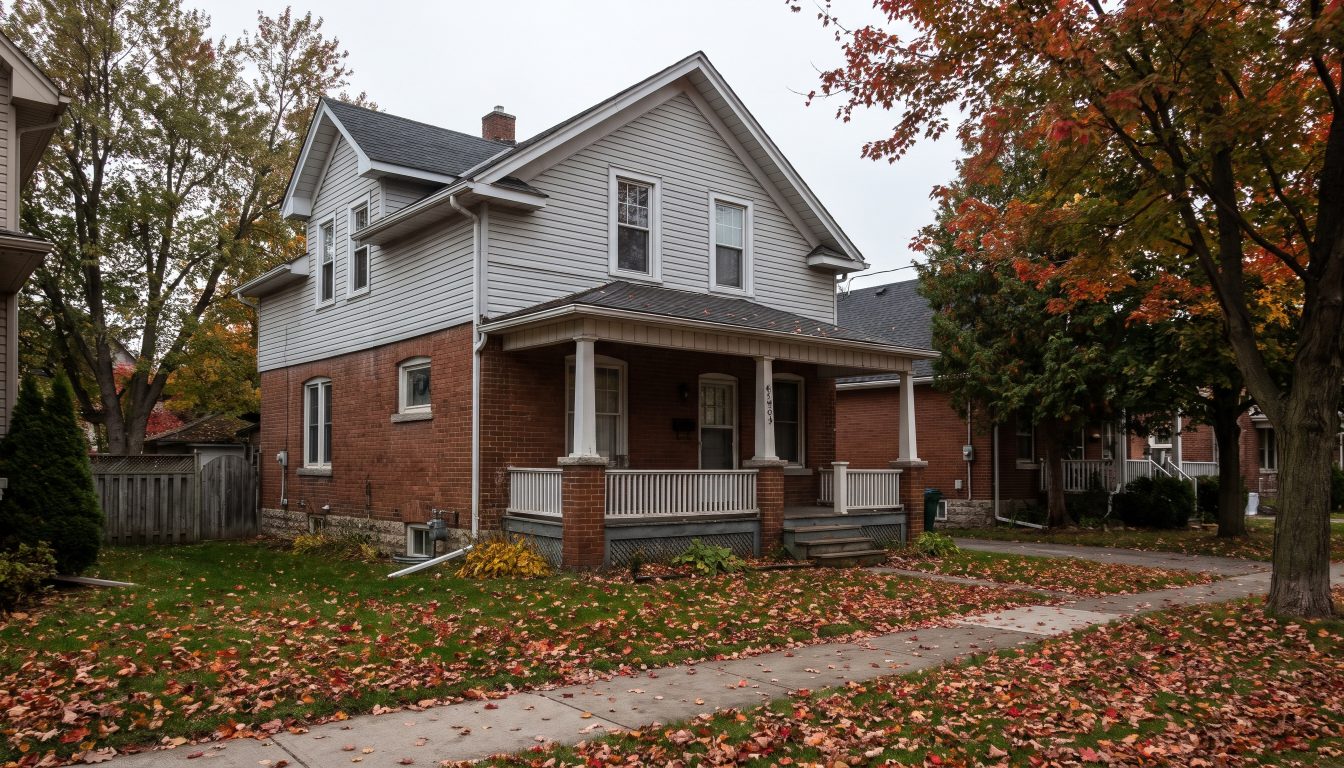
Yes. In Ontario you can legally sell a house for less than market value, including to family. But the CRA treats a sale to a related person as if you received full fair market value, while the buyer’s tax cost is only the price paid. Land transfer tax is based on the price actually paid plus any mortgage taken over.
This guide is for Ontario owners thinking about selling a house to a child, a sibling or another relative for less than it is worth, and for anyone wondering whether a cheap sale to a stranger is allowed. You will learn what the law allows, how the Canada Revenue Agency (CRA) taxes a below-market family sale, how land transfer tax works, and the paperwork to get right before you sign.
Is it legal to sell a house below market value in Ontario?
Yes. In Ontario you can agree to sell your own home for less than it could fetch on the open market, including to a family member. What changes is the tax, not whether the sale is allowed. The federal Income Tax Act and Ontario’s land transfer tax rules each treat a cheap family sale in their own way, and the two do not line up.
A few situations need extra care before you agree to a low price:
- You owe tax. If you owe the CRA money, a below-market transfer to a relative can make that relative liable for part of your tax debt. More on this below.
- You are selling as an executor. You are acting for the beneficiaries, not yourself. Read my guide for an executor selling a home in Ontario and speak to the estate lawyer first.
- You are married or separating. A matrimonial home has its own consent rules. See my guide to selling the matrimonial home in Ontario.
- The home is jointly owned. Every owner on title must agree to the sale and the price.
Everything below is general information. Tax and legal rules depend on your facts, so confirm your plan with an accountant and a real estate lawyer before you sign anything.
What does the CRA do when you sell a house to family below market value?
The CRA treats you as if you sold at full market value. Under paragraph 69(1)(b) of the Income Tax Act, if you sell property to someone you do not deal with “at arm’s length” for less than its fair market value, you are deemed to have received fair market value. The same rule applies if you give property away as a gift.
Two terms matter here:
- Fair market value is, in the CRA’s words, usually the highest price you could get in an open and unrestricted market between a willing buyer and a willing seller.
- Related persons include people connected by blood, marriage, common-law partnership or adoption. The CRA says related persons are not considered to deal with each other at arm’s length.
So if your home is worth $900,000 and you sell it to your daughter for $600,000, the CRA looks at the sale as if you received $900,000. Whether that creates any tax for you depends on whether the house was your principal residence.
Does the principal residence exemption still protect me?
Often, yes. If the house was your principal residence for every year you owned it, the gain is generally not taxable, even when the CRA uses the full market value. A principal residence can be a house, condo, cottage or other housing unit that you, your spouse or partner, or your children lived in during the year, and that you designate as your principal residence.
You still have to report the sale. Since the 2016 tax year, the CRA only allows the exemption if you report the disposition on Schedule 3 of your return and complete Form T2091(IND). Forgetting can mean a penalty.
The problem is bigger for a rental property, a second home or a cottage that you have not designated. Then the deemed full-value sale can create a large taxable capital gain on money you never received. My guide to capital gains tax when you sell a home in Ontario explains how the gain is worked out.
What happens to the buyer’s tax cost in a below-market family sale?
This is the trap most families miss. The rule that bumps your sale price up to market value does not bump up your relative’s cost. When you sell below market, the buyer’s cost for tax purposes is generally what they actually paid. If you give the home as a pure gift instead, paragraph 69(1)(c) says the person receiving it is treated as getting it at fair market value.
Here is an illustration. A parent bought a cottage for $400,000. It is now worth $900,000. It was never designated as a principal residence. The daughter will later sell it for $900,000.
| Option | Parent’s gain reported | Daughter’s tax cost | Daughter’s gain on a later $900,000 sale | Total gain taxed |
|---|---|---|---|---|
| Sell to daughter for $600,000 | $500,000 (deemed $900,000) | $600,000 | $300,000 | $800,000 |
| Sell to daughter at full $900,000 | $500,000 | $900,000 | $0 | $500,000 |
| Give it to daughter as a gift | $500,000 (deemed $900,000) | $900,000 | $0 | $500,000 |
Source: Income Tax Act, paragraphs 69(1)(b) and 69(1)(c); eCampusOntario, Tax and Tax Planning, section 6.9. Illustration only, before selling costs and any exemption; not tax advice.
In the first row, $300,000 of the same growth is taxed twice: once in the parent’s hands and again when the daughter sells. The only real growth was $500,000. If the daughter later lives in the home as her own principal residence, her later gain may be exempt, but that depends on her facts. Ask an accountant to run your numbers before you choose a price.
Instant Home Valuation
What’s your home
worth today?
Answer six quick questions and get an instant value range built from current Toronto & GTA sale data — property type, size, condition, lot and location all weighted the way a real pricing conversation weighs them. Takes about ninety seconds.
Reading recent GTA sale data…
Building your estimate
Estimated market value
—
$0–$0
Most likely value $0 · roughly $0 per square foot
What moved the number
Starting from the area baseline for your property type, here’s what each answer added or subtracted.
Market context
Recent local averages for comparison.
—
A range is a starting point.
A strategy is what sells.
This model doesn’t know that your neighbour’s identical semi went $80,000 over asking last month, or which two upgrades actually pay back in your area. That conversation is free and takes twenty minutes.
How much land transfer tax does a family sale pay in Ontario?
Ontario land transfer tax is based on what the buyer actually gives, not on market value. The province calls this the value of the consideration. It includes the price paid plus any mortgage or other debt the buyer takes over. Ontario says assumed debts count “regardless of the relationship between the parties”. Fair market value is only used in special cases, such as transfers from a corporation to its shareholder or very long leases.
The buyer pays the tax when the deal closes. Using the cottage example above, outside Toronto:
| How the home moves to the daughter | Value the tax is based on | Ontario land transfer tax |
|---|---|---|
| Sale for $600,000 | $600,000 | $8,475 |
| Sale at full $900,000 | $900,000 | $14,475 |
| Gift, no mortgage | Nil | $0 |
| Gift, daughter takes over a $300,000 mortgage | $300,000 | $2,975 |
Source: Ontario Ministry of Finance, Calculating Land Transfer Tax and Transactions for Nominal Consideration. My calculations for a home with one single-family residence.
Inside the City of Toronto, the buyer also pays Toronto’s municipal land transfer tax, which uses similar rate brackets. Some transfers between spouses or former spouses are exempt, for example under a written separation agreement or a court order. Ontario also has a general anti-avoidance rule, so a deal built only to cut land transfer tax can be challenged. Have the lawyer confirm the tax before closing.
Is it better to gift the house than to sell it cheap?
From a pure tax view, a below-market sale is often the worst of the three choices in the table, because it can tax the same growth twice. A full-price sale or an outright gift usually avoids that. But tax is not the only issue.
- A full-price sale keeps the tax clean. Some parents then help with cash separately. My guide on giving your children money from the house sale covers gifts and loans.
- A gift avoids land transfer tax if no mortgage moves, but you give up the money, and the gift is final.
- A below-market sale may still suit a family that needs some cash for the parent and accepts the tax cost. Go in with eyes open.
If you plan to buy with family rather than sell to them, read my guide to buying a home with family in Ontario.
If you owe tax, a below-market transfer can pass your debt to your relative. Under subsection 160(1) of the Income Tax Act, when you transfer property to a spouse, a person under 18 or anyone you do not deal with at arm’s length for less than its value, they can be held jointly liable for your unpaid tax, up to the amount of the discount. Clear any tax owing first, and ask an accountant to check.
Can I sell my house below market value to a stranger?
Yes. You can accept any price you agree to with an unrelated buyer. The deemed fair-market-value rule in paragraph 69(1)(b) is aimed at sales to people you do not deal with at arm’s length and at gifts. In a normal open-market sale between strangers, the price you accept is usually strong evidence of the market value.
The real risk with a stranger is leaving money on the table. Sellers sometimes price low for a fast sale and then get one offer at that price. If you want speed, price close to the market and make the home easy to buy instead. My guide on pricing your home to sell shows how.
What paperwork do you need for a below-market family sale?
- A written appraisal or opinion of value dated close to the sale, so you can show the CRA what fair market value was.
- A lawyer for each side. The seller and buyer have different interests even inside a family.
- The land transfer tax affidavit. It records the consideration, any debts taken over and the relationship between the parties and the reason for the transfer.
- Your tax return. Report the sale on Schedule 3 and Form T2091(IND) if you claim the principal residence exemption.
- Lender approval. If your relative needs a mortgage, speak to the lender early. Lenders have their own rules for family sales.
When families ask me about a “family price”, I suggest they start with the true market value in writing, then decide how much help to give and in what form. That one step makes the accountant’s and lawyer’s jobs easier and avoids arguments later, especially when there are other children who expect to be treated fairly.
What to do next
- Get a written opinion of your home’s current market value.
- Confirm with an accountant whether the home qualifies as your principal residence for every year you owned it.
- Ask the accountant to compare a full-price sale, a gift and a below-market sale for both you and the buyer.
- Have a real estate lawyer confirm the land transfer tax and any spousal or estate issues.
- Clear any tax you owe before the transfer closes.
Need help with this? Talk to me.
I’m Jatin Dua, Broker of Record at RE/MAX Quantum Realty, and I’m the best agent to do this kind of work for you in Toronto and across the GTA. Over $100 million in GTA sales and 100+ families helped sell. Feel free to contact me any time: call or text 833-330-1925 or email [email protected].
Frequently asked questions
Is it legal to sell a house for less than market value in Ontario?
Yes. In Ontario you can legally sell your house for less than market value, including to a family member. The sale is allowed, but the tax changes: the CRA treats a below-market sale to a related person as if you received full fair market value. Confirm your plan with an accountant and a real estate lawyer before you sign, as of 2026.
Can I sell my house to my son for $1 in Canada?
You can, but the CRA will treat it as a sale at full fair market value under paragraph 69(1)(b) of the Income Tax Act, and your son’s tax cost will generally be only $1. That can tax the same growth twice. If the home was your principal residence every year, your own gain may be exempt. Ask an accountant first.
Do I pay capital gains if I sell my house to a family member below market value?
Only if the gain is not covered by the principal residence exemption. The CRA deems you to have sold at fair market value, so a rental or cottage can create a taxable gain on money you never received. If the home was your principal residence every year you owned it, the gain is generally exempt, but you must still report the sale. Confirm with an accountant.
What is the fair market value of a house for CRA purposes?
Fair market value is usually the highest price a property would get in an open and unrestricted market between a willing buyer and a willing seller, according to the CRA. For a family sale in Ontario, a dated written appraisal or a broker’s opinion of value is the best way to show what that figure was on the day you sold.
Who counts as a related person under CRA rules?
The CRA says related persons include individuals connected by blood, marriage, common-law partnership or adoption, such as parents, children, siblings and spouses. Related persons are treated as not dealing at arm’s length. That means the fair-market-value rules for property sales apply when you sell your Ontario home to any of them for less than it is worth.
Is land transfer tax charged on market value when selling to family in Ontario?
No. Ontario land transfer tax is based on the value of the consideration, meaning the price paid plus any mortgage or debt the buyer takes over, whatever the relationship. On a $600,000 family sale of a $900,000 home outside Toronto, the buyer pays $8,475, not $14,475. A gift with no mortgage attached pays no land transfer tax.
Can my child be liable for my tax debt if I sell them my house cheap?
Yes. Under subsection 160(1) of the Income Tax Act, if you transfer property to a non-arm’s length person, such as your child, for less than its value, they can be held jointly liable for your unpaid tax up to the amount of the discount. Pay off any tax you owe before the transfer, and confirm with an accountant.
Is it better to gift a house or sell it below market value to family?
For tax, a gift or a full-price sale is usually better than a below-market sale. With a gift, the CRA treats your child as acquiring the home at fair market value, which avoids double tax. With a cheap sale, your child’s tax cost is only the price paid. Have an accountant compare all three options for your family.
Can I sell my house to a stranger for less than it is worth?
Yes. In Ontario you can accept any price you agree to with an unrelated buyer, and the CRA’s deemed fair-market-value rule for non-arm’s length sales does not apply to a normal open-market sale. The bigger risk is financial: pricing too low can cost you money. Get a written market evaluation before you accept a low offer.
Sources
- Income Tax Act, section 69 (Justice Laws Website)
- Income Tax Act, section 160 (Justice Laws Website)
- CRA Guide T4037: Capital Gains (definitions of fair market value, arm’s length and related persons)
- CRA: Principal residence and other real estate
- Ontario Ministry of Finance: Land transfer tax
- Ontario Ministry of Finance: Transactions for nominal consideration
- Ontario Ministry of Finance: Calculating land transfer tax
- eCampusOntario, Tax and Tax Planning: What is a non-arm’s length transaction?
Related reading
- Seller Closing Costs in Ontario for 2027: Every Fee Before You Get Paid
- How to Sell a House in Toronto, Step by Step (2027)
- Closing Costs on a New Build in Ontario: What Builders Add
- How Much Is My House Worth in Caledon? (2027)
About the author — Jatin Dua, Toronto and GTA real estate broker
I am Jatin Dua, Broker of Record and co-founder of RE/MAX Quantum Realty Inc., Brokerage, Unit 101, 799 The Queensway, Toronto. I work with buyers and sellers across Toronto and the GTA and have helped more than 100 families sell. Four-plus years of active GTA transactions and over $100 million in sales volume.
Reach me at [email protected] or 833-330-1925, or book a call.