

Published 29 September 2026 · By Jatin Dua, Broker of Record, RE/MAX Quantum Realty
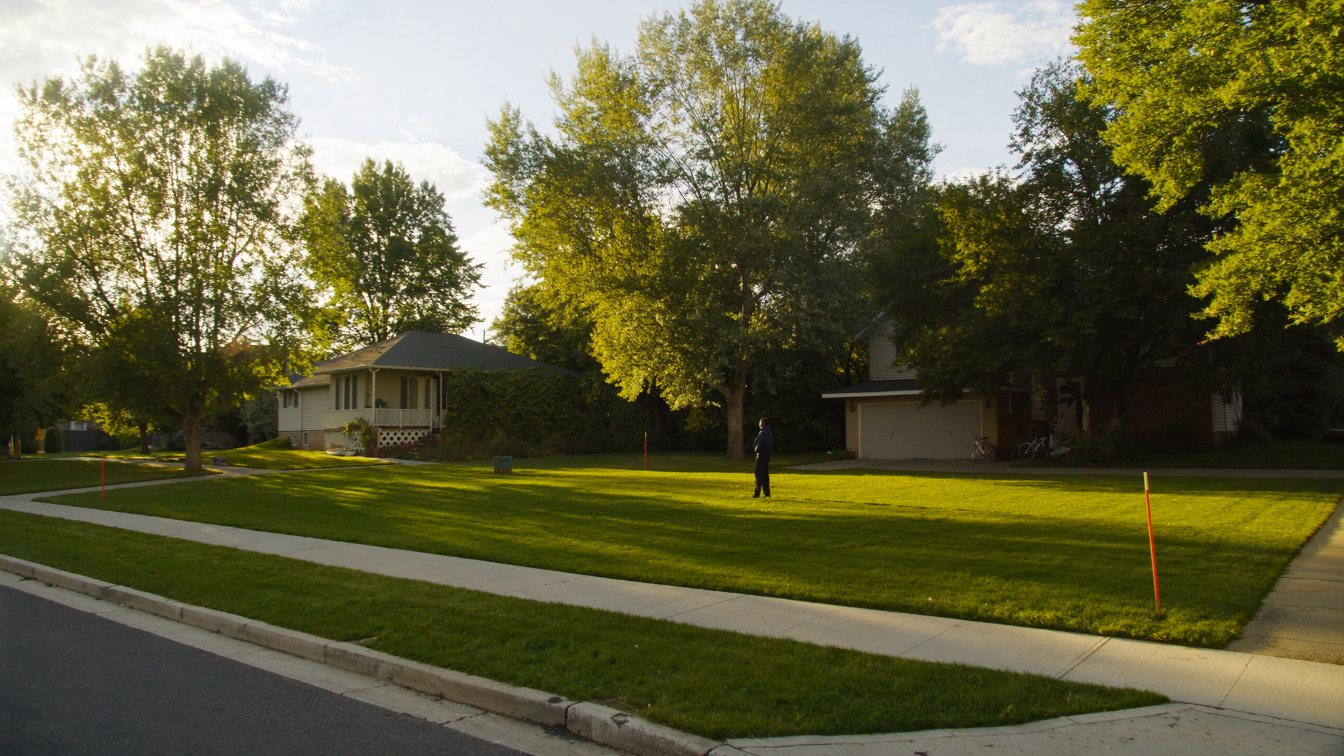
Buy a vacant lot in the GTA in this order: confirm the official plan designation and zoning allow the house you want, confirm water, sewer, hydro and legal road access, check conservation authority, Greenbelt and Oak Ridges Moraine limits, then write an offer with a due-diligence condition long enough to get answers in writing. Budget for Ontario land transfer tax (on a $900,000 lot it is $14,475, my arithmetic from the published brackets), plus Toronto’s municipal tax if the lot is in Toronto. A sale of vacant land by an individual is usually HST-exempt; a sale by a builder or corporation usually is not. When you build, development charges apply: a new single house in Mississauga carries $139,019.54 in city, regional and school board charges for permits after 1 August 2026.
Start with what you want to build, not the lot
A vacant lot is only worth what the rules let you put on it. Before you look at listings, write down the house or building you want, its rough size, and whether you want a second unit or a garden suite. Then every lot you see gets one question: can I build that here, and what will it cost to get there?
In the GTA the answer changes street by street. The same frontage can carry a detached house in one zone and a fourplex in another. A lot beside a creek can lose much of its buildable area to a conservation setback. When I walk a vacant lot with a buyer, I spend more time on the zoning map than on the lot itself.
If you are buying an existing house to knock down, read buying a teardown to build in Toronto instead; the tax and permit picture is different.
Step 1: the official plan and the zoning by-law
Ontario’s Planning Act works in two layers. The municipality’s official plan sets the general land use. The zoning by-law puts it into effect with enforceable rules: the permitted uses, minimum lot size and frontage, parking, height, density and setbacks. The Province’s citizen’s guide is blunt about the consequence: construction that does not comply with the zoning by-law is not allowed, and the municipality will refuse the building permit.
Check four things on the municipal zoning map for every lot:
- The zone and its exceptions. A site-specific exception can add or remove permissions.
- A holding symbol (H). A holding by-law allows the future use but delays development until something is in place, often roads or services. Lifting it is a separate application; in Toronto the 2026 fee is $51,255.18.
- An interim control by-law. This freezes some uses while the municipality studies an area, for up to a year plus one more year.
- Lot frontage and area. If the lot is smaller than the zone minimum, you may need a minor variance before you can build.
For a deeper checklist, see what to check before buying land in Ontario.
Step 2: services and access
An urban lot needs municipal water, a sanitary sewer connection, storm drainage, hydro and frontage on an open public road. Ask the seller for anything they have in writing, then confirm with the municipality. If services stop short of the lot, get an engineer’s quote to extend them.
A rural lot will usually need a private septic system and a drilled or dug well. Septic systems of 10,000 litres a day or less are governed by Part 8 of the Ontario Building Code and need a permit before construction; the size depends on the soil and the daily design flow. Wells must be built by a licensed well contractor. Our guide to septic and wells on rural lots covers the tests to order.
Step 3: conservation authority, Greenbelt and Moraine limits
Much of the GTA’s remaining vacant land sits near water or inside provincial plans. Three layers can reduce or remove what you can build:
- Conservation authority regulation. Since 1 April 2024, Ontario Regulation 41/24 sets the regulated areas: hazardous lands, watercourses with a defined bed and banks, shorelines, wetlands and 30 metres around wetlands. Development there needs a conservation authority permit. See conservation authority regulated land (TRCA and CVC).
- The Greenbelt. In the Protected Countryside a single dwelling is permitted on an existing lot of record if it was zoned for one when the Greenbelt Plan came into force, and new lots are discouraged.
- The Oak Ridges Moraine. Outside the Moraine’s Settlement Areas, new lot creation is very restricted.
If a lot is inside either plan, read Greenbelt and Oak Ridges Moraine land: what you can build before you offer.
Step 4: the conditions to write into your offer
Vacant land needs more conditions than a resale house. The ones I use most often are:
- Due diligence (or “satisfactory investigation”). Long enough to get written answers from the municipality, the conservation authority and your designer.
- Survey. A current surveyor’s real property report shows boundaries, easements and encroachments. See encroachments and possessory claims.
- Environmental. If the lot was ever commercial or industrial, a Phase One environmental site assessment. Changing a former factory or dry-cleaner site to houses requires a record of site condition filed in Ontario’s Environmental Site Registry before the new use.
- Financing. Lenders treat vacant land differently from a house; get your lender’s terms in writing before you waive.
- Soil and servicing. Geotechnical testing for foundations, and percolation tests for a septic bed on rural land.
Your lawyer drafts the wording; I make sure the timelines fit the answers you need.
Step 5: price it from land sales, not house sales
Vacant land is priced on what it can become. A builder works backwards from the finished value of the house, less construction cost, fees, charges, financing and profit; what is left is what the land can carry. That is why two lots of the same size can sell far apart. The usual drivers are frontage, depth and shape, zoning, services, trees and slope, conservation limits, and the street’s finished home values.
Comparable land sales are thin in most GTA neighbourhoods, so I also look at sales of houses bought as teardowns on the same streets. Our explainer how much is my land worth sets out the method in more detail.
The AI land value estimator below gives you a range for a lot or acreage in about a minute, from the same inputs a buyer’s appraiser starts with.
Step 6: the closing costs specific to land
| Cost | What the published rule says | Worked example (my arithmetic) |
|---|---|---|
| Ontario land transfer tax | 0.5% to $55,000; 1% to $250,000; 1.5% to $400,000; 2% above. The extra 2.5% bracket over $2 million applies only where the land contains one or two single family residences. | $900,000 lot: $14,475. $2,500,000 vacant lot: $46,475, against $48,975 if the same price bought a house. |
| Toronto municipal land transfer tax | Charged in Toronto only, on top of the provincial tax. | Use the land transfer tax calculator. |
| HST | Most sales of vacant land by individuals are exempt. Land sold in the course of a business, land used primarily in a business, and lots from a parcel subdivided into more than two parts are generally taxable. | At Ontario’s 13% rate, HST on a taxable $900,000 lot would be $117,000. |
| Property tax | MPAC codes vacant residential land as property code 100. 2026 taxes are still based on 1 January 2016 values. | Ask the seller for the latest tax bill. |
HST is where buyers get caught. If the seller is a builder or a corporation, ask your lawyer to settle in the agreement whether the price includes HST. Our guide to HST on land sales in Ontario walks through the CRA rules.
Step 7: budget for what happens after closing
The purchase price is not the cost of the lot. Before a shovel goes in you will pay for design, a zoning review, any minor variance, permits and, for a new unit, development charges. Committee of Adjustment fees for a minor variance on a house of three units or fewer are $5,011.08 in Toronto and $1,361 in Mississauga’s low and medium density residential zones for 2026.
Development charges are the largest item. For building permits from 1 August 2026, a new single or semi-detached house in Mississauga carries $139,019.54 (city, Region of Peel and both school boards), and in Brampton $155,650.32. Toronto’s current schedule, effective 26 June 2025, lists $137,846 for a single or semi before education charges. See development charges in the GTA. If you are replacing an existing house, a redevelopment credit may reduce this; confirm with the municipality in writing.
If you want a second opinion on a lot before you offer, book a call or phone 833-330-1925.
Free tool — AI land value estimator
Land Valuation
What’s your land
worth today?
Three quick steps. Land doesn’t price like a house — what you’re allowed to build on it, how far along the approvals are, and whether services reach the lot line move the number more than anything else. This weighs all of them.
Reading recent land sales…
Estimated land value
—
$0–$0
Most likely $0 · about $0 per acre · $0 per buildable sq ft
What moved the number
Starting from what comparable land in your municipality trades for, here’s what your specifics added or subtracted.
What would raise it
Approvals are the biggest lever on land. Here is what each next step is worth on this parcel.
—
Development sites are listed at $1
for a reason.
Sellers let the market price them — and the market only pays for what it can see: the planning file, the servicing letter, the environmental reports. A model can’t read your file. I can, and I know which developers are buying right now.
Frequently asked questions
Is it a good idea to buy a vacant lot in the GTA?
It can be, if you have confirmed the zoning, services and conservation limits before you commit. Vacant land has fewer comparable sales than houses, lenders treat it differently, and you pay development charges when you build. A lot that looks cheap is often cheap because of a setback, a missing service or a holding symbol. Put a due-diligence condition in your offer and use it.
Do you pay HST on vacant land in Ontario?
Usually not when the seller is an individual who held the land personally. The CRA says most sales of vacant land by individuals are exempt. HST at 13% generally applies when the seller is in the business of selling land, used the land primarily in a business, or created the lot by subdividing a parcel into more than two parts. Corporate sellers are usually taxable. Confirm with your lawyer before you sign.
How much is land transfer tax on a vacant lot in Ontario?
The provincial brackets are 0.5% up to $55,000, 1% to $250,000, 1.5% to $400,000 and 2% above that. The extra 2.5% bracket over $2 million applies only when the land has one or two single family residences, so a vacant lot above $2 million is taxed at 2% on the excess. On a $900,000 lot the provincial tax is $14,475. Toronto adds its own municipal tax.
Can I build a house on any vacant lot?
No. The zoning must permit a dwelling, the lot must meet or be varied to the minimum frontage and area, and it needs services and access. A holding symbol, an interim control by-law, conservation authority regulation or Greenbelt and Oak Ridges Moraine policies can each delay or prevent a house. Get written confirmation from the municipality during your conditional period.
What conditions should I put in an offer on land?
The common ones are a due-diligence condition, a survey, an environmental condition for any former commercial or industrial site, financing, and geotechnical or percolation testing where relevant. Make the conditional period long enough to hear back from the municipality and the conservation authority. Your lawyer should draft the wording; your agent should make sure the dates are realistic.
Sources
- Government of Ontario — Citizen's guide to land use planning: zoning by-laws — rezoning, minor variances, additional residential units, site plan control
- Hamilton Conservation Authority — Conservation Authorities Act and new O. Reg. 41/24 — in effect 1 April 2024
- Government of Ontario — Greenbelt Plan (2017), PDF — sections 3.2.5, 4.5 and 4.6
- Government of Ontario — Oak Ridges Moraine Conservation Plan — four designations, O. Reg. 140/02
- Government of Ontario — Brownfields redevelopment and records of site condition — O. Reg. 153/04
- Government of Ontario — Calculating land transfer tax — provincial brackets
- Canada Revenue Agency — GST/HST Info Sheet GI-003, Sales of vacant land by individuals
- Canada Revenue Agency — GST/HST rates — Ontario 13%
- City of Mississauga — Development charge rates, 1 August 2026 to 31 January 2027 — City, Region of Peel and school boards
- City of Brampton — Development charges as of 1 August 2026 — effective until 31 January 2027
- City of Toronto — Development charge rates effective June 26, 2025 — the schedule the City lists as current
- City of Toronto — Committee of Adjustment forms, submission guidelines and fees — fees effective 1 January 2026
Related reading
- What to check before buying land in Ontario
- Development charges in the GTA: what land buyers pay
- HST on land sales in Ontario
- How much is my land worth?
- Conservation authority regulated land
- Lot severance in Ontario: cost and process
- Land transfer tax calculator
About the author — Jatin Dua, Toronto and GTA real estate broker
I am Jatin Dua, Broker of Record and co-founder of RE/MAX Quantum Realty Inc., Brokerage, Unit 101, 799 The Queensway, Toronto. I work with buyers and sellers across Toronto and the GTA and have helped more than 100 families sell. Four-plus years of active GTA transactions and over $100 million in sales volume. Every figure here comes from a published table, regulator or statute linked in the sources, so you can check all of it without asking me.
Reach me at connect@jatindua.com or 833-330-1925, or book a call.