

Published 10 September 2026 · By Jatin Dua, Broker of Record, RE/MAX Quantum Realty
What's Your Home Worth Right Now?
Get a free AI-powered price range for your property in under 90 seconds, based on recent GTA comparable sales. No name or address required.
Get My Free Estimate →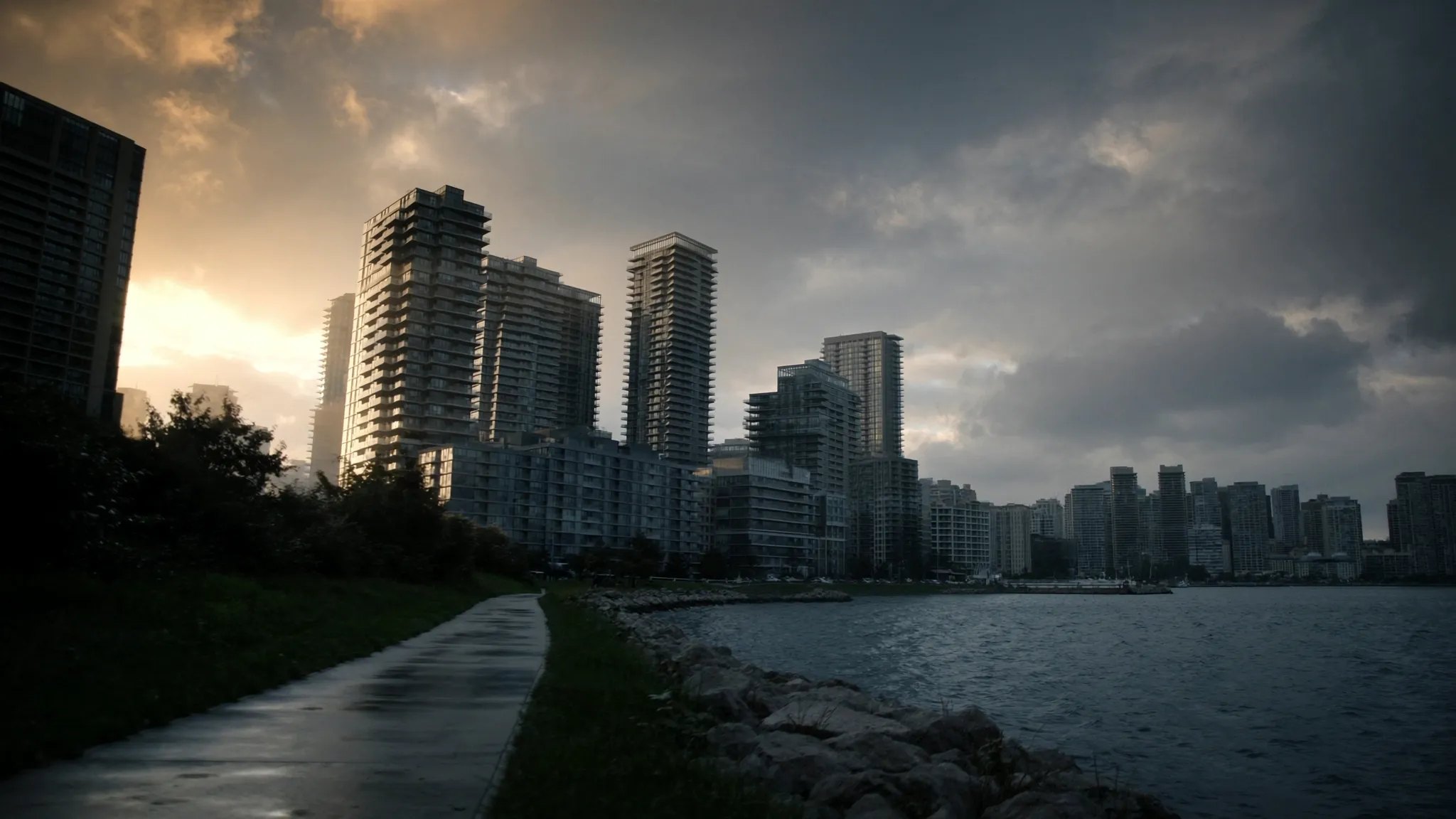
Etobicoke is not one place. It is the whole former borough — roughly from the Humber River west to Mississauga and from the lake north to Steeles — and it contains seven distinct districts with different housing stock, transit, price levels and daily rhythms. It is part of the City of Toronto, so both land transfer taxes apply on a purchase here. Choosing the right district matters more than choosing the right house, because you cannot renovate a location.
The seven districts
1. Mimico, New Toronto and Long Branch — the lakeshore villages
Pre-amalgamation town grids on small lots, houses from the 1910s to the 1950s, and Lake Shore Boulevard West as a genuine main street with an established restaurant and retail strip. Mimico GO on the Lakeshore West line is the strongest commuter feature in the west end. Expect older building systems, narrow frontages, and a mix that changes house by house rather than street by street. Substantial rebuild activity throughout.
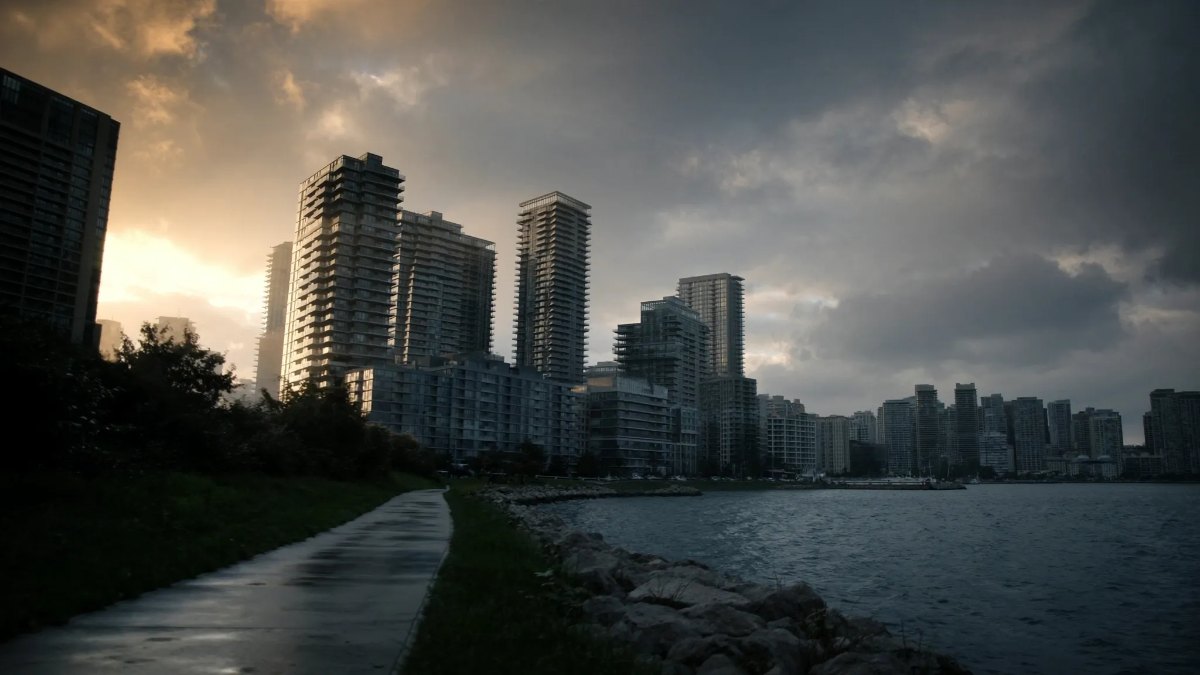
2. Humber Bay Shores — the waterfront towers
A dense cluster of newer glass towers on reclaimed land between the Gardiner and the lake. Lake and skyline views, extensive amenities, the best public waterfront in the west end, and correspondingly high fees. Within a single tower, exposure, floor and view protection can move price by six figures on identical square footage. Lake Shore congestion at peak is the daily reality.
3. The Queensway and Stonegate — the practical corridor
Mid-rise condominium development from roughly 2015 onward along a busy arterial, with groceries, restaurants, gyms, services and big-box retail at street level, and quick access to both the Gardiner and Highway 427. Behind the arterial, Stonegate is a settled residential pocket of post-war houses. Fees are lower and square footage per dollar is generally better than the waterfront; the trade-off is the road.
4. The Kingsway, Sunnylea and Old Mill — the established houses
The 1920s and 1930s planned garden suburb and its neighbours, between Bloor Street West, the Humber valley and Royal York Road. Tudor Revival and Georgian houses, mature canopy, generous setbacks, and Royal York and Old Mill subway stations at the edge. Consistently among the most expensive west-end house markets. Original houses carry original wiring, plumbing and drains.
5. Islington City Centre and Six Points — the civic node
Etobicoke’s designated downtown: office towers, the civic centre, and two Line 2 stations at Islington and Kipling, with Kipling adding GO, UP Express and a major bus terminal. The Six Points interchange was reconfigured into a conventional street grid, freeing developable land, so this is an area still visibly changing. Both 1970s corporations with large suites and new towers with modern fees.
6. Markland Wood, Eringate and Etobicoke Centre — the planned suburbs
Post-war and 1960s planned residential, wider lots, side-splits and bungalows, a golf course, and a cluster of 1970s townhouse and apartment corporations with unusually large suites. Quiet, car-oriented, and among the best value in Etobicoke for space. Highway 427 and the airport are close.
7. Rexdale, West Humber and Richview — the north
North Etobicoke, from Eglinton up to Steeles. Post-war bungalows, some of Etobicoke’s earliest condominium corporations, industrial and employment lands, and the most affordable entry points in the borough. Airport-adjacent, with the practical advantages and the noise that implies depending on the approach. Line 6 Finch West and the Eglinton Crosstown affect the north and the centre respectively.
Thinking about buying or selling here?
I work this area every week and I will give you a straight answer, including when the answer is to wait. No pressure, and no drip campaign you cannot get out of.
Call or text 833-330-1925 Send me a message
Jatin Dua, Broker of Record — RE/MAX Quantum Realty Inc., Brokerage. Not intended to solicit buyers or sellers currently under contract with another brokerage.
Choosing between them
| If you want | Look at |
|---|---|
| The best downtown commute | Mimico GO, or Islington and Kipling on Line 2 |
| Water and views | Humber Bay Shores |
| Walkable errands and highway access | The Queensway |
| Architecture and canopy | The Kingsway, Sunnylea, Old Mill |
| Maximum square footage per dollar | Markland Wood, Eringate, Rexdale |
| Subway plus a changing node | Islington City Centre |
| Airport proximity | Rexdale, Richview, Etobicoke Centre |
| A pre-war village feel | Mimico, New Toronto, Long Branch |
Getting around, honestly
- Line 2 subway runs along Bloor Street West with Royal York, Old Mill, Islington and Kipling serving south-central Etobicoke. North of Dundas, there is no subway.
- GO Transit serves the Lakeshore West line at Mimico and Long Branch — the fastest route downtown for many residents.
- Driving is genuinely good by Toronto standards: the Gardiner, Highway 427, Highway 401 and Highway 27 all serve the borough, and Pearson is close.
- Cycling along the waterfront is excellent; north–south cycling across arterials is a different experience.
- Walking varies enormously. The lakeshore villages and the Queensway are walkable; the planned suburbs are not, and were not designed to be.
What it costs
TRREB reported an average Etobicoke sale price of $1,049,793 across 243 sales in August 2026 across all property types. That average is a blend of Kingsway detached houses and Queensway condominium apartments and is a poor guide to any specific district — use matched sold data for your actual pocket.
What is uniform across all seven districts is the closing cost, because the whole borough is inside the City of Toronto:
- Both the provincial land transfer tax and the Toronto Municipal Land Transfer Tax apply, in cash, and neither can be added to a mortgage. At the August 2026 average that pair is roughly $35,000.
- First-time buyers may claim up to $4,000 provincially and up to $4,475 municipally, subject to eligibility.
- Toronto’s private tree by-law and its zoning rules on front yard landscaping and parking apply everywhere in Etobicoke — worth knowing before you plan a driveway or a tree removal.
The housing stock, by era
| Era | Where | What to check |
|---|---|---|
| 1910s–1930s | Mimico, New Toronto, Long Branch, The Kingsway | Knob-and-tube wiring, galvanised plumbing, clay drains, foundation type, oil tanks |
| 1950s–1960s | Alderwood, Stonegate, Markland Wood, Rexdale, Richview | Aluminum branch wiring, 60-amp services, basement water, roof and eaves |
| 1970s–1980s condominiums | Rexdale, Kipling, Royal York, Markland Wood, Mill Road | Reserve fund against garage membrane, windows, elevators; all-inclusive fees |
| 1990s–2000s | Scattered infill borough-wide | Build quality varies; ask for permits |
| 2010s onward | Humber Bay Shores, The Queensway, Mimico, Islington | Young reserve funds, metered utilities, parking ratios, construction litigation |
How to choose a district in two weekends
- Shortlist three districts from the table above, based on how you actually get to work.
- Spend a Saturday morning in each doing errands you would actually do.
- Spend a weekday evening in each, at the hour you would come home.
- Drive or ride your real commute from each.
- Walk from a representative address to the nearest station, and time it.
- Stand outside on two different days and listen — for the arterial, the rail corridor and aircraft.
- Then get matched sold data for the pocket you preferred, not for “Etobicoke.”
Frequently asked questions
What are the main neighbourhoods in Etobicoke?
Seven broad districts: the lakeshore villages of Mimico, New Toronto and Long Branch; Humber Bay Shores; The Queensway and Stonegate; The Kingsway, Sunnylea and Old Mill; Islington City Centre and Six Points; Markland Wood, Eringate and Etobicoke Centre; and north Etobicoke covering Rexdale, West Humber and Richview. Each has different housing stock, transit and price levels.
Is Etobicoke part of Toronto?
Yes. Etobicoke has been part of the City of Toronto since amalgamation in 1998. The practical consequences are that Toronto’s Municipal Land Transfer Tax applies to purchases here on top of the provincial tax, and Toronto by-laws — including the private tree by-law and the zoning rules on front yard landscaping and parking — apply throughout the borough.
Which part of Etobicoke has the best transit?
For the subway, Islington City Centre, with both Islington and Kipling on Line 2 and Kipling adding GO, UP Express and a bus terminal. For downtown specifically, Mimico GO on the Lakeshore West line is often faster. North Etobicoke has no subway. Test your own route rather than accepting a general answer.
Where is the best value in Etobicoke?
Generally the planned suburbs and the north — Markland Wood, Eringate, Rexdale and Richview — where lots are wider, houses are larger and prices are lower, and where the 1970s condominium corporations offer suites 30% to 60% larger than new construction. The trade-offs are car dependence and, in older buildings, reserve funds doing serious work.
Is aircraft noise a problem in Etobicoke?
It varies far more by runway configuration and wind than by straight-line distance to Pearson, which is why one house can be noisier on a given day than another that is closer. Do not rely on a map or on a general answer. Stand at the specific property on more than one day, at different times, before you decide what it is worth to you.
What are closing costs in Etobicoke?
Both the provincial land transfer tax and the Toronto Municipal Land Transfer Tax apply, in cash, and neither can be financed — roughly $35,000 together at the August 2026 Etobicoke average of $1,049,793. Add legal fees, disbursements, title insurance, adjustments, and on a condominium a reserve fund contribution of about two months of common expenses.
Is Etobicoke a good place for families?
Many parts are, particularly the planned suburbs and the established house districts, where lots are larger and streets are quieter. Confirm school catchments directly with the boards rather than from a listing, because boundaries in this part of the city have moved. Also weigh car dependence, which varies enormously between the lakeshore villages and the northern suburbs.
Which district should I choose?
Start from how you actually get to work, then narrow on housing type and budget. Shortlist three districts, spend a Saturday morning and a weekday evening in each, drive your real commute, walk to the nearest station and time it, and listen at the property on more than one day. Then price from matched sold data in that specific pocket rather than from an Etobicoke average.
Sources
- Toronto Transit Commission — Line 2 stations at Royal York, Old Mill, Islington and Kipling, and surface routes. Accessed 10 September 2026.
- GO Transit — Mimico and Long Branch stations on the Lakeshore West line. Accessed 10 September 2026.
- City of Toronto — Municipal Land Transfer Tax — the Toronto brackets applying throughout Etobicoke. Accessed 10 September 2026.
- TRREB Market Watch, August 2026 — the Etobicoke average sale price of $1,049,793 across 243 sales. Accessed 10 September 2026.
Related reading
- The Kingsway buyer’s guide
- Mimico buyer’s guide
- Humber Bay Shores condo guide
- Islington City Centre condos
- The Etobicoke commute guide
- Moving to Etobicoke from downtown Toronto
About the author — Jatin Dua, Etobicoke real estate agent
I am Jatin Dua, Broker of Record at RE/MAX Quantum Realty Inc., Brokerage, Unit 101, 799 The Queensway in Etobicoke, with more than four years of active GTA transactions and over $100M in sales volume. The single most useful thing I do for buyers new to this part of the city is talk them out of treating “Etobicoke” as one place.
Reach me at connect@jatindua.com or 833-330-1925.