

Published 8 August 2026 · Updated 10 September 2026 · By Jatin Dua, Broker of Record, RE/MAX Quantum Realty
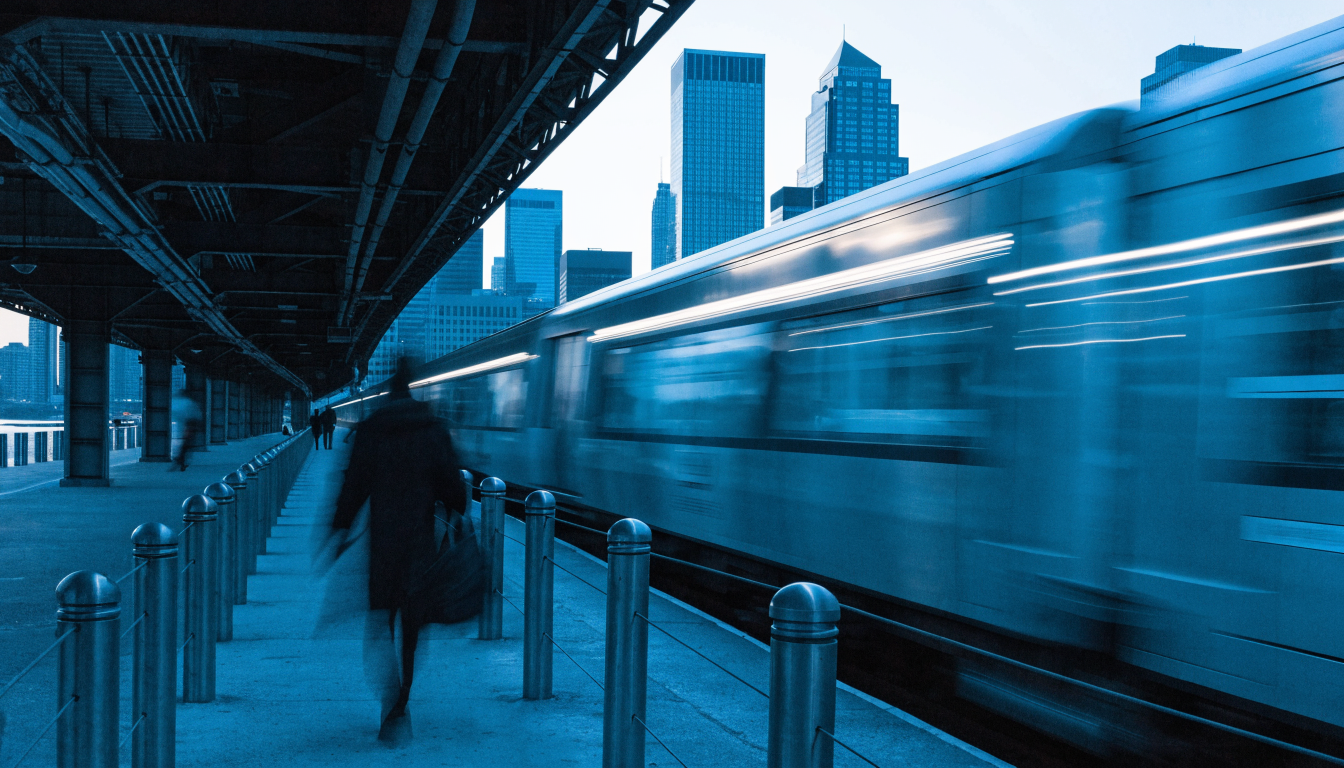
The fastest downtown commute in Etobicoke is GO train, not the subway. Mimico GO and Long Branch GO reach Union in roughly 15 minutes on the Lakeshore West line — quicker than the subway from Kipling and comfortably quicker than driving the Gardiner at peak. For subway access, Kipling and Islington are the only stations in the borough, with Kipling also offering Kipling GO on the Milton line and the MiWay terminal into Mississauga. For the airport and the employment lands, Highway 427 from central and northern Etobicoke is the strongest position. The notable weak spot: Humber Bay Shores has no rapid transit station at all despite being the closest Etobicoke neighbourhood to downtown.
Commute is the single variable that decides where most people should buy in Etobicoke, and it is the one buyers reason about least carefully — usually because they are answering with the commute they had in 2019 rather than the one they have now.
The counterintuitive fact about this borough: the train beats the subway. People instinctively look for a subway station, then discover that a Mimico condo puts them at Union faster than a Kipling one does.
The other thing worth saying plainly: Etobicoke is unusually good for households with two different commutes. If one person goes downtown and another goes to Mississauga, Brampton or the airport lands, few places in Toronto serve both. Downtown serves one person and strands the other.
Here is how each area actually performs.
To downtown and Union Station
The winner: Lakeshore West GO
Mimico GO and Long Branch GO both reach Union in roughly 15 minutes. If your office is anywhere near Union, this is the best commute available in the west end and it beats large parts of midtown Toronto.
It also already exists. No future infrastructure promise required — which matters, because a lot of Toronto condo pricing is built on transit that has not been delivered.
The subway
Kipling and Islington on Line 2 are the only subway stations in Etobicoke. The ride downtown is a genuine subway journey — reliable, frequent, but longer than the GO train because it stops everywhere and you change lines. Best if your destination is along Line 2 rather than at Union.
The streetcar
The 501 Queen runs the length of Lake Shore Boulevard West. Direct, scenic, and slow. Fine for off-peak trips, not a serious daily commute from the western end.
Driving
The Gardiner is right there and it is genuinely quick outside peak. At peak it is not. Parking downtown is the other half of that cost.
The exception
Humber Bay Shores is closest to downtown as the crow flies and has no rapid transit station. Residents rely on buses to Mimico GO or Kipling, or they drive. The planned Park Lawn GO station would fix this — but it is not open, and you should not underwrite a purchase on it.
Who this suits: If Union is your destination, buy near Mimico or Long Branch GO. If your office is along Line 2, buy near Kipling or Islington.
Thinking about buying or selling here?
I work this area every week and I will give you a straight answer, including when the answer is to wait. No pressure, and no drip campaign you cannot get out of.
Call or text 833-330-1925 Send me a message
Jatin Dua, Broker of Record — RE/MAX Quantum Realty Inc., Brokerage. Not intended to solicit buyers or sellers currently under contract with another brokerage.
To Pearson Airport and the employment lands
This is the commute Etobicoke serves better than almost anywhere in Toronto, and it is chronically underrated because people frame everything around downtown.
Highway 427
The 427 runs north–south through Etobicoke directly to Pearson and the surrounding employment lands. From M9C (Markland Wood, Eringate, Etobicoke West Mall) and M9A/M9B, airport access is genuinely quick — often 15 to 20 minutes outside peak.
Why it matters
The airport employment zone is one of the largest job clusters in the GTA — logistics, aviation, corporate offices, hotels. A very large number of people commute to it, not through it. If that is your workplace, central and northern Etobicoke is a far better base than downtown, and you will pay less for housing.
The reverse-commute advantage
Traffic on the 427 and QEW is heavily directional. If you are travelling against the dominant flow — north or west in the morning — your commute is dramatically better than the raw distance suggests. Worth mapping your actual direction before dismissing an area.
Transit to the airport
Weaker than driving. Bus connections exist but are slow. If you work at the airport and do not drive, this is a genuine constraint and you should test the route before committing.
Who this suits: If you work at or near Pearson, central and northern Etobicoke — M9A, M9B, M9C — gives you a short drive and cheaper housing than almost any alternative.
To Mississauga, Brampton and the west GTA
The Kipling hub
Kipling station is the key piece. It combines Line 2 subway, Kipling GO on the Milton line, and the MiWay terminal connecting into Mississauga transit. For anyone commuting between Toronto and Mississauga without a car, this is the connection point.
Driving west
The QEW and 427 are immediately accessible from most of Etobicoke. From M8W (Alderwood and Long Branch) and M9C you are effectively at the Mississauga boundary already.
The two-commute household — the real Etobicoke case
This is worth stating directly because it is the strongest argument for the borough and almost nobody makes it.
A large share of GTA households have one person commuting downtown and another commuting to Mississauga, Brampton or the airport lands. Downtown Toronto serves the first person and strands the second. Etobicoke serves both — GO or subway east, 427 and QEW west.
If that describes your household, the housing you can afford in Etobicoke versus the core, combined with two workable commutes, is usually decisive.
Who this suits: For a household with one downtown and one west-GTA commute, Etobicoke is one of the few places in Toronto that genuinely works for both people.
Neighbourhood by neighbourhood — the honest ranking
Best for downtown
Mimico and Long Branch — walking distance to GO, roughly 15 minutes to Union. Nothing else in Etobicoke comes close.
Best for the subway
Islington-City Centre West and the buildings around Kipling. The only rapid transit stations in the borough, and Kipling is genuinely multi-modal.
Best for the airport and west GTA
Markland Wood, Eringate, Etobicoke West Mall (M9C) and Alderwood (M8W). Immediate 427 and QEW access, and you get the most house per dollar in the borough as a bonus.
Best compromise
Kipling / Islington. Subway east, 427 west, GO on the Milton line. Not the fastest to Union, but the most flexible if your commute might change.
Weakest transit
Humber Bay Shores — no station, despite being closest to downtown. And The Queensway corridor — bus to Kipling or Islington, excellent for drivers, no rapid transit of its own. Both are priced accordingly, which is part of why they offer what they do on space and newness.
The question to ask yourself
Not “where do I work” but how many days a week am I actually required to be there, and will that number rise? Five days downtown is a strong argument for paying up for GO proximity. Two or three days is a much weaker one — and that is where a large share of the market now sits.
Who this suits: Buy for the commute you actually have on your heaviest week, not the one you had in 2019 — and check whether your household has two commutes, not one.
Etobicoke commute comparison
| Area | To Union | To subway | To airport / west GTA |
|---|---|---|---|
| Mimico | ~15 min (Mimico GO) | Bus to Kipling | QEW — good |
| Long Branch / Alderwood | ~15 min (Long Branch GO) | Bus to Kipling | QEW + 427 — excellent |
| Islington-City Centre W. | Subway (longer than GO) | At the station | 427 — excellent |
| Kipling area | Subway or Kipling GO | At the station | 427 + MiWay — best overall |
| Markland Wood / Eringate | Drive or bus + subway | Bus to Kipling | Best — short 427 run |
| The Kingsway / Old Mill | Subway (Royal York / Old Mill) | At the station | Moderate |
| The Queensway | Bus to Kipling, or drive | Bus | Gardiner, QEW, 427 — very good |
| Humber Bay Shores | No station — bus or Gardiner | Bus to Kipling | Gardiner + QEW |
- Mimico neighbourhood guide
- M8V guide: Mimico, New Toronto and Long Branch
- M9A, M9B and M9C: central Etobicoke
- M8W guide: Alderwood and Long Branch
- Etobicoke vs downtown Toronto: who should buy where
- How Park Lawn GO station will change property values
- Humber Bay Shores neighbourhood guide
- Buying a home in Toronto without parking
Tell me your commute and I will tell you where to buy.
Send me where you work, how many days a week you are there, and whether anyone else in the household commutes somewhere different. I will show you the neighbourhoods and buildings that genuinely work for both of you — and what they cost.
Talk to JatinFree home valuationNet proceeds calculatorConfidential. Reviewed personally and answered within 24 hours. I never share, sell or distribute your information.
Frequently asked questions
What is the fastest commute from Etobicoke to downtown Toronto?
The GO train, not the subway. Mimico GO and Long Branch GO both reach Union Station in roughly 15 minutes on the Lakeshore West line, which is faster than taking the subway from Kipling and comfortably faster than driving the Gardiner at peak. This surprises most buyers, who instinctively look for a subway station. If your workplace is near Union, walking distance to Mimico or Long Branch GO is the strongest commute position in the borough.
Does Etobicoke have subway stations?
Yes, but only a few. Kipling and Islington on Line 2 serve central Etobicoke, and Royal York and Old Mill serve The Kingsway area. Kipling is the most useful, combining the subway with Kipling GO on the Milton line and the MiWay terminal connecting into Mississauga transit. Most of the rest of Etobicoke — including Humber Bay Shores and The Queensway corridor — relies on buses to these stations or on GO train service.
How long does it take to get to Pearson Airport from Etobicoke?
From central and northern Etobicoke — Markland Wood, Eringate, Etobicoke West Mall and the Islington and Kipling areas — Highway 427 provides direct access and the drive is often 15 to 20 minutes outside peak. This is one of Etobicoke’s underrated advantages, since the airport employment zone is one of the largest job clusters in the GTA. Transit access to the airport is considerably weaker than driving, so test the route before committing if you do not drive.
Which Etobicoke neighbourhood has the worst transit?
Humber Bay Shores, which is counterintuitive because it is the closest Etobicoke neighbourhood to downtown as the crow flies. It has no rapid transit station — residents rely on buses to Mimico GO or Kipling, or they drive the Gardiner. The planned Park Lawn GO station would resolve this, but it is not open and should not be factored into a purchase decision. The Queensway corridor is similarly bus-dependent, though excellent for drivers with Gardiner, QEW and 427 access.
Is Etobicoke good for a household with two different commutes?
It is one of the best options in Toronto for exactly that. A large share of GTA households have one person commuting downtown and another to Mississauga, Brampton or the airport employment lands. Downtown Toronto serves the first person well and strands the second. Etobicoke offers GO or subway service east toward the core and immediate Highway 427 and QEW access west — so both commutes work. Combined with lower housing costs than the core, this is frequently the decisive factor for two-commute households.
Should I pay more to live near a GO station in Etobicoke?
It depends on how many days a week you actually need to be downtown. Five days near Union makes walking distance to Mimico or Long Branch GO genuinely worth paying for, since roughly 15 minutes to Union is exceptional. At two or three days a week — where a large share of the market now sits — the premium is much harder to justify, and you may be better served buying more space further from the station. Answer honestly based on your heaviest week, not the commute you had in 2019.
Commuting from Etobicoke, Toronto: the fastest route to downtown is the GO train rather than the subway, with Mimico GO and Long Branch GO reaching Union Station in approximately 15 minutes on the Lakeshore West line — faster than the subway from Kipling and faster than driving the Gardiner Expressway at peak. Etobicoke’s subway stations are Kipling and Islington on Line 2 serving central Etobicoke, and Royal York and Old Mill serving The Kingsway. Kipling is multi-modal, combining Line 2, Kipling GO on the Milton line, and the MiWay terminal connecting to Mississauga transit. Highway 427 provides direct access to Pearson Airport and the surrounding employment lands, with drives of roughly 15 to 20 minutes off-peak from Markland Wood, Eringate, Etobicoke West Mall and the Islington and Kipling areas. Humber Bay Shores has no rapid transit station despite being the Etobicoke neighbourhood closest to downtown, relying on buses or the Gardiner; the planned Park Lawn GO station would address this but is not open. The Queensway corridor is bus-dependent but has strong Gardiner, QEW and Highway 427 access. Etobicoke is particularly well suited to households with two different commutes, serving both downtown and west GTA destinations.
Thinking about buying or selling here?
I work this area every week and I will give you a straight answer, including when the answer is to wait. No pressure, and no drip campaign you cannot get out of.
Call or text 833-330-1925 Send me a message
Jatin Dua, Broker of Record — RE/MAX Quantum Realty Inc., Brokerage. Not intended to solicit buyers or sellers currently under contract with another brokerage.
Sources and further reading
Metrolinx GO Transit Lakeshore West and Milton line schedules for Mimico, Long Branch and Kipling stations · TTC Line 2 station and 501 Queen streetcar route information · MiWay Kipling terminal connections · Metrolinx Park Lawn GO station planning. Commute times vary with schedule, service conditions, time of day and individual origin and destination — verify current schedules with Metrolinx and the TTC.
Looking at Etobicoke more broadly? Start with my Etobicoke community guide — the neighbourhoods, what each pocket is like, and where they sit relative to one another.
The Crosstown changed the crosstown trip: Line 5 Eglinton, seven months in.
General information prepared August 2026. Commute times cited are approximate and vary with schedule, service conditions, time of day, and your specific origin and destination — verify current schedules with Metrolinx, the TTC and MiWay before relying on them for a purchase decision. Planned transit infrastructure including the Park Lawn GO station is subject to change in scope and timing and should not be assumed in a purchase. Statements about neighbourhood pricing are general market observations and are not a valuation. Jatin Dua is a Realtor with RE/MAX Quantum Realty.