
Published 2 November 2026 · By Jatin Dua, Broker of Record, RE/MAX Quantum Realty
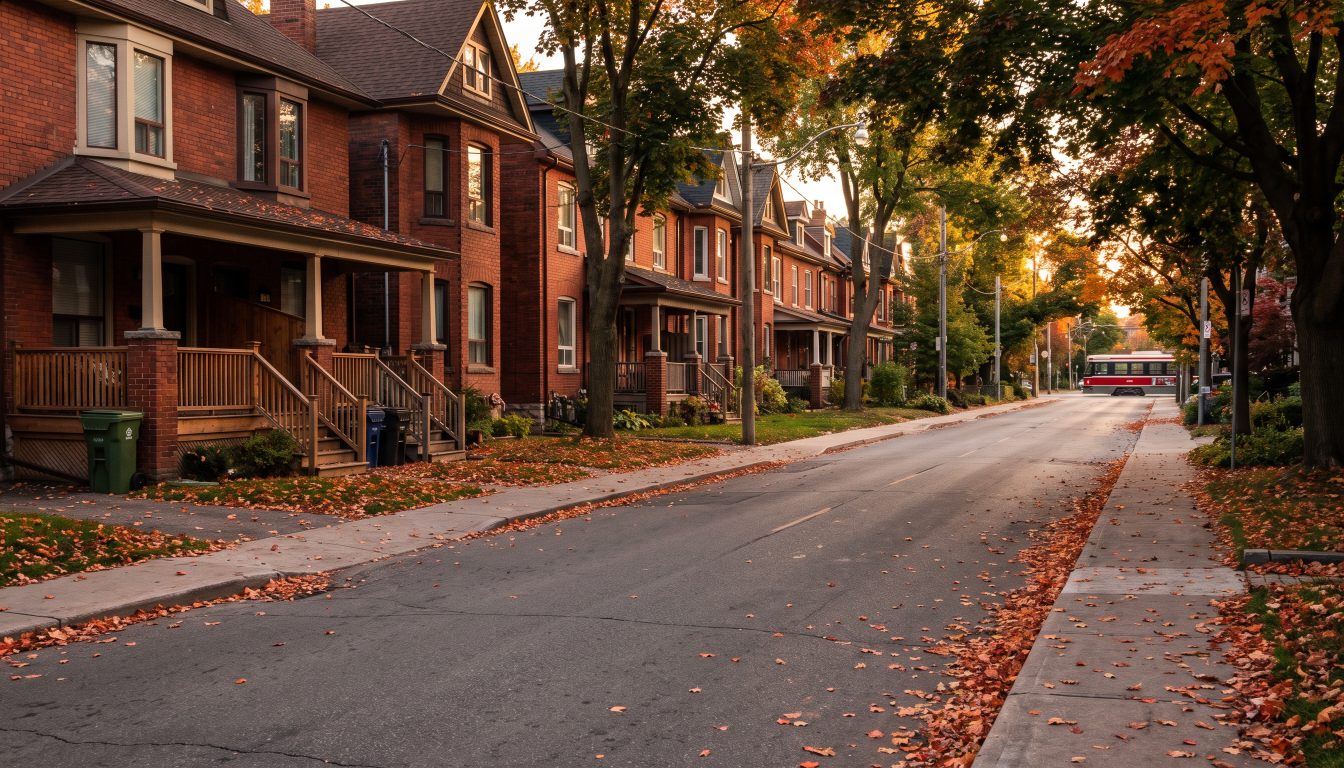
For 2027, the best Toronto neighbourhoods are Leaside for families, The Beaches for lake life, High Park and Roncesvalles for a walkable main street, Willowdale East for subway condos, and Long Branch and Mimico for GO trains and value. Toronto’s weighted detached median was about $1.42 million from January to October 2026, down 4.7% (TRREB MLS data via REALM).
This guide is for buyers and renters who want to live in the City of Toronto in 2027 and are not sure where to start. You will get real 2026 prices by district, five neighbourhoods I would put on any shortlist, and the checks I would make before buying in each one.
Is Toronto a good place to live in 2027?
For most people who want city life, jobs and transit, yes. Toronto had 2,794,356 people in the 2021 census, up 2.3% from 2016, which makes it Canada’s largest city. The 2021 census also found that 46.6% of residents were born outside Canada, so almost every neighbourhood has a mix of cultures, food and languages.
Here is what works in Toronto’s favour:
- Transit. Toronto has subway lines, streetcars and GO trains. Line 5 Eglinton opened on 8 February 2026 and now runs across midtown from Mount Dennis to Kennedy.
- A lower tax rate. Toronto’s 2026 total residential property tax rate is 0.767311% of your assessed value. On a home assessed at $700,000, that is about $5,371 a year.
- Choice. You can buy a downtown condo, a Victorian semi near the lake or a post-war bungalow in the former suburbs, all inside one city.
The trade-offs are real. Homes cost more than in most of the 905 region, and Toronto buyers pay two land transfer taxes: Ontario’s and the City’s. My guide to land transfer tax in Toronto shows what that adds at each price.
What do homes cost in Toronto right now?
TRREB does not publish one Toronto-wide median in the data I use. It splits the city into 35 districts (W01 to W10, C01 to C15 and E01 to E11). To give you one number for the whole city, I weighted each district’s median by its number of sales.
| Home type | Sales Jan–Oct 2026 | Weighted median 2026 | Change vs 2025 | Avg. days on market |
|---|---|---|---|---|
| Detached | 6,296 | $1,417,358 | −4.7% | 26 |
| Semi-detached | 2,070 | $1,183,620 | −2.1% | 20 |
| Freehold townhouse | 761 | $1,124,392 | −5.3% | 24 |
| Condo townhouse | 1,213 | $746,458 | −6.2% | 36 |
| Condo apartment | 9,173 | $574,736 | −7.4% | 38 |
Source: TRREB MLS data via REALM, January–October 2026 vs the same period of 2025, all 35 Toronto districts. Weighted medians are my calculation, not official TRREB figures.
The range inside the city is huge. Detached district medians ran from $866,500 in E09 (Bendale, Morningside and Woburn in Scarborough) to $3,627,500 in C09 (Rosedale-Moore Park). Condo apartments are the most common sale, and their prices fell the most. If you want a house under $1 million, my post on where cheaper Toronto houses still sell walks through those districts.
How did I pick these five neighbourhoods?
There is no single “best” area. I looked for places that do several things well at once: a real main street or shopping area, parks, good transit, a strong mix of home types, and steady demand from buyers. I also spread the list across the city so there is a west, east, north and central option. The table shows each pick’s TRREB district. These are district numbers, not neighbourhood prices, because each district holds more than one community.
| Neighbourhood | TRREB district | Detached median 2026 | Semi median 2026 | Condo apt median 2026 | Detached days on market |
|---|---|---|---|---|---|
| Leaside | C11 | $2,258,500 (−9.7%) | $1,380,000 | $468,500 | 19 |
| The Beaches | E02 | $1,613,000 (−9.6%) | $1,205,000 | $712,500 | 16 |
| High Park and Roncesvalles | W01 | $1,850,000 (−7.5%) | $1,517,313 | $612,000 | 16 |
| Willowdale East | C14 | $1,691,900 (−6.0%) | Too few sales | $568,500 | 36 |
| Long Branch and Mimico | W06 | $1,179,000 (+1.6%) | $1,046,500 | $607,500 | 25 |
Source: TRREB MLS data via REALM, January–October 2026 vs 2025. District community lists from TRREB’s Q2 2026 Toronto community reports.
1. Leaside
What it’s like: Leaside sits around Bayview Avenue and Eglinton Avenue East. It began as a planned town: in 1912 the Canadian Northern Railway hired landscape architect Frederick Todd to lay it out, and it was incorporated in 1913 before joining East York and later Toronto. Today it is one of the most expensive neighbourhoods in the city, with schools such as Leaside High School, Bessborough and Northlea. Line 5 Eglinton opened in 2026 with three stations serving the area.
Who it suits: families with a large budget who want a quiet street, walkable schools and a fast trip across midtown.
What it costs: district C11 had a detached median of $2,258,500 from January to October 2026, down 9.7%, with homes selling in 19 days on average. C11 also includes Flemingdon Park and Thorncliffe Park, so its $468,500 condo median mostly reflects towers outside Leaside itself.
What to check: at these prices you need at least 20% down, because mortgage insurance is not available at $1.5 million or more. Confirm school boundaries for the exact address; my list of top schools in Leaside and Lawrence Park is a good start.
Instant Home Valuation
What’s your home
worth today?
Answer six quick questions and get an instant value range built from current Toronto & GTA sale data — property type, size, condition, lot and location all weighted the way a real pricing conversation weighs them. Takes about ninety seconds.
Reading recent GTA sale data…
Building your estimate
Estimated market value
—
$0–$0
Most likely value $0 · roughly $0 per square foot
What moved the number
Starting from the area baseline for your property type, here’s what each answer added or subtracted.
Market context
Recent local averages for comparison.
—
A range is a starting point.
A strategy is what sells.
This model doesn’t know that your neighbour’s identical semi went $80,000 over asking last month, or which two upgrades actually pay back in your area. That conversation is free and takes twenty minutes.
2. The Beaches
What it’s like: the neighbourhood takes its name from four beaches on Lake Ontario: Balmy, Scarboro, Kew and Woodbine. A long boardwalk runs along most of the sand, with the Martin Goodman Trail beside it, and Woodbine and Kew-Balmy beaches hold Blue Flag status. Queen Street East is the main street, lined with independent shops. Side streets have semis, Victorian and Edwardian houses, and some low-rise apartments.
Who it suits: buyers who want lake life inside the city, dog owners, and families who want a strong local main street.
What it costs: district E02 (East End-Danforth, The Beaches and Woodbine Corridor) had a detached median of $1,613,000, down 9.6%. Semis held up better at $1,205,000, down only 0.8%, and detached homes sold in 16 days on average, among the fastest in Toronto.
What to check: fast sales mean you need your financing ready before you book showings. Some residents have pushed for heritage designation on certain streets, so ask the City whether a home is designated before you plan an addition.
3. High Park and Roncesvalles
What it’s like: Roncesvalles Village runs along Roncesvalles Avenue, a commercial strip about 1.7 kilometres long between Queen Street and Dundas Street West, with High Park to its west. It is the centre of Toronto’s Polish-Canadian community and hosts a large Polish festival every September. St. Joseph’s Health Centre is on the west side of the neighbourhood, and streetcars have served the area for more than a century.
Who it suits: buyers who want a walkable main street and a huge park next door, and who are happy with older homes.
What it costs: district W01 (High Park-Swansea, Roncesvalles and South Parkdale) had a detached median of $1,850,000 and a semi median of $1,517,313. Semis sold in just 11 days on average. Condo apartments were $612,000, down 9.4%.
What to check: if you buy an older house, budget for a full inspection of wiring, plumbing, roof and foundation, and ask for receipts for past upgrades.
4. Willowdale East
What it’s like: Willowdale is in North York, centred on Yonge Street. North York City Centre, around Yonge and Empress Avenue, gives it a second downtown with offices and condo towers, while side streets have detached homes, many of them large rebuilds. Willowdale has four subway stations: Finch and North York Centre on Line 1, Bayview on Line 4, and Sheppard-Yonge, where the two lines meet. High-density building is kept to the Yonge corridor.
Who it suits: condo buyers who want the subway at the door, and families who want a detached home close to Line 1.
What it costs: district C14 (Willowdale East and Newtonbrook East) had a condo apartment median of $568,500 on 475 sales, below the Toronto-wide weighted median. Its detached median was $1,691,900, and detached sales rose from 142 to 174.
What to check: detached homes in C14 took 36 days to sell on average, so there is room to negotiate. For condos, compare several buildings on the same stretch of Yonge before choosing one.
5. Long Branch and Mimico
What it’s like: these are lakeside neighbourhoods in south Etobicoke. Long Branch has its own GO station on the Lakeshore West line, and Long Branch Loop is the western end of the 501 Queen and 508 Lake Shore streetcar routes. Marie Curtis Park sits at its western edge. Mimico, to the east, has Mimico GO Station, and the Humber Bay Shores condo towers rise beyond it toward the Humber River.
Who it suits: buyers who want the lake and a GO train for less than the price of the other four picks, and condo buyers who want more choice.
What it costs: district W06 (Alderwood, Long Branch, Mimico and New Toronto) had a detached median of $1,179,000, up 1.6%, one of the few Toronto districts where it rose. Condo apartments were $607,500 on 422 sales. My guide to whether Mimico is a good place to live covers the pros and cons in more depth.
What to check: condo apartments in W06 averaged 40 days on market, so read the status certificate and compare recent sales in the same building before you offer.
Which Toronto neighbourhoods just missed my list?
Plenty of areas could swap into the top five depending on your budget:
- Bloor West Village and the Junction (W02): detached median $1,637,500, selling in 14 days on average.
- Riverdale and Leslieville (E01): semis are the main home type here, with a median of $1,319,272 and 12 days on market.
- Bayview Village and Don Valley Village (C15): detached median $1,411,000, with Line 4 and some ravine lots.
- Guildwood and Cliffcrest (E08): a detached median of $938,750 in Scarborough, for buyers who need a house under $1 million.
Source: TRREB MLS data via REALM, January–October 2026.
Before you shop, run your numbers again at today’s rates. The Bank of Canada raised its policy rate to 2.50% on 28 October 2026, and the big banks raised prime to 4.70%. The next decision is on 9 December 2026.
I would not pick a Toronto neighbourhood from a ranking alone, including this one. Start with the commute you will make five days a week, then the home type your budget buys, then the main street you want to walk to. In 2026, most Toronto districts saw lower prices and slower sales than in 2025, which gives buyers more room on price and conditions. I would use that room, but I would not wait for a perfect bottom. Nobody can promise where prices go in 2027.
A district median can hide very different homes. C11 mixes Leaside houses with Thorncliffe Park towers, and C14 mixes Yonge Street condos with large rebuilt homes. Before you set a budget, ask for the last 12 months of sales on the exact street and home type you want.
What to do next
- Pick two neighbourhoods from this list and ride or drive your real commute from each at rush hour.
- Get a written mortgage pre-approval, and check whether your price crosses $1.5 million, where 20% down is required.
- Add both land transfer taxes and the 2026 property tax rate to your monthly budget. My post on average property tax in Toronto has worked examples.
- Confirm school boundaries for each address with the TDSB or TCDSB.
- Ask for recent sales on your target street before you write an offer.
Need help with this? Talk to me.
I’m Jatin Dua, Broker of Record at RE/MAX Quantum Realty, and I’m the best agent to do this kind of work for you in Toronto and across the GTA. Over $100 million in GTA sales and 100+ families helped sell. Feel free to contact me any time: call or text 833-330-1925 or email [email protected].
Frequently asked questions
What is the best area to live in Toronto?
The best area to live in Toronto depends on your budget and commute. For 2027, my top five are Leaside for families, The Beaches for lake life, High Park and Roncesvalles for a walkable main street, Willowdale East for subway-friendly condos, and Long Branch and Mimico for GO trains and lower lakeside prices. Compare street-level sales before you decide.
Is Toronto a good place to live?
Yes, Toronto is a good place to live for people who want jobs, transit and choice. It had 2,794,356 residents in the 2021 census, a subway system, Line 5 Eglinton since February 2026, and a 2026 residential tax rate of 0.767311%. The main drawbacks are higher home prices than most of the GTA and two land transfer taxes.
How much does a house cost in Toronto in 2026?
A detached house in Toronto sold for a weighted median of about $1,417,000 from January to October 2026, based on TRREB MLS data via REALM for all 35 districts. That was about 4.7% lower than in 2025. District medians ranged from $866,500 in E09 in Scarborough to $3,627,500 in C09, Rosedale-Moore Park.
What is the cheapest area to buy a house in Toronto?
The cheapest Toronto district for detached houses in 2026 was E09 (Bendale, Morningside and Woburn in Scarborough), with a median of $866,500 from January to October, according to TRREB MLS data via REALM. E04 in Scarborough and W10 in north Etobicoke were close behind at $870,000 each. Prices on individual streets can differ a lot.
What is the most expensive neighbourhood in Toronto?
Rosedale-Moore Park (TRREB district C09) had Toronto’s highest detached median from January to October 2026, at $3,627,500 on 74 sales, according to TRREB MLS data via REALM. The Bridle Path, Sunnybrook and York Mills area (C12) was next at $3,200,000. Both medians fell compared with 2025.
Which Toronto neighbourhood is best for families?
Leaside is one of the best-known Toronto neighbourhoods for families, with a planned street layout, local schools and three Line 5 Eglinton stations since 2026. Its district detached median was $2,258,500 in 2026. Families on a smaller budget can look at Long Branch and Mimico, where the W06 detached median was $1,179,000.
What is the best area to live in Toronto without a car?
Willowdale is one of the best Toronto areas to live without a car in 2027. It has four subway stations: Finch and North York Centre on Line 1, Bayview on Line 4, and Sheppard-Yonge, where the two lines meet. Roncesvalles and Long Branch also work well, with streetcars and, in Long Branch, a GO station.
Are house prices going down in Toronto in 2027?
Toronto prices fell in 2026. TRREB MLS data via REALM shows the weighted detached median down about 4.7% and condo apartments down about 7.4% from January to October 2026 compared with 2025. No one can promise what happens in 2027, especially after the Bank of Canada raised its rate to 2.50% in October 2026.
Where should first-time buyers live in Toronto?
Many first-time buyers in Toronto start with a condo apartment near transit. In 2026, condo medians were $568,500 in Willowdale East (C14) and $607,500 in Long Branch and Mimico (W06), according to TRREB MLS data via REALM. First-time buyers can also claim land transfer tax refunds from both Ontario and the City of Toronto.
How much is property tax in Toronto in 2026?
Toronto’s 2026 total residential property tax rate is 0.767311% of your MPAC assessed value, according to the City of Toronto. That includes the city rate, the provincial education rate of 0.153% and the City Building Fund. A home assessed at $700,000 pays about $5,371 for 2026, before any credits or rebates.
Sources
- TRREB Community Housing Market Reports, Q2 2026 (Toronto district community lists)
- City of Toronto: Property tax rates and fees (2026)
- Toronto (2021 census population and immigration)
- Leaside (history, schools, Line 5 stations)
- The Beaches, Toronto (beaches, boardwalk, Queen Street East)
- Roncesvalles, Toronto (main street, Polish festival, St. Joseph’s)
- Willowdale, Toronto (North York City Centre, subway stations)
- Long Branch, Toronto (GO station, Long Branch Loop, Marie Curtis Park)
Related reading
- Top 5 Best Neighbourhoods to Live in Mississauga in 2027
- Top 5 Best Neighbourhoods to Live in Brampton in 2027
- Top 5 Best Neighbourhoods to Live in Markham in 2027
- Top 5 Best Neighbourhoods to Live in Oakville in 2027
About the author — Jatin Dua, Toronto and GTA real estate broker
I am Jatin Dua, Broker of Record and co-founder of RE/MAX Quantum Realty Inc., Brokerage, Unit 101, 799 The Queensway, Toronto. I work with buyers and sellers across Toronto and the GTA and have helped more than 100 families sell. Four-plus years of active GTA transactions and over $100 million in sales volume.
Reach me at [email protected] or 833-330-1925, or book a call.