
Published 2 November 2026 · By Jatin Dua, Broker of Record, RE/MAX Quantum Realty
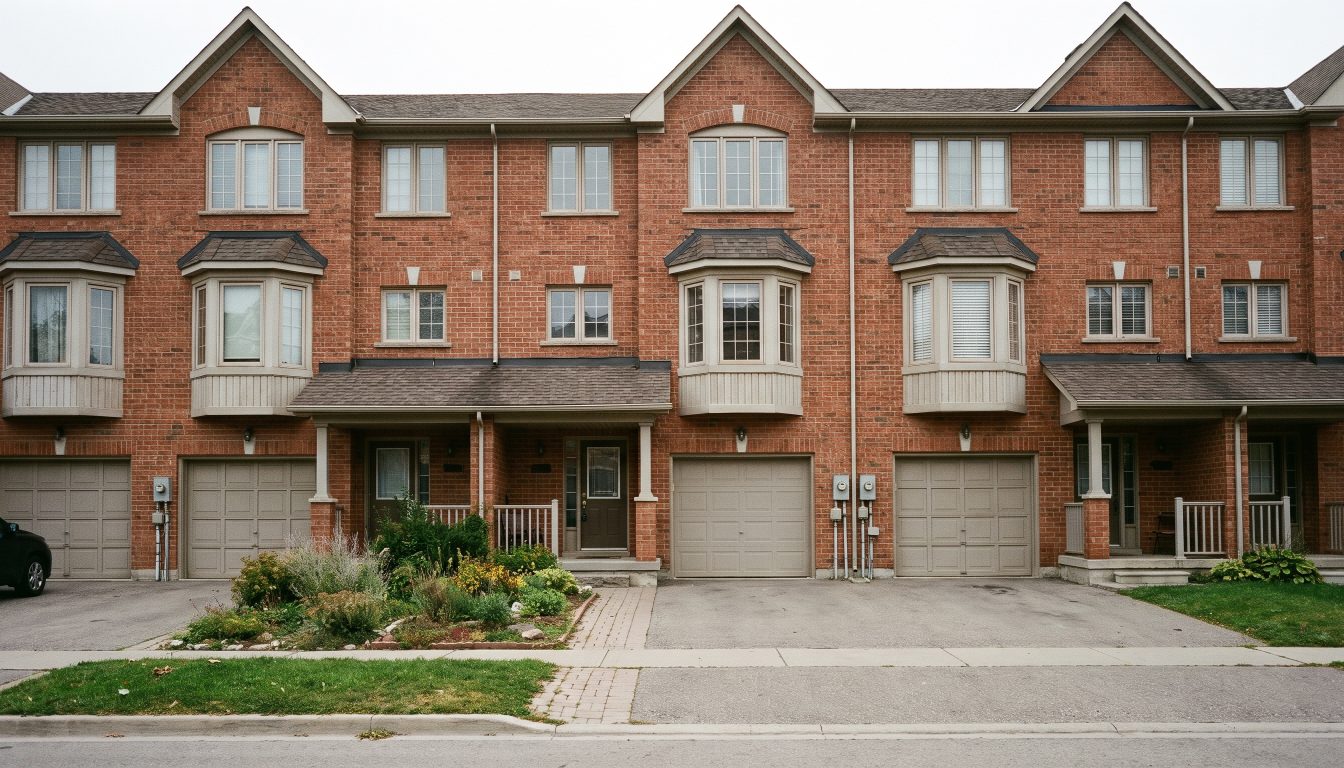
A freehold townhouse means you own the house and land with no condo fee; a condo townhouse is part of a corporation that charges a monthly fee and sets rules. In 2026 the GTA median was about $909,000 for freehold and $691,000 for condo townhouses. Compare total monthly cost, not just price.
This guide is for GTA buyers choosing between a freehold townhouse and a condo townhouse in 2027, and for owners deciding which one to sell or move up to. You will get the legal difference in plain English, 2026 prices across the GTA, a worked monthly cost example, the mortgage rule that treats condo fees differently, and what to check before you sign.
What is a freehold townhouse?
A freehold townhouse is a house joined to its neighbours by shared side walls, where you own the building and the land under it outright. There is no condominium corporation, no board and no monthly fee. You pay your own property tax, insurance and every repair, from the roof and windows to the driveway.
The trade-off is simple. You get full control and no fees, and you carry the full cost and the full job of upkeep. If the roof needs replacing, you arrange it and pay for it, sometimes working it out with the neighbour whose roof joins yours.
What is a condo townhouse, and what is a POTL?
A condo townhouse looks like a freehold one from the street, but the ownership is different. It is part of a condominium corporation run by a board that the owners elect. Under Ontario’s Condominium Act, there are a few types. Two matter most for townhouses:
- Standard condominium. This is the most common type in Ontario. You own your unit, and you share the common elements with the other owners. You pay a monthly fee, also called common expenses, that covers operating costs and contributions to a reserve fund for major repairs.
- Common elements condominium. This type has no units at all, only shared parts such as a private road. Each owner owns a house on a parcel of tied land (POTL) that is legally attached to those shared parts. In my experience the fee is usually lower, because it covers fewer things.
A POTL townhouse sits between the two. You own your house and lot, but you are tied to a corporation for the shared road or other common parts. Who pays for your roof, windows and walls depends on the documents for that complex, so never assume. I cover the three structures with a real cost example in my guide to condo townhouses.
How much cheaper is a condo townhouse in the GTA?
About $217,000 at the median in 2026. Across Toronto, Peel, Halton, York and Durham, I weighted each city’s median by its number of sales to get one GTA figure for each type.
| GTA, Jan–Oct | Freehold townhouse | Condo townhouse |
|---|---|---|
| 2026 median (weighted) | about $909,000 | about $691,000 |
| Change vs 2025 | −6.5% | −7.3% |
| Change vs 2024 | −10.3% | −12.1% |
| 2026 sales | 4,726 | 3,836 |
| Average days on market (weighted) | about 28 | about 37 |
Source: TRREB MLS data via REALM, January–October 2024, 2025 and 2026. GTA = City of Toronto (35 districts) plus the municipalities of Peel, Halton, York and Durham regions. Weighted medians are my calculation, not official TRREB figures.
City by city
| Jan–Oct 2026 | Freehold town median | Condo town median | Gap | Days on market (freehold / condo) |
|---|---|---|---|---|
| Toronto (weighted) | about $1,124,000 | about $746,000 | about $378,000 | 24 / 36 |
| Richmond Hill | $1,040,000 | $690,000 | $350,000 | 32 / 38 |
| Oakville | $1,005,000 | $712,500 | $292,500 | 31 / 34 |
| Markham | $999,990 | $750,000 | $249,990 | 29 / 37 |
| Vaughan | $1,014,500 | $768,000 | $246,500 | 29 / 35 |
| Mississauga | $880,000 | $689,300 | $190,700 | 29 / 37 |
| Brampton | $755,000 | $570,000 | $185,000 | 27 / 41 |
| Pickering | $789,000 | $608,000 | $181,000 | 27 / 32 |
| Burlington | $860,000 | $691,000 | $169,000 | 31 / 39 |
| Whitby | $765,000 | $617,500 | $147,500 | 23 / 31 |
| Oshawa | $657,500 | $518,500 | $139,000 | 34 / 33 |
Source: TRREB MLS data via REALM, January–October 2026. Medians compare different homes in different locations, so the gap is a guide, not a price for the same house.
In my view, the gap is widest where land costs most. In Toronto, a freehold townhouse cost about $378,000 more than a condo townhouse at the median. In the three Durham cities in the table, it was about $139,000 to $181,000. If you want to see where townhouses still sell under $1 million, my list of GTA townhouse markets under $1 million has the details by city.
Which costs less per month: a freehold or a condo townhouse?
It depends on the condo fee, and you can work it out. Here is an example using the rounded GTA medians. The 4.5% rate and 25-year amortization are assumptions for illustration only, not a rate quote.
| Example | Freehold townhouse | Condo townhouse |
|---|---|---|
| Price | $900,000 | $690,000 |
| Minimum down payment | $65,000 | $44,000 |
| Mortgage plus 4.00% CMHC premium | $868,400 | $671,840 |
| Monthly payment at 4.5%, 25 years | about $4,806 | about $3,718 |
| Ontario land transfer tax | $14,475 | $10,275 |
| Monthly condo fee | None | Varies by complex |
Source: Ontario land transfer tax brackets; down payment rules and CMHC premium bands (95% loan-to-value band). Mortgage payments are my calculation with semi-annual compounding. Inside Toronto, add the municipal land transfer tax, which matches the Ontario amount at these prices.
In this example, the condo townhouse mortgage is about $1,090 a month lower. So if the condo fee is well under $1,090, the condo townhouse costs less each month on paper. But that is not the full picture. The freehold owner pays for the roof, windows, siding and driveway directly, while a standard condo fee covers part of that through the reserve fund. Put a monthly amount aside for those repairs before you compare. Property tax also depends on each home’s assessment, so ask for both tax bills.
Free tool — what can you actually afford?
Is it harder to get a mortgage on a condo townhouse?
A little, because lenders count the fee. For insured mortgages, CMHC says 50% of condominium fees must be included in your gross debt service (GDS) and total debt service (TDS) ratios. It caps those ratios at 39% and 44% of gross income. So a $400 monthly fee adds $200 a month to the housing costs a lender measures, which lowers the amount you can borrow a little.
The other rules are the same for both types. The minimum down payment is 5% of the first $500,000 and 10% of the rest up to $1.5 million. Homes priced at $1.5 million or more need at least 20% down. You must also pass the stress test at the higher of 5.25% or your contract rate plus two points. The Bank of Canada raised its rate to 2.50% on 28 October 2026, and big-bank prime is now 4.70%, so update any pre-approval you got before then.
What rules come with a condo townhouse?
A condo townhouse comes with three layers of rules: the declaration, the by-laws and the rules. If they conflict with Ontario’s Condominium Act, the Act wins. According to Ontario’s condo buyers’ guide, these documents can:
- Set a minimum lease length, which can block short-term rentals. If you rent your unit out, you must give your tenant the governing documents and tell the corporation within 10 days.
- Require notice to the board and approval for changes to your unit, and limit renovation days and hours.
- Require board approval and a written agreement for any change to the common elements, such as a deck or a new door.
You will also need your own insurance. The corporation insures the building, but owners are strongly encouraged, and often required, to insure their improvements, contents and liability. A freehold townhouse has none of these rules, apart from city by-laws and permits.
What should you check before buying each type?
Condo townhouse
- The status certificate. The corporation must provide it within 10 days for up to $100, including taxes. Have your lawyer review it. My guide to what a status certificate tells you explains what to look for.
- The reserve fund study. Every corporation needs one, with updates at least every three years. Compare the reserve balance with what the study says is needed.
- Special assessments. A special assessment is a one-time charge when the corporation needs money fast. Owners must pay it, and unpaid amounts can lead to a lien on the unit.
Freehold townhouse
- A home inspection, focused on the roof, windows, shared walls and drainage.
- The age of big items, since you alone will pay to replace them.
- Whether it is truly freehold. If there is any monthly fee, ask whether it is a POTL tied to a common elements corporation, and get those documents too.
Older townhouse complexes often have a lot of roof, siding and private road for the number of owners. When those come due and the reserve fund is short, each owner’s share of a special assessment can be large. A low condo fee is not always good news. It can mean the reserve fund is underfunded. My post on why condo fees keep going up shows how to spot it.
Do new townhouses come with a cooling-off period?
Yes for new condo townhouses, and from 2027 for new freehold ones. When you buy a new condo from a developer, you get 10 calendar days to cancel for any reason. The clock starts once you have the signed agreement, the disclosure statement and the condo buyers’ guide.
For new freehold homes, Tarion says a 10-day cooling-off period applies starting 1 January 2027. It begins once you receive the purchase agreement with the required information sheet and addendum. If you sign for a new freehold townhouse before then, you do not get it, so read the agreement with a lawyer before you sign. My guide to the new freehold cooling-off period covers the details.
Which type sells faster and holds value better?
Freehold townhouses, in 2026. Across the GTA they averaged about 28 days on market, against about 37 for condo townhouses. They also fell a little less: about 10.3% since 2024 at the median, against about 12.1% for condo townhouses. In some places the gap in speed was large. Brampton condo townhouses averaged 41 days, against 27 for freehold ones.
That does not mean every freehold beats every condo. A well-run condo complex with a healthy reserve fund and reasonable fees can sell well. A freehold that needs a roof and windows will not.
I tell my clients to compare total monthly cost, not price. Add the mortgage, property tax, insurance and condo fee for the condo option. Add the mortgage, property tax, insurance and a repair set-aside for the freehold. If the numbers are close, I lean toward freehold for buyers who plan to stay a long time and like doing their own upkeep, and toward a well-funded condo townhouse for buyers who want a lower entry price and less work. Either way, read the documents before you fall for the kitchen.
Freehold or condo townhouse: who should pick which?
Pick a freehold townhouse if you:
- Want full control over renovations, rentals and exterior changes.
- Plan to stay for many years and can budget for big repairs yourself.
- Want no monthly fee and no board decisions.
Pick a condo townhouse if you:
- Need a lower purchase price to get into a city you want.
- Prefer the corporation to handle snow, landscaping and major exterior work.
- Are comfortable with rules and with checking the reserve fund before you buy.
What to do next
- Get a written pre-approval and ask your lender how a condo fee changes your limit.
- Price both options in the same city, using the tables above as a starting point.
- Work out total monthly cost for each, including a repair set-aside for freehold.
- For a condo townhouse, make your offer conditional on your lawyer’s review of the status certificate.
- For a new build, note your cooling-off dates and read the builder’s agreement with a lawyer.
Need help with this? Talk to me.
I’m Jatin Dua, Broker of Record at RE/MAX Quantum Realty, and I’m the best agent to do this kind of work for you in Toronto and across the GTA. Over $100 million in GTA sales and 100+ families helped sell. Feel free to contact me any time: call or text 833-330-1925 or email [email protected].
Frequently asked questions
What does freehold townhouse mean?
A freehold townhouse is an attached house where you own both the building and the land outright, with no condominium corporation and no monthly condo fee. You pay your own property tax, insurance and all repairs, including the roof and windows. In the GTA, the sales-weighted median freehold townhouse sold for about $909,000 from January to October 2026.
What is the difference between a freehold townhouse and a condo townhouse?
Ownership. With a freehold townhouse you own the house and land and pay no condo fee. With a condo townhouse you own your unit within a condominium corporation, share the common elements and pay a monthly fee that funds operations and a reserve fund. In 2026, condo townhouses were about $217,000 cheaper at the GTA median.
Is a POTL townhouse freehold or condo?
It is a mix. A POTL, or parcel of tied land, is a freehold house and lot that is legally tied to a common elements condominium, which owns shared parts such as a private road. You pay a fee for those shared parts, usually lower than a standard condo fee. In Ontario, check the documents to see who pays for roofs and exteriors.
Is a freehold townhouse a better investment than a condo townhouse?
In 2026, freehold townhouses held value a little better. Their GTA median fell about 10.3% from January–October 2024, against about 12.1% for condo townhouses, and they sold faster, in about 28 days versus 37. But a well-run condo complex can also hold value. Compare total monthly cost and the condo’s reserve fund before deciding.
Do condo fees affect how much mortgage I can get?
Yes. For insured mortgages in Canada, CMHC requires lenders to include 50% of your condominium fees in your gross and total debt service ratios, which are capped at 39% and 44% of income. A $400 monthly fee adds $200 to your measured housing costs, which slightly lowers the mortgage you qualify for in 2027.
How much does a status certificate cost in Ontario?
Up to $100, including taxes. Under Ontario rules, a condominium corporation must provide a status certificate within 10 days for that fee, though some offer faster delivery for more. It shows the reserve fund balance, fees and other key details, so have your lawyer review it before you firm up a condo townhouse purchase.
Is there a cooling-off period on a new freehold townhouse in Ontario?
From 1 January 2027, yes. Tarion says buyers of new freehold homes get a 10-day cooling-off period, starting once they receive the purchase agreement with the required information sheet and addendum. New condo townhouses bought from a developer already have a 10-day cooling-off period under Ontario’s condominium rules.
Do I pay less land transfer tax on a condo townhouse?
Only because the price is usually lower. Ontario’s land transfer tax uses the same brackets for both types. On a $900,000 freehold townhouse it is $14,475, and on a $690,000 condo townhouse it is $10,275. Inside the City of Toronto, the municipal land transfer tax adds the same amount again at these prices.
Can a condo corporation charge a special assessment on a townhouse?
Yes. A special assessment is a one-time charge when a condo corporation needs money quickly, such as for urgent repairs, and owners must pay it, in a lump sum or in instalments. Unpaid amounts can lead to a lien on the unit. In Ontario, reading the status certificate and reserve fund study helps you spot this risk early.
Sources
- Condominium Authority of Ontario – What is a condo (types of condominium corporations)
- Condominium Authority of Ontario – What is a status certificate and how much does it cost
- Condominium Authority of Ontario – What is a condo reserve fund
- Condominium Authority of Ontario – What is a special assessment
- Ontario’s Condominium Buyers’ Guide (CAO)
- CMHC – Calculating GDS and TDS
- Tarion – Cooling-off period for new freehold homes
- Ontario – Calculating land transfer tax
Related reading
- Mississauga vs Oakville in 2027: Prices, Commute and Which Fits You
- Brampton vs Mississauga in 2027: Prices, Commute and Which Fits You
- Markham vs Richmond Hill in 2027: Prices, Commute and Which Fits You
- Vaughan vs Markham in 2027: Prices, Commute and Which Fits You
About the author — Jatin Dua, Toronto and GTA real estate broker
I am Jatin Dua, Broker of Record and co-founder of RE/MAX Quantum Realty Inc., Brokerage, Unit 101, 799 The Queensway, Toronto. I work with buyers and sellers across Toronto and the GTA and have helped more than 100 families sell. Four-plus years of active GTA transactions and over $100 million in sales volume.
Reach me at [email protected] or 833-330-1925, or book a call.