
Published 2 November 2026 · By Jatin Dua, Broker of Record, RE/MAX Quantum Realty
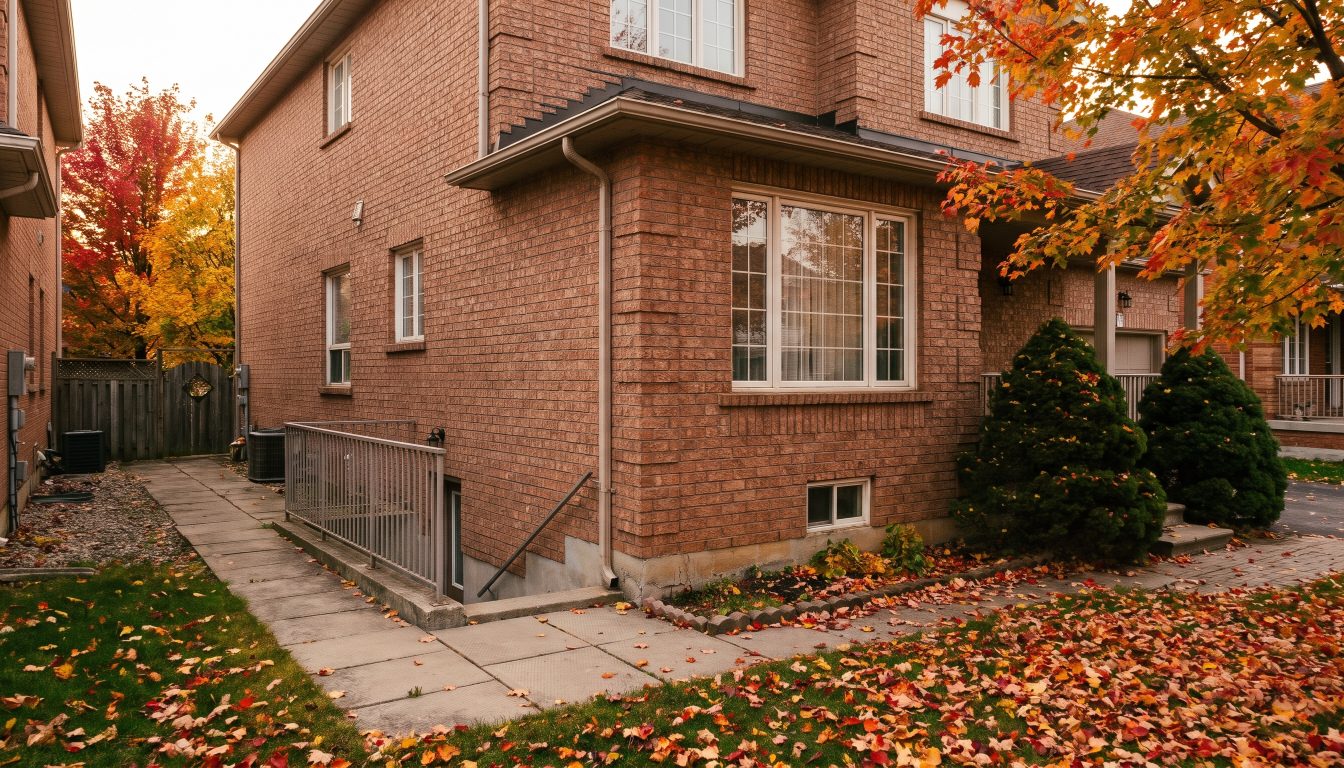
Yes. Since March 25, 2025, Vaughan allows up to two additional units per lot in detached, semi-detached and townhouse homes, so a basement apartment is legal if it meets zoning (its own entrance, one extra parking space outside transit areas), gets a building permit and passes inspection. There is no separate City registration step described in Vaughan’s guide.
This guide is for Vaughan homeowners who want to rent out a basement, build a suite for a parent, or buy a house that already has one. You will get the zoning rules Vaughan adopted in 2025, the Building Code and Fire Code checks that decide whether a unit is legal, the permit steps, and the costs I could confirm from official sources as of November 2026.
Is a basement apartment legal in Vaughan in 2027?
Yes, if it meets zoning, gets a building permit and passes inspection. Vaughan Council passed two by-laws on March 25, 2025 that allow “additional residential units” (the new name for secondary suites) in single detached, semi-detached and townhouse homes. By-law 083-2025 amends the newer comprehensive Zoning By-law 001-2021, and By-law 082-2025 amends the older By-law 1-88. Both say they were made to match the province’s Bill 23 and Bill 185 changes to the Planning Act.
A basement unit that was built without a permit is not “grandfathered” just because it has been rented for years. Until it passes the City’s inspections, it is an unpermitted unit, even if the zoning would allow it.
How many units can a Vaughan lot have?
Up to two additional units per lot, on top of the main home. That can be two units inside the house, or one inside the house (often the basement) and one in a detached accessory building such as a garden suite. So the maximum is three homes on one lot, where the lot has municipal water and sewer.
What changed in Vaughan’s basement apartment rules in 2025?
A lot. If you search online you will still find the City’s older homeowner guide (November 2022). Some of its zoning rules have since been replaced. Here is how the old and new rules compare.
| Rule | Older guide (Nov 2022, By-law 1-88) | 2025 by-laws (082-2025 and 083-2025) |
|---|---|---|
| Units allowed | Two dwelling units in total | Main home plus up to two additional units |
| Size of the suite | Up to 45% of the main home’s floor area, minimum 35 m² | Not more than the main home’s gross floor area |
| Parking | Three spaces on the property | Normal minimum for the main home, plus one space per additional unit; none extra inside a Protected Major Transit Station Area |
| Separate building | Not allowed | Allowed, at least 4.0 m from the main building |
| Lot coverage | Zone maximum | Up to 45%, or the zone maximum if higher |
Source: City of Vaughan Secondary Suites Information Guide for Homeowners (November 2022); City of Vaughan By-laws 082-2025 and 083-2025, passed March 25, 2025.
The older guide also listed areas where suites were not allowed, such as the Woodbridge Special Policy Area and floodplains. I could not confirm how the 2025 by-laws treat those areas, so if your home is in Woodbridge or near a floodplain, ask the City’s zoning staff before you spend money on drawings.
What are Vaughan’s zoning rules for a basement apartment?
The 2025 by-laws set the rules every basement unit must meet:
- Home type: single detached, semi-detached or townhouse dwelling (street townhouse under By-law 1-88). A condo apartment unit is not covered.
- Services: the lot must be on municipal water and sanitary sewer.
- Entrance: the unit needs its own entrance, either an outside door on a side or rear wall or a shared indoor vestibule. A new entrance cannot be on the same wall as the main front door.
- Path to the street: a clear, hard-surfaced walkway at least 1.2 metres wide, or the driveway.
- Side yard: under By-law 1-88, a new side entrance must be at least 1.2 metres from the side lot line, or more if the zone requires.
- Parking: one extra space per additional unit, except inside a Protected Major Transit Station Area.
- Conflicts: a unit is not allowed in a building that also has a bed and breakfast or a home occupation.
If your house misses one rule, such as the parking count, the option is a minor variance at the Committee of Adjustment. That adds time and a fee, so check zoning first.
What Building Code rules apply to a basement apartment?
The Ontario Building Code decides whether the space is safe to live in. Which part applies depends on the age of the house. A house less than five years old must meet Part 9, the new-construction rules. A house five years or older can use Part 11, which is more flexible for renovations. Most Vaughan basements fall under Part 11.
The main checks, as summarized in Ontario’s second-unit guide and in municipal guides based on the 2024 Code:
- Fire separation: under Part 11, 30 minutes between units, or 15 minutes if every unit and common area has interconnected smoke alarms. The rating is waived if the house is sprinklered.
- Ceiling height: a basement unit can have a ceiling of 1.95 metres over the required floor area, including the route to the exit.
- Bedroom windows: each bedroom level needs an openable window with at least 0.35 m² of clear opening and no side less than 380 mm, unless there is a door straight outside.
- Exits: each unit needs a safe way out that does not pass through the other unit.
- Alarms: smoke alarms on every level and in each bedroom, interconnected between units, plus carbon monoxide alarms near bedrooms where there is a fuel-burning appliance.
- Room sizes: for example, a bachelor unit that combines living, sleeping and kitchen space can be 13.5 m².
- Heating: in an older house, one furnace can serve both units only if there are smoke alarms in each unit and a duct smoke detector that shuts off fuel and power.
Ceiling height and window size are the two items that most often turn a “nice finished basement” into a costly job. Underpinning to gain height or cutting new window openings changes the budget fast.
Instant Home Valuation
What’s your home
worth today?
Answer six quick questions and get an instant value range built from current Toronto & GTA sale data — property type, size, condition, lot and location all weighted the way a real pricing conversation weighs them. Takes about ninety seconds.
Reading recent GTA sale data…
Building your estimate
Estimated market value
—
$0–$0
Most likely value $0 · roughly $0 per square foot
What moved the number
Starting from the area baseline for your property type, here’s what each answer added or subtracted.
Market context
Recent local averages for comparison.
—
A range is a starting point.
A strategy is what sells.
This model doesn’t know that your neighbour’s identical semi went $80,000 over asking last month, or which two upgrades actually pay back in your area. That conversation is free and takes twenty minutes.
How do you get a permit for a basement apartment in Vaughan?
The City of Vaughan’s homeowner guide and the province’s guide describe the same basic path:
- Check zoning with the City before you design anything.
- Get drawings. Homeowners can draw their own, but the City strongly recommends a designer with a BCIN (Building Code Identification Number), an engineer or an architect. Weak drawings are the most common cause of delay.
- Apply for the building permit with the forms, drawings and fee. Ontario’s guide says you should hear within 10 business days whether a complete application is approved.
- Book inspections at each stage. Vaughan’s guide lists stages from footings and plumbing rough-in through framing, insulation and the final interior inspection.
- Close the permit after the final inspection. That closed permit is your proof that the unit is legal.
Electrical work needs its own inspection from the Electrical Safety Authority. The City guide also says renovators and contractors working in Vaughan must hold a City business licence.
Do you have to register a basement apartment in Vaughan?
Vaughan’s homeowner guide does not describe a separate registration step. The building permit and its final inspection are the approval. That is different from Markham, next door, where every two-unit house must also be registered with the fire department for a fee.
What about a suite that has been there for decades?
Age matters. Ontario’s Fire Code has a retrofit section for two-unit houses (Section 9.8). It defines “existing” as in existence on July 14, 1994. Vaughan’s guide says suites built on or before that date go through a Fire Code inspection with Vaughan Fire and Rescue Service, while suites built after it must meet the Building Code through a permit. Under the Fire Code retrofit rules, each unit generally needs a 15-minute fire separation and interconnected smoke alarms, with other options for exits.
If you cannot prove when the suite was built, ask the City to search its permit records. The guide warns that older records are not guaranteed and can take time to retrieve.
Renting an unpermitted unit does not take away the tenant’s rights. Ontario’s Residential Tenancies Act says it applies to rental units despite any other Act. So if the City orders the unit closed, you may still owe the tenant notice and compensation under that Act. Legalize before you rent, not after.
How much does a legal basement apartment cost in Vaughan?
Here is what I could confirm. Anything not on this list depends on your house and your contractor’s quote.
- Building permit fee: Vaughan’s guide says a secondary suite permit costs the same as finishing a basement. The rate is set per square metre in Schedule F of the City’s yearly Fees and Charges By-law, which was up for review in early 2026. Ask Building Standards for the current rate before you budget.
- Development charges: Ontario’s guide says development charges are not collected for a second unit built in an existing house.
- Minor variance: only if you cannot meet zoning, and it carries its own City fee.
- Construction: no official source publishes a reliable cost per suite for Vaughan. Ceiling height, new windows, a separate entrance and fire-rated drywall drive most of the cost. Get at least three written quotes from licensed trades.
Can you finance it?
One option is CMHC’s insured refinance for adding units. CMHC’s fact sheet allows up to 90% of the as-improved value, a value under $2,000,000, up to four units in total, and up to a 30-year amortization. The home must be owner-occupied and the new suite cannot be rented short term (under 90 days in a row). Your lender decides whether you qualify.
What is a Vaughan house with a legal second unit worth?
MLS data does not separate homes with legal suites from homes without them, so no one can quote you a verified premium. What I can give you is the price base for the three home types where a basement unit is allowed.
| Vaughan home type | Median sold price, Jan–Oct 2026 | Change vs 2025 | Sales | Avg days on market |
|---|---|---|---|---|
| Detached | $1,415,000 | −5.0% | 1,193 | 30 |
| Semi-detached | $1,040,000 | −9.2% | 148 | 28 |
| Freehold townhouse | $1,014,500 | −9.3% | 358 | 29 |
Source: TRREB MLS data via REALM, January–October 2026 vs the same period of 2025, City of Vaughan as a whole. Median prices; not specific to homes with suites.
With prices softer than a year ago, many Vaughan buyers are looking for rent to help carry the mortgage. A unit with a closed permit is easier for a lender, an insurer and a buyer to trust. My guide to what a Vaughan house is worth explains the other factors that move price, and the Vaughan housing market outlook for 2027 covers sales trends.
When I walk through Vaughan homes with a basement unit, the first question I ask is “where is the permit?” A closed permit makes the house easier to sell and easier to insure. If you are planning a suite, spend money on a zoning check and a good designer before you buy a single sheet of drywall. If you are buying, treat any unpermitted unit as a finished basement, not as income, until the paperwork says otherwise.
What if you are buying a Vaughan house with a basement unit?
Ask for proof before you firm up. Useful checks:
- A closed building permit for the second unit, or a written City answer that none exists.
- The current lease, the rent, and whether the tenant is staying. A tenant who stays keeps their rights under the new owner.
- Ceiling height, bedroom windows and a separate exit you can see with your own eyes.
- Insurance quotes that list the property as a two-unit home.
My post on buying a house with a basement apartment walks through the tenant and lender questions in detail; the rules there are Toronto’s, but the tenancy law is the same across Ontario. If you will become a landlord for the first time, read my guide on finding and screening tenants legally.
What to do next
- Confirm which zoning by-law covers your lot (001-2021 or 1-88) and check the entrance, parking and size rules with the City.
- Measure basement ceiling height and bedroom window openings before you get quotes.
- Hire a BCIN designer, engineer or architect and apply for the building permit.
- Book every inspection, close the permit, and tell your insurer the house now has two units.
- If you are buying or selling, ask for the permit history in writing before the offer is firm.
Need help with this? Talk to me.
I’m Jatin Dua, Broker of Record at RE/MAX Quantum Realty, and I’m the best agent to do this kind of work for you in Toronto and across the GTA. Over $100 million in GTA sales and 100+ families helped sell. Feel free to contact me any time: call or text 833-330-1925 or email [email protected].
Frequently asked questions
Is a basement apartment legal in Vaughan?
Yes, if it meets zoning and has a closed building permit. Vaughan’s By-laws 082-2025 and 083-2025, passed March 25, 2025, allow up to two additional residential units per lot in detached, semi-detached and townhouse homes on municipal services. A basement unit built without a permit is still unpermitted in 2027, even if the zoning would allow it, until it passes the City’s inspections.
Do I need to register my basement apartment in Vaughan?
Vaughan’s homeowner guide does not describe a separate registration step; the building permit and final inspection are the approval. That is different from Markham, where two-unit houses must also be registered with the fire department. Keep your closed permit, because it is the document buyers, lenders and insurers ask for when they check whether a Vaughan basement unit is legal.
How many parking spaces do I need for a basement apartment in Vaughan?
One extra space per additional unit, on top of the normal minimum for the main home, under Vaughan’s 2025 zoning by-laws. The extra space is not required inside a Protected Major Transit Station Area shown on the zoning maps. Older guides that say three spaces are out of date, so check the current rule for your lot with the City.
What is the minimum ceiling height for a basement apartment in Ontario?
1.95 metres over the required floor area, including the path to the exit, for a second unit in an existing house, according to Ontario’s guide to adding a second unit. Under beams and ducts the 2024 Building Code allows a little less. Low ceilings are one of the most common reasons a Vaughan basement needs costly work before it can be legal.
Does a basement apartment in Vaughan need a separate entrance?
Yes. Vaughan’s 2025 zoning rules require the unit to have its own entrance, either an outside door on a side or rear wall or a shared indoor vestibule. A new entrance cannot be on the same wall as the main front door, and it must connect to the street by a hard-surfaced path at least 1.2 metres wide or by the driveway.
Do I pay development charges for a basement apartment in Vaughan?
No, not for a second unit built inside an existing house. Ontario’s guide to adding a second unit says development charges are not collected in that case. You still pay the building permit fee, which Vaughan sets per square metre in its yearly Fees and Charges By-law, plus any minor variance fee if your lot cannot meet zoning.
Can I legalize an old basement apartment in Vaughan?
Yes, through a permit or a fire inspection, depending on its age. Vaughan’s guide says suites in existence on or before July 14, 1994 go through a Fire Code inspection with Vaughan Fire and Rescue Service, while newer suites must meet the Building Code through a building permit. If you do not know when it was built, ask the City to search its permit records.
Can I have a basement apartment and a garden suite in Vaughan?
Yes, on a lot with municipal services. Vaughan’s 2025 by-laws allow two additional units: one inside the house, such as a basement unit, and one in a detached accessory building at least 4.0 metres from the main house. Each additional unit generally needs one more parking space, and lot coverage can go up to 45% or the zone maximum.
Does a tenant in an illegal basement apartment in Ontario have rights?
Yes. Ontario’s Residential Tenancies Act says it applies to rental units despite any other Act, so a tenant in an unpermitted Vaughan basement still has the Act’s protections in 2027. If the City orders the unit closed, the landlord may still owe notice and compensation. That is why legalizing before you rent is safer than legalizing after.
Sources
- City of Vaughan By-law 082-2025 (additional residential units, amending By-law 1-88)
- City of Vaughan By-law 083-2025 (additional residential units, amending Zoning By-law 001-2021)
- City of Vaughan Secondary Suites Information Guide for Homeowners (November 2022)
- City of Vaughan public notice: Schedule F, 2026 Fees and Charges By-law
- Government of Ontario: Add a second unit in your house
- Ontario Fire Code, O. Reg. 213/07, Section 9.8 Two Unit Residential Occupancies
- City of Markham Secondary Suites Guide for Homeowners (April 2026, based on the 2024 Ontario Building Code)
- CMHC Refinance fact sheet (secondary suites)
Related reading
- How Much Does a Fourplex Cost to Build or Buy in Toronto?
- Converting a House to a Triplex in Toronto: Cost, Permits and Payback
- Multiplex Benefits for Toronto Homeowners: Rent, Value and Family Living
- Legal Basement Apartment in Brampton (2027): Rules, Permits and Costs
About the author — Jatin Dua, Toronto and GTA real estate broker
I am Jatin Dua, Broker of Record and co-founder of RE/MAX Quantum Realty Inc., Brokerage, Unit 101, 799 The Queensway, Toronto. I work with buyers and sellers across Toronto and the GTA and have helped more than 100 families sell. Four-plus years of active GTA transactions and over $100 million in sales volume.
Reach me at [email protected] or 833-330-1925, or book a call.