

Published 7 August 2026 · Updated 7 September 2026 · By Jatin Dua, Broker of Record, RE/MAX Quantum Realty
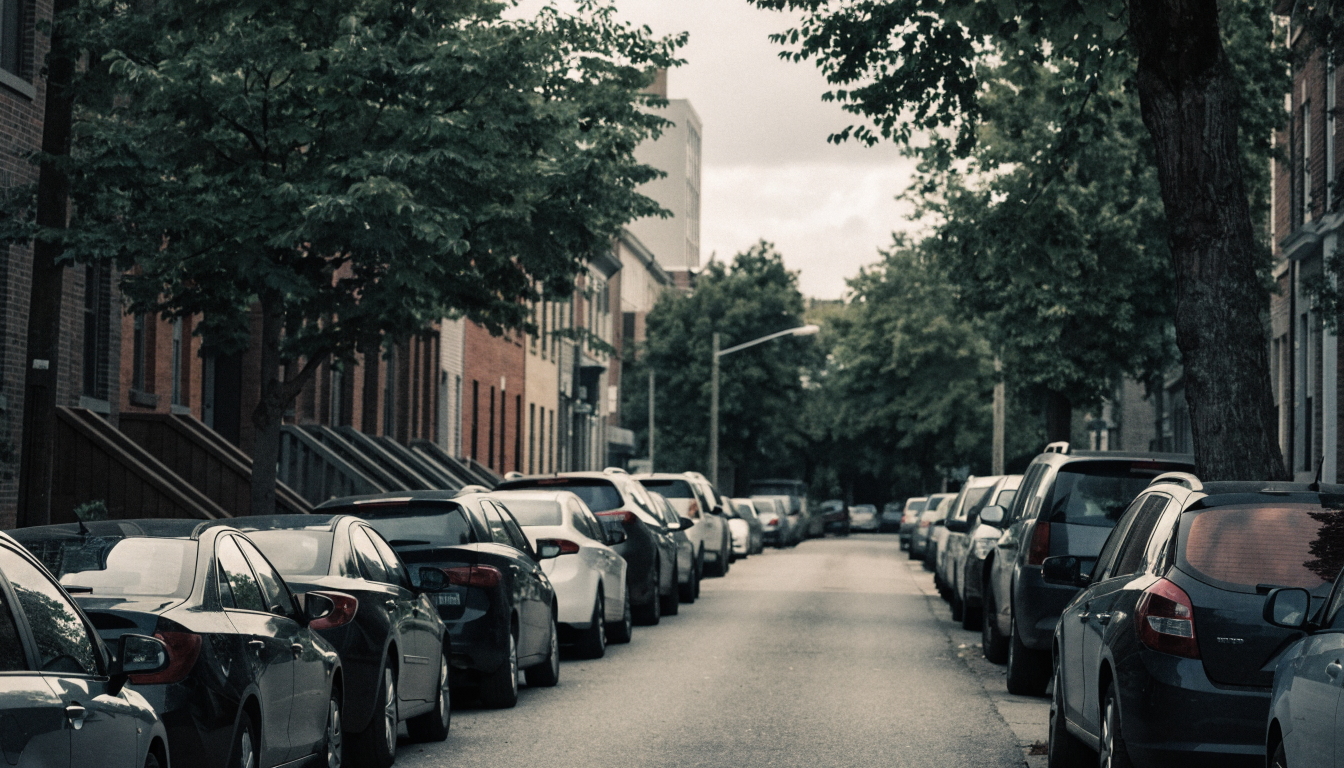
Buying without parking can be the right call — but only in specific conditions. It works if you are on a subway or GO line, you genuinely do not own a car, and you are buying a smaller unit where the buyer pool skews to people who also do not drive. It works badly for larger units, family-sized homes, anything away from rapid transit, and anywhere in Etobicoke outside the Kipling, Islington and Mimico GO catchments. The cost is not only the discount you pay less — it is a smaller buyer pool at resale, which means longer days on market and weaker negotiating position. The one thing to check before you commit: whether the building allows you to rent a space from another owner, and whether the City will issue you a street permit.
The market figures in this article reflect data available when it was written. TRREB’s July 2026 report is now the most current: the GTA average selling price was $1,003,956, down 4.5% year over year, new listings fell 17.8% to 14,484, and condo apartments averaged $672,807 in the 416 and $560,923 in the 905. TRREB describes the market as tightening and setting the stage for price stability. For the current picture and what it means for a decision to sell or hold, see Should I sell my Toronto condo now or wait?
- What a parking space is actually worth
- The resale problem: you are shrinking your buyer pool
- When buying without parking genuinely works
- Your options if you buy without parking and then need it
- Houses without parking — a different and harder problem
- Side-by-side comparison
- Frequently asked questions
This question comes up in almost every condo search I run under about $650,000, and the honest answer is more nuanced than either side of the usual argument.
The pro-parking camp says never buy without it. The pragmatist camp says you do not own a car, so why pay for something you will not use. Both are partly right, and both are missing the part that actually decides it: a parking space is not primarily an amenity you use. It is an asset that determines who can buy your unit when you sell.
That distinction is everything. You can live perfectly happily without parking for eight years. The bill arrives on the day you list.
1What a parking space is actually worth
Start with the mechanics, because a lot of buyers do not know how parking is even held.
How ownership works
Parking is generally either deeded — a separately titled unit you own outright and can sell — or exclusive use common element, where you have the exclusive right to use a space that the corporation owns. The distinction matters. Deeded spaces can sometimes be sold or bought separately from other owners in the building. Exclusive-use spaces typically cannot be transferred independently of the unit.
Ask which one it is before you assume you can buy a space from a neighbour later. Owners routinely discover after closing that the building does not permit it.
The value question
What a space is worth varies enormously by building and by area — driven mostly by how scarce parking is in that specific building and how car-dependent the neighbourhood is. A space in a downtown building with a subway at the door and a large surplus of spaces is worth far less than a space in a suburban Etobicoke building where every household has a car and the building is short.
The part people get wrong
The resale impact of not having parking is often larger than the market value of the space itself. That is because you are not just subtracting an asset — you are removing a large share of your buyer pool. Those two effects compound, and the second one is invisible until you are on the market.
Why it makes the list: Because the number that matters is not what a space costs to buy — it is what its absence costs you when you sell.
2The resale problem: you are shrinking your buyer pool
This is the argument that actually matters, and it is the one nobody makes clearly.
The mechanic
When you own a unit with parking, everyone can buy it — car owners and non-car owners alike. Non-car owners will happily take the space and rent it out or use it for storage where permitted.
When you own a unit without parking, only buyers who do not need a car can consider it at all. You have removed a large share of the market from your listing before it goes live.
Why it bites hardest in a soft market
GTA condo apartment values are down roughly 9.4% year over year to an average near $630,688, with about four months of inventory. In a market where buyers have choice, anything that narrows your pool hurts disproportionately. When a buyer has six comparable units to look at and yours is the one without parking, yours is the one that sits.
In a hot market, no-parking units get pulled along. In this market they do not. That is the environment you should be underwriting against, because you do not get to choose the market you sell into.
The practical consequence
Longer days on market, and a weaker position when the offer comes in. Buyers know a no-parking unit has fewer competing bidders and they price accordingly.
Why it makes the list: A parking space is the difference between everyone being able to buy your unit and only some people being able to. That gap widens in exactly the markets where you least want it to.
Thinking about buying or selling here?
I work this area every week and I will give you a straight answer, including when the answer is to wait. No pressure, and no drip campaign you cannot get out of.
Call or text 833-330-1925 Send me a message
Jatin Dua, Broker of Record — RE/MAX Quantum Realty Inc., Brokerage. Not intended to solicit buyers or sellers currently under contract with another brokerage.
3When buying without parking genuinely works
There are real situations where it is the right decision, and I have advised clients into them.
The conditions that need to hold
Rapid transit at the door. Not a bus route — a subway station or a GO station. In Etobicoke that means Kipling, Islington, or walking distance to Mimico or Long Branch GO. A ten-minute bus to a subway is not the same thing and buyers do not treat it as the same thing.
You genuinely do not own a car and do not expect to. Be honest about the horizon. If a child is likely within your ownership period, you will probably want one.
Smaller unit. A studio or one-bedroom already sells largely to people who do not drive. In that pool, the absence of parking excludes far fewer buyers. A two or three-bedroom is different — that unit sells to couples and families, and they overwhelmingly need a space.
A real discount. You should be paying meaningfully less. If a no-parking unit is priced close to comparable units with parking, you are absorbing the resale disadvantage for free.
Where it works best in Etobicoke
Buildings at Kipling and Islington stations, and units in Mimico within walking distance of Mimico GO. Those are genuinely transit-first locations with a buyer pool that reflects it.
Where it does not work
Humber Bay Shores. Beautiful, close to downtown as the crow flies, and with no rapid transit station. It is a car-dependent neighbourhood despite its location, and no-parking units there are considerably harder to resell. Park Lawn GO would change this — but it is not open, and you should not underwrite a purchase on it.
The Queensway corridor generally, and anywhere in central or northern Etobicoke.
Why it makes the list: The rule is simple: buy without parking only where the next buyer will also not need parking. That is a much smaller set of locations than people assume.
4Your options if you buy without parking and then need it
If you already own without parking, or you are considering it, these are the realistic fallbacks — and their limitations.
Rent a space from another owner in your building
Usually the best option: convenient, secure, and typically cheaper than commercial parking. Non-resident owners and investors frequently have spaces they are not using.
The catch: many condo corporations restrict leasing parking to non-owners or require the arrangement to be registered with management. Some prohibit it. Confirm the rules in writing before you buy on the assumption that this is available. This is the single most important check in this whole article and the one most people skip.
City of Toronto on-street permit parking
The City operates a permit parking programme, but availability is not universal — it depends on the specific street, and many areas are either not eligible or have waiting lists. Eligibility rules also commonly exclude residents of buildings that have available parking on site.
Check the specific address on the City of Toronto permit parking system before you commit. Do not assume a permit will be available because you have seen permit signs nearby.
Commercial monthly parking
Municipal Green P lots, private lots and monthly rentals through parking apps. Reliable, generally the most expensive option, and often not immediately adjacent to your building — which is fine for a car you use twice a week and tiresome for a daily commute.
What this does not fix
None of these solve the resale problem. A rented space is not an asset that transfers with your unit. Your buyer faces exactly the same question you did.
Why it makes the list: Renting a space solves your daily life. It does not solve your resale — and whether you can even rent one is governed by rules you must confirm before you buy.
5Houses without parking — a different and harder problem
Everything above concerns condos. Houses without parking are a different situation and generally a harder one.
Where you find them
Older narrow-lot semis and rowhouses, mostly in Toronto’s older core neighbourhoods, on streets with no laneway and no room for a mutual drive. In Etobicoke these are relatively uncommon — the borough developed later and on wider lots — but they exist in pockets of Mimico and New Toronto.
Why it is harder than a condo
A house buyer is overwhelmingly a family buyer, and family buyers need a car. The buyer pool for a family-sized home without parking is dramatically smaller than for a one-bedroom condo without parking. The discount required to sell it is correspondingly larger.
Front pad parking is not a solution you can assume
Toronto restricts front yard and front pad parking, and creating a new legal parking pad where none exists is difficult and frequently not permitted. Requirements vary by area and by street.
Critically: an existing pad is not proof of a legal pad. Unlicensed front pads exist across the city and can be subject to enforcement. If parking is part of why you are buying the house, verify with the City that the pad is licensed and permitted — before your conditions expire. Do not rely on the fact that a car is currently sitting on it.
Why it makes the list: House buyers are family buyers and family buyers need cars. Without a genuinely legal space, the resale discount on a house is far steeper than on a condo.
Side-by-side comparison
| Situation | Buy without parking? | Reasoning |
|---|---|---|
| Studio or 1-bed at Kipling / Islington station | Yes, if discounted | Buyer pool is already largely car-free; rapid transit at the door |
| 1-bed walking distance to Mimico GO | Reasonable | 15 min to Union; transit-first buyer pool |
| Anything in Humber Bay Shores | No | No rapid transit station — car-dependent despite the location |
| 2-bed or larger, anywhere | No | Sells to couples and families, who need a space |
| Queensway corridor / central Etobicoke | No | Bus-dependent; buyer pool overwhelmingly drives |
| A house, anywhere | Rarely | Family buyer pool; front pad approval cannot be assumed |
Looking at a unit without parking?
Send me the address. I will check the building’s parking rules, pull what comparable units with and without parking have actually sold for, and tell you honestly whether the discount is big enough to justify the resale trade-off.
Thinking about buying or selling here?
I work this area every week and I will give you a straight answer, including when the answer is to wait. No pressure, and no drip campaign you cannot get out of.
Call or text 833-330-1925 Send me a message
Jatin Dua, Broker of Record — RE/MAX Quantum Realty Inc., Brokerage. Not intended to solicit buyers or sellers currently under contract with another brokerage.
Frequently asked questions
Is it a bad idea to buy a condo without parking in Toronto?
Not always, but the conditions are narrow. It works when you are at a subway or GO station, you genuinely do not own a car and do not expect to, you are buying a studio or one-bedroom whose buyer pool is already largely car-free, and you are getting a meaningful discount. It works poorly for two-bedroom and larger units, anywhere without rapid transit, and in car-dependent neighbourhoods. The real cost is not the amenity you go without — it is that at resale only buyers who do not need a car can consider your unit, which means longer days on market and a weaker negotiating position.
How much value does a parking space add to a Toronto condo?
It varies substantially by building and neighbourhood, driven mainly by how scarce parking is in that specific building and how car-dependent the area is. More important than the standalone value is the resale effect: not having parking removes a large share of your potential buyer pool, and that impact is often larger than the market value of the space itself. In a soft market — GTA condo values are down roughly 9.4% year over year with about four months of inventory — that narrowed pool hurts considerably more than it would in a competitive market.
Can I rent a parking spot from another owner in my condo building?
Often, but not always, and you must verify before you buy. Many condo corporations restrict leasing parking to non-owners, require arrangements to be registered with management, or prohibit it outright. It also depends on whether parking in your building is deeded — separately titled and transferable — or exclusive use common element, which typically cannot be transferred independently of the unit. Get the rules in writing from property management before purchasing on the assumption that renting a space will be possible.
Can I get a City of Toronto street parking permit if my condo has no parking?
Sometimes, but you cannot assume it. The City’s permit parking programme depends on the specific street, and many areas are either ineligible or have waiting lists. Eligibility rules also commonly exclude residents of buildings that have parking available on site. Check the specific address on the City of Toronto permit parking system before you commit — the presence of permit parking signage nearby does not mean a permit will be issued to you.
Which Etobicoke neighbourhoods work best for living without a car?
The areas around Kipling and Islington subway stations, and Mimico within walking distance of Mimico GO, which puts you roughly 15 minutes from Union Station. Those are genuinely transit-first locations with buyer pools that reflect it. Humber Bay Shores is the notable exception to expectations — it is close to downtown but has no rapid transit station, making it car-dependent in practice. The planned Park Lawn GO station would change this, but it is not open and should not be relied on when buying.
Can I add front pad parking to a Toronto house that has none?
It is difficult and frequently not permitted. Toronto restricts front yard and front pad parking, and requirements vary by area and street. Importantly, an existing pad is not proof of a legal pad — unlicensed front pads exist across the city and can be subject to enforcement. If parking is part of why you are buying the property, confirm directly with the City that any existing pad is licensed and permitted before your conditions expire, rather than relying on the fact that a car is currently parked there.
Buying a Toronto condo without parking can be reasonable but only under specific conditions: the property should be at a subway or GO station, the buyer should genuinely not own a car, the unit should be a studio or one-bedroom whose buyer pool is already largely car-free, and the price should reflect a meaningful discount. It works poorly for two-bedroom and larger units, for houses, and in car-dependent areas including Humber Bay Shores, which has no rapid transit station despite its proximity to downtown. The principal cost is at resale: a unit without parking can only be purchased by buyers who do not need a car, which shrinks the buyer pool, lengthens days on market and weakens negotiating position — an effect amplified in the current market where GTA condo apartment values are down roughly 9.4% year over year to an average near $630,688 with about four months of inventory. Condo parking is held either as a deeded separately titled unit or as exclusive use common element, and many corporations restrict leasing spaces to non-owners, so buyers should confirm parking rules in writing before purchasing. City of Toronto on-street permit parking availability depends on the specific street and often excludes residents of buildings with on-site parking. Front pad parking on houses is restricted and an existing pad is not proof of a licensed one.
Sources and further reading
Toronto Regional Real Estate Board condominium apartment market statistics · City of Toronto permit parking programme and front yard parking regulations · Ontario Condominium Act provisions on deeded parking units and exclusive use common elements · Metrolinx GO Transit network. Parking rules are set by individual condominium corporations and by the City of Toronto and must be verified for the specific property and address.
General information prepared August 2026, not legal or financial advice. Condominium parking ownership structures, leasing rules and transferability are set by each corporation’s declaration and by-laws and must be confirmed in writing with property management before purchase. City of Toronto permit parking eligibility and front yard parking permissions are address-specific and change; verify directly with the City before relying on them. Market statistics cited are GTA-wide averages and do not represent any individual building or unit. Statements about resale impact are general observations and are not a valuation or a guarantee. Jatin Dua is a Realtor with RE/MAX Quantum Realty.