
Published 2 November 2026 · By Jatin Dua, Broker of Record, RE/MAX Quantum Realty
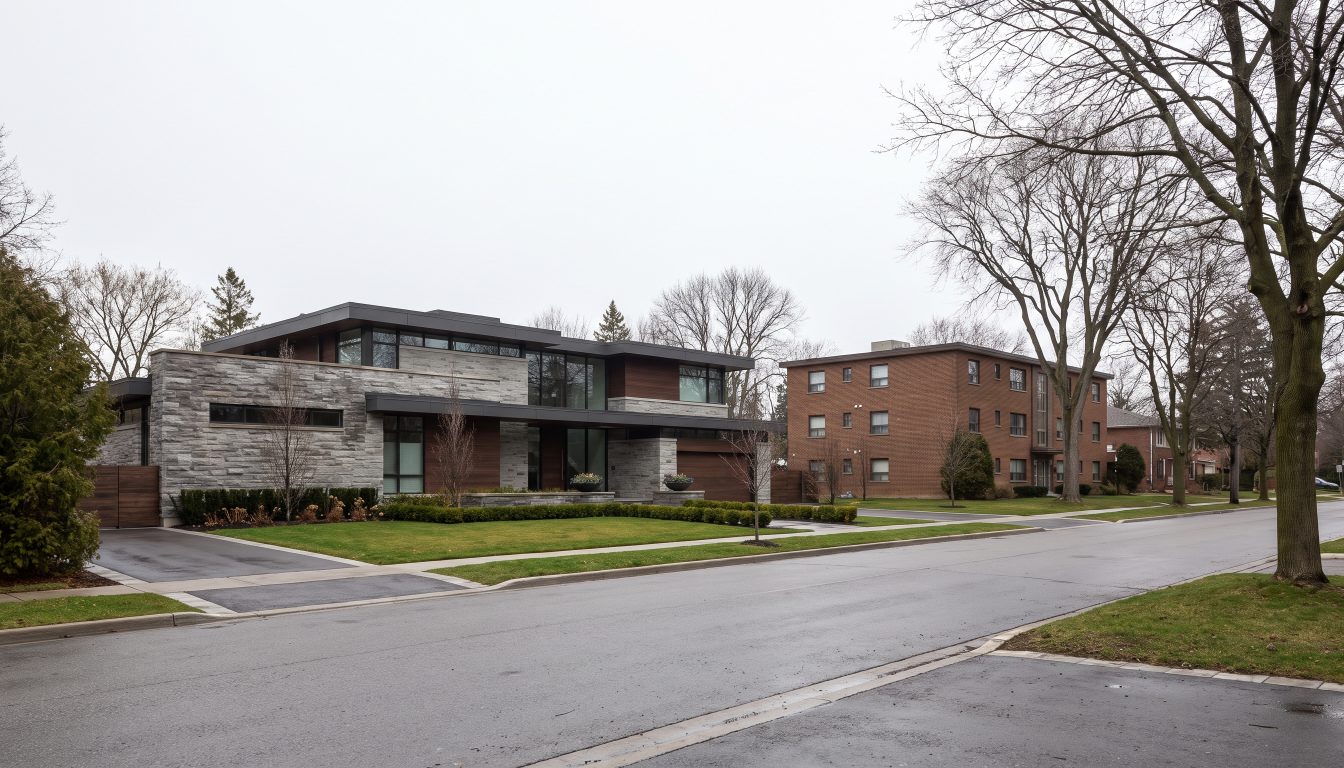
For income, the building wins: at the Q3 2026 Toronto average cap rate of 4.21%, a $5 million apartment building earns about $210,500 a year before the mortgage, and its land transfer tax is $192,950 versus $271,450 for a $5 million house. The house wins on tax only if it is your principal residence.
This guide is for anyone deciding between putting $5 million into a luxury house in Toronto or into a rental apartment building. You will see the real 2027 math side by side: land transfer tax, income, property tax, mortgages, tax when you sell, tenant rules and the risks of each, with every example worked out.
Which is the better investment in Toronto, a $5 million house or a $5 million apartment building?
They are different kinds of investment. A house is mainly a bet on land value, and if you live in it, the gain can be tax-free. An apartment building is a business that pays you income every month, but it comes with tenants, repairs and taxable gains. The table sums up the key differences for a purchase inside the City of Toronto.
| Item | $5M house (1 or 2 homes on the lot) | $5M apartment building (3+ units) |
|---|---|---|
| Ontario + Toronto land transfer tax | $271,450 | $192,950 |
| Yearly income | None unless rented | About $210,500 NOI at a 4.21% cap rate (illustrative) |
| 2026 Toronto property tax rate (on assessed value) | 0.767311% (residential) | 1.208792% (multi-residential); 0.767311% for new multi-residential |
| Tax on the gain when you sell | Often none if it is your principal residence every year | Capital gains tax at the 50% inclusion rate, plus possible CCA recapture |
| Typical financing | Uninsured residential mortgage, at least 20% down | Conventional or CMHC-insured commercial mortgage (5+ units for CMHC) |
| Work involved | Low if you live in it | Ongoing: tenants, repairs, rent rules |
Source: City of Toronto MLTT rates and 2026 property tax rates; Ontario land transfer tax rates (ontario.ca); Lee & Associates Toronto multifamily Q3 2026 (cap rate). Income figure is illustrative arithmetic.
How much land transfer tax is there on a $5 million house vs a building in Toronto?
Land transfer tax is the biggest closing cost on both, and the house pays more. Since 1 April 2026, Toronto charges higher municipal rates on property with one or two single-family homes priced above $3 million: 4.40% from $3 million to $4 million, 5.45% from $4 million to $5 million and 6.50% from $5 million to $10 million. Ontario adds 2.5% on the portion above $2 million for homes. Apartment buildings with more than two units and commercial property stay at the top 2% band in both.
| Purchase in Toronto at $5,000,000 | Ontario LTT | Toronto MLTT | Total |
|---|---|---|---|
| House (one or two single-family homes) | $111,475 | $159,975 | $271,450 |
| Apartment building (more than two units) | $96,475 | $96,475 | $192,950 |
| Same building outside Toronto | $96,475 | None | $96,475 |
Source: City of Toronto municipal land transfer tax rates (rates as of 1 April 2026) and Ontario land transfer tax rates. Calculated before any rebates.
The house costs $78,500 more in land transfer tax on the same price. Non-resident buyers of certain residential property also pay Ontario’s 25% Non-Resident Speculation Tax and, since 1 January 2025, Toronto’s 10% Municipal Non-Resident Speculation Tax on top. You can check any price with my land transfer tax calculator.
How much income does each one produce?
An apartment building is bought for its income. The key figure is NOI, net operating income: rent minus vacancy and operating costs such as property tax, insurance, repairs and management, before the mortgage. At the Q3 2026 Toronto multifamily average cap rate of 4.21%, a $5 million building would earn about $210,500 of NOI a year. That is an illustrative average; a real building’s NOI comes from its rent roll and expense statements.
A house you live in produces no income. It saves you rent, but it also costs you property tax, insurance and upkeep every year.
Property tax rates differ too, and they apply to the MPAC assessed value, not the price you pay. In 2026, Toronto’s total residential rate was 0.767311%, or about $7,673 a year per $1 million of assessed value. The multi-residential rate for older apartment buildings was 1.208792%, about $12,088 per $1 million. New multi-residential buildings pay the lower residential rate. In a building, the tax is an operating cost already counted in NOI.
What rent would a $5 million house need to match an apartment building?
To match the 4.21% building average, a $5 million house rented out would need $210,500 a year after all its own costs. That is about $17,542 a month, net. Before tax, insurance, maintenance and any vacancy, the asking rent would need to be higher still. In my experience, very few house rentals in Toronto reach that level, and the tenant pool at that price is small. So in pure income terms, the building wins clearly. The house case rests on lifestyle, tax-free gains if you live there, and land value over time.
To see what your own cash buys and how the cash flow compares across building types, use the calculator below; it is set to $5 million but you can change every number.
Loading the investment calculator…
How do mortgages compare for a $5 million house and a $5 million building?
A house above $1.5 million cannot get a CMHC-insured mortgage, so you need at least 20% down and an uninsured mortgage, which at federally regulated lenders still has to pass the stress test. The lender looks mainly at your personal income.
An apartment building with five or more units is financed as a commercial loan, sized mostly on the building’s income. CMHC’s standard rental program allows up to 85% loan-to-value and up to 40-year amortization on existing buildings. Using bond yields plus Avison Young’s Q3 2026 spreads, conventional apartment loans priced at roughly 4.9% to 5.6% and CMHC-insured loans at roughly 4.15% to 4.6%. Those are my derived estimates, not quotes. From 1 February 2027, private insurers can also insure loans on 5 to 50 unit buildings, with rules such as a minimum debt coverage ratio of 1.15 on 5-year terms. My guide to mortgage insurance for 5 to 50 unit buildings explains the details.
An illustrative comparison: put 50% down on each and borrow $2.5 million at 5.25% over 30 years. Both loans cost about $164,612 a year. The building’s $210,500 NOI covers that with about $45,888 to spare, a DSCR (debt service coverage ratio) of 1.28. The house has no income, so you pay all $164,612 yourself, plus property tax and upkeep.
How are a house and an apartment building taxed when you sell?
If the house is your principal residence for every year you own it, the principal residence exemption generally means no tax on the gain. Since 2016 you must still report the sale on Schedule 3 of your return and, for 2017 and later, on Form T2091, or CRA may deny the exemption.
A rental building has no such exemption. Half of the capital gain is taxable; the inclusion rate is still 50% after the proposed increase was cancelled in March 2025. If you claimed capital cost allowance (CCA, tax depreciation) on the building, some of it can be taxed back as income when you sell, which is called recapture. My guide to CCA recapture on rental property explains how that works. Confirm your situation with your accountant.
What rules come with owning an apartment building in Ontario?
Every residential tenancy in the building falls under the Residential Tenancies Act, and disputes go to the Landlord and Tenant Board. Rent increases on units first occupied before 15 November 2018 are capped by the provincial guideline: 2.1% for 2026 and 1.9% for 2027. Newer units are exempt from the guideline. You need 12 months between increases and 90 days’ written notice.
If you plan major renovations that need tenants to leave, Toronto’s Rental Renovation Licence bylaw requires a licence within 7 days of serving an N13 notice, at $700 per unit. My guide to rent control exemptions for investors covers which units qualify. A house rented to one family is also under the same Act, so even the “simple” option comes with tenant rules if you rent it.
An older building’s NOI can look good on paper while the roof, boiler, balconies or parking garage need major work. Get a building condition assessment (BCA), a Phase 1 environmental site assessment (ESA) and the full rent roll with leases before you firm up. On a house, the risk is different: you are relying on land values, which fell in many Toronto districts in 2026.
Who should buy the house, and who should buy the building?
The house suits you if you will live in it, value the principal residence exemption, want no tenants and can carry the costs from other income. It is a lifestyle purchase that can also hold value over a long period, though detached medians fell in most Toronto districts in 2026 per TRREB MLS data via REALM.
The building suits you if you want income now, accept that gains are taxable, and are ready to hire good management or learn the business. It also spreads risk across many tenants instead of one property.
If the goal is investment, I usually steer $5 million clients toward income property and a sensible home, rather than a $5 million house expected to do both jobs. If the goal is a family home, buy the house you love and do not pretend it is a rental play. Mixing the two goals is where I see people get disappointed. That is my view; your accountant should check the tax side.
What to do next
- Decide whether this $5 million is for a home, for income, or split between them.
- Price the land transfer tax on your exact purchase, inside or outside Toronto.
- Run a real building’s rent roll through the calculator above and compare it with your house carrying costs.
- Ask your accountant how each choice affects your tax when you sell.
- Book a call with me to walk through a specific house or building and test the numbers together.
Need help with this? Talk to me.
I’m Jatin Dua, Broker of Record at RE/MAX Quantum Realty, and I’m the best agent to do this kind of work for you in Toronto and across the GTA. Over $100 million in GTA sales and 100+ families helped sell. Feel free to contact me any time: call or text 833-330-1925 or email [email protected].
Frequently asked questions
Is a $5 million house or an apartment building a better investment in Toronto?
For income, an apartment building usually wins: at the Q3 2026 Toronto average cap rate of 4.21%, a $5 million building earns about $210,500 a year before the mortgage, while a house you live in earns nothing. A house can win on tax if it is your principal residence, since the gain is generally exempt. The right choice depends on whether you want a home or income.
What is the Toronto land transfer tax on a $5 million house?
About $271,450 in total for a $5 million house in Toronto in 2026: $111,475 Ontario land transfer tax plus $159,975 Toronto municipal land transfer tax. Since 1 April 2026, Toronto charges 4.40%, 5.45% and 6.50% on the portions of a home’s price between $3 million and $10 million. First-time buyer rebates are small at this price.
What is the land transfer tax on a $5 million apartment building in Toronto?
About $192,950: $96,475 Ontario land transfer tax plus $96,475 Toronto municipal land transfer tax, as of 2026. Buildings with more than two units are taxed at the regular bands topping out at 2%, not the higher luxury home bands. The same building outside Toronto pays only the $96,475 Ontario tax.
How much rent would a $5 million house in Toronto need to earn to be a good investment?
To match the Q3 2026 Toronto apartment average cap rate of 4.21%, a $5 million house would need about $210,500 a year of rent after all its own costs, or about $17,542 a month net. The asking rent would need to be higher to cover tax, insurance and upkeep. In my experience, very few Toronto house rentals reach that level.
Can you get a CMHC-insured mortgage on a $5 million house?
No. Insured mortgages are limited to homes priced at $1.5 million or less, so a $5 million house needs at least 20% down and an uninsured mortgage that passes the stress test. An apartment building with five or more units can qualify for CMHC multi-unit insurance, which allows up to 85% loan-to-value and 40-year amortization on existing buildings.
Do you pay capital gains tax when you sell a $5 million house in Toronto?
Not if it was your principal residence for every year you owned it, in most cases. The principal residence exemption generally covers the gain, but you must report the sale on Schedule 3 and Form T2091. A rental property or a second home does not get that exemption. Confirm your situation with your accountant before you sell.
What is the property tax rate on an apartment building in Toronto?
In 2026, Toronto’s total multi-residential tax rate was 1.208792% of MPAC assessed value, about $12,088 a year per $1 million of assessment. New multi-residential buildings pay the residential rate of 0.767311%, about $7,673 per $1 million. The tax is based on assessed value, not purchase price, and is an operating cost in the building’s NOI.
Is a luxury home in Toronto a good investment in 2027?
It can hold value over the long run, but it is mostly a land and lifestyle play, not an income investment. Detached medians fell in most Toronto districts from January to October 2026, including 9.3% in both C09 and C12, per TRREB MLS data via REALM. Buy one because you want to live in it, and judge it on that.
Are apartment buildings in Ontario rent controlled?
Units first occupied before 15 November 2018 are rent controlled: increases are capped at the provincial guideline, 2.1% for 2026 and 1.9% for 2027. Units first occupied after that date are exempt from the guideline. Every unit still needs 12 months between increases and 90 days’ written notice under the Residential Tenancies Act.
Sources
- City of Toronto: Municipal land transfer tax rates and fees
- Government of Ontario: Calculating land transfer tax
- City of Toronto: Property tax rates and fees (2026)
- Lee & Associates: Toronto multifamily market report, Q3 2026
- CMHC: Standard rental housing mortgage loan insurance
- Canadian Mortgage Professional: What persistently high bond yields could mean for the commercial mortgage market (Oct 2026)
- Canada Revenue Agency: Reporting the sale of your principal residence
- Department of Finance Canada: Mortgage insurance rule changes to support missing middle housing (5 Nov 2026)
Related reading
- How to Invest $5 Million in GTA Real Estate (2027): Your Real Options
- What $5 Million Buys in GTA Real Estate in 2027: Houses, Buildings, Plazas and Land
- Commercial vs Residential Real Estate Investment in the GTA (2027)
- Best Real Estate Investments in the GTA for 2027, by Property Type
About the author — Jatin Dua, Toronto and GTA real estate broker
I am Jatin Dua, Broker of Record and co-founder of RE/MAX Quantum Realty Inc., Brokerage, Unit 101, 799 The Queensway, Toronto. I work with buyers and sellers across Toronto and the GTA and have helped more than 100 families sell. Four-plus years of active GTA transactions and over $100 million in sales volume.
Reach me at [email protected] or 833-330-1925, or book a call.
More from the library
- Thrift and Consignment Store Premises in Ontario: Licensing, Donation Bins and the Lease
- How Much Does It Cost to Open an Optometry Clinic in the GTA in 2027?
- How Much Should You Pay for a Restaurant in Ontario? A Buyer’s Pricing Guide
- Toronto’s Basement Flooding Subsidy: How to Claim Up to $6,650
- Buying a Teardown to Build in Toronto: Zoning, Permits, Taxes and Charges
- Murano, 38 Grenville St: Two architectsAlliance Towers at Bay and College
