

Published 29 September 2026 · By Jatin Dua, Broker of Record, RE/MAX Quantum Realty
Pay what the restaurant’s verified owner earnings can support after you pay yourself, service your debt and keep a reserve, and never more than the remaining lease can justify. No regulator, lender or government body in Canada publishes restaurant sale multiples, so treat any multiple you are quoted as someone’s opinion. Build the number instead: confirm sales against HST returns and bank deposits, adjust the seller’s profit to what you would earn running it, subtract a fair wage for your own labour, and test the loan payment. Then add the costs on top of the price: 13 percent HST on an asset purchase unless you make the section 167 election, a $1,000 AGCO licence transfer fee, $536.64 for a new Toronto licence, legal and accounting fees, and any equipment repairs. If the lease has only a few years left, the goodwill is worth little.
Why nobody can give you an honest restaurant multiple
You will hear that restaurants sell for some multiple of earnings. I have looked: no regulator, lender or government body in Canada publishes restaurant sale multiples, and sale prices of private businesses are not public the way house prices are. A multiple quoted by a seller is a claim, not data.
What you can verify is the business itself: what it sells, what it costs to run, what the lease allows and what the equipment is worth. That is what a lender underwrites and what an accountant tests. For the seller’s side of the same question, see how much is my restaurant worth.
Start with owner earnings, then take your wage out
Buyers and brokers often talk about seller’s discretionary earnings: the net profit, with the owner’s own salary, one-off costs and personal expenses run through the business added back. It shows what the business throws off for one working owner.
Two cautions. First, every add-back has to be proved with a receipt or a statement, not a story. Second, if you will work in the kitchen or on the floor, you must pay yourself. The number that pays back your purchase is what is left after a fair wage for the hours you will actually work.
- Sales: compare the financial statements with the HST returns and the bank deposits for the same periods.
- Food and drink cost: match supplier invoices to the statements.
- Labour: use payroll records, and ask whether the owner’s family works unpaid. If they do, you will be paying someone to replace them.
- Rent: use the lease going forward, including any step-ups and additional rent, not last year’s figure.
A worked example: testing a price
Round illustrative numbers, not a real business. Assume verified owner earnings of $180,000 a year, and you plan to work full time in the business.
| Line | Amount (illustrative) |
|---|---|
| Verified owner earnings | $180,000 |
| Less a fair wage for your own labour | −$70,000 |
| Less reserve for repairs and replacement | −$15,000 |
| Cash available to repay the purchase | $95,000 |
| Annual payment on a $400,000 loan at an assumed 8% over 10 years, monthly payments | about $58,200 |
| Left after debt service | about $36,800 |
My arithmetic, using a standard amortization formula; the 8 percent rate is an assumption, not a quote. On these numbers a $400,000 loan is serviceable with a cushion. At $600,000 borrowed on the same terms the payment is about $87,400 and the cushion almost disappears. That is the kind of test that tells you where your ceiling is, and why a lower price with a longer lease can be the better deal.
The lease sets the ceiling
Goodwill lives inside the lease. If you pay a premium for the trade, you need enough years to earn it back. Read the remaining term and every renewal option, and whether renewal rent is fixed or set at market. A landlord’s demolition or relocation clause can end your tenancy early no matter what you paid.
My rule of thumb as a broker: work out how many years your cash flow needs to repay the price, then check the lease gives you comfortably more than that. If it does not, the premium for goodwill should shrink toward the value of the equipment. More in what buyers must check in a restaurant lease.
The equipment and build-out floor
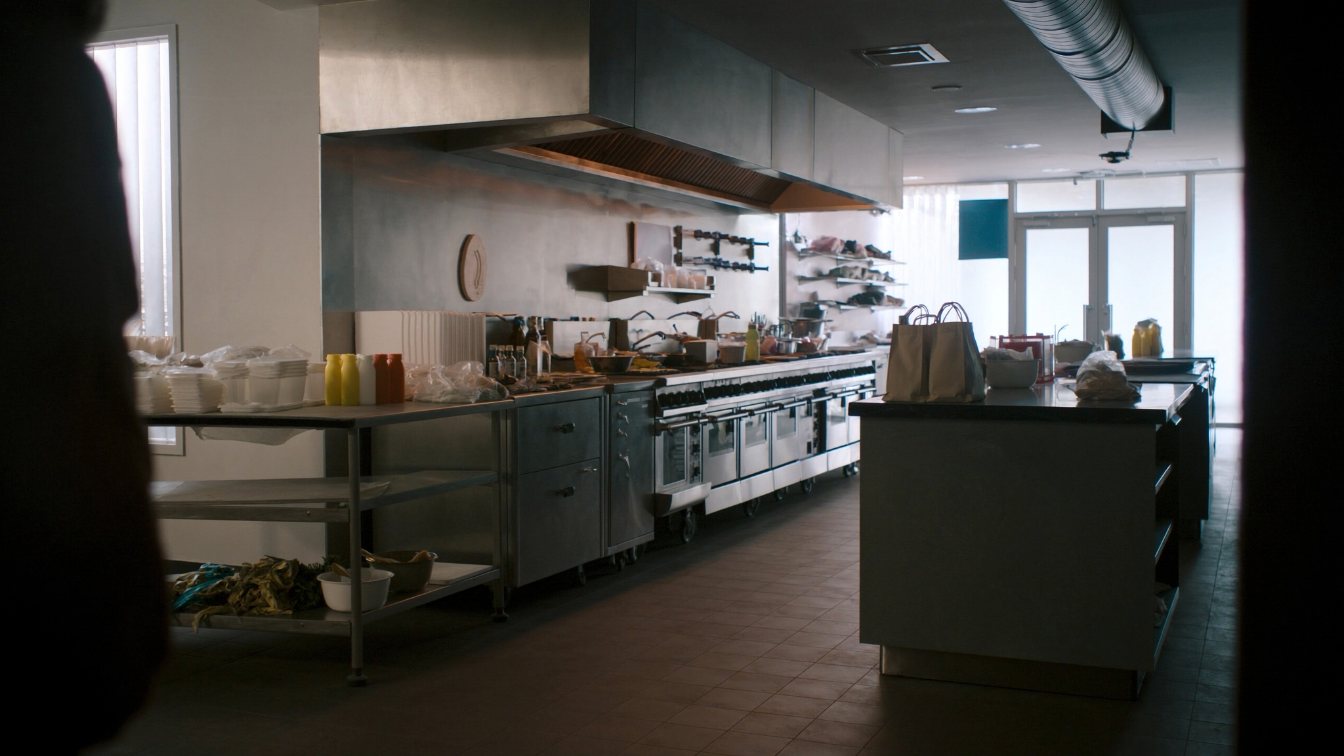
When a restaurant earns little, its price leans on what is in the room: the kitchen line, the hood and fire suppression, the walk-in, the bar, the washrooms and the finishes. Ask for an equipment list that separates owned items from leased ones, then search the seller in Ontario’s personal property registry ($8 online) to see which lenders have registered security. Leased equipment is not the seller’s to sell.
Price the replacement honestly. A working kitchen with a compliant hood is worth real money to you. Old equipment near the end of its life is worth much less than the seller paid. In Toronto, check that the grease interceptor is installed and working; the City says not having one working properly can mean conviction and fines of up to $100,000.
The costs on top of the price
| Cost | Published figure |
|---|---|
| HST on an asset purchase | 13% unless the section 167 election is made on Form GST44 |
| AGCO liquor licence transfer | $1,000 (share transfer also $1,000) |
| New Toronto eating or drinking establishment licence | $536.64 ($268.32 + $268.32) |
| PPSA search | $8 per online search |
| Sidewalk café permit, if you add or transfer a patio | $1,016.55 application, plus $44.14 + HST per m² |
| Legal, accounting, landlord’s consent fee, repairs, opening inventory, working capital | Quote-based; not published |
Sources: AGCO fee schedule, City of Toronto, Government of Ontario, CRA. On a $400,000 asset price, 13 percent HST would be $52,000 if no election applied (my arithmetic). Registered buyers can usually claim it back as an input tax credit, but you still have to fund it at closing, so ask your accountant whether the election fits. More on the tax in asset vs share purchase.
Use a range, then negotiate the terms
Price is not the only lever. A training period, a seller who holds part of the price as a loan, a holdback tied to the landlord’s consent or to sales in the first months, and a firm non-compete can all be worth as much as a lower number. Structure where you can prove things; pay a premium only for what you can verify.
For a quick outside check on an asking price, the tool below turns the seller’s figures into a range.
The AI restaurant valuation tool below gives you a price range from the numbers a seller should be able to show you, so you can test an asking price before you make an offer.
Where I fit
I help buyers across the GTA test asking prices against the seller’s documents, the lease and the equipment, and I write offers that protect the price. For the steps from offer to keys, read buying a restaurant in Ontario step by step. When you have a listing in front of you, book a call or phone 833-330-1925.
Free tool — AI restaurant valuation
Restaurant valuation
What is your restaurant
actually worth?
Restaurants don’t sell on revenue — they sell on what the owner takes home, multiplied by how easy the business is to hand over. Your lease and your rent do more damage or more good than anything on the menu. This weighs all of it in about two minutes.
Reading comparable restaurant sales…
Indicative business value
—
$0$0
Most likely sale price $0 · Implied multiple 0×
Where I’d list it
$0
Comparable restaurants sell for about 85% of asking. Price to that, not to hope.
How the number is built
Your owner earnings, multiplied by what buyers pay for a business like yours — then adjusted line by line.
What the market pays
Benchmarks from completed restaurant sales.
What a buyer will ask for
- Three years of financials — statements and tax returns, not just POS reports.
- The lease, with the assignment clause and every option in writing.
- Proof of your add-backs. Lenders reject the ones you cannot document, and that is the single biggest reason deals reprice.
- Equipment list showing what is owned outright and what is leased or financed.
- Licences — AGCO, food premises, patio, and whether each one transfers.
- WSIB, HST and payroll accounts in good standing.
Want the number a buyer
would actually sign?
Send me three years of financials and your lease and I will price it properly — normalised earnings, real comparables, a defensible asking price and a confidential marketing plan that never tips off your staff or your landlord.
Frequently asked questions
How much should I pay for a small restaurant in Ontario?
Whatever the verified owner earnings can repay after a fair wage for yourself, your loan payments and a repair reserve, within the years the lease guarantees. No Canadian regulator or lender publishes restaurant sale multiples, so build the price from the seller’s statements, HST returns, bank deposits, lease and equipment list.
What multiple do restaurants sell for in Canada?
No primary source in Canada publishes restaurant sale multiples, and private business sale prices are not public. Any multiple you are quoted is someone’s opinion. A lender will look at verified earnings, the lease term, the equipment and your own experience instead.
How do you value a restaurant for purchase?
Verify sales against HST returns and bank deposits, rebuild the profit a working owner would earn, subtract your wage, and test the loan payment. Then compare with the cost of the equipment and build-out, and check that the remaining lease term is long enough to earn back any premium for goodwill.
Is HST charged on the purchase of a restaurant in Ontario?
On an asset purchase, yes, at 13 percent, unless the buyer and seller make the section 167 election on Form GST44, which requires the buyer to take at least 90 percent of the property needed to run the business. Share purchases are generally not subject to GST/HST.
What costs are there besides the purchase price?
Published ones include the AGCO licence transfer fee ($1,000), a new Toronto eating or drinking establishment licence ($536.64), PPSA searches ($8 each) and, on an asset deal without the election, 13 percent HST. Legal, accounting, landlord consent fees, repairs, inventory and working capital are on top and depend on quotes.
Should the price include the equipment?
Usually yes, but only equipment the seller owns outright. Search the seller in Ontario’s personal property registry to see registered liens, and get copies of any equipment leases. Leased items belong to the leasing company, so they add a payment for you rather than value.
Sources
- CRA — GST/HST Memorandum 14.4, Sale of a business or part of a business — section 167 election
- CRA — Buying a business — 90% test; share purchases generally not subject to GST/HST
- CRA — GST/HST rates — Ontario 13%
- AGCO — Liquor licensing fees — transfer $1,000; share transfer $1,000; new licence from $925
- City of Toronto — Eating or drinking establishment licence — $536.64 new; zoning review rule for takeovers
- Government of Ontario — Register a security interest or search for a lien — PPSA search, $8
- City of Toronto — Sidewalk café permit — transfer may reduce the permit area
- City of Toronto — Mandatory grease interceptors for food service establishments — fines up to $100,000
- CRA — Buying an existing business — allocating the price; goodwill
Related reading
- Buying a restaurant in Ontario step by step
- Financing a restaurant purchase in Ontario
- Restaurant due diligence checklist
- What buyers must check in a restaurant lease
- How much is my restaurant worth? (seller's view)
- Restaurant valuation in Ontario
- Red flags when buying a restaurant in Toronto
About the author — Jatin Dua, Toronto and GTA real estate broker
I am Jatin Dua, Broker of Record and co-founder of RE/MAX Quantum Realty Inc., Brokerage, Unit 101, 799 The Queensway, Toronto. I work with buyers and sellers across Toronto and the GTA and have helped more than 100 families sell. Four-plus years of active GTA transactions and over $100 million in sales volume. Every figure here comes from a published table, regulator or statute linked in the sources, so you can check all of it without asking me.
Reach me at connect@jatindua.com or 833-330-1925, or book a call.