

Published 29 September 2026 · By Jatin Dua, Broker of Record, RE/MAX Quantum Realty
What's Your Home Worth Right Now?
Get a free AI-powered price range for your property in under 90 seconds, based on recent GTA comparable sales. No name or address required.
Get My Free Estimate →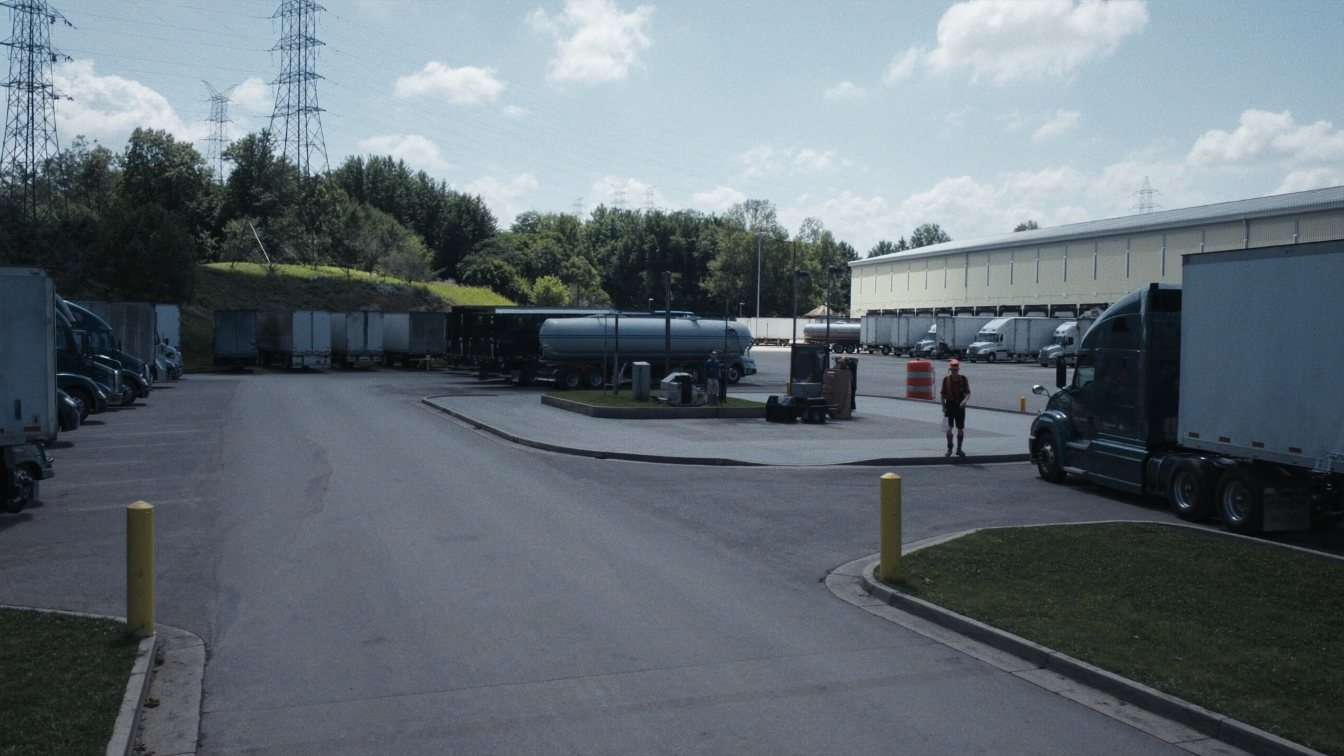
A trucking company’s most important permit does not transfer. Under section 17(7) of the Highway Traffic Act, a Commercial Vehicle Operator’s Registration (CVOR) certificate is not transferable, and trucks over 4,500 kg need one. In an asset purchase your company needs its own CVOR, and the Registrar may refuse it if you are related to an operator whose CVOR was cancelled. Buy the shares and, by my reading, the certificate and its safety record stay with the company you bought; confirm with the Ministry of Transportation. Carriers crossing provincial or international borders fall under the Canada Labour Code rather than Ontario’s Employment Standards Act. On-site fuel tanks are TSSA territory: a private outlet needs no TSSA licence, but a cardlock does, and fuel licences do not transfer either. No primary source publishes trucking company multiples.
What you are really buying
| Piece | Transfers? | What to check |
|---|---|---|
| CVOR certificate | No (HTA s. 17(7)); stays with the company in a share deal | Safety rating, audit history, violation record |
| Trucks and trailers | Yes, by bill of sale and new registration | PPSA liens, maintenance files, leases |
| Customer contracts | Only if assignable | Change-of-control and assignment clauses |
| Drivers and staff | Those you keep bring their service | Which labour law applies, hire dates |
| Fuel tanks and cardlock | Tanks yes; TSSA licences no | Tank age, leak testing, spill history |
| The yard | Lease assignment or real property purchase | Zoning, site plan, environmental history |
The yard is often the biggest risk and sometimes the biggest asset. It has its own guide: trucking yard premises in Ontario.
The CVOR and the safety record
Ontario requires a CVOR for trucks with a registered gross weight or actual weight over 4,500 kg, and for buses with 10 or more seats. The certificate is issued to a person, meaning an individual or a corporation, and the Highway Traffic Act says three things a buyer needs to know:
- It is not transferable (s. 17(7)), and each person holds only one (s. 17(6)).
- The Registrar may refuse a certificate based on the applicant’s safety record, or if the applicant is related to a person whose CVOR was cancelled or suspended, through common officers, directors or controlling shareholders (s. 17(2) and (3)).
- Safety ratings are Satisfactory, Satisfactory-unaudited, Conditional and Unsatisfactory. An Unsatisfactory rating means operating privileges are suspended or cancelled throughout Canada.
What that means in practice, by my reading and to be confirmed with the Ministry: in an asset purchase your company applies for its own CVOR and starts its own record. In a share purchase the corporation keeps its certificate, so you inherit its rating, its violation points and any open audit, good or bad. Ontario also requires operators to notify the Ministry immediately of changes to names, addresses and corporate officers, so a share deal still involves paperwork. Pull the CVOR abstract and audit history before you sign anything.
Drivers: provincial or federal labour law?
This question decides which employment statute you inherit. The federal government lists road transportation services, including trucks, that cross provincial or international borders as federally regulated; those employers follow the Canada Labour Code, not Ontario’s Employment Standards Act. A carrier that runs only within Ontario is usually provincially regulated.
- Provincial: Employment Standards Act, 2000, s. 9. Employees you keep carry their seller service; it does not apply if you hire them more than 13 weeks after the earlier of their last day and the sale.
- Federal: Canada Labour Code, s. 189. On a transfer of a federal business, employment is deemed continuous with one employer for Part III purposes.
Either way, a buyer takes on service-based entitlements. Owner-operators on contract are a separate question for your lawyer, who will look at how they are actually engaged and paid.
Fuel on site: TSSA and the Fire Code
Many yards fuel their own trucks. Under Ontario’s Liquid Fuels regulation (O. Reg. 217/01), a private outlet is premises, other than a retail outlet, where gasoline or an associated product such as diesel is put into vehicle tanks. A cardlock/keylock is an outlet not used by the general public where fuel is dispensed unsupervised.
- TSSA says private fuel outlets do not need a TSSA licence, but must follow the CSA Liquid Fuels Handling Code, and anyone working on the equipment, such as underground tanks, must be a TSSA-registered contractor.
- A cardlock does need a licence (s. 20(1)), and licences and registrations under the regulation are not transferable (s. 25(1)). A buyer applies in its own name.
- Spills and leaks must be reported (s. 13(2)).
- Under the Fire Code, an underground tank with no further use, or out of service for two years or more, must be emptied, purged and removed, with contaminated soil replaced by clean fill, unless the fire official allows it to be abandoned in place (4.3.16.2).
Ask for tank installation records, leak detection tests and any spill reports. Old, idle tanks are a cost you inherit on closing.
Environmental liability travels with the land
Ontario Regulation 153/04 lists “commercial trucking and container terminals” and “gasoline and associated products storage in fixed tanks” among its potentially contaminating activities. A phase one environmental site assessment will flag both. Spills must be reported to the Spills Action Centre (1-800-268-6060, 24 hours) by whoever caused or permitted the spill or had control of the substance.
Yards where trucks are repaired or maintained outdoors are excluded from the simpler registry route for storm water works and may need an Environmental Compliance Approval instead; I cover that in the premises guide. If you are buying the land, budget for a phase one at minimum and read how an environmental review is scoped in gas station environmental due diligence, which deals with the same fuel risks.
HST, liens and the fleet
If you buy all or substantially all of the assets needed to run the business, a joint section 167 election on form GST44 means no HST on those assets, provided you are registered. If the yard is included, it is a taxable real property sale that a registered buyer self-assesses (Excise Tax Act s. 221(2) and s. 228(4)).
Trucks and trailers are often financed. A PPSA search on the seller, $8 online through ServiceOntario, shows registered lenders; your lawyer will search by vehicle identification number as well. Get discharges on closing.
Documents to demand, and no multiple
No Canadian primary source publishes sale prices or multiples for trucking companies. Build value from proven cash flow, fleet condition and the yard. Ask for:
- The CVOR abstract, safety rating and audit reports.
- Three years of financial statements, revenue by customer, and customer contracts.
- A fleet list with year, kilometres, ownership or lease, and maintenance files.
- Driver and staff lists with hire dates, and owner-operator agreements.
- Fuel tank records, TSSA documents and any spill reports.
- The yard lease or title, zoning confirmation and any environmental reports.
If the yard is part of the deal, get a range for the real estate with the AI industrial property value estimator below.
Where I fit
I help buyers across Peel, Halton, York and Toronto look at the yard before they fall for the fleet. If the property is really a warehouse with a truck court, read buying a warehouse in Ontario; if you also service trucks on site, auto repair shop premises covers the garage side. Book a call or phone 833-330-1925.
Free tool — AI industrial property value estimator
Frequently asked questions
Can you transfer a CVOR when buying a trucking company in Ontario?
No. Section 17(7) of the Highway Traffic Act says a CVOR certificate is not transferable. In an asset purchase the buyer needs its own CVOR. In a share purchase the corporation keeps its certificate and its record, by my reading; confirm the specifics with the Ministry of Transportation.
Who needs a CVOR in Ontario?
Operators of trucks with a registered gross weight or actual weight over 4,500 kg, and buses with 10 or more seats, among others. The certificate is issued to the operator, whether a person or a corporation, and it cannot be transferred to a buyer.
Is a trucking company federally or provincially regulated for employment?
Trucking that crosses provincial or international borders is federally regulated, so the Canada Labour Code applies. A carrier operating only within Ontario is generally covered by Ontario’s Employment Standards Act. Both laws carry an employee’s service over to a buyer of the business.
Do I need a TSSA licence for diesel tanks at my truck yard?
TSSA says private fuel outlets do not need a TSSA licence, but they must follow the Liquid Fuels Handling Code and use TSSA-registered contractors. A cardlock or keylock outlet does need a licence, and fuel licences are not transferable, so a buyer applies in its own name.
How much is a trucking company worth in Ontario?
No Canadian primary source publishes sale prices or multiples for trucking companies. Value depends on proven cash flow, the fleet, the safety record and the yard, and the yard’s zoning and environmental history can change the price more than the trucks.
Sources
- Highway Traffic Act — e-Laws — s. 17(7): a CVOR certificate is not transferable
- Government of Ontario — Commercial Vehicle Operator’s Registration (CVOR) — over 4,500 kg; safety ratings; report changes immediately
- Government of Canada — Federally regulated businesses and industries — trucking that crosses provincial or international borders
- Canada Labour Code, section 189 — Justice Laws Website — continuity of employment on a transfer
- Employment Standards Act, 2000 — e-Laws — s. 9, sale of a business and continuity of employment
- O. Reg. 217/01, Liquid Fuels — e-Laws — private outlet and cardlock definitions; s. 25 licences not transferable
- TSSA — Private fuel outlets — no TSSA licence; registered contractors; Liquid Fuels Handling Code
- Ontario Fire Code, O. Reg. 213/07 — e-Laws — occupant load 2.7.1.4, fire safety plans 2.8, records 1.1.2, tanks 4.3.16
- O. Reg. 153/04, Records of Site Condition — e-Laws — industrial use definition, potentially contaminating activities, 18-month currency
- Government of Ontario — Report pollution and spills — Spills Action Centre 1-800-268-6060, 24/7
- Excise Tax Act, section 167 — Justice Laws Website — election on the sale of a business; not available where a registrant sells to a non-registrant
- Government of Ontario — Register a security interest or search for a lien — online search $8
Related reading
- Trucking yard premises in Ontario
- Buying a warehouse in Ontario
- Auto repair shop premises in Ontario
- Gas station environmental due diligence
- Buying a gas station in Ontario
- AI industrial property value estimator
- Book a call with Jatin
About the author — Jatin Dua, Toronto and GTA real estate broker
I am Jatin Dua, Broker of Record and co-founder of RE/MAX Quantum Realty Inc., Brokerage, Unit 101, 799 The Queensway, Toronto. I work with buyers and sellers across Toronto and the GTA and have helped more than 100 families sell. Four-plus years of active GTA transactions and over $100 million in sales volume. Every figure here comes from a published table, regulator or statute linked in the sources, so you can check all of it without asking me.
Reach me at connect@jatindua.com or 833-330-1925, or book a call.