

Published 23 August 2026 · Updated 29 September 2026 · By Jatin Dua, Broker of Record, RE/MAX Quantum Realty
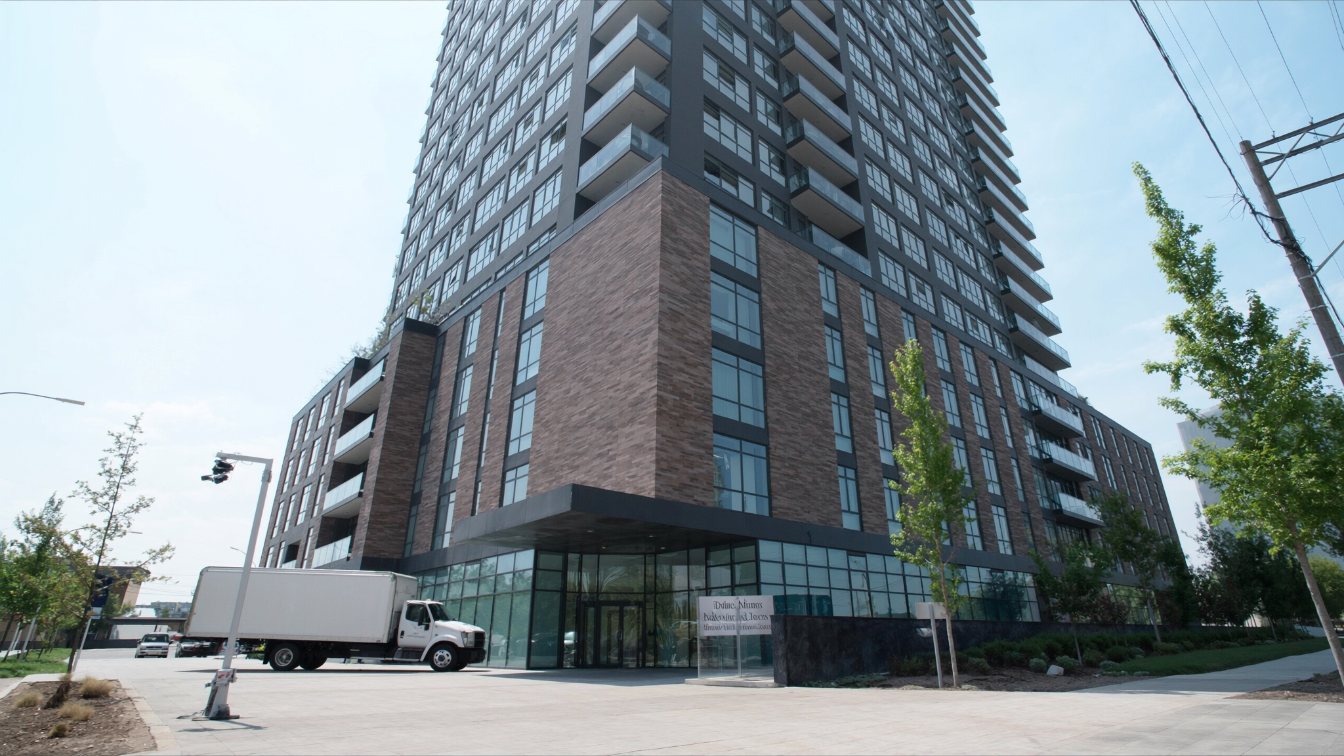
Reina at 689 The Queensway registered as condominium corporation TSCC-3158 on 23 December 2025, with first residents having moved in around mid-February 2025. That makes it a very young corporation, and buying into one is a different exercise from buying into a fifteen-year-old building.
The difference is not that new is worse. It is that the things you can verify are different. In an established building you read a decade of budgets. In a newly registered one, several of the documents you would normally rely on either do not exist yet or are based on the developer’s projections. Here is what to do about that.
What “newly registered” actually means
There are three dates in a new condominium’s life and buyers routinely confuse them:
| Stage | What happens | At Reina |
|---|---|---|
| Interim occupancy | You can move in, but you do not own yet. You pay the developer an occupancy fee — interest, taxes and a fee for common expenses — which builds no equity. | First residents reported moving in around mid-February 2025 (Storeys) |
| Registration | The corporation legally exists. Title transfers, mortgages fund, and owners start paying real maintenance fees instead of occupancy fees. | TSCC-3158, registered 23 December 2025 (condos.ca) |
| Turnover meeting | Within 21 days of the developer owning less than 20% of the units, an owner-elected board replaces the developer’s board and the corporation starts running itself. | Ask the property manager where this stands |
Roughly ten months elapsed at Reina between first occupancy and registration. That is not unusual and it is not a red flag. But it means the corporation has had a short operating life, and anyone buying a resale suite there today is buying into an entity with very little financial history.
Thinking about buying or selling here?
I work this area every week and I will give you a straight answer, including when the answer is to wait. No pressure, and no drip campaign you cannot get out of.
Call or text 833-330-1925 Send me a message
Jatin Dua, Broker of Record — RE/MAX Quantum Realty Inc., Brokerage. Not intended to solicit buyers or sellers currently under contract with another brokerage.
The seven things I would check before writing an offer
1. The first-year budget versus the second-year budget
This is the single most important one. A developer prepares the first-year budget before the building has ever operated. It is a projection, and projections for a new building have a systematic direction of error: they tend to be optimistic on utilities, insurance and staffing. Once real invoices arrive, the second-year budget is often meaningfully higher.
Ask for both budgets and compare them line by line. If you are told the second-year budget is not ready, that itself tells you where in the cycle the corporation is, and you should price for the possibility of an increase rather than assume the current fee holds.
2. The performance audit
Ontario requires a performance audit of the common elements early in a new corporation’s life, carried out by an engineer on the corporation’s behalf, to identify construction deficiencies for a Tarion warranty claim. This is the document that tells you whether the building was actually built the way it was drawn. Ask whether it has been done, whether you can see it, and what it found.
3. The reserve fund and its first study
A new corporation starts with a reserve fund contribution set by the developer, and its first comprehensive reserve fund study is done in the corporation’s early years. Until that study exists, nobody — not the board, not me, not the listing agent — actually knows whether the fund is adequately funded. Ask for the study. If it does not exist yet, that is a real, specific unknown you are taking on.
4. Whether the turnover meeting has happened
Before turnover, the developer controls the board. After turnover, owners do. It is not that developer-controlled boards behave badly — most do not — but their interests and yours are not identical, particularly on warranty claims against the developer. Knowing where the corporation sits on this timeline tells you a lot about what the next two years will look like.
5. Tarion warranty status on the suite
New homes in Ontario carry a statutory warranty administered by Tarion, with one, two and seven-year coverage periods running from the date of possession. On a resale of a recently occupied unit, some of those windows may still be open and some may have closed. Find out the original possession date, what has already been claimed, and what remains. This is a genuine dollar value attached to the unit and it is routinely ignored in negotiation.
6. Parking and locker, on the legal description
Never from a photograph, never from the listing headline. At Reina specifically, listings on condos.ca show many suites with no parking and some larger suites with one space, which suggests parking is scarce in the building. If you need a spot, confirm it is legally attached to the unit — owned or exclusive-use — before you commit, and find out what a rented spot costs if it is not.
7. The declaration and rules, actually read
Pets, short-term rentals, balcony use, flooring requirements, whether you can run a business from home. None of Reina’s rules are published on any public source I could find, so there is no substitute for reading the documents. If any of these matter to you — and for most buyers at least one does — make the offer conditional on your review and then actually review it.
In Ontario the corporation must provide a status certificate within 10 days of a written request, for a fee capped at $100 including HST. In a brand-new corporation it is the only document that bundles the budget, the reserve fund position, any special assessment, any litigation, the declaration, the by-laws and the rules. Ten days and a hundred dollars against a several-hundred-thousand-dollar decision is not a close call. Make your offer conditional on your lawyer’s review of it, and give yourself enough business days to actually get it.
The honest case for buying a young building anyway
Everything above is a list of unknowns, so let me balance it, because I do think new buildings can be excellent purchases:
- Everything is new. No roof at end of life, no elevator modernisation looming, no thirty-year-old boilers. The heavy capital cycle is decades away rather than years.
- Warranty coverage still exists. An older building has none. That is a real asset if you know what remains.
- Design reflects current standards for insulation, accessibility, ventilation and, at Reina specifically, family living — a design brief documented in independent reporting rather than only in marketing.
- Uncertainty is negotiable. If the second-year budget is unknown, that is a reason to ask for a price that accounts for it, not automatically a reason to walk. Sellers in young buildings often have not thought about this at all.
The takeaway
Reina registered in December 2025, which means anyone buying there now is buying into a corporation with under a year of real financial history. That is manageable, but only if you treat the status certificate, the performance audit and the second-year budget as required reading rather than paperwork. Bring me the unit and I’ll tell you what to ask for and how to structure the conditions so you have time to actually read it.
Buying in a building this new?
Send me the address and the unit. I’ll tell you exactly which documents to request, how many business days your condition needs, and what I’d want answered before you waive anything. I do this for clients every week and it costs you nothing to ask. No pitch, no obligation.
[email protected] · 833-330-1925 · Book a free consultation
Confidential. Reviewed personally and answered within 24 hours. I never share, sell or distribute your information.
Frequently asked questions
When did Reina Condos register as a condominium corporation?
Reina registered as TSCC-3158 on 23 December 2025, per condos.ca. Storeys reported that the first residents moved in around mid-February 2025, so there was roughly a ten-month interim occupancy period before registration.
What is the difference between interim occupancy and registration?
During interim occupancy you can live in the suite but you do not own it yet, and you pay the developer an occupancy fee made up of interest, taxes and a common expense component — none of which builds equity. At registration the corporation legally exists, title transfers to you, your mortgage funds, and you begin paying maintenance fees to the corporation instead.
Are maintenance fees likely to go up in a new condo?
It is common. The first-year budget is prepared by the developer before the building has ever operated, so it is a projection rather than a record, and projections tend to be optimistic on utilities, insurance and staffing. Once real invoices arrive, the second-year budget is often higher. Ask to compare the two budgets rather than assuming the current fee holds.
What is a performance audit in an Ontario condominium?
It is an engineering review of the common elements carried out early in a new corporation’s life to identify construction deficiencies so they can be claimed under the Tarion warranty. It tells you whether the building was built the way it was designed. Ask whether it has been completed and what it found.
Does a resale condo still have Tarion warranty coverage?
It can. Ontario’s new home warranty has one, two and seven-year coverage periods that run from the original date of possession, not from your purchase, so some windows may still be open on a recently occupied unit. Find out the original possession date and what has already been claimed — it is a real value attached to the suite.
Does Reina Condos come with parking?
Parking is assigned by suite, not by building, and no public source publishes a building-wide parking count. Listings on condos.ca show many Reina suites with no parking and some larger suites with one space, which suggests parking is scarce. Confirm it on the legal description for the specific unit before you commit.
How much does a status certificate cost in Ontario?
The fee is capped at $100 including HST, and the corporation must provide the certificate within 10 days of a written request. Make your offer conditional on your lawyer’s review of it and allow enough business days to actually receive and read it.
Sources
- condos.ca — Reina Condos, 689 The Queensway. Corporation number TSCC-3158 and its 23 December 2025 registration date, suite sizes, amenities and listing-level parking observations. Accessed 23 August 2026.
- Storeys — All-Female Team Putting Finishing Touches On Reina (7 March 2025). Reporting that first residents were welcomed in mid-February 2025, plus the amenity programme and design brief. Accessed 23 August 2026.
- Condominium Act, 1998, S.O. 1998, c. 19 (Ontario). The statute governing registration, interim occupancy fees, turnover meetings, performance audits, reserve fund studies and status certificates. Accessed 23 August 2026.
- Condominium Authority of Ontario. Ontario’s condominium regulator, with guidance for owners and buyers on corporation records, reserve funds and board turnover. Accessed 23 August 2026.
- Tarion. Administrator of Ontario’s new home warranty, including the one, two and seven-year coverage periods that run from the date of possession. Accessed 23 August 2026.
Thinking about buying or selling here?
I work this area every week and I will give you a straight answer, including when the answer is to wait. No pressure, and no drip campaign you cannot get out of.
Call or text 833-330-1925 Send me a message
Jatin Dua, Broker of Record — RE/MAX Quantum Realty Inc., Brokerage. Not intended to solicit buyers or sellers currently under contract with another brokerage.
Related reading
- Living at Reina Condos, 689 The Queensway — an honest review
- Who built Reina Condos? The team behind 689 The Queensway
- Three-bedroom condos in Etobicoke: why Reina is different
- What a status certificate tells you about an Ontario condo
- Older vs new condos in Humber Bay Shores
About the author — Jatin Dua, Etobicoke real estate agent
I’m the Broker of Record at RE/MAX Quantum Realty, 799 The Queensway in Etobicoke, a few minutes from every building on this page. I work with buyers, sellers and investors across Mimico, Humber Bay Shores, New Toronto, Long Branch, Alderwood and the Stonegate–Queensway corridor. I write these building guides the way I’d brief a client at my own kitchen table: what is documented, what isn’t, and where the published numbers disagree with each other.
Questions about a specific suite? [email protected] or 833-330-1925.