

Published 29 September 2026 · By Jatin Dua, Broker of Record, RE/MAX Quantum Realty
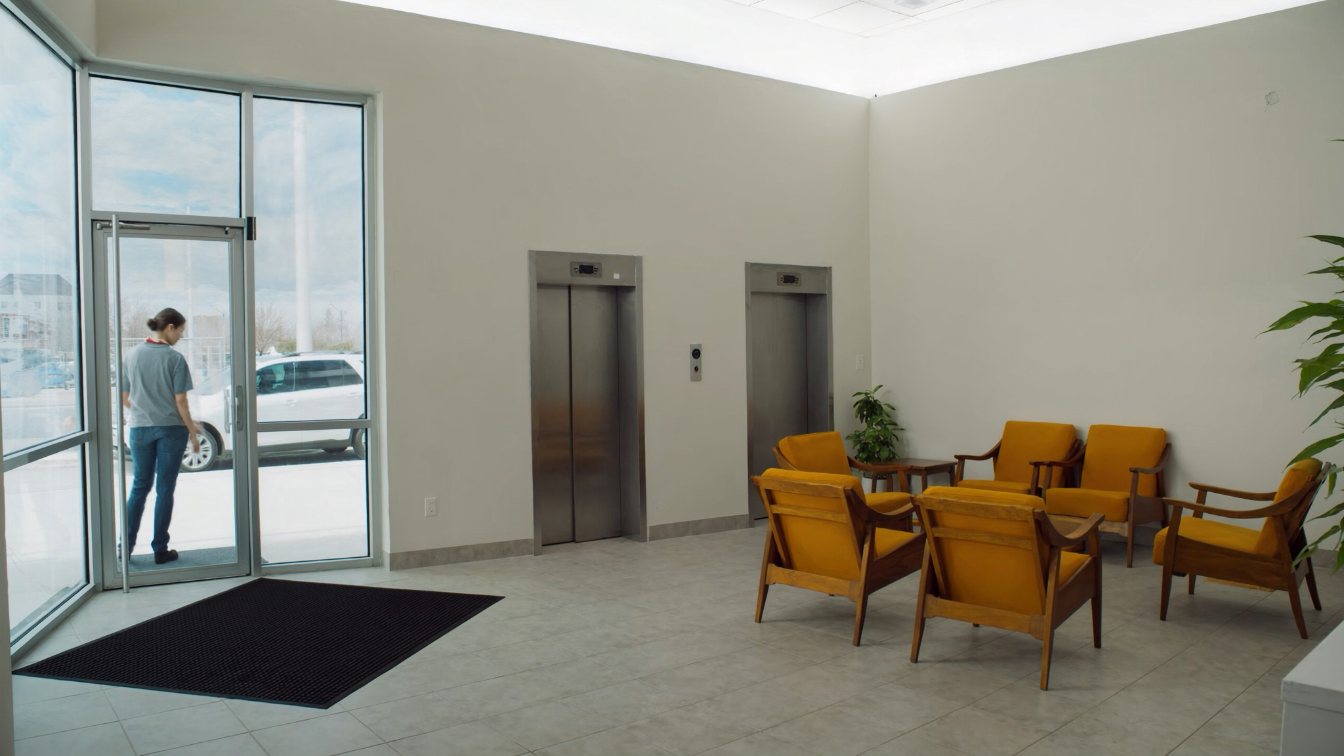
A condo building is good for seniors when getting in, out and up is easy every day and the corporation is well run. Look for more than one elevator serving your floor and ask what runs on backup power; a steady history of maintenance fees; a status certificate with no surprise special assessments and a healthy reserve fund; and transit, groceries and a hospital close by. Prices vary by area: in August 2026 TRREB’s condo apartment median was $550,000 for the City of Toronto, $525,000 in Toronto West and $482,000 in Toronto East. Seniors 65+ pay $2.25 a ride on the TTC with PRESTO, and ride free on MiWay, Oakville and Burlington buses with a senior PRESTO card.
The short version: what a senior-friendly building gets right
Most condo checklists are written for first-time buyers who care about gyms and rooftop terraces. When you are 70 and buying what may be your last home, the priorities change. You want a building that is easy to live in on a bad day: when your knee is sore, when it is snowing, when an elevator is out of service, when a family member needs to park and help you move a couch.
In my experience the buildings that work best for older owners share a few things: more than one elevator, a lobby without steps, a board and property manager who answer questions, fees that have risen steadily rather than in jumps, and a location where the doctor, the pharmacy and the grocery store are a short walk or a short bus ride away. I do not recommend specific buildings in a public article, because the right one depends on you, but this checklist will help you judge any building you see. For the bigger picture of where to retire, see my city-by-city guide to retiring in the GTA.
What condo apartments sold for in August 2026
These are TRREB’s condo apartment figures for a single month, August 2026. I use the median, the middle sale, because a few large or luxury units pull the average up.
| Area (condo apartment) | Sales | Median price |
|---|---|---|
| City of Toronto | 885 | $550,000 |
| Toronto West (incl. Etobicoke) | 160 | $525,000 |
| Toronto Central | 598 | $576,900 |
| Toronto East (incl. Scarborough) | 127 | $482,000 |
| Mississauga | 109 | $500,000 |
| Oakville | 35 | $515,000 |
| Burlington | 36 | $482,500 |
| Vaughan | 63 | $525,000 |
| Markham | 57 | $563,800 |
| Richmond Hill | 33 | $500,000 |
| Brampton | 21 | $425,000 |
| Pickering | 13* | $509,900 |
| Durham Region | 46 | $457,500 |
*Fewer than 15 sales, so treat it with caution. The gap between average and median is widest downtown: Toronto Central’s average was $698,321 against its $576,900 median. Across the GTA, condo apartments sold for about 96% of their final list price on average that month. For a specific unit, my condo value estimator is a better guide than any area median.
Elevators: count them, then ask what happens when one breaks
For an older owner the elevator is not an amenity. It is the front door. When I look at a building with a retired buyer, these are my first questions:
- How many elevators serve your floor? A building with a single elevator can leave you with stairs, or stuck, during repairs.
- Is there a separate service elevator, so move-ins and deliveries do not tie up the passenger ones?
- What has the building done lately? Ask whether the elevators have been modernized or when that is planned. It will usually show up in the reserve fund study.
- What runs on backup power? Ask the property manager whether the building has a generator and whether it powers any elevator, the hallway lights and the water pumps during an outage. Get the answer in writing if you can.
- Which floor? A lower floor means fewer stairs if you ever have to walk down. A higher floor is quieter and has better views. It is a real trade-off, and worth thinking about before you fall in love with the view.
Maintenance fees: the monthly number that keeps rising
On a fixed income, the maintenance fee matters as much as the price. It is paid every month for as long as you own the unit, and it rises over time. Ask for:
- The fee history for the last several years. Steady, modest increases are normal. A long freeze followed by a big jump can mean the board kept fees artificially low.
- What the fee includes. Heat, water, hydro, air conditioning, parking and locker are sometimes included and sometimes metered or billed separately.
- The fee per square foot, compared with similar buildings nearby. It is a rough but useful way to spot a building that is unusually expensive to run.
- The current budget. It shows what the corporation expects to spend this year and how much goes into the reserve fund.
Then put the fee into your monthly budget next to property tax, insurance and utilities. Many people compare a condo fee with the cost of running a house and find it is closer than they expected once snow clearing, lawn care and repairs are counted.
The status certificate and reserve fund: read them before you commit
The status certificate is the package the condo corporation provides that describes the financial and legal state of the building. It usually includes the budget, the reserve fund balance and study, the declaration, by-laws and rules, and notice of any special assessments or lawsuits. For a retired buyer it is the most important document in the deal.
I recommend a real estate lawyer review it, and that your offer is conditional on that review. The lawyer is looking for things like:
- Special assessments, current or proposed. These are one-time charges to owners when the reserve fund cannot cover a repair.
- The reserve fund study: whether planned contributions keep up with upcoming big-ticket work such as the roof, the garage, windows and elevators.
- Lawsuits involving the corporation.
- The insurance deductible owners may have to cover if damage starts in their unit, which affects the insurance you buy.
- Rules that could affect your life: pets, renovations, rentals, moving hours.
If the seller has not ordered the certificate, ask for it early. A thin reserve fund or a coming special assessment is exactly the surprise a retiree on a fixed income cannot absorb.
Location: transit, hospital and the daily walk
A good building in the wrong spot is still the wrong condo. Walk the route to the grocery store, the pharmacy and the bus stop yourself, ideally in bad weather. Then check the fares. Senior fares from each system’s own page:
| Transit system | Senior fare (65+) |
|---|---|
| TTC (Toronto) | $2.25 with PRESTO, $2.30 cash; after 47 eligible fares in a calendar month, the rest are free |
| MiWay (Mississauga) | Free with a PRESTO card set to the senior fare type |
| Oakville Transit | Free with PRESTO |
| Burlington Transit | Free with PRESTO |
| York Region Transit | $2.60 with PRESTO |
| Durham Region Transit | $2.53 PRESTO tap, $55.30 monthly pass |
| GO Transit | Seniors save 55% |
Ontario’s Seniors’ Public Transit Tax Credit returns up to $450 a year on up to $3,000 of eligible transit costs. If you may need door-to-door service, check eligibility for Wheel-Trans in Toronto, TransHelp in Peel or the equivalent in your region.
Know your nearest hospital too. In Etobicoke that is Etobicoke General (William Osler) or Queensway Health Centre (Trillium Health Partners); in North York, North York General or Hennick Humber Hospital; in Scarborough, the three Scarborough Health Network sites. My guide to the best Toronto neighbourhoods for retirees goes area by area.
Parking, lockers, pets and the rules
- Parking: is the space owned or exclusive-use, and how close is it to the elevator? Is there visitor parking for family and caregivers, and how long can they stay?
- Lockers: if you are coming from a house, you will want one. Check how far it is from the elevator.
- Pets: read the declaration and rules. Some buildings limit the number, size or type of pets.
- Renovations: many corporations require approval for in-suite work, including bathroom changes. If you plan to add grab bars or a walk-in shower, ask how the approval process works before you buy.
- Moving: elevator booking rules and hours matter on moving day, and again if you ever need to move out quickly.
- Short-term rentals and leasing: buildings that allow many rentals can feel less settled. Ask what share of units are rented if the manager will say.
- Community: a party room, library or garden that residents actually use can matter more than a gym you never visit.
Inside the unit: details that matter at 75 and at 85
Once the building passes, look at the suite with the same long view. A walk-in shower or a tub that can be converted. Doorways and a hallway wide enough for a walker. A threshold at the balcony door you will not trip over. In-suite laundry. Lever door handles instead of knobs, or the ability to change them. Good natural light and switches where you need them. A kitchen where the things you use every day are not above your head. And a reasonable walk from the elevator to your door; on some large floors it is further than you think.
The money: what a move from a house to a condo frees up
A house-to-condo move is where most retirees release equity. Using TRREB’s August 2026 figures, median to median, before selling costs, legal fees and land transfer tax, and purely as illustrations:
| Move | Detached median | Condo apartment median | Difference |
|---|---|---|---|
| Toronto West | $1,100,000 | $525,000 | $575,000 |
| Toronto East | $950,000 | $482,000 | $468,000 |
| Markham | $1,488,000 | $563,800 | $924,200 |
| Oakville | $1,604,000 | $515,000 | $1,089,000 |
On a $550,000 condo in the City of Toronto, Ontario land transfer tax works out to $7,475 and Toronto’s municipal land transfer tax another $7,475, about $14,950 together (my arithmetic on the published brackets). Property tax is charged on the MPAC assessed value, not the price; Toronto’s 2026 residential rate is 0.767311%, or about $767.31 per $100,000 of assessment. Add the maintenance fee and you have your real monthly cost. The downsizing money planner below puts staying and moving side by side. For the tax side of selling, see selling your home in retirement: the tax side, and talk to your accountant about your own situation.
Your checklist before an offer
- Count the elevators serving your floor, and ask about backup power.
- Get the fee history, the current budget and what the fee includes.
- Make the offer conditional on your lawyer’s review of the status certificate.
- Read the rules on pets, renovations, parking and moving.
- Walk to the bus stop, grocery store and pharmacy yourself.
- Check your senior fare and your nearest hospital.
- Look at the unit as you will use it in ten or fifteen years.
If you are weighing a condo against staying in your house, I am happy to walk through the numbers with you. Book a call or phone 833-330-1925.
Free tool — Downsizing money planner
Downsizing money planner
See roughly how much a move frees up, what the next place costs, and how long the money lasts. Prices start at TRREB’s August 2026 medians; change any number to match your home.
Want the line-by-line breakdown, plus what homes like yours actually sold for on your street? I’ll show the full breakdown here and send you a short written plan. No obligation, no spam.
Estimates only, not advice or a valuation. Starting prices are TRREB Market Watch August 2026 medians (one month, whole-municipality figures). Rent default: Rentals.ca August 2026 Toronto average asking rent. Retirement home default: CMHC’s last Seniors’ Housing Survey (2021, Toronto, studio or private room with meals; CMHC has since discontinued it), so expect higher today. Land transfer tax uses Ontario’s brackets, plus Toronto’s municipal tax for Toronto purchases; repeat buyers get no first-time rebate. Property tax is estimated on the price, but your bill is based on MPAC’s assessed value, which is usually lower.
Frequently asked questions
What should seniors look for when buying a condo in Toronto?
Start with the building: more than one elevator, a step-free entrance, backup power, steady maintenance fees and a status certificate without surprise special assessments. Then the location: transit, a grocery store, a pharmacy and a hospital nearby. Then the unit: a walk-in shower or convertible tub, wide doorways, in-suite laundry and a short walk from the elevator.
How much is a condo in Toronto for a retiree in 2026?
TRREB’s condo apartment median for the City of Toronto was $550,000 in August 2026, with Toronto West at $525,000 and Toronto East at $482,000. That is one month of data, and a specific unit can be well above or below. Budget for land transfer tax, legal fees, moving and monthly maintenance fees on top of the price.
What is a status certificate and why does it matter?
It is a package from the condo corporation describing the building’s finances and legal position: the budget, the reserve fund, any special assessments or lawsuits, and the rules. For a retiree on a fixed income it shows whether a large one-time charge could be coming. Have a lawyer review it and make your offer conditional on that review.
Do seniors ride the TTC for free?
No. Seniors 65 and older pay $2.25 with PRESTO or $2.30 cash on the TTC. Since 31 August 2026, once you pay 47 eligible TTC fares in a calendar month, the rest of that month is free. Seniors do ride free with a senior PRESTO card on MiWay in Mississauga and on Oakville and Burlington Transit.
Are condo fees higher than the cost of keeping a house?
Sometimes, sometimes not. Condo fees cover shared costs such as the building, grounds, snow clearing and the reserve fund. In a house you pay those things yourself, often irregularly. Add up a year of house costs, including repairs and outside help, and compare it honestly with the condo fee plus your in-suite utilities.
Sources
- TRREB — Market Watch, August 2026 — condo apartment and detached sales and medians by area; 96% of list
- TTC — Fares and passes — senior fare and 47-fare monthly cap
- City of Mississauga — MiWay fare prices — free senior PRESTO fare
- Oakville Transit — Kids, Youth and Seniors Ride Free — free for seniors with PRESTO
- City of Burlington — Burlington Transit fares — free for seniors with PRESTO
- York Region Transit — Fare Chart — senior PRESTO fare
- Durham Region Transit — Fares — senior PRESTO fare and monthly pass
- GO Transit — Seniors — 55% senior discount
- Government of Ontario — Ontario Seniors' Public Transit Tax Credit — up to $450 on $3,000
- City of Toronto — Property Tax Rates and Fees — 2026 residential rate
- Government of Ontario — Calculating land transfer tax — provincial brackets
- City of Toronto — Municipal Land Transfer Tax rates and fees — municipal brackets
Related reading
- Best Places to Retire in the GTA (2026): A City-by-City Comparison
- Best Toronto Neighbourhoods for Retirees
- Buying a Bungalow in Retirement (GTA)
- What Your House Buys When You Downsize, City by City
- Sell and Rent in Retirement?
- Condo value estimator
- Downsizing in Toronto
About the author — Jatin Dua, Toronto and GTA real estate broker
I am Jatin Dua, Broker of Record and co-founder of RE/MAX Quantum Realty Inc., Brokerage, Unit 101, 799 The Queensway, Etobicoke. I work with buyers and sellers across Toronto and the GTA, and I have helped more than 100 families sell, many of them downsizing after decades in the same house. Four-plus years of active GTA transactions and over $100 million in sales volume. Every market figure here comes from TRREB’s published tables and every rule from the regulator or the legislation, so you can check all of it without asking me.
Reach me at connect@jatindua.com or 833-330-1925, or book a call.