

Published 29 September 2026 · By Jatin Dua, Broker of Record, RE/MAX Quantum Realty
What's Your Home Worth Right Now?
Get a free AI-powered price range for your property in under 90 seconds, based on recent GTA comparable sales. No name or address required.
Get My Free Estimate →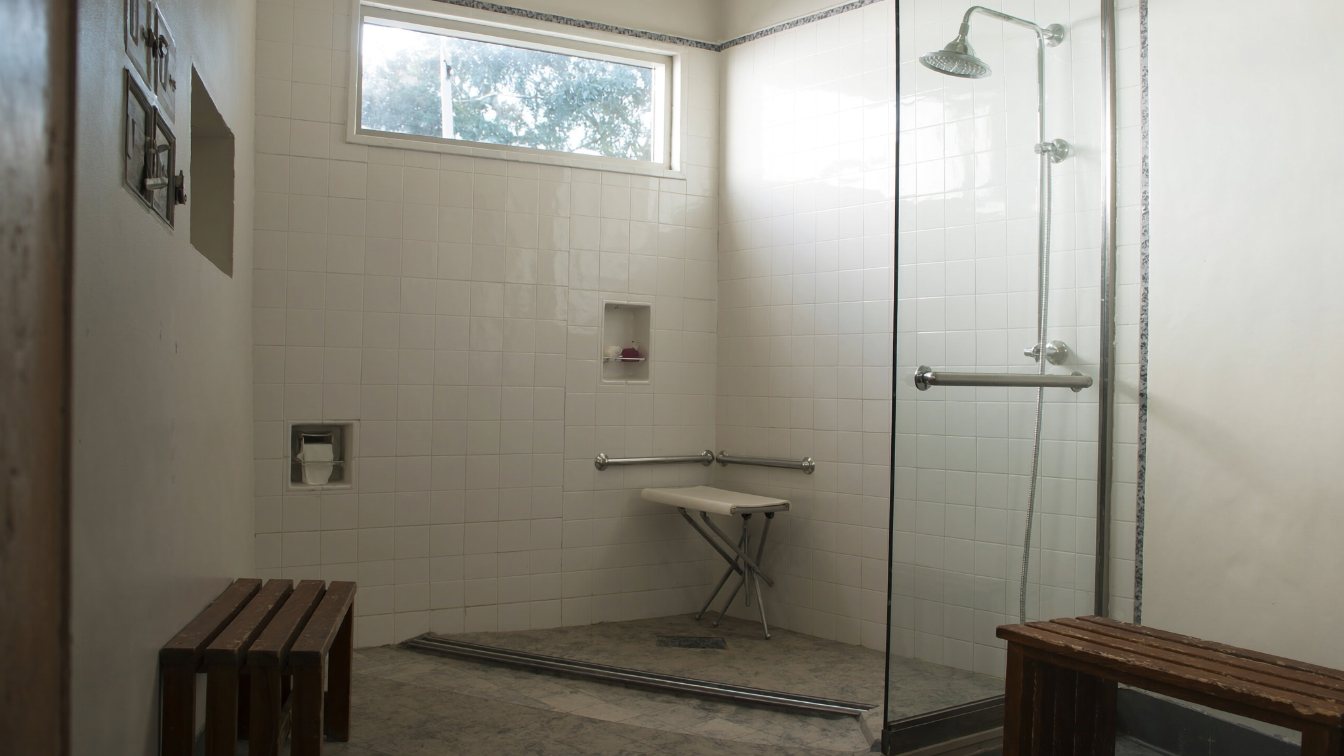
The renovations that matter most are the ones that remove daily risks: a step-free entrance, a main-floor bathroom with a walk-in shower and grab bars, secure railings on every stair, and a bedroom and laundry on the main floor. Four programs can help pay. The federal Home Accessibility Tax Credit covers up to $20,000 of eligible expenses a year per home. The Multigenerational Home Renovation Tax Credit covers up to $50,000 of costs to build a self-contained unit for a senior relative (14.5%, up to $7,250, on CRA’s 2025 page). March of Dimes funds modifications for people with a mobility disability, with an income test. And the Ontario Seniors Care at Home Tax Credit returns up to $1,500 on eligible medical expenses for people 70+. Check each with your accountant before you start.
Aging in place, in plain terms
Aging in place means staying in your own home as you get older, with the changes and support that make that safe. It is a practical question, not a sentimental one: can this house work for you at 80 and 90, and what will it cost to get it there?
This guide is about the renovations and the money that helps pay for them anywhere in Ontario. If you are still deciding whether to stay or move at all, I have covered that choice separately in aging in place vs downsizing in Etobicoke, and my guide to retiring in Toronto and the GTA compares cities if a move is on the table. Here I assume you want to stay and want to do it well.
I do not quote renovation prices here. They vary too much by house and contractor, and I would rather you get two or three written quotes than rely on a number from an article.
At a glance: four sources of help
| Program | Who it is for | What it covers | Type |
|---|---|---|---|
| Home Accessibility Tax Credit (federal) | Someone 65+ at year-end, or eligible for the disability tax credit | Up to $20,000 of eligible expenses per year, per home | Non-refundable tax credit |
| Multigenerational Home Renovation Tax Credit (federal) | Families creating a self-contained unit for a senior 65+ or an adult eligible for the disability tax credit | Up to $50,000 of expenses per qualifying renovation; 14.5%, max $7,250 on CRA’s 2025 page | Refundable tax credit |
| Home and Vehicle Modification Program (March of Dimes, Ontario) | Ontario residents with a permanent or ongoing mobility disability, with an income test | Home and vehicle modifications; FAQ says up to $15,000 per applicant (undated) | Funding program |
| Ontario Seniors Care at Home Tax Credit | People 70+ (or with a spouse 70+), income-tested | 25% of up to $6,000 of claimable medical expenses, max $1,500 | Refundable tax credit |
Each has its own paperwork and timing, and you should not assume the same expense can be claimed twice. Your accountant is the right person to decide which to claim.
The renovations that make the biggest difference
When I walk a house with an older couple who want to stay, I look for the places where a fall is most likely and where a small change removes a big problem:
- The entrance. Steps up to the front door, no railing, a heavy door. A ramp, a railing on both sides or a regraded walk can change daily life.
- The bathroom. A curbless or low-threshold walk-in shower, grab bars fixed into solid backing, a comfort-height toilet and a non-slip floor.
- Stairs. Solid railings on both sides, good lighting at top and bottom, and in some homes a stair lift.
- A main-floor bedroom and laundry. Often the change that decides whether a two-storey house works long term.
- Doors and hardware. Wider doorways where a walker or wheelchair may be needed, lever handles instead of knobs.
- Lighting and flooring. Brighter lights, switches at both ends of halls, night lights, and removing loose rugs and raised thresholds.
- The kitchen. Moving everyday items to counter height, pull-out shelves, and a work surface you can use sitting down.
An occupational therapist can assess the home and recommend changes for your specific needs. Their written recommendations can also help when you apply for funding.
Federal Home Accessibility Tax Credit
This is the credit most retirees hear about first. The rules on CRA’s line 31285 page:
- It is a non-refundable credit, so it reduces tax you owe but does not pay out if you owe none.
- It applies to up to $20,000 of eligible expenses per year, per home.
- The qualifying individual is someone 65 or older at the end of the year, or someone eligible for the disability tax credit.
- CRA’s page explains which renovation expenses qualify; keep it open when you talk to your contractor.
On the dollar value, I am not going to give you a figure. CRA’s own pages do not agree on the current amount. Ask your accountant what it is worth for the tax year you plan to claim, and keep every invoice and receipt.
Multigenerational Home Renovation Tax Credit
This one is for families building a self-contained secondary unit so a senior (65+) or an adult eligible for the disability tax credit can live with a qualifying relation. Think of a basement apartment or a garden suite with its own entrance, kitchen, bathroom and sleeping area.
- It is refundable, so it can pay out even if you owe no tax.
- It applies to up to $50,000 of eligible expenses per qualifying renovation.
- CRA’s 2025 line 45355 page shows a rate of 14.5%, for a maximum of $7,250. CRA’s undated housing guide still shows 15% and $7,500, so the figure depends on the tax year. Confirm it for the year you claim.
If you are thinking about building a suite for a parent, my guide to moving a parent in covers Ontario’s three-unit rule and Toronto’s garden and laneway suite rules.
March of Dimes Home and Vehicle Modification Program
The Home and Vehicle Modification Program (HVMP) is run by March of Dimes Canada and funds changes for Ontario residents with a permanent or ongoing mobility disability. Unlike the tax credits, it is a funding program you apply to before the work. Income limits are based on after-tax household income:
| Household | Full funding if income is at or below | Not eligible above |
|---|---|---|
| 1 adult | $38,000 | $54,000 |
| 2 adults | $54,000 | $65,000 |
| 3 adults | $65,000 | $71,000 |
Between those two limits, the household contributes part of the cost, from 10% to 60%. The program’s FAQ gives a maximum of $15,000 per applicant; that document is undated, so confirm the current limit when you apply. Check the application steps before you sign a contract with a builder.
Ontario Seniors Care at Home Tax Credit
This provincial credit helps older people with eligible medical expenses, which can include some costs of staying at home. The rules from Ontario’s page:
- You (or your spouse) must be 70 or older.
- It is refundable: 25% of up to $6,000 of claimable medical expenses, for a maximum of $1,500.
- It is reduced by 5% of family net income over $35,000 and is fully phased out at $65,000.
- You claim it on form ON479 with your tax return.
Not every renovation counts as a medical expense, so ask your accountant which of your costs qualify before you assume this credit applies.
Property tax relief and other help
- Property tax relief for accessibility modifications. Ontario’s seniors guide says relief may be available for changes such as building a ramp. MPAC can explain how it works: 1-866-296-6722.
- Ontario Senior Homeowners’ Property Tax Grant: up to $500 a year for homeowners 64 and older with lower incomes, claimed with your tax return.
- Ontario Energy and Property Tax Credit: for the July 2026 to June 2027 benefit year, the maximum for seniors is $1,488.
- Local programs. Toronto, for example, offers tax increase cancellation and deferral for eligible seniors with household income up to $62,000; the 2026 deadline is 2 November 2026. My guide to property tax relief for seniors, city by city lists each municipality.
When renovating is the wrong answer
Sometimes the honest conclusion is that the house cannot be made to work at a sensible cost: every bedroom is upstairs, the only bathroom is on the second floor, the lot slopes steeply to the door. In that case the renovation budget may be better spent on a move.
For context, TRREB’s August 2026 figures (one month) put the Toronto West detached median at $1,100,000 and the Toronto West condo apartment median at $525,000, a gap of about $575,000 median to median, before costs, as an illustration. A one-floor alternative such as a bungalow or a condo may free up money rather than consume it. The downsizing money planner below compares the monthly cost of staying and renovating with the cost of moving. If you are considering borrowing to renovate, read reverse mortgage vs HELOC vs selling first.
Next steps
- Ask an occupational therapist to assess the house for your needs today and in ten years.
- List the changes in order of risk, starting with the entrance and the bathroom.
- Get two or three written quotes for each job.
- If a mobility disability is involved, look into the March of Dimes program before signing any contract.
- Talk to your accountant about which credits to claim and in which tax year.
- Keep every invoice and receipt in one folder.
- Compare the total with what a move would cost and free up.
If you want an honest view on whether your house is worth adapting or whether a move makes more sense, book a call or phone me at 833-330-1925.
Free tool — Downsizing money planner
Downsizing money planner
See roughly how much a move frees up, what the next place costs, and how long the money lasts. Prices start at TRREB’s August 2026 medians; change any number to match your home.
Want the line-by-line breakdown, plus what homes like yours actually sold for on your street? I’ll show the full breakdown here and send you a short written plan. No obligation, no spam.
Estimates only, not advice or a valuation. Starting prices are TRREB Market Watch August 2026 medians (one month, whole-municipality figures). Rent default: Rentals.ca August 2026 Toronto average asking rent. Retirement home default: CMHC’s last Seniors’ Housing Survey (2021, Toronto, studio or private room with meals; CMHC has since discontinued it), so expect higher today. Land transfer tax uses Ontario’s brackets, plus Toronto’s municipal tax for Toronto purchases; repeat buyers get no first-time rebate. Property tax is estimated on the price, but your bill is based on MPAC’s assessed value, which is usually lower.
Frequently asked questions
What renovations help seniors stay in their home?
The most useful are a step-free or ramped entrance, a main-floor bathroom with a walk-in shower and grab bars, solid railings on both sides of stairs, better lighting, lever handles and, where possible, a main-floor bedroom and laundry. An occupational therapist can recommend changes specific to your needs and your house.
How much is the Home Accessibility Tax Credit?
It applies to up to $20,000 of eligible expenses per year, per home, for someone 65 or older or eligible for the disability tax credit. It is non-refundable. CRA’s pages do not agree on the current credit amount, so I do not quote one; ask your accountant what it is worth for the tax year you claim.
Is there a grant for seniors to renovate their home in Ontario?
The March of Dimes Home and Vehicle Modification Program funds modifications for Ontario residents with a permanent or ongoing mobility disability, based on household income. Its FAQ mentions up to $15,000 per applicant, but the document is undated. Check the application steps before you start the work.
Can I claim a tax credit for building a suite for my mother?
Possibly. The Multigenerational Home Renovation Tax Credit applies to up to $50,000 of expenses to create a self-contained secondary unit so a senior 65+ or an adult eligible for the disability tax credit can live with a relative. CRA’s 2025 page shows 14.5%, up to $7,250. Confirm with your accountant.
Is it cheaper to renovate or to move?
It depends on the house. If a few changes to the entrance and bathroom make it work, staying is often cheaper. If every bedroom and bathroom is upstairs, a move may free up money instead. Compare real quotes with the likely sale price and the cost of your next home before deciding.
Sources
- Canada Revenue Agency — Line 31285, Home accessibility expenses — $20,000 limit, qualifying individual, non-refundable
- Canada Revenue Agency — Multigenerational home renovation tax credit (line 45355) — $50,000 limit, 14.5%, max $7,250
- Canada Revenue Agency — Your CRA guide to taxes and housing benefits — undated guide showing 15% / $7,500
- March of Dimes Canada — HVMP Eligibility — mobility disability and income limits
- March of Dimes Canada — HVMP FAQ — $15,000 per applicant (undated)
- Government of Ontario — Ontario Seniors Care at Home Tax Credit — 70+, 25% of up to $6,000, income phase-out
- Government of Ontario — A guide to programs and services for seniors: Home and housing — property tax relief for accessibility modifications
- Government of Ontario — Senior Homeowners' Property Tax Grant — up to $500 a year
- Canada Revenue Agency — Ontario Energy and Property Tax Credit questions and answers — seniors maximum $1,488 for 2026 benefit year
- City of Toronto — Property Tax, Water and Solid Waste Relief — $62,000 income limit, 2 November 2026 deadline
- TRREB — Market Watch, August 2026 — Toronto West detached and condo apartment medians
Related reading
- Best Places to Retire in the GTA (2026): A City-by-City Comparison
- Aging in place vs downsizing in Etobicoke
- Moving a Parent In: Suites, Additions and Rules in Ontario
- Buying a Bungalow in Retirement (GTA)
- Property Tax Relief for Seniors, City by City
- Reverse Mortgage vs HELOC vs Selling
- Inspection checklist for 1950s and 1960s bungalows
About the author — Jatin Dua, Toronto and GTA real estate broker
I am Jatin Dua, Broker of Record and co-founder of RE/MAX Quantum Realty Inc., Brokerage, Unit 101, 799 The Queensway, Etobicoke. I work with buyers and sellers across Toronto and the GTA, and I have helped more than 100 families sell, many of them downsizing after decades in the same house. Four-plus years of active GTA transactions and over $100 million in sales volume. Every market figure here comes from TRREB’s published tables and every rule from the regulator or the legislation, so you can check all of it without asking me.
Reach me at connect@jatindua.com or 833-330-1925, or book a call.