
Published 2 November 2026 · By Jatin Dua, Broker of Record, RE/MAX Quantum Realty
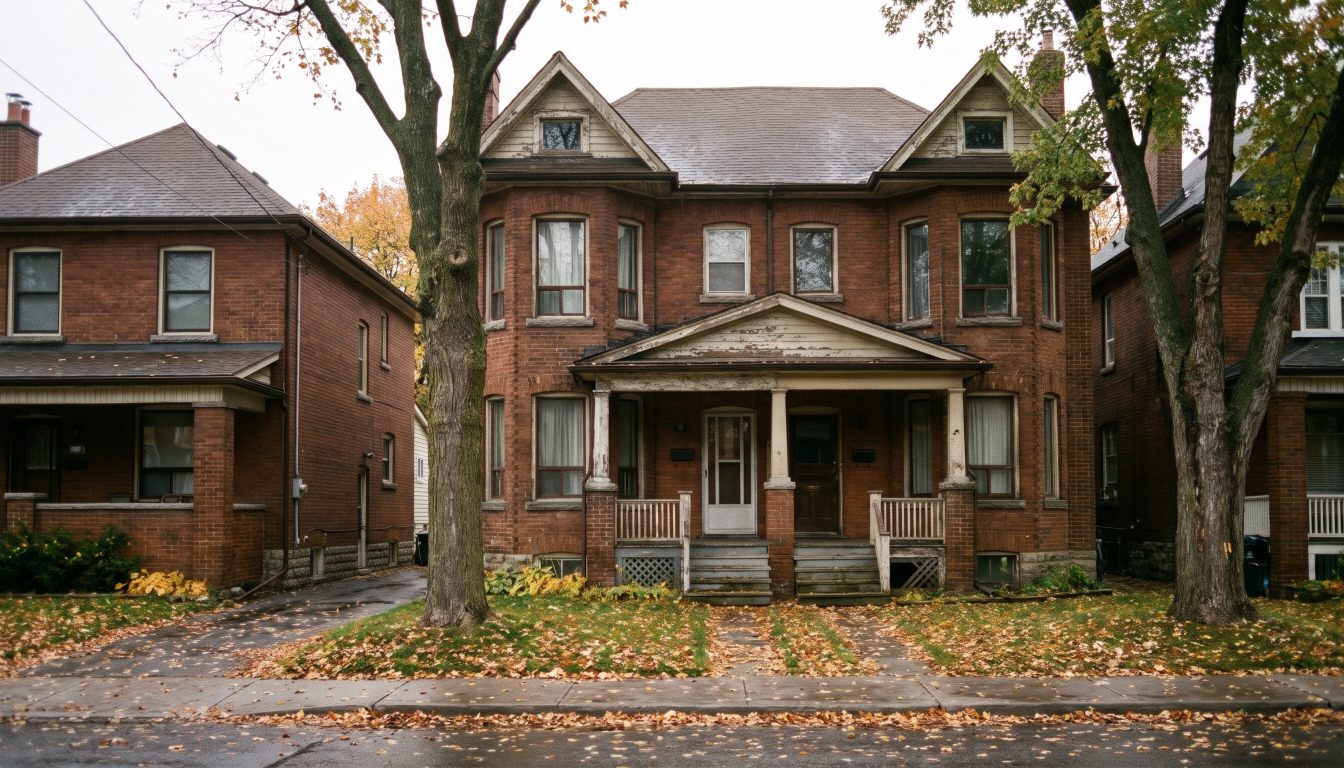
A semi-detached house cost about 24% less than a detached house in the GTA in January to October 2026: $1,012,049 on average versus $1,326,055, according to TRREB. Semis also sold faster. Resale values moved about the same in most cities, so buy a semi to save money, and a detached home for privacy and freedom to renovate.
This guide is for GTA buyers deciding between a detached house and a semi-detached house in 2027, and for owners wondering which holds value better. You will get the real 2026 price gap city by city, how fast each type sells, how resale values moved, the shared-wall issues most buyers miss, and a plain answer on who should buy which.
How much cheaper is a semi than a detached house in the GTA?
About $314,000 on average, or roughly 24% less. From January to October 2026, TRREB reported an average detached sale price of $1,326,055 across its whole market area, against $1,012,049 for semi-detached homes. A semi-detached house, or “semi”, is one of two homes joined by a shared wall. A detached house stands on its own lot with no shared walls.
TRREB’s benchmark prices, which compare typical homes over time, tell the same story. In October 2026 the benchmark single-family detached home was $1,194,200 and the benchmark single-family attached home, the category that covers semis, was $914,300. Both were down about 4% from a year earlier.
Semis are also much rarer. They made up about 9% of TRREB sales so far in 2026, against about 47% for detached homes. In some cities, such as Oakville and Richmond Hill, fewer than 80 semis sold in ten months, so the choice is thin.
What is the detached vs semi price gap in each GTA city?
The gap changes a lot by city, and in a few Toronto districts it almost disappears. In Brampton, a semi saved you about $160,000 at the median. In Oakville it saved $640,000. In Toronto’s W03 district, the median semi actually sold for more than the median detached home.
| Area | Detached median | Semi median | Gap | Days on market (det. / semi) |
|---|---|---|---|---|
| Brampton | $950,000 | $790,000 | $160,000 | 30 / 28 |
| Mississauga | $1,225,000 | $885,000 | $340,000 | 31 / 26 |
| Milton | $1,130,000 | $912,000 | $218,000 | 32 / 24 |
| Oakville | $1,625,000 | $985,000 | $640,000 | 33 / 27 |
| Vaughan | $1,415,000 | $1,040,000 | $375,000 | 30 / 28 |
| Markham | $1,420,000 | $1,025,000 | $395,000 | 29 / 28 |
| Ajax | $925,000 | $810,000 | $115,000 | 23 / 22 |
| Oshawa | $730,000 | $610,000 | $120,000 | 25 / 21 |
| Toronto E03 (Danforth, East York and nearby) | $1,195,000 | $1,085,000 | $110,000 | 24 / 14 |
| Toronto W02 (High Park North, Bloor West Village, Junction) | $1,637,500 | $1,250,000 | $387,500 | 14 / 16 |
| Toronto W03 (Corso Italia, Weston-Pellam Park and nearby) | $882,500 | $948,400 | Semi higher | 29 / 23 |
Source: TRREB MLS data via REALM, January–October 2026. City-wide and TRREB district medians, not neighbourhood figures.
The lesson: location usually moves price more than the type of house. A semi on a strong street can cost more than a detached home a few kilometres away. For every city’s semi prices, see my GTA semi-detached prices for 2027, and for the detached side, my GTA detached home prices for 2027.
Do semis sell faster than detached homes?
Yes, in most of the GTA. In October 2026, TRREB reported that GTA semis sold in 22 days on average and at 101% of the asking price. Detached homes took 29 days and sold at 97% of asking. In the City of Toronto, semis averaged 102% of asking that month, which means many still drew more than one offer.
Supply is part of the reason. In October 2026 there were 1,333 semis listed for sale across TRREB’s area, against 11,721 detached homes. Price is the other part. About 71% of GTA semis sold so far in 2026 went for between $700,000 and $1.25 million, a range where many first-time and move-up buyers shop. Few listings and steady demand at that price usually means quicker sales.
Is a semi-detached house worth it compared with a detached?
Often, yes, if the lower price changes what you can afford. A semi gives you your own front door, your own land and usually a basement and backyard, with no condo fee. The trade-off is a shared wall and, usually, a narrower lot.
The bigger money point is the cash you need to buy. In Canada, homes priced at $1.5 million and up need at least 20% down and cannot get an insured mortgage. Below that, the minimum is 5% of the first $500,000 and 10% of the rest.
| Example (2026 price) | Minimum down payment | Land transfer tax |
|---|---|---|
| Mississauga detached, $1,225,000 | $97,500 | $20,975 |
| Mississauga semi, $885,000 | $63,500 | $14,175 |
| Toronto detached average, $1,595,953 | $319,191 (20%) | $56,788 |
| Toronto semi average, $1,222,951 | $97,295 | $41,868 |
Source: TRREB MLS data via REALM, January–October 2026 (Toronto figures are sales-weighted averages of all Toronto districts); my calculation from Ontario and Toronto land transfer tax rates, before first-time buyer refunds.
In Toronto the gap is dramatic. The average detached home crosses the $1.5 million line, so the minimum down payment jumps to about $319,000. The average semi stays under it, at about $97,000. Toronto buyers also pay the city’s own land transfer tax on top of Ontario’s.
Instant Home Valuation
What’s your home
worth today?
Answer six quick questions and get an instant value range built from current Toronto & GTA sale data — property type, size, condition, lot and location all weighted the way a real pricing conversation weighs them. Takes about ninety seconds.
Reading recent GTA sale data…
Building your estimate
Estimated market value
—
$0–$0
Most likely value $0 · roughly $0 per square foot
What moved the number
Starting from the area baseline for your property type, here’s what each answer added or subtracted.
Market context
Recent local averages for comparison.
—
A range is a starting point.
A strategy is what sells.
This model doesn’t know that your neighbour’s identical semi went $80,000 over asking last month, or which two upgrades actually pay back in your area. That conversation is free and takes twenty minutes.
Do semi-detached homes hold their resale value as well as detached homes?
About as well, but it depends on the city. I compared median prices from January to October 2024 with the same months of 2026. There was no clear winner.
- Semis held up better in Ajax (semis down 5.8%, detached down 11.9%), Newmarket (down 9.3% vs 15.4%) and Pickering (down 8.5% vs 12.6%).
- Detached held up better in Oakville (semis down 15.8%, detached down 7.8%) and Markham (down 19.9% vs 13.9%).
- About the same in Brampton (down 14.4% vs 15.7%), Milton (both down 10.3%) and Mississauga (down 11.5% vs 10.7%).
Source: TRREB MLS data via REALM, January–October 2024 vs January–October 2026, city-wide medians.
So do not buy a semi expecting it to be “safer” or a detached home expecting it to grow faster. Both follow the local market. What protects resale is the street, the lot, the condition and the price you pay. On resale, buyers do pay for a wider lot, a private driveway and a well-kept shared wall, so those details matter when you buy.
What are the downsides of a semi-detached house?
The shared wall
The wall between the two halves is called a party wall. Ontario has no party wall law like the one in England. A Toronto builder writing in Canadian Contractor explained that work on a shared wall normally needs a party wall agreement signed by the neighbour, and that there is no simple legal way to force a neighbour to sign. Additions and underpinning can become hard if the two owners do not get along.
Your neighbour’s renovation
CBC Toronto has reported on an east-end semi where the owner said a neighbour’s renovation caused cracks and water damage, and the city found building code violations on the project. The City of Toronto’s chief building official advised neighbours to talk early and agree on protective measures before work starts.
Noise and upkeep
You share a wall, so sound can carry, especially in older homes. The roof line, eavestroughs and front porch are often joined too, so a leak on one side can affect the other. A detached house removes all of these issues.
Before you buy a semi, ask your home inspector to look closely at the shared wall, the shared roof line and the basement on your side for cracks or water. Ask the seller whether the neighbour has done or plans any major work, and whether any party wall agreement exists. Have your lawyer check title for anything registered between the two lots.
Can you add a suite or extra units to a semi?
Yes, in Toronto, within the rules. Toronto allows garden suites, which are small homes in the backyard, on semi-detached lots as well as detached and townhouse lots, if the zoning, building code and tree rules are met. Only one garden suite is allowed per property. Toronto has also allowed multiplexes of up to four units as of right city-wide since May 2023.
In practice, a detached lot is usually wider and easier to work with for a basement suite with its own entrance or a garden suite with fire access. Check with a designer and the city before you count on rental income from either type. Other GTA cities have their own rules for extra units, so check the local zoning.
Detached or semi: who should buy which?
Buy a semi if you:
- Want a house with land and no condo fee, but a detached home stretches your budget.
- Want to stay under the $1.5 million line so you can buy with less than 20% down.
- Value location, such as a subway stop or a walkable main street, more than lot width.
Buy a detached house if you:
- Plan a big addition, a second storey or a separate suite and want no neighbour sign-off.
- Want more privacy, less noise and full control of your roof, walls and yard.
- Are buying in a city where the gap is small, such as Ajax, Oshawa or Brampton, and can stretch a little.
I help buyers across the GTA with this choice every season. My view, and it is only a view: where the gap is $100,000 to $160,000, as in Brampton, Ajax or Oshawa, I lean toward the detached house if the payment works, because you get full control for a modest premium. Where the gap is $350,000 or more, a well-located semi is often the smarter buy. For a three-way look that adds townhouses, see my condo vs townhouse vs semi guide.
What to do next
- Get pre-approved and check whether your price range crosses $1.5 million.
- Compare the detached and semi medians in your target city using the table above.
- Shortlist streets first, then look at both home types on those streets.
- For any semi, book an inspection that covers the shared wall and ask about the neighbour’s plans.
- Budget all your closing costs with my guide to buyer closing costs in Ontario for 2027.
Need help with this? Talk to me.
I’m Jatin Dua, Broker of Record at RE/MAX Quantum Realty, and I’m the best agent to do this kind of work for you in Toronto and across the GTA. Over $100 million in GTA sales and 100+ families helped sell. Feel free to contact me any time: call or text 833-330-1925 or email [email protected].
Frequently asked questions
Is a semi-detached house worth it in 2027?
Often, yes. A semi in the GTA cost about 24% less than a detached house on average from January to October 2026, according to TRREB, and semis sold faster, in 22 days versus 29 in October 2026. You still own your land with no condo fee. The trade-offs are a shared wall, a narrower lot and less freedom to renovate.
How much cheaper is a semi than a detached house in Toronto?
About $373,000 on average. From January to October 2026, detached homes across all Toronto districts averaged about $1,595,953 and semis about $1,222,951, in TRREB MLS data via REALM. The gap varies by district. In Toronto’s W03 district, the median semi actually sold for more than the median detached home.
Do semi-detached houses appreciate as much as detached houses?
About the same, overall. Between January to October 2024 and the same months of 2026, semis fell less than detached homes in Ajax, Newmarket and Pickering, but more in Oakville and Markham, in TRREB MLS data via REALM. In Brampton, Milton and Mississauga the drops were similar. Location and condition matter more than the house type.
Do semis sell faster than detached homes in the GTA?
Yes. In October 2026, TRREB reported that GTA semis sold in 22 days on average at 101% of asking, while detached homes took 29 days and sold at 97% of asking. There were only 1,333 semis listed that month, against 11,721 detached homes, so semis face less competition from other sellers.
What is a party wall agreement in Ontario?
It is a written agreement between the two owners of a semi about work that affects the shared wall. Ontario has no party wall law, so major work on the shared wall, such as an addition or underpinning, normally needs the neighbour’s signed agreement. It usually sets out protection, access and repair terms. Have a lawyer draft or review it.
Can I renovate a semi-detached house without my neighbour’s permission?
You can renovate inside your own half with the right permits, but work that affects the shared wall usually needs your neighbour’s agreement. In Ontario there is no party wall law that forces a neighbour to sign. For additions, underpinning or structural changes to the shared wall, talk to your neighbour early and get a written party wall agreement.
Can you build a garden suite on a semi-detached lot in Toronto?
Yes. The City of Toronto permits garden suites in the backyards of semi-detached lots, as well as detached and townhouse lots, if the zoning by-law, Ontario Building Code and tree rules are met. Only one garden suite is allowed per property, and fire access rules cannot be varied. Check the specific lot with the city before buying in 2027.
How much down payment do I need for a semi-detached house?
For a typical GTA semi under $1.5 million, you need 5% of the first $500,000 plus 10% of the rest. For Mississauga’s 2026 median semi of $885,000, that is $63,500. For Toronto’s average semi of about $1,222,951, it is about $97,295. Homes at $1.5 million or more need at least 20% down.
Which GTA city has the smallest price gap between detached and semi homes?
Among GTA cities with enough sales to compare, Ajax and Oshawa had the smallest gaps in 2026. From January to October 2026, Ajax’s median semi was $115,000 below its median detached home, and Oshawa’s was $120,000 below, in TRREB MLS data via REALM. Oakville had the biggest gap, at $640,000.
Sources
- TRREB Market Watch, October 2026
- City of Toronto – Garden suites
- Canadian Contractor – Party walls are not such a party anymore
- CBC Toronto – Semi-detached renovation dispute and advice from Toronto’s chief building official
- Ontario – Calculating land transfer tax
- City of Toronto – Municipal land transfer tax rates and fees
Related reading
- Mississauga vs Oakville in 2027: Prices, Commute and Which Fits You
- Brampton vs Mississauga in 2027: Prices, Commute and Which Fits You
- Markham vs Richmond Hill in 2027: Prices, Commute and Which Fits You
- Vaughan vs Markham in 2027: Prices, Commute and Which Fits You
About the author — Jatin Dua, Toronto and GTA real estate broker
I am Jatin Dua, Broker of Record and co-founder of RE/MAX Quantum Realty Inc., Brokerage, Unit 101, 799 The Queensway, Toronto. I work with buyers and sellers across Toronto and the GTA and have helped more than 100 families sell. Four-plus years of active GTA transactions and over $100 million in sales volume.
Reach me at [email protected] or 833-330-1925, or book a call.