
Published 2 November 2026 · By Jatin Dua, Broker of Record, RE/MAX Quantum Realty
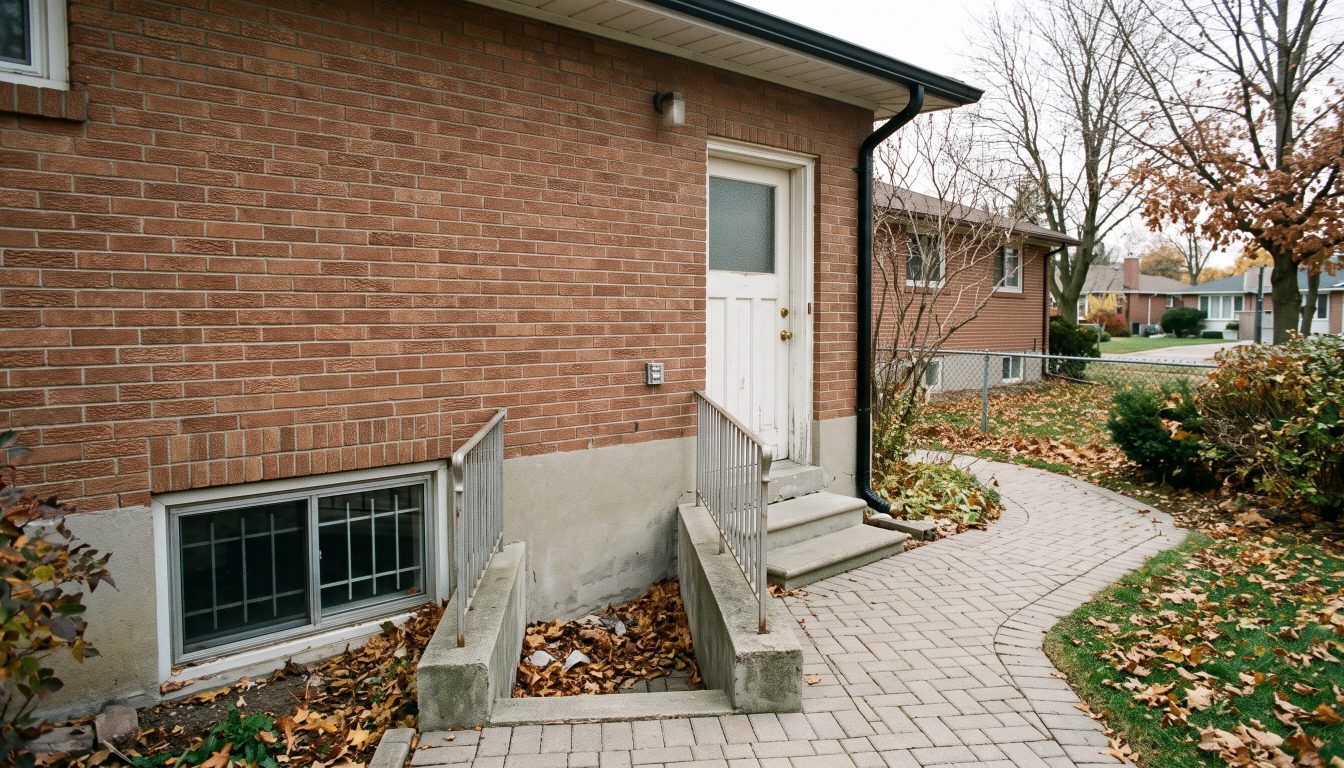
A basement apartment in Ontario can be safe if it was built with a permit and meets the Building Code: interconnected smoke alarms, CO alarms near bedrooms, a 30-minute fire separation, a 1.95 m ceiling and a real way out. Many GTA units were never inspected, so check. Your Residential Tenancies Act rights apply either way.
This guide is for renters in Toronto and the GTA who are looking at a basement apartment, or already live in one, and want to know if it is safe. You will get the actual Ontario safety rules, a checklist to use on a viewing, and what to do if your unit falls short.
Is it safe to live in a basement apartment in Ontario?
Yes, a basement apartment can be just as safe as any other home, if it was built with a permit and meets the Ontario Building Code and Fire Code. The risk is not the basement itself. The risk is a unit that was put in without permits, so nobody checked the alarms, the walls between the units, the exits or the wiring.
Basements bring three extra concerns: getting out fast in a fire, smoke and carbon monoxide (CO) travelling from the furnace or the upstairs unit, and water, mould or radon gas. A legal, inspected unit deals with the first two by design. The third you can check yourself.
Many basement units in the GTA were never registered or inspected. That does not make each one dangerous, but you cannot assume the safety features are there.
What makes a basement apartment legal in Ontario?
Ontario allows second units in houses, but each one still needs to meet local zoning, get a building permit and pass inspections. The province’s guide says electrical work needs its own permit and an Electrical Safety Authority (ESA) inspection. Some cities also require the unit to be licensed or registered once it is built.
Two GTA examples show how this works in practice:
- Brampton: every additional residential unit must be registered with the City, including older units that used to be treated as legal non-conforming. The City publishes a list and a map of registered units, so a renter can look up an address. Zoning allows up to three units on a property, counting the main house.
- Markham: every two-unit house must be registered. Both units are inspected for building and fire safety. The City lists a $260 fee for the first fire inspection and $246 to register.
Other GTA cities have their own process, so check your city’s website for the address you are renting. A unit with a building permit, a final inspection and, where the city requires it, a registration is the safest starting point.
What fire safety features should a basement apartment have?
These are the main features to look for. They come from Ontario’s homeowner guide to second units and a City of Oshawa summary of the 2024 Building Code. Rules differ for houses less than five years old, and your city’s building department has the final word.
| Feature | What to look for |
|---|---|
| Smoke alarms | On every level, in each bedroom of the unit, outside sleeping areas and in shared areas, interconnected so one alarm sets off all of them |
| Carbon monoxide alarms | Near each sleeping area and on every storey if the house has a gas furnace, fireplace or attached garage |
| Fire separation | 30-minute rated walls and ceiling between the units (15 minutes allowed if the whole house has interconnected smoke alarms) |
| Way out | Its own exit is preferred; a shared exit needs a fire separation and interconnected alarms |
| Escape window | If the only exit runs through the other unit: an unobstructed opening of at least 0.38 m², with the openable part at least 460 mm across |
| Bedroom window | At least 0.35 m² of openable area, no side under 380 mm, opens from inside without tools |
| Ceiling height | At least 1.95 m (about 6 ft 4¾ in) over the required floor area; 1.85 m under beams and ducts |
| Heating | A shared furnace is allowed if a duct-type smoke detector is installed |
Source: Ontario Ministry of Municipal Affairs and Housing, “Add a second unit in your house” (updated January 2023); City of Oshawa, Ontario Building Code 2024 requirements for basement secondary suites (revised February 2026); City of Toronto carbon monoxide alarm page.
The CO rule got stricter recently. The City of Toronto says that as of January 1, 2026, homes with a fuel-burning appliance, fireplace or attached garage need a working CO alarm near each sleeping area and on every storey.
How can I tell if a basement apartment is legal before I rent it?
You do not need to be an inspector. On a viewing, use this short checklist:
- Ask directly. “Was this unit built with a building permit, and is it registered with the city?” A landlord with a legal unit can usually show paperwork.
- Look it up. In Brampton, check the City’s list of registered units. Elsewhere, call or email the city’s building department with the address.
- Press the test button on a smoke alarm, with the landlord’s permission, and ask whether the alarms are linked to the upstairs unit.
- Find the CO alarm near the bedrooms if the house has a gas furnace or water heater.
- Open every bedroom window. Could an adult climb out? Is the window well clear?
- Walk the way out. Do you have your own door, or do you have to pass through the landlord’s space?
- Look and smell for water. Stains on the walls or floor, a musty smell, or a dehumidifier running hard are clues.
If the answers are vague and the unit fails two or three of these, I would keep looking. A cheaper rent is not worth it if you cannot get out of a bedroom in a fire.
Instant Home Valuation
What’s your home
worth today?
Answer six quick questions and get an instant value range built from current Toronto & GTA sale data — property type, size, condition, lot and location all weighted the way a real pricing conversation weighs them. Takes about ninety seconds.
Reading recent GTA sale data…
Building your estimate
Estimated market value
—
$0–$0
Most likely value $0 · roughly $0 per square foot
What moved the number
Starting from the area baseline for your property type, here’s what each answer added or subtracted.
Market context
Recent local averages for comparison.
—
A range is a starting point.
A strategy is what sells.
This model doesn’t know that your neighbour’s identical semi went $80,000 over asking last month, or which two upgrades actually pay back in your area. That conversation is free and takes twenty minutes.
Do I have tenant rights in an illegal basement apartment?
In most cases, yes. Section 3 of Ontario’s Residential Tenancies Act (RTA) says the Act applies to rental units “despite any other Act” and despite any agreement to the contrary. A zoning or registration problem does not switch your rights off.
Two parts of the Act matter most for basement renters:
- Repairs and standards. Under section 20, the landlord must keep the unit in a good state of repair, fit to live in, and in line with health, safety and maintenance standards. This applies even if you knew about the problem before you moved in.
- Proper process to end a tenancy. A landlord cannot simply tell you to leave. They must give the correct notice, and only the Landlord and Tenant Board (LTB) can order an eviction. Only the sheriff can enforce it.
There is one big exception. The RTA does not apply if you share a kitchen or bathroom with the owner, or the owner’s spouse, child or parent, and that person lives in the same building. If your “basement apartment” shares the owner’s kitchen, you may not be covered.
My guide to what Ontario landlords must maintain goes through the repair rules in more detail.
What other health risks come with basement living?
Radon
Radon is a natural radioactive gas that comes up from the ground and collects in lower levels. Take Action on Radon, a Health Canada-funded program, says radon is the leading cause of lung cancer in people who do not smoke. Health Canada’s guideline is 200 becquerels per cubic metre (Bq/m³). The program recommends a test of at least three months, ideally in the heating season, on the lowest lived-in level. A tenant can run a long-term test kit without any help from the landlord.
Water and mould
Basements flood. Ask whether the unit has flooded before and whether the house has a backwater valve or sump pump. Keep valuables off the floor. The landlord’s insurance does not cover your belongings, so read my note on what tenant insurance covers before you move in.
Heat
Basements can run cold. In Toronto, the City sets a minimum indoor temperature that landlords who supply heat must meet in winter. My guide to the Toronto heat by-law explains the rule and how to complain.
Never cover, unplug or take the battery out of a smoke or CO alarm, even if it goes off when you cook. Toronto’s fire pages say tenants must not disable alarms and must tell the landlord right away if one is not working. Fines under Ontario’s Fire Protection and Prevention Act can reach $50,000 and a year in jail for an individual. If an alarm keeps going off, ask the landlord to move or replace it.
What can I do if my basement apartment is unsafe?
- Tell the landlord in writing. Email or text is fine. List the problem, the date, and ask for a fix by a clear date.
- Call the city for safety issues. In Toronto, the City says a tenant whose landlord does not provide working alarms can call 311 to be referred to Toronto Fire Services. Other GTA cities have their own fire prevention and by-law lines.
- Apply to the LTB. If repairs do not happen, a tenant can file a T6 application about maintenance. My guide to the T6 tenant maintenance application walks through it.
- Get free legal advice from a community legal clinic before you withhold rent or move out. Withholding rent on your own can lead to an eviction application against you.
In an emergency, such as smoke, a CO alarm sounding or no way out, leave first and call 911.
What should landlords do to make a basement unit safe and legal?
If you own the house, the safest route is also the one that protects your investment: get the permit, pass the inspections and register the unit where your city requires it. Ontario’s guide says to expect a response to a building permit application within 10 business days, and to hire a licensed electrical contractor for ESA-inspected work.
The cost of skipping this can be high. Brampton’s page lists fines of $25,000 to $1.5 million for individuals and corporations, plus administrative penalties of $1,000 to $1,500 for failing to register a unit. Toronto’s fire pages list Fire Code fines of up to $50,000 and a year in jail for individuals, and $500,000 for corporations.
A legal second unit also matters when you sell. Buyers, lenders and insurers ask about it. If you are buying a house with an existing unit, read my guide to buying a house with a basement apartment first.
When I walk through houses with basement units, the paperwork tells me more than the finishes do. A plain unit with a permit, linked alarms and a real bedroom window is a better home than a glossy one with none of those. As a renter, spend ten minutes on the checklist above before you sign. As an owner, treat legalizing the unit as part of the value of the house, not an extra cost.
What to do next
- Before you sign, ask the landlord if the unit has a building permit and city registration, and check the city’s records yourself.
- On the viewing, test a smoke alarm, find the CO alarm and open every bedroom window.
- Get tenant insurance and a long-term radon test kit in your first month.
- If something is unsafe, put it in writing to the landlord, then call your city’s fire or by-law line.
- If repairs still do not happen, talk to a community legal clinic about a T6 application.
Need help with this? Talk to me.
I’m Jatin Dua, Broker of Record at RE/MAX Quantum Realty, and I’m the best agent to do this kind of work for you in Toronto and across the GTA. Over $100 million in GTA sales and 100+ families helped sell. Feel free to contact me any time: call or text 833-330-1925 or email [email protected].
Frequently asked questions
Is it legal to live in a basement apartment in Ontario?
Yes, Ontario allows second units in houses. A unit is fully legal only if it meets local zoning, was built with a building permit and passed inspections, and is registered where the city requires it, as Brampton and Markham do. As of 2026, many GTA basement units were never registered, so ask the landlord and check with the city before you sign.
Are basement apartments safe in a fire?
A basement apartment built to the Ontario Building Code is designed to be safe in a fire. Key features include interconnected smoke alarms, a 30-minute fire separation between units, its own exit or a protected shared one, and bedroom windows large enough to climb out of. The danger comes from units built without permits, where none of these were checked. Test the alarms and open the windows on a viewing.
Does a basement bedroom need a window in Ontario?
Yes, in most cases. A City of Oshawa summary of the 2024 Ontario Building Code says a basement bedroom window needs at least 0.35 square metres of openable area, with no side under 380 mm, and must open from inside without tools. If a window opens into a window well, the well needs clear space in front of it. Check with your city’s building department for your exact situation.
What is the minimum ceiling height for a basement apartment in Ontario?
The minimum is 1.95 metres, about 6 feet 4¾ inches, over the required floor area of a basement unit, according to Ontario’s guide to adding a second unit. A City of Oshawa summary of the 2024 Building Code allows 1.85 metres under beams and ducts. Areas lower than this may not count toward the required room sizes, so a very low basement may not qualify as a legal unit.
Do I have tenant rights if my basement apartment is illegal in Ontario?
Usually yes. Section 3 of Ontario’s Residential Tenancies Act says the Act applies to rental units despite any other Act, so a zoning or registration problem does not remove your rights. Your landlord must still keep the unit repaired and safe, and must go through the Landlord and Tenant Board to end the tenancy. The exception is if you share a kitchen or bathroom with an owner who lives there.
Can my landlord evict me because the basement unit is not legal?
Not on their own. In Ontario a landlord must give the proper notice under the Residential Tenancies Act, and only the Landlord and Tenant Board can order an eviction, which only the sheriff can enforce. If a city orders an illegal unit closed, the situation gets more complicated, so contact a community legal clinic for free advice before you agree to leave or sign anything.
Who do I call about an unsafe basement apartment in Toronto?
Start by telling your landlord in writing. In Toronto, if the landlord does not provide working smoke or carbon monoxide alarms, the City says you can call 311 to be referred to Toronto Fire Services. For repairs that are not fixed, you can file a T6 application with the Landlord and Tenant Board. In an emergency, such as smoke or a sounding CO alarm, leave and call 911.
How do I check if a basement apartment is registered in Brampton?
Use the City of Brampton’s published list or map of registered additional residential units, which you can find from its Additional Residential Units page. Brampton requires every additional unit to be registered, including older units once treated as legal non-conforming. If the address is not on the list, ask the landlord for the registration or permit, and contact the City’s zoning team before you sign a lease.
Do basement apartments need carbon monoxide alarms in Ontario?
Yes, if the house has a fuel-burning appliance such as a gas furnace or water heater, a fireplace or an attached garage. The City of Toronto says that as of January 1, 2026, these homes need a working CO alarm near each sleeping area and on every storey. Landlords must install and maintain the alarms, and tenants must not disable them or remove the batteries.
Should I test my basement apartment for radon in Ontario?
Yes, it is worth it. Radon collects in lower levels and is the leading cause of lung cancer in non-smokers, according to Take Action on Radon, a Health Canada-funded program. Health Canada’s guideline is 200 Bq/m³. Use a long-term test kit for at least three months, ideally during the heating season, in a room on the lowest level that you use for at least four hours a day.
Sources
- Residential Tenancies Act, 2006 (Ontario e-Laws)
- Add a second unit in your house (Ontario Ministry of Municipal Affairs and Housing)
- Ontario Building Code 2024 requirements: basement secondary suites (City of Oshawa)
- Smoke alarms: fire prevention, inspection and enforcement (City of Toronto)
- Carbon monoxide alarms (City of Toronto)
- Additional Residential Units (City of Brampton)
- Registration: basement apartments and second suites (City of Markham)
- Frequently asked questions about radon (Take Action on Radon)
Related reading
- Can My Landlord Enter Without Notice in Ontario?
- Can a Landlord Evict You Without Going to the LTB in Ontario?
- Can My Landlord Raise the Rent Every Year in Ontario? 2027 Rules
- Can a Landlord Put Security Cameras in or Outside a Rental in Ontario?
About the author — Jatin Dua, Toronto and GTA real estate broker
I am Jatin Dua, Broker of Record and co-founder of RE/MAX Quantum Realty Inc., Brokerage, Unit 101, 799 The Queensway, Toronto. I work with buyers and sellers across Toronto and the GTA and have helped more than 100 families sell. Four-plus years of active GTA transactions and over $100 million in sales volume.
Reach me at [email protected] or 833-330-1925, or book a call.