
Published 18 October 2026 · By Jatin Dua, Broker of Record, RE/MAX Quantum Realty
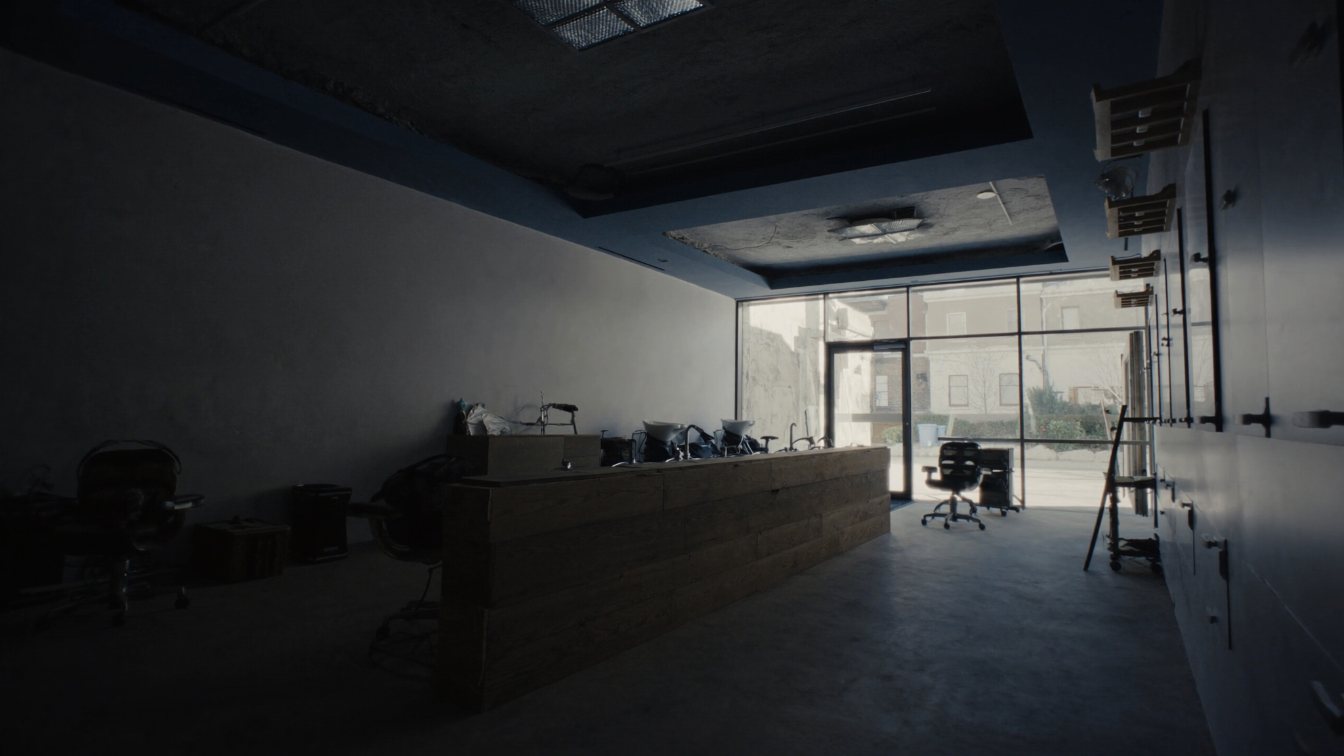
A specimen collection centre in Ontario needs a licence under the Laboratory and Specimen Collection Centre Licensing Act, which is still in force in 2026, with detailed rules in O. Reg. 45/22. Only owners of a licensed laboratory may own one. The licence lists the address and the centre must operate there, so a move needs Ministry involvement. The unit needs a private collection room, a patient waiting room and washroom, a couch, a refrigerator, a centrifuge and clean storage. Rent with a referring health professional must be at market and cannot vary with referrals. Accreditation Canada runs the quality program.
Looking for specimen collection centre space in Toronto or the GTA? Tell me what you need and I will send you units that fit, with the zoning and the lease checked before you commit.
Where the law stands in 2026
Patient service centres where people line up for blood work are “specimen collection centres” under Ontario’s Laboratory and Specimen Collection Centre Licensing Act (R.S.O. 1990, c. L.1). That Act is still in force in 2026. A 2017 statute, the Oversight of Health Facilities and Devices Act, 2017, was meant to fold labs into a new framework, but it was repealed on May 18, 2023, so the older Act remains the one that governs.
The detailed rules moved, though. The old Regulation 682 was revoked on July 1, 2022 and replaced by O. Reg. 45/22 (General), which was last amended in 2025. If a consultant or a landlord quotes you Regulation 682, their information is out of date.
The Act defines a specimen collection centre as “a place where specimens are taken or collected from the human body for examination to obtain information for diagnosis, prevention or treatment.” Section 9(1) says no person shall establish, operate or maintain a laboratory facility (a lab or a specimen collection centre) except under a licence issued by the Director.
Who can actually lease and open one
This is the part most people miss, and it decides whether a deal is real before anyone talks about rent.
- Ownership is restricted. Section 39 of O. Reg. 45/22 says no person shall be an owner of a licensed specimen collection centre, or have any proprietary interest in one, unless that person also owns a laboratory licensed under the Act. An independent entrepreneur cannot simply open a blood-draw storefront.
- The Minister can refuse new licences by area. Section 9(5) of the Act lets the Minister tell the Director in writing that issuing a licence in the proposed area is not in the public interest, in which case the Director must refuse it. Factors include how many facilities already operate in the area, their capacity and the funds available for insured lab tests.
- Physicians’ offices are excluded. Section 34 of the regulation excludes from the definition a place where a CPSO member is practising medicine, and similar places for nurse practitioners, dietitians and midwives. A clinic that draws blood from its own patients is generally not a licensed collection centre.
So the realistic tenants are licensed laboratory companies opening or relocating a patient service centre, and the realistic landlords are medical buildings and plazas that want one. If you are a physician group planning a clinic with in-house collection, read my notes on walk-in clinic space instead.
The licence is tied to the address
O. Reg. 45/22 says a licence must set out the name and address of the facility (section 3), and section 15(1) requires the owner and operator to ensure the facility “is operated at the address provided on the licence.” A licence also cannot be transferred without the Director’s consent (section 9.2 of the Act), and the Director treats the proposed transferee like a new applicant.
For a lease, that means the location is part of the regulatory approval. Moving down the plaza is not a simple relocation. Before you commit to a new unit, confirm with the Ministry of Health how it will handle the change of address on your licence and how long that takes, then build that timing into the lease.
Do not let the old lease expire first
If your current centre’s lease ends before the licence is in place at the new address, you can be left with no lawful place to collect specimens. Negotiate an overlap period or a short extension at the old location as part of the new deal.
What the unit must have
Section 15(2) of O. Reg. 45/22 requires the place to be suitable and equipped for the specimens the centre is licensed to collect. Section 16 then lists what every specimen collection centre must have:
- a private room for taking or collecting specimens;
- a chair to accommodate individuals having blood taken;
- a waiting room and washroom facilities for patients;
- a couch or other furnishing in case someone becomes ill;
- a refrigerator and a centrifuge;
- clean storage space for supplies and instruments;
- at least one clean, covered container for skin cleansing swabs; and
- a self-closing waste disposal container.
The washroom matters more than people think, because urine and other collections happen there. Under section 14, nobody can be employed to take specimens unless a CPSO member has certified in writing their competence, ability to care for patients and personal cleanliness. And under section 40, the centre must post parts of its licence and evidence that it met the most recent quality management program assessment, in a conspicuous place.
| Item | Why it matters | Who to ask |
|---|---|---|
| Private collection room(s) | Required by s.16(a); number of rooms sets throughput | Your design team, lab operations |
| Patient washroom near collection rooms | Required by s.16(c); barrier-free on extensive renovations | Landlord drawings, plans examiner |
| Dedicated circuits for fridge and centrifuge | Both required by s.16; a failed fridge spoils specimens | Your electrician, landlord on panel capacity |
| Secure biomedical waste storage | Guideline C-4 expects storage away from public access | Your licensed waste carrier |
| Courier access near the door | Specimens leave several times a day | Landlord on loading and short-term parking |
| Zoning for the use | Lab, medical office or both, depending on the city | Toronto Zoning Use Review; Mississauga zoning |
| Licence address | Licence is tied to the address on it | Ministry of Health licensing |
Accreditation: IQMH is now Accreditation Canada
Ontario labs and their collection centres must take part in a provincial quality management program. Many people still call this “IQMH accreditation.” On October 7, 2019, the Institute for Quality Management in Healthcare became a controlled affiliate of Accreditation Canada and its Centre for Accreditation was renamed AC Diagnostics. The current regulation, O. Reg. 45/22, section 42, names Accreditation Canada as the designated agency for the quality management program. Assessments look at the facility as well as the processes, so a new site should be fit for assessment from the day it opens.
Zoning: lab, medical office, or both?
A collection-only centre does not run tests on site, but a city may still classify it as a laboratory or as a medical office. Get the city’s answer in writing.
Toronto. Zoning By-law 569-2013 defines “laboratory” as “premises used for scientific or technical research, analysis, experimentation or development.” Laboratory is permitted outright in the EL, E and EO employment zones. In the CR commercial residential zone it is permitted only with a condition that its interior floor area may not exceed the floor area of the building’s first storey. Medical office is permitted in CR and CL. A Zoning Use Review ($214.79 in 2026) will tell you how the examiner classifies your specific operation.
Mississauga. Zoning By-law 0225-2007 defines “Medical Office” to include accessory “laboratories, facilities for medical, diagnostic and dental purposes,” which helps a collection centre inside a medical building. A stand-alone lab that does research-style work may fall under “Science and Technology Facility,” which includes laboratories and is permitted in the E1 to E3 employment zones. A change of use type also needs a Certificate of Occupancy. Brampton, Vaughan and Markham each use their own definitions, so ask each city.
Collection centres are high-volume, early-morning operations, so parking and access count as much as the zone. In Mississauga the medical office parking rate is 3.8 to 5.5 spaces per 100 square metres depending on the precinct.
Biohazard waste and specimen transport
Ontario’s Guideline C-4 on biomedical waste (updated October 2025) applies to the sharps, blood-soaked materials and other waste a collection centre generates. It says biomedical waste should be segregated from other waste; sharps and blood waste use yellow labels with the universal biohazard symbol; blood waste should be refrigerated at or below 4°C if stored more than four days; and the storage area should be secure and not accessible to the general public, and not next to supply or food areas.
Specimens themselves usually travel as UN3373, “Biological Substance, Category B,” under the federal Transportation of Dangerous Goods Regulations. Transport Canada’s guidance says to assume training is required unless an exemption applies, and describes Type P650 packaging with the Category B mark on the outside. On the property side, that means a predictable courier pickup point, somewhere to stage packed boxes out of patient view, and a lease that does not restrict courier stops at the front door.
Think like the courier and the 7 a.m. patient
Collection centres are judged on the first hour of the day. If fasting patients cannot park, get in the door before the plaza opens, or find a washroom, and if the courier cannot stop near the entrance, the site will underperform no matter how good the rent is.
The lease clauses that matter for a collection centre
One rule here is specific to labs. Section 37 of O. Reg. 45/22 says a lab facility owner or operator shall not rent premises to or from a health professional who requisitions tests from it (or their family member or corporation) if the rent is not comparable to rent for similar premises in the same area, or if the rent varies with the number or value of services referred. There is an exception in section 38 where the health professional holds at least 50 per cent ownership in the facility. If your landlord is a physician group in the same building, document how the rent was set.
- Use clause. “Specimen collection centre licensed under the Laboratory and Specimen Collection Centre Licensing Act, and related patient services and administration.”
- Licensing condition. Make the lease conditional on the licence being issued or amended for the new address, with a right to terminate if it is not.
- Fair market rent record. Where the landlord is a referring health professional, attach comparable rent evidence and avoid any rent formula tied to referrals or volume.
- Early hours and access. Access from early morning, six or seven days a week, and HVAC and lighting outside plaza hours.
- Power. Landlord consent to dedicated circuits, and to a backup arrangement or alarm for the specimen fridge.
- Waste and couriers. A locked waste storage area, carrier and courier access, and no landlord objection to biohazard labelling on that door.
- Signage. Signage rights that let you meet the regulation’s posting rules; under section 41, advertising must not be false or misleading.
- Assignment. Assignment to a successor licensee or affiliate, recognising that the licence transfer itself needs the Director’s consent.
- Overlap with the old site. Early occupancy or a holdover right so service does not stop between sites.
Rent is quoted as net rent per square foot per year plus TMI. For the broader logic on wording, see commercial lease use clauses.
Deal-killers to check on a viewing
- No ownership path. If the would-be operator does not own a licensed lab, section 39 stops the deal.
- A landlord who wants rent tied to volume while also referring patients.
- No patient washroom close to the collection rooms, or one that cannot be made barrier-free.
- Restricted early access in a mall or office tower that opens at 9 or 10 a.m.
- Weak electrical service or no room for the fridge and centrifuge on their own circuits.
- No courier stopping point within a short walk of the door.
- A zone that does not fit, or a first-storey cap in a Toronto CR zone that your planned lab area would exceed.
The same buildings often host pharmacies and physiotherapy clinics, which is part of why a collection centre wants them.
Where I fit
I help laboratory operators and medical landlords find and assess collection centre space across Toronto, Mississauga, Brampton and the rest of the GTA. I check zoning before anything is signed, look at washrooms, power, early access and courier stops on the viewing, and read the lease for the licensing condition, use clause and any rent terms that could cross the regulation’s conflict-of-interest rules.
Find me specimen collection centre space
Tell me the area, size, budget and timing, plus how many collection rooms you need and your opening hours, and I will send units that fit.
I will come back to you personally, usually the same day, with spaces that fit. If it is urgent, call or text 833-330-1925.
Frequently asked questions
Is the Laboratory and Specimen Collection Centre Licensing Act still in force in 2026?
Yes. The Act, R.S.O. 1990, c. L.1, remains in force. The 2017 Oversight of Health Facilities and Devices Act that was meant to replace parts of this framework was repealed on May 18, 2023. The detailed rules are now in O. Reg. 45/22, which replaced Regulation 682 on July 1, 2022 and was last amended in 2025.
Can I open my own blood collection centre in Ontario?
Not as an independent business. Section 39 of O. Reg. 45/22 says no one may own or hold a proprietary interest in a licensed specimen collection centre unless they also own a licensed laboratory. The Minister can also refuse new licences in an area on public interest grounds. Physicians' offices collecting from their own patients are excluded from the definition.
What rooms does a specimen collection centre need?
Section 16 of O. Reg. 45/22 requires a private room for taking specimens, a chair for blood draws, a waiting room and washroom facilities for patients, a couch or similar furnishing in case of illness, a refrigerator, a centrifuge, clean storage for supplies and instruments, a covered container for skin swabs and a self-closing waste container.
Can a lab move its collection centre to a new unit?
The licence sets out the facility's address, and section 15 of O. Reg. 45/22 requires the centre to operate at that address. A move therefore involves the Ministry of Health licensing office. Confirm the process and timing before signing a new lease, and negotiate an overlap with the old site so service is not interrupted.
Can a doctor rent space to a lab in the same building?
Yes, with limits. Section 37 of O. Reg. 45/22 bars a lab facility from renting to or from a requisitioning health professional if the rent is not comparable to similar premises nearby, or if rent varies with the number or value of referred services. An exception applies where health professionals own at least 50 per cent of the facility.
Who accredits labs and collection centres in Ontario now?
O. Reg. 45/22 designates Accreditation Canada to carry out the quality management program. The Institute for Quality Management in Healthcare (IQMH) became a controlled affiliate of Accreditation Canada in October 2019, and its accreditation centre became AC Diagnostics. Centres must post evidence that they met the most recent assessment.
What zoning does a specimen collection centre need in Toronto?
It depends on how the city classifies the operation. Toronto defines a laboratory as premises for scientific or technical analysis; labs are permitted in the EL, E and EO zones and in the CR zone with a floor area cap. Medical office is permitted in CR and CL. A Zoning Use Review for the address gives you the city's answer before you sign.
Sources
- Ontario e-Laws — Laboratory and Specimen Collection Centre Licensing Act — licence requirement, public interest refusal, transfer
- Ontario e-Laws — O. Reg. 45/22: General — premises, location, ownership, rent rules, Accreditation Canada
- Ontario e-Laws — Oversight of Health Facilities and Devices Act, 2017 — repealed May 18, 2023
- Accreditation Canada — About AC Diagnostics — IQMH affiliation and rename, 2019
- City of Toronto — Zoning By-law 569-2013, Section 40.10 CR Zone — laboratory floor area condition, medical office
- City of Toronto — Zoning By-law 569-2013, Chapter 800 Definitions — laboratory definition
- City of Mississauga — Zoning By-law 0225-2007, Definitions — medical office with accessory laboratories
- Government of Ontario — Guideline C-4: Management of Biomedical Waste — storage, labelling, refrigeration
- Transport Canada — Shipping infectious substances — UN3373 Category B, training, P650
Related reading
- Walk-in medical clinic space
- Pharmacy premises requirements
- Dental office space in Ontario
- Commercial lease use clauses
- Office space value estimator
- The use clause in a commercial lease
About the author — Jatin Dua, Toronto and GTA real estate broker
I am Jatin Dua, Broker of Record and co-founder of RE/MAX Quantum Realty Inc., Brokerage, Unit 101, 799 The Queensway, Toronto. I help business owners across Toronto and the GTA find, assess and lease commercial space, and I work with buyers and sellers of homes and businesses. Four-plus years of active GTA transactions and over $100 million in sales volume. Every rule here comes from a regulator, statute or by-law linked in the sources, so you can check all of it without asking me.
Reach me at [email protected] or 833-330-1925, or book a call.